These Coffee FAQs give short answers to common questions about brewing, beans and caffeine. Use them for a quick explanation, then explore the site from the linked starting points when you want more detail.
Common Questions Answered
Where should I start if I am new to coffee?
Start with the drink you already enjoy, rather than trying to learn everything at once. Choose one brewing method, follow a repeatable recipe and change one thing at a time as you learn what you prefer. Our home page is the starting point for exploring the site.
Is espresso a special type of coffee bean?
No, espresso is a brewing method, not a species of bean or a particular roast level. It uses pressure to push hot water through finely ground coffee, producing a concentrated drink. Begin at the coffee guide home to explore coffee terminology and preparation.
FAQs About Brewing Methods
Are a cafetière and a French press the same thing?
Yes, cafetière and French press are names for the same brewing device. Ground coffee steeps in hot water, then a plunger with a mesh filter separates most of the grounds from the drink. Use the home page as your starting point for exploring brewing methods.
Can I use the same grind for every brewing method?
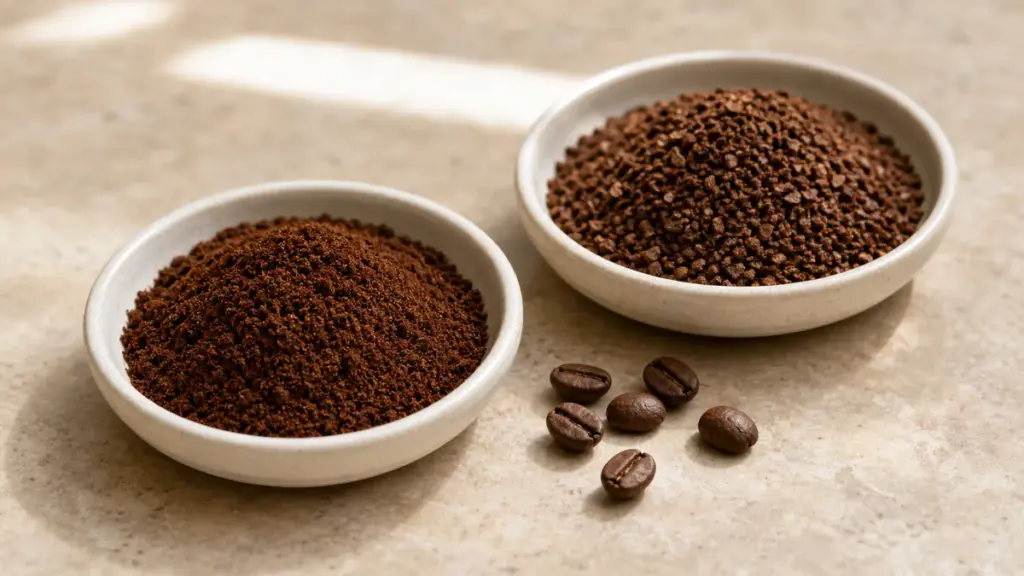
Usually not: espresso generally needs a fine grind, while a cafetière commonly starts with a coarser grind. The right setting depends on the brewer and recipe, so treat these as starting points rather than fixed rules. Explore further from the main coffee guide.
FAQs About Coffee Beans
What is the difference between arabica and robusta?
Arabica and robusta refer to different coffee species: Coffea arabica and Coffea canephora, respectively. They are not roast levels, and arabica itself contains many named varieties. For a route into the wider subject, start with the coffee guide home.
How should I store coffee beans?
Keep beans in an airtight, opaque container somewhere cool and dry, away from sunlight and heat. If you grind your own coffee, grind only what you need shortly before brewing. Continue exploring beans and preparation from the home page.
FAQs About Coffee Health
Health information, not personal medical advice: these answers describe population guidance, not an intake target or an assessment of your circumstances. Speak to a GP, pharmacist or midwife about caffeine if you have a medical condition, take medicines, are pregnant or have concerns about symptoms. Our editorial policy explains the standards behind the site’s information.
How much caffeine can a healthy adult have?
EFSA’s 2015 scientific risk assessment found that up to 400 mg a day, spread throughout the day, and single doses up to 200 mg raise no safety concerns for healthy, non-pregnant adults. These are not targets; individual sensitivity varies. See our editorial policy for how health evidence is handled.
Can I drink coffee during pregnancy?
The NHS advises no more than 200 mg of caffeine a day during pregnancy, counting all sources, not just coffee. Caffeine content varies between drinks, so a number of cups is not a reliable universal limit. Our editorial policy sets out the approach to sourcing health guidance.
Can coffee affect my sleep?
Yes, caffeine can affect sleep even below the general adult daily benchmark. EFSA’s assessment found that 100 mg close to bedtime may affect sleep duration and patterns in some adults. There is no single cut-off time that suits everyone. Read our editorial policy for the site’s evidence standards.
Does coffee count towards my fluid intake?
Yes, coffee counts towards daily fluid intake, according to NHS guidance. That does not mean caffeine is unlimited: the NHS also advises moderation and recognises that some people are more sensitive than others. Start at the home page to explore the wider coffee guide.
More about brewing at home
How hot should the water be for coffee?
Just off the boil is right for most methods. Water at a rolling boil can bring out bitterness, while water that has cooled too much leaves coffee thin and sour.
What does “bloom” mean when making filter coffee?
Blooming means wetting fresh grounds with a splash of hot water and waiting briefly before pouring the rest. It lets trapped carbon dioxide escape, so the water flows more evenly through the coffee.
Why does my filter coffee taste bitter?
Bitterness usually means over extraction: the grind is too fine, the brew ran too long or the water was too hot. Try a slightly coarser grind or a shorter brew.
Why does my coffee taste weak or sour?
Weak or sour coffee is usually under extracted, so the water has not dissolved enough flavour. Use a finer grind, a little more coffee or a longer contact time.
Can I reuse coffee grounds for a second cup?
You can, but the second cup will be weak and often bitter, because most of the good flavour comes out in the first brew. Fresh grounds give a far better result.
Is filtered water better for coffee?
It can be, especially where tap water is very hard or tastes of chlorine, because minerals and chlorine change how coffee tastes. Avoid distilled water: coffee needs some minerals to taste right.
How long should I brew coffee in a cafetiere?
Let it steep for a few minutes, then press the plunger gently. Leaving it much longer keeps extracting and turns it bitter, so pour it all off once pressed.
Do I need scales to make good coffee?
Not essential, but scales make good coffee repeatable, because strength depends on the ratio of coffee to water. Weighing is far more consistent than using scoops.
What is the difference between filter and instant coffee?
Filter coffee is brewed fresh from ground roasted beans. Instant coffee has already been brewed and then dried into granules or powder, so it is quicker but tastes different.
Espresso and milk drinks
Why is my espresso pouring too fast?
A fast shot usually means the grind is too coarse, there is too little coffee in the basket or it is not tamped evenly. Grind a touch finer first, then test again.
Why is my espresso dripping slowly or not at all?
A very slow shot usually means the grind is too fine or there is too much coffee in the basket. Change one thing at a time, starting with a slightly coarser grind.
What is crema?
Crema is the golden foam on top of an espresso, formed when pressurised water releases carbon dioxide and oils from fresh coffee. It is a good sign of freshness, but not the only measure of a great shot.
What is the difference between a latte, a cappuccino and a flat white?
A latte has the most steamed milk and a thin layer of foam. A cappuccino has a deeper, airier foam. A flat white is smaller and stronger, with silky microfoam. Recipes vary from cafe to cafe.
What is a macchiato?
A macchiato is an espresso “marked” with a small spoonful of milk foam. It is much stronger and smaller than a latte macchiato, which is mostly milk.
What is a ristretto?
A ristretto is a short espresso made with the same coffee but less water. It tastes sweeter and more concentrated than a standard shot.
What is an Americano?
An Americano is espresso topped up with hot water to make a longer black coffee. It has a different body from filter coffee because it starts as espresso.
Which milk froths best?
Fresh, cold dairy milk froths well, and semi skimmed is a popular all rounder. For plant milk, look for “barista” versions, which are made to foam more reliably.
Why will my milk not foam properly?
Milk that is warm, old or low in protein foams poorly, and so does a steam wand or milk system with dried residue. Start with cold milk and clean the wand straight after use.
Can I froth oat, soya or almond milk?
Yes, though results vary because protein and fat decide how stable the foam is. Barista editions of plant milks give a texture closest to dairy.
Beans and roasting
What does “single origin” mean?
Single origin coffee comes from one country, region or farm rather than a blend of several. It is chosen to show off the flavours of a particular place.
What do light, medium and dark roast mean?
Roast level describes how far the beans have been roasted. Lighter roasts keep more of their origin character and brightness, while darker roasts taste more roasty, smoky and bitter. Neither is better: it is about taste.
Is whole bean coffee better than ground?
Whole beans stay fresh for longer because less of the coffee is exposed to air. Grinding just before brewing gives noticeably more aroma and flavour.
What do tasting notes such as “chocolate” or “citrus” mean?
They describe flavours tasters notice in the cup, not added ingredients. Growing conditions, variety, processing and roasting all shape them.
What is the difference between washed and natural coffee?
Processing is how the fruit is removed from the coffee cherry. Washed coffee has the fruit removed before drying and tastes clean and bright; natural coffee is dried inside the fruit and often tastes fruitier.
Why does my coffee taste burnt?
A burnt taste can come from very dark roasting, stale beans, over extraction or scalded milk. Try a fresher or lighter roast and avoid overheating milk.
Can I freeze coffee beans?
Yes, if they are sealed airtight in small portions. Let a sealed portion come back to room temperature before opening it, so moisture does not settle on the beans.
What is the roast date on a bag of coffee?
It is the day the beans were roasted, which tells you how fresh they are. Coffee tastes best within weeks of roasting rather than months, depending on how it is packed and stored.
Caffeine and health
How much caffeine is in a cup of coffee?
It varies a lot. The European Food Safety Authority gives about 80 mg for a 60 ml espresso and about 90 mg for a 200 ml cup of filter coffee.
Does an espresso have more caffeine than a filter coffee?
Not per cup. Espresso is stronger per sip, but a cup of filter coffee is bigger: EFSA gives about 80 mg for a 60 ml espresso and about 90 mg for a 200 ml filter coffee.
Is coffee safe before exercise?
For healthy adults, EFSA says single doses of caffeine up to 200 mg do not raise safety concerns, including when taken less than two hours before intense exercise in normal conditions.
Can children drink coffee?
Coffee is not a suitable everyday drink for children. EFSA proposes a safety level for children and teenagers of 3 mg of caffeine per kilogram of body weight per day, which a single adult cup can easily exceed for a young child.
Does coffee interact with medicines?
Caffeine can interact with some medicines. Check the patient information leaflet, or ask a pharmacist or GP if you are unsure.
Decaf
Does decaf coffee contain any caffeine?
Yes, a little. Decaf is not caffeine free. Under UK rules, decaffeinated instant coffee may contain no more than 0.3% caffeine in its dry matter.
How is decaf coffee made?
Caffeine is removed from the green beans before roasting, using water, carbon dioxide or an approved solvent. The beans are then dried and roasted like any other coffee.
Does decaf taste different?
It can, because decaffeination can remove some aroma along with the caffeine. Modern methods keep flavour well, and freshness and roasting still matter most.
Can I drink decaf in the evening?
For most people, yes, because it has far less caffeine. EFSA notes that single doses of 100 mg of caffeine may affect sleep in some adults if taken close to bedtime, so very sensitive people may still notice a late decaf.
Office coffee machines
How often should an office bean to cup machine be descaled?
Descale when the machine asks, or as its manual says. How often depends on your water hardness and how many drinks are made, so set the water hardness on the machine correctly.
Can an office machine use normal tap water?
Yes, if it is fresh drinking water, but hard water builds limescale faster. Many manufacturers recommend a water filter in hard water areas, changed when the machine prompts.
How should the milk system be cleaned?
Run the automatic milk clean after milk drinks and at the end of each day, and take apart and wash the removable milk parts as the manual says. Dried milk affects hygiene and frothing.
How many people can one bean to cup machine serve?
It depends on the model. Manufacturers publish a recommended daily number of drinks, so match that to your team and your busiest hour rather than headcount alone. Our office bean to cup machines guide explains how.
How often does an office coffee machine need servicing?
Follow the manufacturer’s service plan, which goes beyond daily cleaning to seals, brew units and internal parts. Busy office machines usually need servicing more often than home machines.
Coffee culture, history and sustainability
Where did coffee drinking begin?
Arabica coffee grows wild in Ethiopia, and coffee drinking spread through Yemen and the wider Middle East before reaching Europe. Our culture and travel guides tell the story.
When did coffee become popular in Britain?
Coffee houses spread through London in the 17th century, where people met to share news, debate and do business. They were nicknamed “penny universities” for the conversation on offer.
What is coffee cupping?
Cupping is how professionals taste and compare coffees. Hot water is poured over ground coffee in small bowls, the crust is broken and the coffee is slurped from a spoon.
What is third wave coffee?
Third wave coffee treats coffee more like fine wine, with attention to origin, traceability, lighter roasting and careful brewing. It grew alongside speciality coffee shops.
What does “speciality coffee” mean?
Speciality coffee is high quality coffee that scores well when professionally tasted, with careful growing, processing and roasting. The Specialty Coffee Association sets the grading standards.
Are coffee pods recyclable?
Some are, but it depends on the material and your local council. Many pods need a brand’s own collection scheme rather than household recycling, so ask before you choose.
Can used coffee grounds be composted?
Yes. Used grounds can go in home compost or food waste collections where accepted. Mix them with dry material such as leaves or cardboard so they do not clump.
What is Fairtrade coffee?
Fairtrade coffee is certified against standards designed to give farmers fairer trading terms and extra investment in their communities.
What is Rainforest Alliance coffee?
Rainforest Alliance certification covers environmental protection, farmers’ livelihoods and human rights on farms. Coffee with its seal comes from farms audited against its standard.
Brewing methods
Should I buy a burr grinder or a blade grinder?
A burr grinder is the better choice. It crushes beans between two burrs to an even size, while a blade grinder chops them into a mix of dust and chunks that brew unevenly.
How do I use a moka pot?
Fill the base with water to just below the valve, add ground coffee to the basket without pressing it down, and heat gently. Take it off the heat as soon as it starts to gurgle, so the coffee does not taste burnt.
What is an AeroPress?
An AeroPress is a small plastic brewer that steeps coffee and then pushes it through a paper filter with a plunger. It is quick, easy to clean and works for anything from a short strong cup to a longer drink.
What is pour over coffee?
Pour over means pouring hot water by hand over ground coffee in a filter cone, so you control the speed and flow. It makes a clean, bright cup and lets the flavours of a good bean shine.
What is the difference between a V60 and a Chemex?
Both are pour over brewers. A V60 is a ribbed cone that brews fairly quickly, while a Chemex uses a thicker paper filter that gives a very clean, lighter bodied cup.
What is cold brew?
Cold brew is made by steeping coarsely ground coffee in cold or room temperature water for many hours, then filtering it. It tastes smooth and low in bitterness, and is often made strong and diluted to serve.
Is iced coffee the same as cold brew?
No. Iced coffee is brewed hot and then chilled or poured over ice, while cold brew never meets hot water. They taste quite different.
How is Turkish coffee made?
Very finely ground coffee is heated with water, and sugar if you like, in a small pot called a cezve, then poured unfiltered into the cup. Let the grounds settle before you drink it.
How can I make good coffee without a machine?
A cafetiere, a pour over cone or an AeroPress all make excellent coffee with just a kettle. Fresh beans and the right grind matter more than fancy equipment.
What does coffee to water ratio mean?
It is how much coffee you use for a given amount of water, and it decides how strong the cup is. Start with the guidance for your brewer, weigh both, and adjust to taste.
Why is my cafetiere coffee gritty?
Fine particles slip through the metal mesh. Use a coarser, more even grind, let the cup settle for a moment and pour gently, leaving the last drop in the pot.
How do I keep coffee hot without it turning bitter?
Pour it into a pre warmed flask rather than leaving it on a hotplate. Coffee kept on a hot plate keeps cooking and soon tastes stewed.
Coffee machines at home
What types of espresso machine are there?
Lever machines are worked by hand, semi automatic machines let you start and stop the shot, automatic machines measure the water for you, and bean to cup machines grind, brew and often froth milk at the touch of a button.
Which suits a home best: bean to cup, pod or filter?
Bean to cup gives fresh ground coffee with little effort, pods are the quickest and tidiest, and a filter machine makes a jug for several people at once. Choose by how many cups you drink and how hands on you want to be.
How do I clean a home espresso machine?
Rinse the group head and portafilter after use, wipe and purge the steam wand straight after frothing, and follow the manual for deeper cleans and descaling. Regular cleaning keeps coffee tasting fresh.
Why does a coffee machine need descaling?
Hard water leaves limescale inside the machine, which slows the water, upsets the temperature and spoils the taste. Descaling dissolves it and keeps the machine working properly.
What is a portafilter?
The portafilter is the handle with a basket that holds the ground coffee on an espresso machine. It locks into the group head, where hot water is forced through the coffee.
Does a higher pressure rating mean better espresso?
Not really. The rating on the box is the most the pump can produce, while good espresso is brewed at a steady, controlled pressure. Grind, dose and temperature matter far more.
Coffee and your health
Does unfiltered coffee affect cholesterol?
Unfiltered coffee, such as cafetiere and Turkish coffee, contains natural oils called diterpenes, including cafestol and kahweol, which can raise LDL cholesterol. Filtered and instant coffee contain almost none, because the filtering and processing remove them.
Does coffee affect iron absorption?
Yes. NHS dietary advice for iron deficiency says drinking coffee or tea with a meal can greatly reduce how much iron your body absorbs, and suggests not drinking them within an hour before or after meals.
Do syrups and sugar make a difference?
Flavoured syrups and sugar turn a coffee into a sweet drink. If you have several a day, try a smaller pump of syrup, or a spice such as cinnamon for flavour without the sugar.
Beans, growing and varieties
How does coffee grow?
Coffee grows on shrubs and small trees that produce red or yellow fruits called coffee cherries. The beans are the seeds inside each cherry.
What is a peaberry?
Most coffee cherries hold two flat sided seeds. Occasionally a cherry holds a single round seed instead, called a peaberry, which some roasters sell separately.
How is coffee harvested?
The best coffee is picked by hand, taking only ripe cherries and returning to the same trees several times. Other farms strip whole branches at once, or harvest by machine on flatter land.
What is the Geisha coffee variety?
Geisha, also written Gesha, is an arabica variety first collected from Ethiopian forests. It became famous in 2005 when a Panamanian farm entered it in a national competition, and it is prized for exceptional cup quality when grown well at high altitude.
What is robusta used for?
Robusta is a hardier coffee species with a stronger, more bitter taste. It is widely used in instant coffee and in some espresso blends for body and crema.
What is kopi luwak?
Kopi luwak is coffee made from beans that have passed through an Asian palm civet. It is famous for its rarity, but animal welfare groups have raised serious concerns about civets kept in cages to produce it.
What is green coffee?
Green coffee is the raw, unroasted bean. It keeps far longer than roasted coffee, and roasting is what develops its familiar colour, aroma and flavour.
Does altitude change how coffee tastes?
Coffee grown higher up tends to ripen more slowly, which can give denser beans with brighter, more complex flavours. Climate, variety and processing all play a part too.
Coffee shop drinks explained
What is a mocha?
A mocha is espresso mixed with chocolate and steamed milk, often finished with a little foam or cream. Think of it as a latte crossed with a hot chocolate.
What is a cortado?
A cortado is espresso “cut” with a similar amount of warm steamed milk and little foam. It is smaller and stronger than a flat white.
What is a piccolo?
A piccolo is a small drink of ristretto topped with steamed milk, usually served in a little glass. It is a mini latte with a strong coffee taste.
What is an affogato?
An affogato is a scoop of vanilla ice cream with a hot shot of espresso poured over it. It is served as a dessert.
What is a long black?
A long black is hot water with espresso poured on top. Adding the coffee last keeps more of the crema than an Americano, where water is added to the espresso.
What is a red eye?
A red eye is a cup of filter coffee with a shot of espresso added, for an extra strong drink.
Coffee at work
How do we work out how much coffee our office needs?
Count the drinks made each day for a week, and note your busiest hour. Those two numbers tell you the size of machine and how often beans and milk need topping up. Our buying checklist walks you through it.
Who should look after the office coffee machine?
Give it a named owner and a simple rota for the daily tasks in the manual, such as emptying the grounds and cleaning the milk system. Shared machines stay cleanest when everyone knows whose turn it is.
What is good office coffee etiquette?
Empty the drip tray or grounds when the machine asks, rinse your cup, refill beans or milk if you finish them, and report faults straight away. Small habits keep the coffee good for everyone.
Should an office offer decaf and plant milk?
Yes. A decaf option and at least one plant milk mean everyone can join the coffee break, whatever their diet or caffeine habits.
Where is the best place for an office coffee machine?
Somewhere with power, water and a drain if it is plumbed in, space for a short queue, and far enough from desks that the noise does not disturb anyone. Our office bean to cup guide covers installation.
Does an employer have to provide coffee at work?
No. In Great Britain the Workplace (Health, Safety and Welfare) Regulations 1992 require an adequate supply of wholesome drinking water and suitable rest facilities, but they create no general duty to supply coffee. Northern Ireland has its own 1993 regulations. Good coffee is a choice, and a popular one: our coffee in the workplace guide explains the options.
Is free office coffee a taxable benefit for staff?
Usually not. Section 317 of the Income Tax (Earnings and Pensions) Act 2003 can exempt light refreshments provided on the employer’s premises, as long as HMRC’s conditions are met, such as making them available to all employees, or all employees at a particular location, and not linking them to salary sacrifice. Ask payroll to confirm your arrangement.
Is VAT due on free coffee we give to staff?
HMRC’s VAT Notice 709/1 says no VAT is due on catering supplied to employees without payment, including free use vending. Whether VAT on the machine, ingredients and servicing can be reclaimed is a separate question for your finance team.
Is coffee for the office zero rated for VAT?
Coffee sold as a food product, including beans, ground coffee and instant coffee, is generally zero rated, and so is dairy milk. Coffee machines, equipment hire, servicing and filters are normally standard rated, so ask suppliers to show the VAT treatment of each line of a quotation.
Does an office coffee machine need a pressure systems examination?
It can. In Great Britain a machine with a steam boiler can fall within the Pressure Systems Safety Regulations 2000, and where they apply a written scheme of examination and examinations are required. Routine servicing is not a substitute, so check the particular machine with the supplier and HSE guidance.
Where should used coffee grounds go at work?
In England, Simpler Recycling means workplaces separate food waste, and coffee grounds belong in that food waste stream. Micro firms with fewer than 10 full time equivalent employees have until 31 March 2027. Do not put compostable pods in food waste unless your collector accepts them. Scotland, Wales and Northern Ireland have their own rules.
How cold should the office fridge be for milk?
Food Standards Agency catering guidance recommends setting fridges at 5°C or below. Keep milk sealed and in date order, and use opened milk within the time given on the pack.
Should an office machine be plumbed in or tank fed?
A plumbed in machine never needs its tank refilled, which suits busy offices, but it needs a suitable water supply, an isolation valve and backflow protection under the water fittings rules. A tank fed machine can go anywhere with power, but someone has to refill and clean the tank.
Bean to cup or pods: which is better for an office?
Bean to cup machines grind fresh beans for every drink and avoid single serve packaging, but need daily cleaning. Pod machines are simple and consistent, but leave used pods to deal with. Our bean to cup vs pods guide compares them side by side.
Should we buy, lease or rent an office coffee machine?
Buying gives you ownership and the responsibility for repairs. Leasing spreads payment over a fixed term, and rental often includes servicing with more flexibility. Compare the whole agreement, including servicing, response times and what happens at the end of the term. See our guides to buying and leasing office coffee machines.
What should we ask an office coffee supplier?
Ask what servicing covers, whether a response time means an engineer arriving or the machine being fixed, who does the daily cleaning, what training staff get, how water is filtered and how the contract ends. Our supplier selection guide has the full list.
How do we stop queues at the office coffee machine?
Compare your busiest hour with the number of drinks the machine can make in an hour. If it falls short, a second station, a hot water tap for tea, or a machine with two spouts can help more than a bigger single machine.
How can a small office get great coffee?
Even a small team deserves a proper cup. A compact bean to cup machine or a good filter machine suits a handful of people, as long as someone is named to look after it and the beans are bought in small, fresh amounts.
How can office coffee be more sustainable?
Choose certified or traceable beans if that matters to your team, offer reusable cups, put grounds in food waste, switch on the machine’s energy saving mode and size the machine to your real demand. Our coffee and the environment guides go further.
Do plant milks at the office need allergen labels?
It is good practice to label them clearly. Soya and nuts such as almond are among the 14 allergens named in UK food law, and some oat drinks can contain gluten, so keep each milk in its own labelled jug and clean steam wands between milks.
Does an office bean to cup machine need cleaning every day?
Yes. Empty the grounds container and drip tray, run the milk cleaning programme after milk drinks and at the end of the day, and wipe the outside. Weekly and monthly tasks, such as cleaning the brew unit, follow the manufacturer’s manual.
Machines, grinders and kit
What is a dual boiler espresso machine?
It has two separate boilers, one for brewing water and one for steam, so you can pull a shot and steam milk at the same time, each at its own temperature.
What is a heat exchanger espresso machine?
It has one steam boiler, with the brewing water passing through a tube inside it to be heated on the way. That lets you brew and steam at once with a single boiler.
What is a thermoblock?
A thermoblock heats water on demand as it flows through a heated metal block, instead of keeping a boiler full of hot water. Machines with one heat up quickly and are usually compact.
What is tamping?
Tamping presses the ground coffee in the portafilter basket into a firm, level bed. An even, level tamp helps the water flow evenly through the coffee, so the shot extracts evenly.
What do dose and yield mean in espresso?
Dose is the weight of ground coffee in the basket and yield is the weight of espresso in the cup. Espresso recipes give both, along with a time, so a shot can be repeated.
What is a double shot?
A double shot uses a larger basket holding roughly twice as much ground coffee as a single, and makes roughly twice as much espresso. Many cafes use a double as the base of every drink.
What is a steam wand?
A steam wand is the metal pipe on an espresso machine that injects steam into milk to heat and froth it. Purge it and wipe it with a damp cloth straight after every use, so milk does not dry on.
How do I clean a coffee grinder?
Follow the manufacturer’s instructions. Usually that means brushing old grounds out of the burrs and chute regularly, and using grinder cleaning tablets if the maker approves them. Do not wash burrs with water unless the manual says you can.
Why does pod coffee taste different from bean to cup?
A pod holds coffee that was ground and sealed in advance, while a bean to cup machine grinds the beans moments before brewing. Grind freshness, the amount of coffee and the brewing settings all shape the taste.
Buying and storing coffee
Should coffee be kept in the fridge?
Not for everyday coffee. A fridge is damp and full of other smells that coffee can pick up. An airtight, opaque container in a cool, dry cupboard is better.
How fast does ground coffee go stale?
Much faster than whole beans, because grinding exposes far more of the coffee to air. Buy ground coffee in small amounts, keep it sealed and use it soon after opening.
What is a coffee blend?
A blend combines beans from more than one origin to build a balanced, consistent flavour. Many espresso blends are designed to taste good with milk.
What does direct trade mean?
It usually means a roaster buys straight from the farm or cooperative rather than through a longer chain of traders. It is not a certification with one standard, so ask the roaster what it means for their coffee.
What is organic coffee?
Organic coffee is grown and handled under certified organic standards, which restrict synthetic pesticides and fertilisers. The label describes how the coffee was farmed, not how it tastes.
What is honey processed coffee?
In honey processing the skin of the coffee cherry is removed but some of the sticky fruit layer is left on the bean while it dries. The result often sits between washed and natural coffee in taste, with extra sweetness.
What is a coffee subscription?
A subscription delivers freshly roasted beans or ground coffee on a regular schedule, so you never run out. Many let you change the coffee, grind and timing. Our coffee subscription guides explain how they work.
What is chicory coffee?
Chicory is a roasted root that brews into a dark, slightly bitter drink with no caffeine. It is often blended with coffee or sold as a coffee alternative. See our coffee substitutes guides.
More coffee shop drinks
What is a lungo?
A lungo is an espresso run with more water through the same coffee, so it is longer and often more bitter than a standard shot. It is not the same as an Americano, where water is added afterwards.
What is an espresso con panna?
It is a shot of espresso topped with a spoonful of whipped cream.
What is a dirty chai?
A dirty chai is a chai latte, spiced tea with steamed milk, with a shot of espresso added.
What is a babyccino?
A babyccino is a small cup of frothed milk, often dusted with chocolate, made for children. It contains no coffee.
What is a frappé?
In most coffee shops a frappé is an iced coffee drink blended with ice and milk, usually sweetened. Recipes vary a lot from shop to shop.
How do I make iced coffee at home?
Brew coffee a little stronger than usual, let it cool, then pour it over plenty of ice and add milk if you like. A shot of espresso over ice and cold milk works well too.
More on caffeine
Does adding milk reduce the caffeine in coffee?
No. Milk makes the drink milder and larger, but the amount of caffeine in the cup stays the same as in the coffee you started with.
Is there caffeine in instant coffee?
Yes. The amount in a cup depends mostly on how much powder you use, so a heaped spoonful gives more than a level one. Decaffeinated instant coffee has very little.
Can coffee cause heartburn?
For some people, yes. The NHS lists coffee among the foods and drinks that can trigger heartburn and acid reflux, and advises avoiding the things that trigger your symptoms. Speak to a pharmacist or GP if heartburn keeps coming back.
How long does caffeine last in the body?
Caffeine is cleared gradually over several hours, and the speed varies a lot from person to person. Pregnancy and some medicines slow it down, which is one reason late coffee can affect sleep.
Coffee words, people and traditions
Where does the word coffee come from?
It comes from the Arabic word qahwa, which passed into Turkish as kahve and then into European languages, including Italian caffè, Dutch koffie and English coffee.
What is a barista?
A barista is someone skilled in making espresso and coffee drinks. The word is Italian for a bartender.
What is latte art?
Latte art is a pattern, such as a heart, tulip or rosetta, poured into an espresso using smooth, glossy microfoam. It needs well textured milk and a steady pour. Our latte art guides show how.
What is the Ethiopian coffee ceremony?
It is a traditional way of welcoming guests. Green beans are washed and roasted in a pan, ground by hand and brewed in a clay pot called a jebena, then served in several rounds.
Where does the flat white come from?
Both Australia and New Zealand claim the flat white, and cafes in both countries were serving it by the 1980s. It has since become a favourite in British coffee shops.
When is International Coffee Day?
1 October. The members of the International Coffee Organization agreed in 2014 to celebrate coffee on that date each year.
What is the International Coffee Organization?
It is the intergovernmental organisation for coffee, established in 1963 under the aegis of the United Nations after the first International Coffee Agreement. It is based in London.
Where to go next
Visit Home to continue beyond these Coffee FAQs, or read About Us for the site’s purpose. Editorial Policy is the next stop for understanding how information should be researched, presented and maintained.
Sources
- National Coffee Association, Espresso, undated web guidance, accessed November 2026.
https://www.aboutcoffee.org/brewing/espresso/ - National Coffee Association, French press coffee, undated web guidance, accessed November 2026.
https://www.aboutcoffee.org/brewing/french-press-coffee/ - National Coffee Association, Storage and shelf life, undated web guidance, accessed November 2026.
https://www.aboutcoffee.org/beans/storage-and-shelf-life/ - World Coffee Research, Coffee varieties catalog: What’s included, undated online edition, accessed November 2026.
https://varieties.worldcoffeeresearch.org/about-the-catalog/whats-included - European Food Safety Authority, Caffeine, official summary of the 2015 Scientific Opinion, accessed November 2026.
https://www.efsa.europa.eu/en/topics/topic/caffeine - NHS, Foods to avoid in pregnancy, reviewed 15 June 2026.
https://www.nhs.uk/pregnancy/keeping-well/foods-to-avoid/ - NHS, Water, drinks and hydration, reviewed 17 May 2023.
https://www.nhs.uk/live-well/eat-well/food-guidelines-and-food-labels/water-drinks-nutrition/ - European Food Safety Authority, Caffeine: caffeine per serving, single doses, children and sleep. Read 3 November 2026.
https://www.efsa.europa.eu/en/topics/topic/caffeine - The Coffee Extracts and Chicory Extracts (England) Regulations 2000, SI 2000/3323: decaffeinated coffee extracts, no more than 0.3% anhydrous caffeine by dry matter.
https://www.legislation.gov.uk/uksi/2000/3323/contents - Fairtrade Foundation, Coffee.
https://www.fairtrade.org.uk/farmers-and-workers/coffee/ - Rainforest Alliance, Coffee.
https://www.rainforest-alliance.org/ - Harvard T.H. Chan School of Public Health, The Nutrition Source: Coffee: unfiltered coffee, diterpenes and LDL cholesterol. Read 4 November 2026.
https://nutritionsource.hsph.harvard.edu/food-features/coffee/ - University Hospitals Coventry and Warwickshire NHS Trust, Dietary advice for iron deficiency anaemia: coffee or tea with meals and iron absorption. Read 4 November 2026.
https://www.uhcw.nhs.uk/download/clientfiles/files/Patient%20Information%20Leaflets/Medicine/Haematology/Dietary%20advice%20for%20iron%20deficiency%20anaemia.pdf - World Coffee Research, Geisha (Panama), varieties catalogue. Read 4 November 2026.
https://varieties.worldcoffeeresearch.org/varieties/geisha-panama - HSE, Workplace health, safety and welfare, L24, second edition, 2013. Read 4 November 2026.
https://www.hse.gov.uk/pubns/priced/l24.pdf - HMRC, Employment Income Manual, EIM21670, staff refreshments under section 317 ITEPA 2003. Read 4 November 2026.
https://www.gov.uk/hmrc-internal-manuals/employment-income-manual/eim21670 - HMRC, Catering, takeaway food: VAT Notice 709/1, free catering for employees. Read 4 November 2026.
https://www.gov.uk/guidance/catering-takeaway-food-and-vat-notice-7091 - HMRC, Food products: VAT Notice 701/14, coffee and milk as zero rated food. Read 4 November 2026.
https://www.gov.uk/guidance/food-products-and-vat-notice-70114 - HSE, Pressure Systems Safety Regulations 2000, steam boilers and written schemes of examination. Read 4 November 2026.
https://www.hse.gov.uk/pressure-systems/pssr.htm - DEFRA, Simpler recycling: workplace recycling in England, updated October 2025. Read 4 November 2026.
https://www.gov.uk/guidance/simpler-recycling-workplace-recycling-in-england - Food Standards Agency, Safer Food, Better Business: Chilled storage and display, fridges at 5°C or below. Read 4 November 2026.
https://assets.publishing.service.gov.uk/media/69ca7e5b76f83be521bb3d85/sfbb-chilling-01-chilled-storage-and-display_2.pdf - Food Standards Agency, Allergen guidance for food businesses, the 14 allergens. Read 4 November 2026.
https://www.gov.uk/government/publications/allergen-guidance-for-food-businesses - NHS, Heartburn and acid reflux, reviewed 20 November 2023. Read 4 November 2026.
https://www.nhs.uk/conditions/heartburn-and-acid-reflux/ - International Coffee Organization, International Coffee Day, 1 October, agreed by members in March 2014. Read 4 November 2026.
https://www.ico.org/international-coffee-day/ - International Coffee Organization, About us, established in 1963 under the aegis of the United Nations. Read 4 November 2026.
https://www.ico.org/about-us/
This page was researched using retrieved coffee-industry guidance, World Coffee Research’s botanical reference and official NHS and EFSA health information, with HMRC, HSE, DEFRA and Food Standards Agency guidance for the workplace questions, without first-hand equipment testing.
Last checked: November 2026