Good office coffee starts with a clear workplace brief: how many drinks people actually want, when they want them and who will look after the equipment. Choose the machine, supply arrangement and maintenance plan together, then check the installation, water, hygiene and UK compliance requirements before signing.
In short
- Size the service around attendance, drink choices and the busiest break, not the payroll headcount alone.
- Compare bean-to-cup, filter, capsule, instant and traditional espresso systems by suitability, cleaning work and peak demand.
- Buying, leasing and renting describe different arrangements. Ask who owns the machine, what support is included and how the agreement ends.
- Drinking water and suitable welfare facilities are statutory requirements; providing coffee is a separate decision.
- Get itemised written quotations covering equipment, ingredients, installation, water treatment, maintenance and contract obligations.
Explore the topics

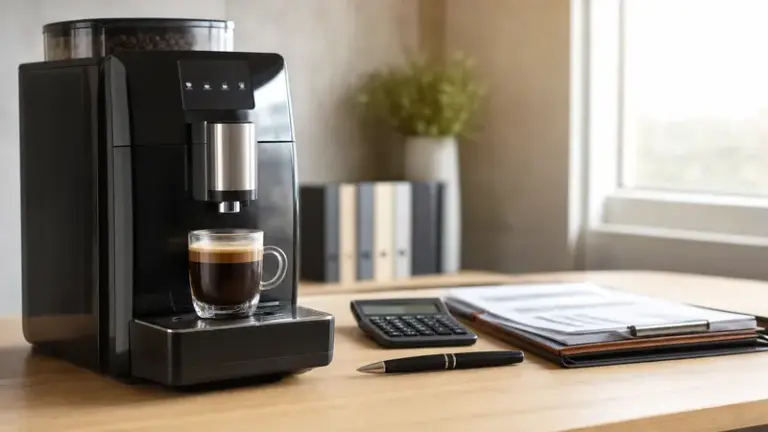
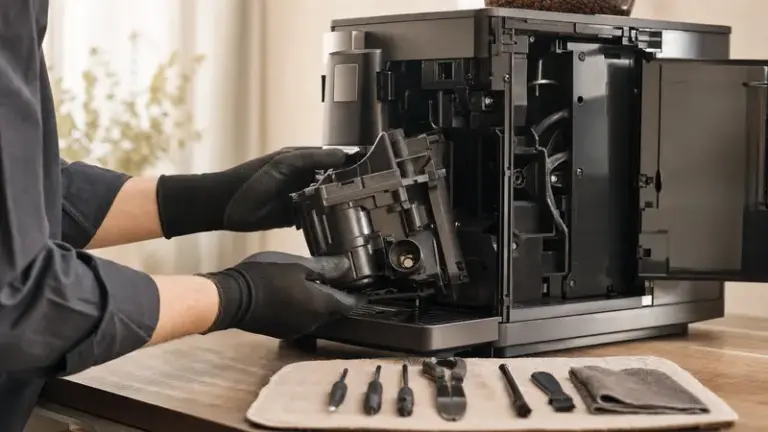

Start here if you are new
If you have been asked to “sort out the coffee”, begin with the workplace rather than a machine shortlist.
- Read coffee in the workplace to establish who the service is for, what people expect and who will run it.
- Move to office coffee machines to compare equipment types against those needs.
- Use buying and leasing to turn the shortlist into a clear specification and compare written offers.
Before contacting suppliers, record typical attendance, visitor demand, preferred drinks, opening hours and the proposed location. Add the person responsible for cleaning. “Everyone will help” is not an operating plan.
What office coffee should achieve
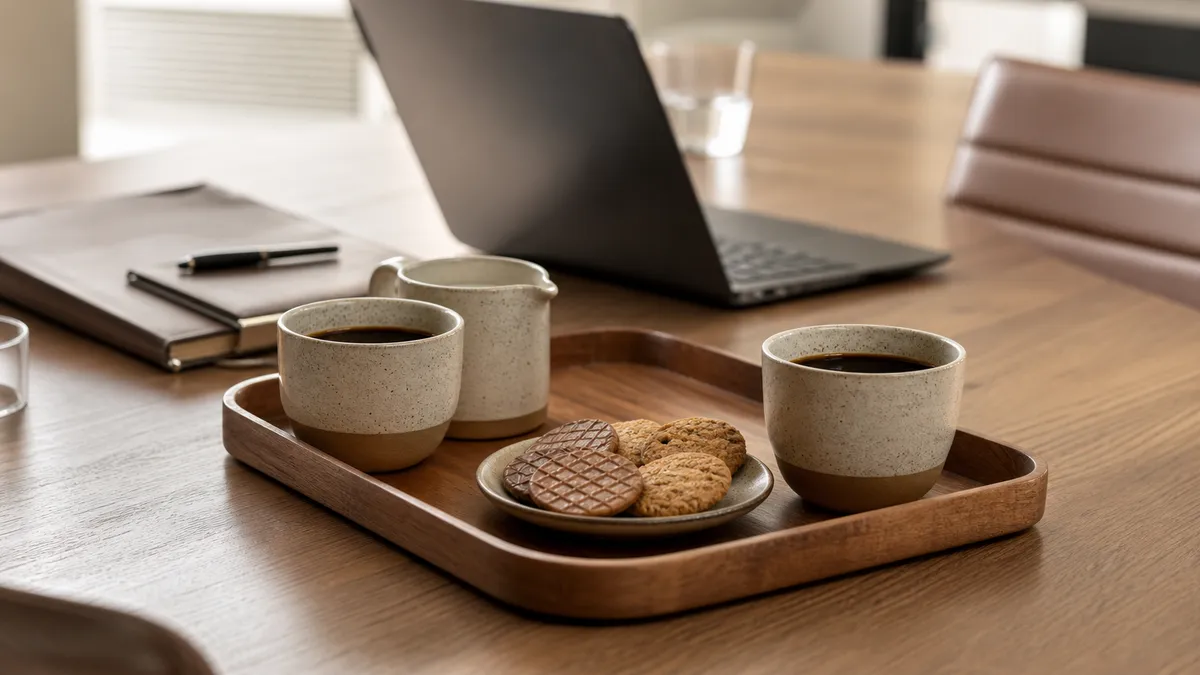
Treat coffee as everyday hospitality: something staff can enjoy during a break and visitors can be offered without a scramble through cupboards. The aim need not be an extensive menu. A dependable black coffee, a milk option and a practical decaffeinated choice may be a better brief than a screen full of drinks nobody wants.
Ask staff what they will actually use, including people who do not drink coffee. Keep access to drinking water distinct from the coffee service, and consider tea, suitable milk alternatives and accessible controls.
For a reception area, prioritise straightforward operation and presentation. For a shared kitchen, prioritise queues, replenishment and cleaning. For shifts, ask who takes responsibility when the usual office team has gone home.
Find the right part of this guide
| Your next decision | Guide | When to read it |
|---|---|---|
| What equipment fits? | machine types | Compare brewing systems before considering individual models. |
| Which manufacturer and support network? | UK machine brands | Investigate published specifications, local support and supplier responsibilities. |
| What should the service provide? | workplace coffee | Set expectations for staff, visitors, accessibility and day-to-day ownership. |
| How should we acquire it? | buying, leasing and renting | Compare ownership, contractual commitments and what each quotation includes. |
| Can we install and maintain it? | installation and maintenance | Check the site, water supply, cleaning arrangements and engineering support. |
| What changes in our setting? | coffee for different workplaces | Adapt the brief for small offices, shared premises, shift work and other environments. |
Choosing office coffee machines
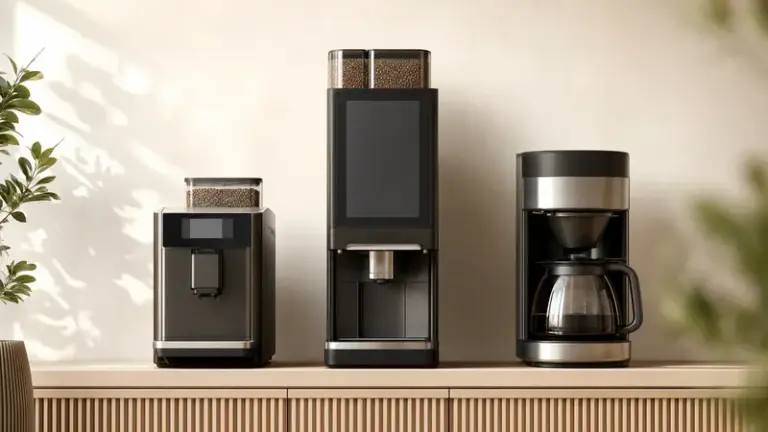
Compare systems using the same criteria: drinks required, peak demand, user involvement, cleaning work and installation requirements. The following suitability judgements are editorial guidance, not manufacturer capacity ratings.
| System | How it makes coffee | Best suited to | Main limitation |
|---|---|---|---|
| Bean-to-cup | Grinds whole beans and automatically brews individual drinks; milk arrangements vary | Shared self-service where freshly ground coffee and drink choice matter | Grounds, water and any milk system need an organised care routine |
| Batch filter | Brews ground coffee through a filter into a jug or holding vessel | Meetings and teams mainly wanting black coffee together | Requires batch planning; espresso-style milk drinks need separate equipment |
| Capsule or pod | Brews a prepared portion in a compatible machine | Intermittent use and individually selected coffees | Compatibility and the route for used capsules need checking |
| Instant vending | Mixes soluble ingredients with water | Straightforward self-service where soluble drinks meet the brief | Does not brew freshly ground coffee |
| Traditional espresso | An operator prepares coffee in a portafilter, the removable handle holding the grounds | Staffed hospitality with someone trained to prepare drinks | Requires operator attention, a suitable grinder and a cleaning routine |
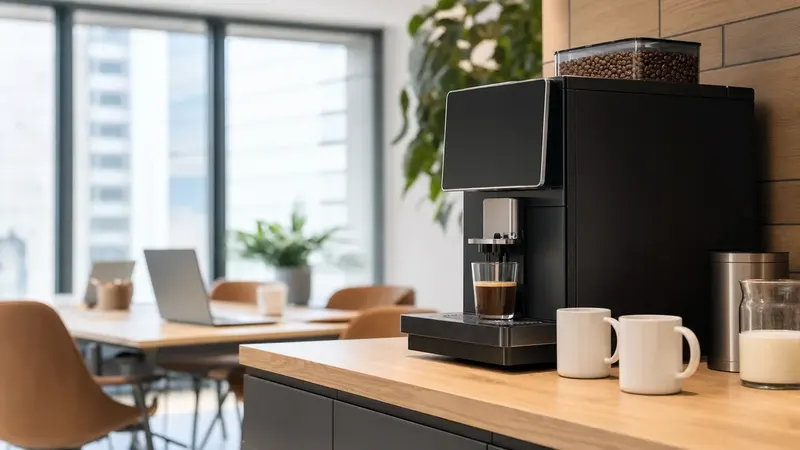
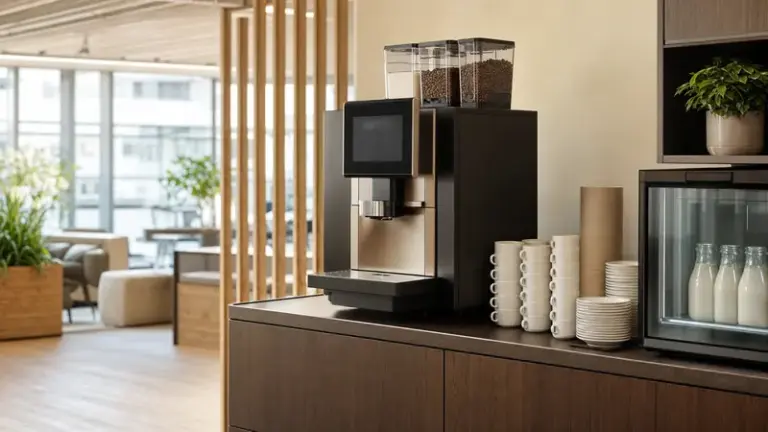
A bean-to-cup machine can use fresh milk, powdered ingredients or a separate milk arrangement, depending on its configuration. Check the exact version quoted: a photograph of a machine beside a milk fridge does not establish that the fridge is included.
Manufacturer specifications describe claimed capabilities. Ask for a demonstration using your intended cup sizes and drink mix rather than accepting an unexplained “cups per day” figure.
Capacity: daily volume and the busiest break
Make a demand estimate from people present, not people employed. As an illustrative assumption, 40 people attending, with 25 coffee drinkers taking two drinks each, means 50 staff coffees a day. Add visitors and meetings separately.
Then test the peak. If 15 people want a drink during the same 10-minute break, the supplier needs to demonstrate that sequence, including milk preparation, recovery and user changeover. These figures describe a hypothetical workplace, not a recommended machine rating.
Ask how often the water tank, bean hopper, grounds container and drip tray need attention under that pattern. For a particularly busy meeting area, consider whether batch filter coffee should handle the group demand while another system serves individual drinks.
Use UK office coffee machine brands once the required machine class is clear. Compare the local supplier and support arrangement as carefully as the maker’s name.
Buying, leasing or renting
Choose the acquisition route after defining the service, not before.
Buying outright gives the workplace ownership of the equipment. Ask separately about warranty, installation, training and maintenance rather than assuming ownership includes support.
Leasing provides use of equipment under an agreement without necessarily transferring ownership. End-of-term arrangements vary. Do not confuse a lease with hire purchase, which is intended to lead to ownership once its contractual conditions are met.
Renting also provides use rather than ownership. Do not assume the word means a short commitment, unrestricted cancellation or an inclusive service package. Read the actual agreement.
For every route, obtain written answers to these questions:
- Who owns the equipment, and who is the contractual counterparty?
- What are the minimum term, renewal arrangements and notice requirements?
- Are ingredients tied to one supplier or a minimum order?
- Which breakdowns, parts, visits and routine tasks are included?
- What happens if attendance changes, the office moves or the machine becomes unsuitable?
- Who arranges collection and any reinstatement when the agreement ends?
The detailed buying and leasing guide is the next stop before comparing offers. Request itemised written quotations against the same specification.
What drives cost per cup?
Cost per cup is meaningful only when the calculation includes the whole service. Beans alone do not describe what it takes to provide a drink.
Include equipment over the chosen comparison period, installation, ingredients, water treatment, cleaning products, servicing, utilities, staff time and waste collection. Record any contract minimums, exclusions and end-of-agreement obligations separately.
For ingredients, establish the actual recipe: grams of coffee, millilitres of milk, powdered ingredients, syrups and any disposable cup or lid. Include discarded milk, unsuccessful drinks and unused batches rather than counting only the drinks served.
A calculation you can adapt
Use one period for everything, such as a working year:
- Estimate drinks actually served during that period.
- Calculate ingredient use from the recipes and expected wastage.
- Add equipment and service commitments attributable to the same period.
- Add installation, water treatment, cleaning, utilities, labour and waste arrangements on a consistent basis.
- Divide the total expenditure by drinks served.
For a non-money example, an assumed 10 g coffee dose across 80 drinks requires 800 g of beans before wastage. If 40 drinks each use an assumed 150 ml of milk, that is 6 litres before wastage. These are calculation inputs, not recommended recipes.
State whether your comparison includes VAT, and have finance confirm which VAT the organisation can recover. Avoid comparing an ingredients-only estimate with an all-inclusive quotation.
Installation, water and plumbing
Do a site survey before committing to equipment. Check the complete installed footprint, including the milk fridge, filters, open doors, bean filling and engineer access, not just the machine’s external dimensions.
Confirm worktop suitability, electrical requirements, ventilation, nearby washing facilities and safe routes for carrying hot drinks. Use the exact manufacturer installation instructions rather than assuming a particular socket, clearance or drainage arrangement will suit every model.
Tank-fed or plumbed-in?
A tank-fed machine needs someone to refill and clean its reservoir. A plumbed-in machine connects to the water supply, but that does not automatically mean its waste tray drains away: check drainage separately.
For mains-connected equipment, confirm water pressure, an accessible isolation valve and suitable backflow protection. Backflow means water moving towards the supply when it should be flowing away from it, potentially carrying contamination.
England and Wales use the Water Supply (Water Fittings) Regulations 1999. Scotland has its own water fittings byelaws, and Northern Ireland has separate regulations. Have the installer confirm compliance and any advance notification required by the local water supplier.
Match treatment to the actual water
Obtain the local supplier’s hardness information and have the installer assess the water at the proposed machine. Hardness describes dissolved minerals; alkalinity describes the water’s ability to neutralise acid. They are related considerations, not interchangeable measurements.
Hardness may be reported in milligrams per litre as calcium carbonate, Clark degrees or German degrees. Give the supplier the original result and its unit rather than entering an unconverted number into the machine.
SCA guidance helps explain water’s effect on coffee extraction and flavour. It is not a substitute for the equipment manufacturer’s water limits. Ask for a treatment specification and replacement schedule covering both drink quality and machine protection.
The installation and maintenance guide is the place to turn those checks into a handover checklist.
Choosing beans and milk people will use
Taste candidate coffees through the proposed equipment, using the drinks people normally order. As an editorial starting point, compare an approachable chocolate-and-nut profile with a brighter, fruitier alternative rather than choosing solely from roast descriptions.
Include decaffeinated coffee in the trial. Ask how it will be served: a separate grinder, compatible bypass arrangement, capsule option or another clearly defined method.
For milk, test dairy and any required plant-based alternatives in the actual system. Check compatibility, storage instructions and the cleaning procedure when changing products.
Keep ingredient packaging available for allergen checks. A plant-based drink is not automatically safe for everyone with a food allergy, and shared milk equipment requires a considered cross-contact procedure. Do not promise an allergen-free drink without a process that supports that claim.
Hygiene, cleaning and servicing duties
Assign a named person and a deputy. Give them the manufacturer’s instructions, training and enough working time to complete the tasks.
Separate three jobs: routine user care, technical maintenance and any statutory examination. A service visit does not replace cleaning, and a cleaning cycle does not establish that a pressure system has been examined.
Build a written care routine
Use the model’s instructions to specify:
- Opening checks: water supply, milk storage, cleanliness, waste capacity and any warnings.
- During use: replenishment, spills, grounds and tray emptying, plus required rinsing.
- Closing or scheduled cleaning: coffee and milk circuits, removable components and surrounding surfaces.
- Periodic work: filter replacement, descaling where instructed and planned servicing.
Do not assume a brief rinse is the same as the prescribed cleaning programme. Manufacturers distinguish between cleaning tasks and schedules, and the requirements vary by machine.
For refrigerated milk, follow its storage instructions and the equipment requirements. FSA catering guidance recommends setting fridges at 5°C or below; treat that as operating guidance, not as a universal statement of the legal maximum throughout the UK.
Agree who reports faults, whether a response commitment means attendance or restoration, and what happens while the machine is unavailable. Keep cleaning, training and service records together.
UK legal and tax points in plain words
The following is a starting checklist, checked in November 2026. It is not a substitute for a site-specific assessment or advice from your accountant.
Drinking water and welfare are not coffee provision
In Great Britain, regulation 22 of the Workplace (Health, Safety and Welfare) Regulations 1992 requires an adequate supply of wholesome drinking water. Regulation 25 concerns suitable and sufficient rest facilities and arrangements for eating meals.
Neither requirement creates a general duty to supply free coffee. Northern Ireland has its own Workplace (Health, Safety and Welfare) Regulations 1993. Keep the optional coffee decision separate from meeting the applicable welfare duties.
Free staff refreshments and employee tax
Section 317 of the Income Tax (Earnings and Pensions) Act 2003 can exempt workplace meals and light refreshments from an employee benefit charge. HMRC’s conditions include reasonable provision on the employer’s premises or in a canteen, availability to all employees or all employees at a particular location, and restrictions on salary-sacrifice arrangements.
This is not the trivial benefits exemption. Ask payroll or finance to check the arrangement, especially where provision is selective or linked to remuneration.
VAT on ingredients, equipment and drinks
Coffee sold as a food product, including beans, ground and instant coffee, is generally zero-rated. Dairy milk is generally zero-rated, and HMRC also accepts specified milk alternatives as zero-rated food.
Coffee machines, ordinary equipment hire, servicing and filters are normally standard-rated. Request the VAT treatment of each quotation line, particularly where equipment, ingredients and services are bundled.
VAT Notice 709/1 distinguishes paid catering from free employee provision. Hot drinks sold in the course of catering are generally standard-rated, but the notice says no VAT is due on catering supplied to employees without payment, including free-use vending. Input VAT recovery is a separate question for finance.
Steam boilers and pressure systems
In Great Britain, a coffee machine with a steam boiler can fall within the Pressure Systems Safety Regulations 2000. Steam counts as a relevant fluid at any pressure.
Check the particular machine with the supplier and HSE guidance. Where applicable, a written scheme of examination and examination are required before use. Routine servicing is not a substitute. For Northern Ireland, obtain advice on the applicable local requirements rather than treating the GB regulations as UK-wide.
Coffee grounds and workplace recycling
England’s Simpler Recycling requirements took effect on 31 March 2025, with micro-firms having until 31 March 2027. Micro-firms have fewer than 10 full-time-equivalent employees across the business, not simply at one site.
Coffee grounds belong in the separated food-waste stream. Packaging labelled compostable, including compostable pods, must not be assumed suitable for that stream: DEFRA directs workplaces to residual waste or a dedicated collection.
Scotland, Wales and Northern Ireland have separate waste rules. Confirm the arrangements with the relevant regulator and commercial waste collector.
Before the first office coffee is served
Ask for a handover that demonstrates the complete routine: making drinks, replenishing supplies, cleaning, recognising faults and contacting support. Have the person who will do the work perform the routine, rather than simply watching an installer.
Record the agreed settings, ingredient list, water treatment, cleaning products, service contacts and contract documents. For workplaces with unusual hours, shared facilities or public access, use coffee for every workplace to identify what needs adapting.
Finally, agree how you will judge the service: drink acceptance, queues, waste, cleaning completion and reliability. Review actual use before expanding the menu or changing equipment.
FAQ
Should we provide coffee free or ask staff to contribute?
Make this a workplace policy decision before choosing payment features. Explain who the service covers, whether visitors are included and how exceptions will be handled. Ask finance to confirm the tax and VAT treatment of the proposed arrangement. Compare the administration involved as well as the equipment needed to operate it.
Is one central machine better than several smaller stations?
Neither arrangement is automatically better. Compare walking routes, peak queues, accessibility and responsibility for cleaning each station. Ask suppliers to demonstrate the proposed layout against the same demand brief. If considering several stations, specify who will replenish and maintain each one rather than treating them as a single shared task.
How should we run a useful staff tasting?
Use the intended equipment and normal drink sizes, and include both black-coffee and milk-drink users. Offer clearly identified samples without presenting a preferred winner, then ask about flavour, strength and everyday suitability. Record the recipes and ingredients so the chosen drink can be reproduced after installation.
Where to go next
Read Office Coffee Machines to turn the equipment overview into a shortlist, then Buying and Leasing Office Coffee Machines to compare contractual routes. Use Office Coffee Installation and Maintenance before the site survey and Coffee for Every Workplace when adapting office coffee to your particular setting.
Sources
Undated sources below are identified by their web edition accessed in November 2026. Manufacturer material was used for equipment functions and care instructions, not as independent evidence of reliability.
- HSE, Workplace health, safety and welfare, L24, second edition, 2013.
https://www.hse.gov.uk/pubns/priced/l24.pdf - UK legislation, Workplace (Health, Safety and Welfare) Regulations (Northern Ireland) 1993, original statutory instrument.
https://www.legislation.gov.uk/nisr/1993/37/pdfs/nisr_19930037_en.pdf - Bravilor Bonamat, Sego: Espresso machines, undated manufacturer brochure; Filter coffee machines and Instant machines, web editions accessed 2026.
https://admin.b2b.bravilor.com/files/1084896
https://www.bravilor.com/en-gb/filter-coffee-machines/
https://www.bravilor.com/en/products/instant-and-liquid-machines-en/ - Nespresso Professional, Zenius machine fact sheet, undated manufacturer document. Used for capsule operation, not UK model specifications.
https://www.nespresso.com/shared_res/mos/free_html/au/NespressoProfessional-FactSheet/Professional_Machine_Fact_Sheet_ZENIUS_Interactive_A4.pdf - La Marzocco, Understanding Commercial Espresso Machine Configurations, 2021; Using a burr espresso grinder, 2023.
https://www.lamarzoccousa.com/news/blog/understanding-commercial-espresso-machine-configurations/
https://www.lamarzocco.com/uk/en/using-a-burr-espresso-grinder/ - British Business Bank, Other forms of finance, web edition accessed 2026.
https://www.british-business-bank.co.uk/business-guidance/guidance-articles/finance/other-forms-of-finance - Water Regs UK, Whitegoods, version 1.4, July 2025; Booklets, web edition accessed 2026.
https://www.waterregsuk.co.uk/downloads/publications/info_leaflets/whitegoods.pdf
https://www.waterregsuk.co.uk/publications/booklets/ - Thames Water, Hard water and CON29DW Residential sample report, undated web resources.
https://www.thameswater.co.uk/help/water-and-waste-help/water-quality/hard-water
https://www.thameswater.co.uk/media-library/home/property-searches/CON29DW-Residential-search-sample-report.pdf - Specialty Coffee Association, Water and Coffee Acidity: How to Adapt Your Water for Different Extraction Methods, 25 Magazine, issue 9, undated web edition.
https://sca.coffee/sca-news/25/issue-9/english/water-and-coffee-acidity-how-to-adapt-your-water-for-different-extraction-methods-25-magazine-issue-9-pxjby - Franke Coffee Systems, Cleaning Instructions, web edition accessed 2026.
https://www.franke.com/us/en/coffee-systems/resources/cleaning-information/cleaning-instructions.html - Food Standards Agency, Safer Food, Better Business: Chilled storage and display, undated guidance sheet.
https://assets.publishing.service.gov.uk/media/69ca7e5b76f83be521bb3d85/sfbb-chilling-01-chilled-storage-and-display_2.pdf - Food Standards Agency, Allergen guidance for food businesses, 2025 web edition; guidance on vegan and free-from food, retrieved 2026.
https://www.gov.uk/government/publications/allergen-guidance-for-food-businesses
- HMRC, Employment Income Manual, EIM21670 and EIM21671, current web editions accessed 2026.
https://www.gov.uk/hmrc-internal-manuals/employment-income-manual/eim21670
https://www.gov.uk/hmrc-internal-manuals/employment-income-manual/eim21671 - HMRC, Food products: VAT Notice 701/14, updated June 2026; VAT Food Manual, VFOOD7660, updated July 2024.
https://www.gov.uk/guidance/food-products-and-vat-notice-70114
https://www.gov.uk/hmrc-internal-manuals/vat-food/vfood7660 - HMRC, Catering, takeaway food: VAT Notice 709/1, updated June 2026, particularly sections 2.4 and 5.8.
https://www.gov.uk/guidance/catering-takeaway-food-and-vat-notice-7091 - HMRC, How VAT works: How much VAT you must charge, current web edition accessed 2026.
https://www.gov.uk/how-vat-works/how-much-vat-you-must-charge - HSE, Pressure Systems Safety Regulations 2000 and Introduction to pressure equipment, current web editions accessed 2026.
https://www.hse.gov.uk/pressure-systems/pssr.htm
https://www.hse.gov.uk/pressure-systems/about.htm - DEFRA, Simpler recycling: workplace recycling in England, updated October 2025.
https://www.gov.uk/guidance/simpler-recycling-workplace-recycling-in-england - GOV.UK, Dispose of business or commercial waste: Your responsibilities, current web edition accessed 2026.
https://www.gov.uk/dispose-business-commercial-waste
This guide was researched from official UK guidance, water-industry and SCA resources, and manufacturers’ published documents; demand examples are explicitly hypothetical and no first-hand machine testing is claimed.
Last checked: November 2026