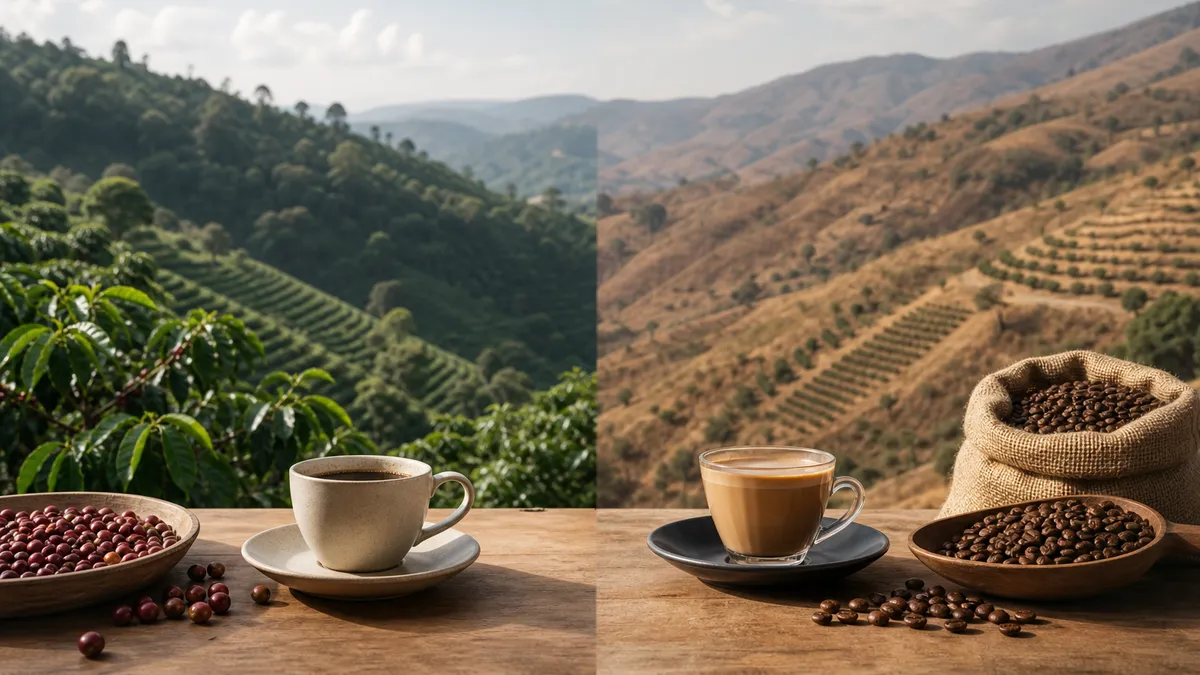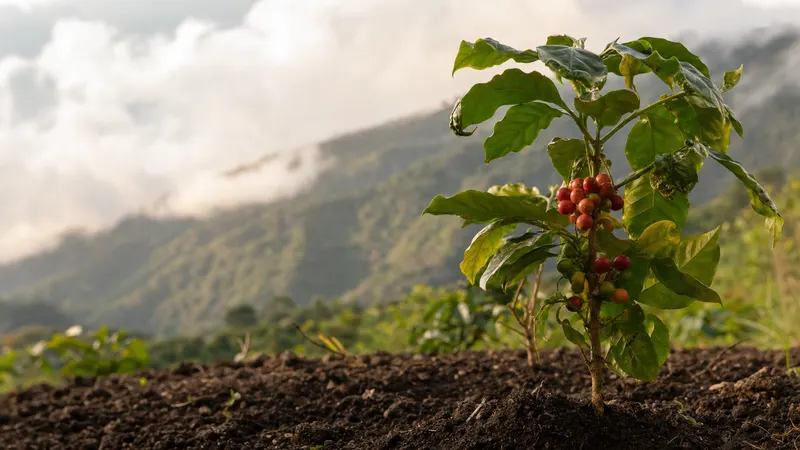
Coffee terroir is the influence of a growing place, including its climate, soil, altitude and local conditions, on the character of coffee. It works through the coffee plant and the farmer’s decisions, rather than giving every bean from a country the same flavour.
In short
- Treat an origin name as a starting point, not a promise of particular tasting notes.
- Read altitude alongside temperature, latitude and shade, rather than ranking coffees by height alone.
- Soil affects growing conditions, but there is no dependable formula linking a soil type to a specific flavour.
- Microclimates can create meaningful differences within the same growing region.
- To explore place through tasting, compare coffees with similar varieties, processing and roast levels.
Guides in Coffee Terroir
 Coffee Altitude and TemperatureLearn how altitude and temperature shape coffee maturation, density and flavour, why latitude matters, and what SHB grading really tells you about beans.Read the guide
 Coffee MicroclimatesDiscover how slope aspect, shade, wind and humidity shape coffee microclimates, and how careful plot comparisons separate growing effects from processing.Read the guide
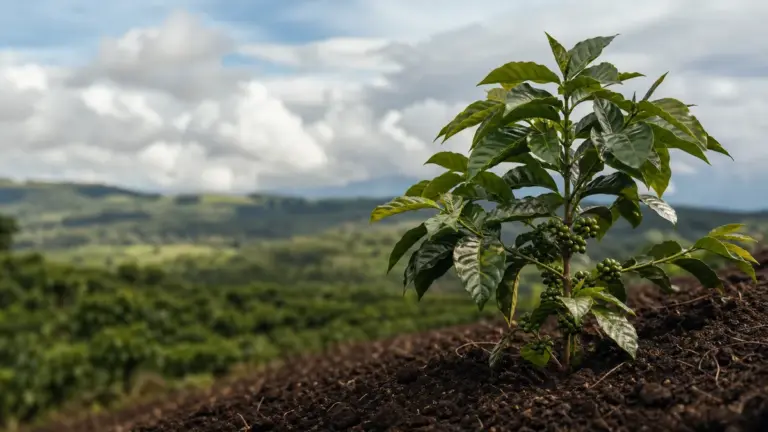 Coffee Terroir ExplainedWhat is coffee terroir? Understand how climate, soil, variety and processing interact, what research supports, and how to compare coffees fairly.Read the guide
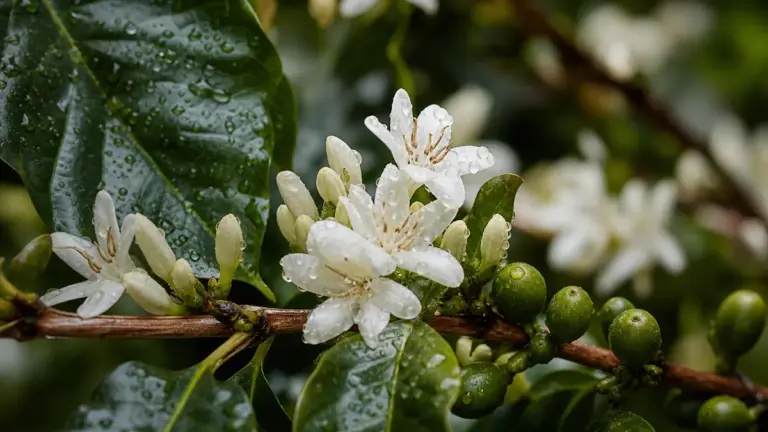 How Climate Variations Affect Coffee GrowingHow rainfall, dry seasons, frost and drought affect coffee growing, plus what El Niño, La Niña and climate change projections mean for the crop.Read the guide
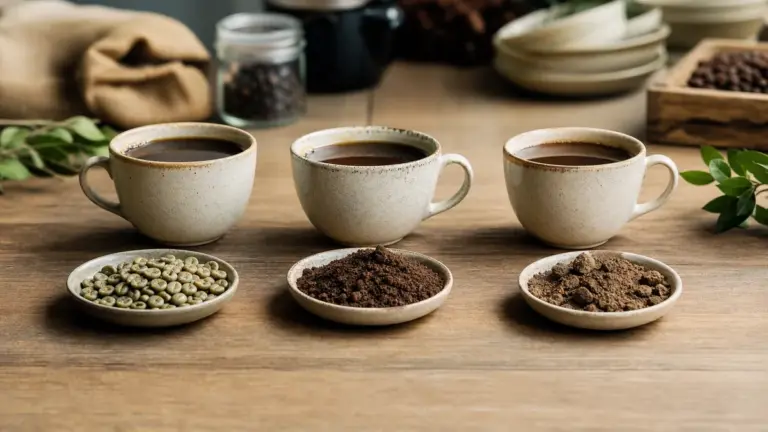 How Coffee Terroir Affects Flavour ProfilesLearn how altitude, temperature, soil and rainfall shape coffee flavour, and compare acidity, aroma and body without mistaking clues for proof of terroir.Read the guide
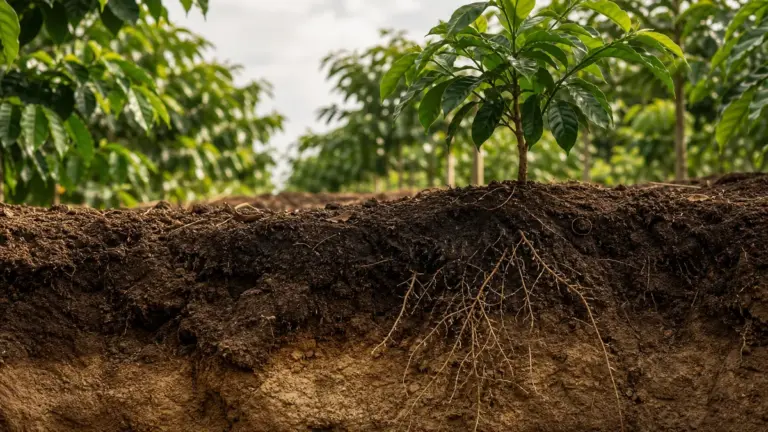 How Soil Composition Affects CoffeeHow volcanic soils, pH, organic matter, drainage and nutrients affect coffee plants, plus what research can really tell us about flavour in the cup.Read the guide
Start here if you are new
- Begin with coffee terroir explained for the meaning of the term and the relationship between place, plants and farming.
- Read about the impact on flavour profiles to connect growing conditions with what you notice in a cup.
- Move to altitude and temperature to understand one of the most frequently quoted details on a coffee bag.
For the wider context, beans and origins connects this subject with coffee’s botanical identity and producing places. This hub concentrates on how to interpret place, rather than providing a catalogue of regional tasting notes.
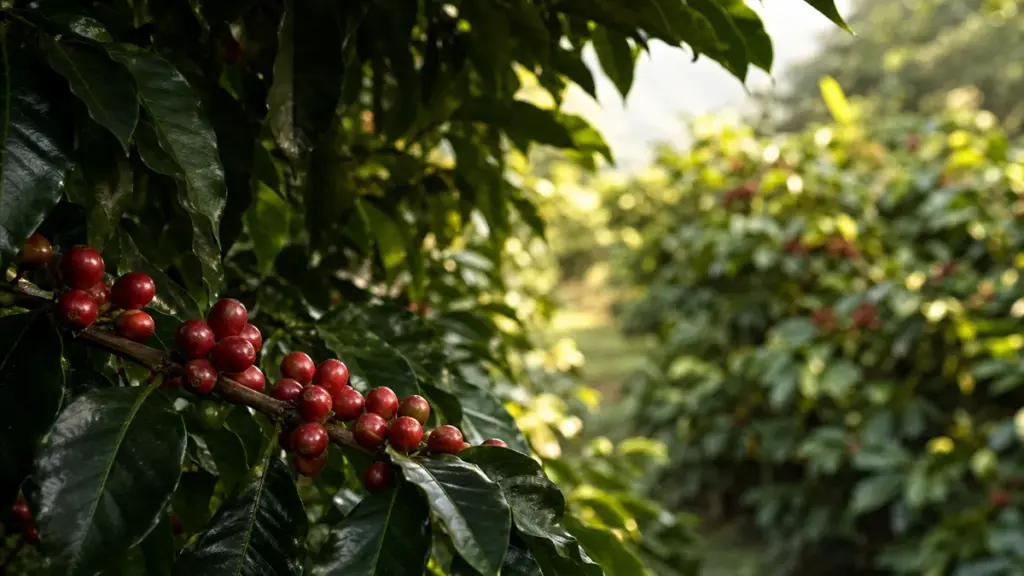
What coffee terroir includes
Terroir brings together the conditions in which coffee grows and the way a plant responds to them. Temperature, water availability, sunlight and soil interact with plant genetics and agricultural management. The result is not simply a geographical address, but a set of conditions that can influence the harvested coffee.
The boundaries of the term need care. A narrower definition concentrates on the growing environment and farming before harvest. A broader interpretation includes locally established processing practices, especially where weather helps determine how coffee can be dried. This guide recognises that broader interpretation while keeping growing conditions and processing distinct when explaining flavour.
A useful distinction is between origin, which tells you where a coffee comes from, and terroir, which asks how that place contributes to its character. An origin label alone does not explain the contribution.
Use the overview below to choose the next question to investigate.
| Part of the picture | What to investigate | What not to assume | Best next read |
|---|---|---|---|
| Flavour | Aroma, acidity, texture and aftertaste | A tasting note proves a particular origin | Impact on Flavour Profiles |
| Altitude | Temperature and maturation conditions | Higher always means better | Altitude and Temperature |
| Soil | Texture, water conditions and nutrient availability | A named soil guarantees a named flavour | Soil Composition |
| Climate | Temperature, rainfall and their seasonal patterns | Annual averages tell the whole story | Climate Variations |
| Microclimate | Shade, exposure and local variation | Every part of a region grows coffee identically | Coffee Microclimates |
The table is a reading map, not a scoring system. None of these factors should be used on its own to declare a coffee superior.
From growing place to flavour
Growing conditions can affect the composition of green coffee, meaning the unroasted seed. Roasting and preparation then influence the sensory experience through which we encounter those differences. Terroir is therefore something assessed through a finished drink, not something tasted independently of everything that happened after harvest.
There is research connecting growing conditions with recognisable sensory differences. In a field comparison of 16 plots on Réunion, mean air temperature during seed development was associated with both green-coffee volatile compounds and beverage character. Cooler conditions were associated with fruity character and acidity, while warmer conditions were linked with greener and earthier profiles.
That is evidence from a particular study, not a universal rule for predicting a bag’s contents. It does not establish that every cool site produces fruit-led coffee, or that warmth inevitably produces an unpleasant cup.
For your own notes, separate description from judgement. “Citrus-like aroma, pronounced acidity and a drying finish” says more than “interesting terroir”, and does not require you to decide immediately whether you like the coffee.
The World Coffee Research Sensory Lexicon provides a shared vocabulary for this kind of description. Its second edition identifies 110 flavour, aroma and texture attributes, with references for assessing intensity.
Read how place affects flavour when you want to connect the growing environment with sensory language without treating tasting notes as geographical proof.
Altitude and temperature: read them together
Altitude is useful because it often accompanies changes in growing temperature. Cooler conditions can extend coffee maturation, giving a different developmental environment from a warmer site. A systematic review found that higher altitude was generally associated with improved sensory attributes, but also identified variation and exceptions.
The practical lesson is not to discard altitude, but to stop treating it as a league table. World Coffee Research adjusts its recommended altitude guidance for latitude because temperature conditions vary with distance from the equator. The same elevation is therefore not an equivalent growing environment everywhere.
Shade and exposure add further context. A sheltered plot and an exposed plot need not experience identical conditions simply because their elevations match.
When reading a bag or asking a roaster about a coffee, look for an explanation rather than the largest elevation figure. Does the producer describe a cool growing season, a particular slope or a shaded production system? Those details help turn a height measurement into useful context.
Use altitude and temperature for the fuller explanation of this relationship. It is the next read if you have been choosing beans mainly by metres above sea level.
Soil composition: growing conditions, not a flavour recipe
Soil matters, but the relationship between soil and cup character is more complicated than a mineral-to-flavour translation. Soil texture, acidity and nutrient conditions are among the variables investigated in coffee-quality research.
A study of 139 plantations in Chiapas, Mexico, found relationships between soil properties, bean composition and cup attributes. However, plantation altitude and bean moisture were the most important variables explaining sensory quality in that dataset. This was an observational relationship study, not a controlled demonstration that changing one soil nutrient would produce a chosen flavour.
That distinction matters when reading claims about volcanic soils or mineral richness. Such descriptions can provide useful agricultural context, but they do not establish what an individual coffee will taste like. The wider research literature does not provide a settled formula connecting particular soil nutrients with particular cup characteristics.
Read soil composition when a coffee description makes soil central to its story. It will help you distinguish an explanation of growing conditions from a sensory claim that needs separate evidence.
Climate variations: patterns matter more than a headline average
Climate describes the longer-term conditions of a growing area; weather is what happens during a particular period. For coffee quality, the timing of conditions matters as well as their overall level.
Research on water availability illustrates why simple rules fail. A systematic review found mixed results for water stress, with outcomes varying between locations and developmental circumstances. “Drier produces better coffee” is therefore no more dependable than “more rainfall produces better coffee”.
Ask what the climate information actually describes. Is it a regional annual average, conditions during seed development, or weather close to harvest? These are different pieces of evidence, and should not be treated as interchangeable.
Climate also gives a reason to be cautious about fixed regional flavour descriptions. The place name may remain unchanged while the conditions experienced by a crop vary.
Choose climate variations for the broader view of temperature, rainfall and seasonality. It is especially useful when you want to understand why familiar origins should not be expected to taste identical every harvest.
Coffee microclimates: why nearby plots can differ
A microclimate is the local set of conditions experienced within a smaller area, such as a shaded part of a farm or an exposed slope. It helps explain why a regional climate summary cannot describe every coffee tree’s growing environment.
Shade offers a clear example. Field research in Chiapas found that lower shade cover was associated with greater fluctuations in temperature, humidity, solar radiation and soil moisture. The differences were clearer in how conditions changed through time than in seasonal averages alone.
Slope exposure can matter too. Research in Costa Rica found generally superior beverage attributes from east-facing slopes in the areas studied, with the authors suggesting better exposure to morning sunlight as an explanation. That is a location-specific finding, not a recommendation that all coffee should grow on east-facing land.
Nor does shade automatically improve the cup. A controlled field experiment in Costa Rica found improved bean characteristics and beverage quality under shade. Research in southern Colombia found different responses between locations, including reduced sensory quality under shade at the higher-altitude site.
These results are useful together: the effect of a farming practice depends on the environment in which it operates.
Read coffee microclimates when you want to move from country and region to the conditions of an individual farm or plot.
How to judge a terroir claim
The strongest explanation connects a specific growing condition with a plausible plant response and supporting evidence. “Cooler conditions extended maturation in this study” is more informative than “mountain-grown beans have more character”.
Keep these questions separate:
- What was recorded? A farm location, a temperature measurement and a tasting description are different kinds of information.
- What was compared? If varieties, processing and roasting also differed, place was not the only possible explanation.
- Was the result descriptive or preferential? A coffee tasting different is not the same as a taster preferring it.
- How widely does the finding apply? A result from one production system may not transfer to another.
The Specialty Coffee Association’s Coffee Value Assessment makes useful distinctions here. Physical assessment examines characteristics such as defects and moisture; descriptive assessment records sensory attributes; affective assessment records impressions of quality; extrinsic assessment records information beyond the cup.
For terroir, this means a favourable quality judgement cannot replace a description of character, and neither can replace evidence about growing conditions.
Explore terroir through a careful comparison
For a practical introduction, ask a roaster to help you find coffees that differ in growing place while keeping variety, processing and roast level as similar as possible. Treat this as an exploratory tasting, not an experiment capable of isolating terroir completely.
Use this approach:
- Record the available producer, region, variety, process and roast information before tasting.
- Prepare the coffees using the same equipment, water and recipe.
- Taste without looking at the origin names, then write separate notes for aroma, flavour, texture and preference.
- Reveal the information and identify what differed besides place.
- Keep your conclusion proportionate: describe what you noticed before proposing why it happened.
If several production details are unknown, leave the explanation open. Learning to recognise uncertainty is part of understanding coffee terroir, not a failure to taste it.
FAQ
Can the same variety taste different in different places?
Yes, the same variety can perform differently under different growing conditions. World Coffee Research explicitly cautions that environment, soil nutrition, weather, tree age and farm management affect quality and other characteristics. For tasting comparisons, keeping the variety similar is useful, but processing and roasting still need attention before differences can reasonably be attributed to place.
Does terroir matter in robusta as well as arabica?
Yes, growing conditions can influence both arabica and robusta, although much of the research discussed here concerns arabica. A systematic review covering both species identified environmental and management influences on quality. Do not assume that a finding about an arabica variety transfers unchanged to robusta, or that the same conditions suit both.
Can you identify a coffee’s exact origin by tasting it?
Tasting alone should not be treated as proof of exact origin. Sensory analysis can reveal differences between coffees, but processing, roasting and preparation also influence what reaches the cup. Use flavour observations alongside documented traceability. Guessing an origin can be an enjoyable exercise, but it is a different task from verifying where coffee was grown.
Where to go next
Read Coffee Terroir Explained for the definition and its boundaries, then Impact on Flavour Profiles to develop the sensory side. Choose Altitude and Temperature for help interpreting elevation claims, or Coffee Microclimates to explore coffee terroir at the scale of a farm and its individual plots.
Sources
-
Southern Cross University researchers, Williams et al. Does Coffee Have Terroir and How Should It Be Assessed? Foods, 2022, volume 11, article 1907. Review covering definitions, processing and assessment.
URL: https://www.mdpi.com/2304-8158/11/13/1907 -
Ahmed et al. Climate Change and Coffee Quality: Systematic Review on the Effects of Environmental and Management Variation on Secondary Metabolites and Sensory Attributes of Coffea arabica and Coffea canephora. Frontiers in Plant Science, 2021, volume 12, article 708013.
URL: https://www.frontiersin.org/journals/plant-science/articles/10.3389/fpls.2021.708013/full -
World Coffee Research. Arabica Coffee Varieties: About the Catalog and What’s included. Living online catalogue, undated. Guidance on environmental variation and interpreting altitude recommendations.
URLs: https://varieties.worldcoffeeresearch.org/about-the-catalog
https://varieties.worldcoffeeresearch.org/about-the-catalog/whats-included -
World Coffee Research. Sensory Lexicon, version 2.0, October 2017.
URL: https://worldcoffeeresearch.org/resources/sensory-lexicon -
CIRAD researchers, Bertrand et al. Climatic factors directly impact the volatile organic compound fingerprint in green Arabica coffee bean as well as coffee beverage quality. Food Chemistry, 2012, volume 135. Research abstract retrieved through PubMed.
URL: https://pubmed.ncbi.nlm.nih.gov/22980845/ -
Morales-Ramos et al. On the soil-bean-cup relationships in Coffea arabica L. Journal of the Science of Food and Agriculture, 2020, volume 100. Research abstract retrieved through PubMed.
URL: https://pubmed.ncbi.nlm.nih.gov/32562262/ -
Lin, B. B. Agroforestry management as an adaptive strategy against potential microclimate extremes in coffee agriculture. Agricultural and Forest Meteorology, 2007, volume 144.
URL: https://www.sciencedirect.com/science/article/pii/S0168192307000548 -
CIRAD, ICAFE and collaborators, Avelino et al. Effects of slope exposure, altitude and yield on coffee quality in two altitude terroirs of Costa Rica, Orosi and Santa María de Dota. Journal of the Science of Food and Agriculture, 2005, volume 85.
URL: https://scijournals.onlinelibrary.wiley.com/doi/10.1002/jsfa.2188 -
CATIE, CIRAD and INRA researchers, Vaast et al. Fruit thinning and shade improve bean characteristics and beverage quality of coffee (Coffea arabica L.) under optimal conditions. Journal of the Science of Food and Agriculture, 2006, volume 86; first published online in 2005.
URL: https://scijournals.onlinelibrary.wiley.com/doi/10.1002/jsfa.2338 -
University of Copenhagen and collaborators, Bosselmann et al. The influence of shade trees on coffee quality in small holder coffee agroforestry systems in Southern Colombia. Agriculture, Ecosystems & Environment, 2009, volume 129. Publication record and author manuscript retrieved.
URLs: https://researchprofiles.ku.dk/en/publications/the-influence-of-shade-trees-on-coffee-quality-in-small-holder-co/
https://library.sweetmarias.com/wp-content/uploads/2020/08/The-influence-of-shade-trees-on-coffee-quality-in-small-holder-coffee-agroforestry-systems-in-Southern-Colombia.pdf -
Specialty Coffee Association. Coffee Value Assessment. Living framework overview, undated; physical, descriptive, affective and extrinsic assessment descriptions.
URL: https://sca.coffee/value-assessment
This guide was researched using live-retrieved scientific papers, research abstracts and official World Coffee Research and Specialty Coffee Association resources, distinguishing field associations from controlled experiments.
Last checked: November 2026