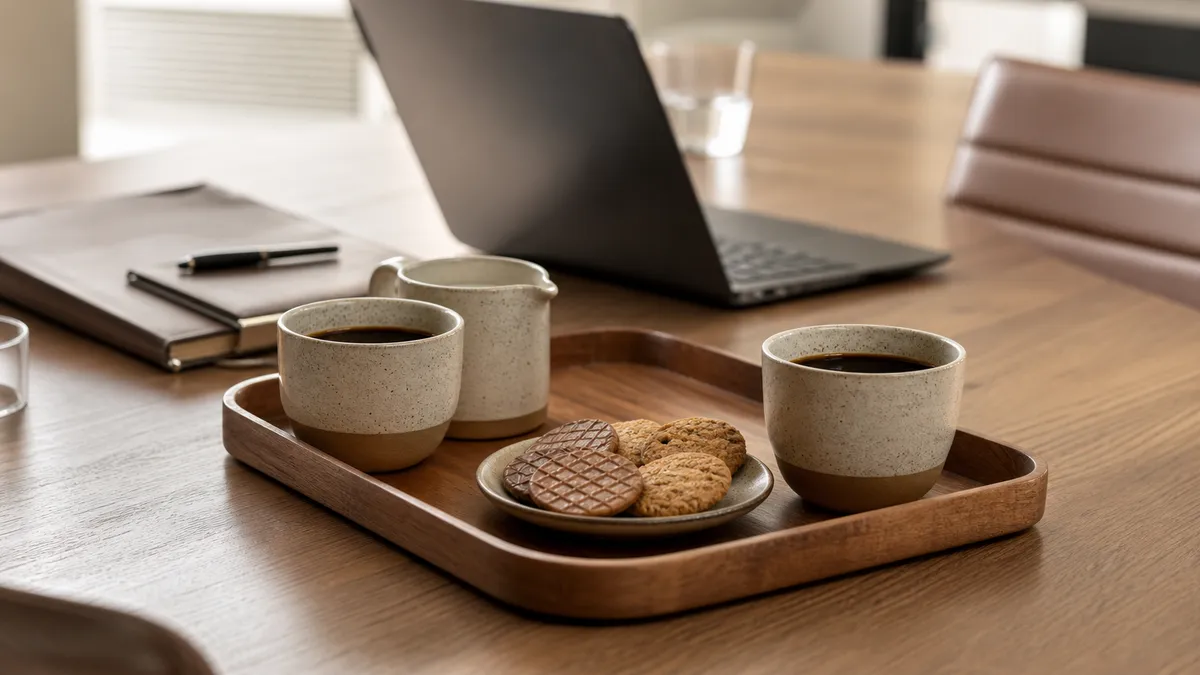
Good coffee in the workplace is best treated as a shared service: enjoyable drinks, a welcoming place to pause and a routine that someone takes responsibility for. This hub helps you connect coffee culture, station design, staff perks, visitor hospitality and sustainability, without assuming that a better machine automatically creates a better workplace.
In short
- Start with the people using the service, including non-coffee drinkers, visitors and colleagues working different shifts.
- Plan for busy periods, cleaning and replenishment, not just the number of employees on the payroll.
- Give the coffee station a named owner and a deputy, with clear responsibilities.
- Evaluate drink satisfaction separately from wider employee satisfaction.
- Check the waste collection route before choosing packaging or describing it as recyclable or compostable.
Guides in Coffee in the Workplace
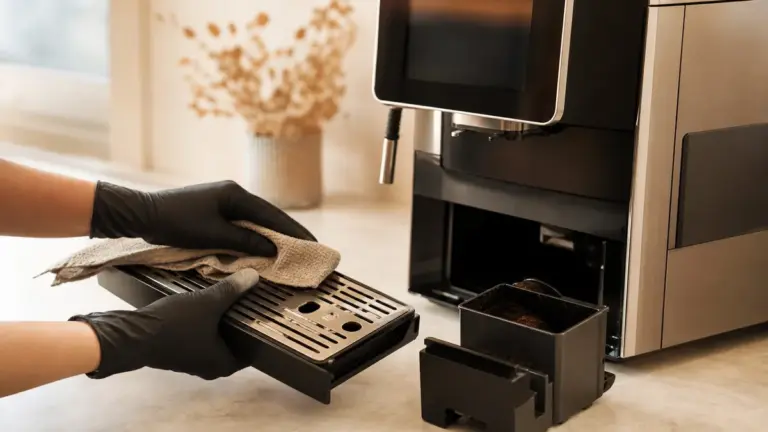 A Day in the Life of the Hardest Working Colleague in Your OfficeIt is first in, last out, and never once takes a day off. Meet the bean to cup machine that quietly keeps your office…Read the guide
 Coffee in the Workplace: The Complete GuidePlan better workplace coffee with evidence on breaks, equipment checks, inclusive perks, station design, sustainability and UK water and welfare duties.Read the guide
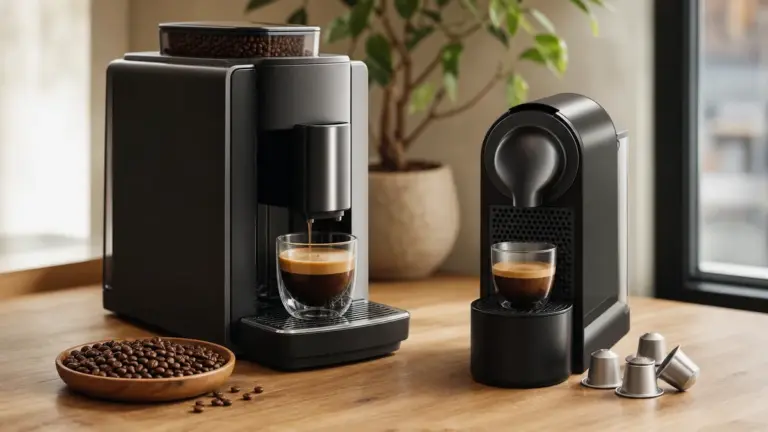 Coffee Shop Quality at Work: Why Bean to Cup Wins the OfficeYour team already knows what great coffee tastes like. Bean to cup brings coffee shop quality into the office, and makes the grounds easy…Read the guide
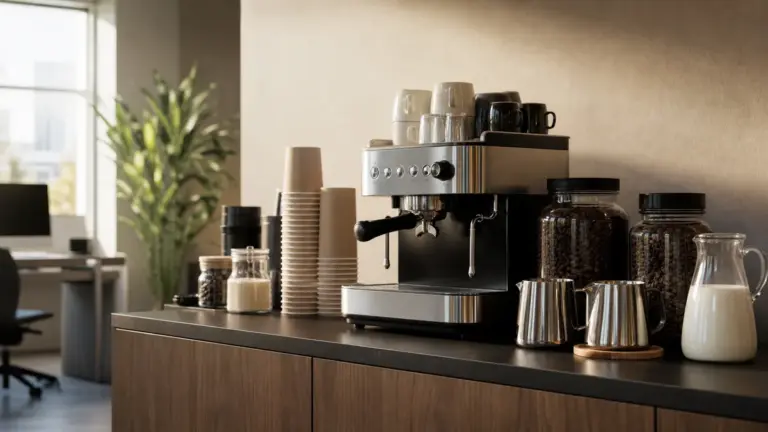 Coffee Stations and Office PerksIs free office coffee worthwhile? Assess staff preferences, fair alternatives, HMRC tax rules and the full resource commitment before launching a perk.Read the guide
 Creating a Coffee-Friendly Office EnvironmentCreate a welcoming office coffee point with practical guidance on access, seating, lighting, noise, ventilation, storage and everyday hygiene.Read the guideGood Coffee Is the Perk Everyone Actually UsesMost workplace perks are used by a few people now and then. Great coffee is used by nearly everyone, every single day.Read the guide
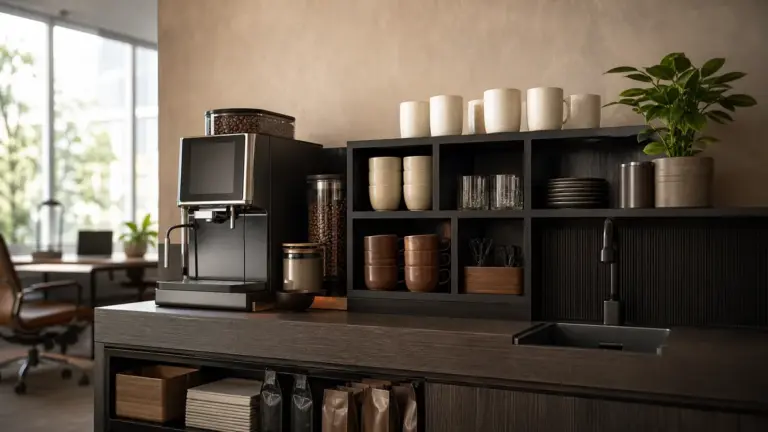 How to Design an Office Coffee StationPlan an office coffee station with practical dimensions, accessible worktops, power, water, drainage, storage and England’s food-waste requirements.Read the guide
 Office Coffee CultureBuild an inclusive office coffee culture with better breaks, decaf and tea choices, shared cleaning, optional tastings and thoughtful hybrid-team habits.Read the guide
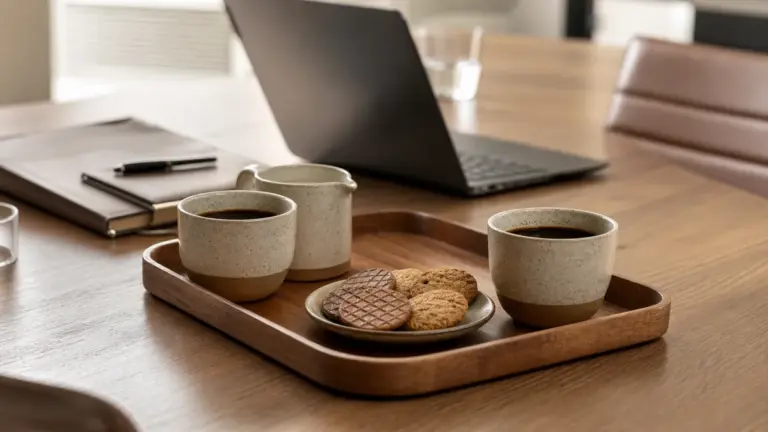 Office Coffee for Clients and VisitorsPlan welcoming reception and meeting room coffee, with practical advice on drink choices, cups, milk alternatives, allergen information and hygiene.Read the guide
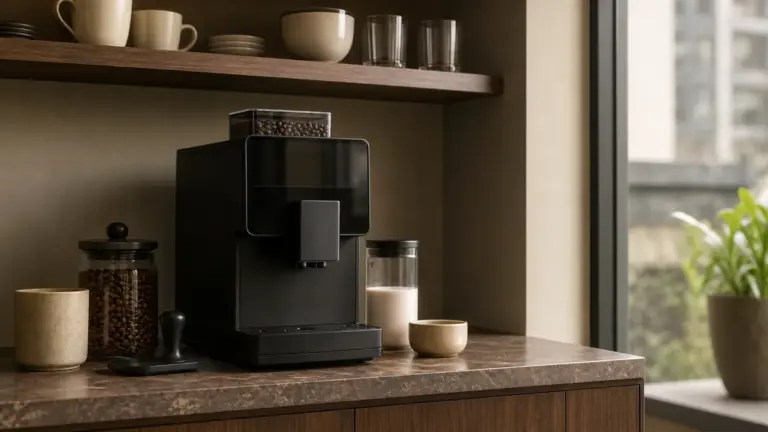 Small Team, Great Coffee: Why Size Is No BarrierYou do not need a big office to have brilliant coffee. Here is how small teams get coffee shop quality at work.Read the guide
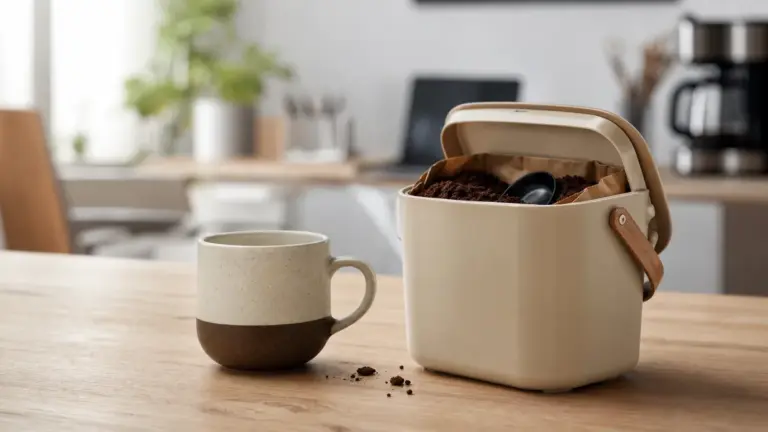 Sustainable Coffee in the OfficeMake office coffee more sustainable with credible beans, less milk waste, reusable cups, sensible energy settings and correct UK grounds recycling.Read the guideThe Best Conversations in Your Office Start at the Coffee MachinePeople do not leave their desks for caffeine. They leave for a break. Here is how to make your coffee point the best break…Read the guideThe Best Return to Office Policy Might Be a Really Good Flat WhiteLeaders want people back in the office. Here is why great coffee is one of the simplest ways to make the office worth the…Read the guideThe Coffee That Wins the Meeting Before It StartsFirst impressions start at reception. Here is why a proper coffee is one of the warmest welcomes a business can give.Read the guide
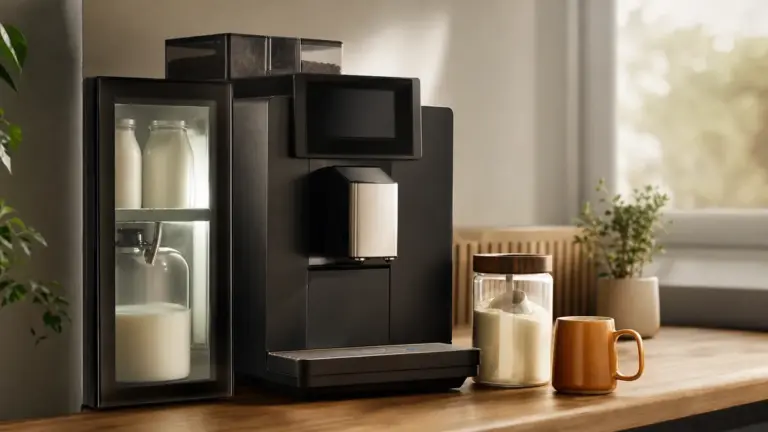 The Flat White Revolution Has Reached the Office KitchenLattes, flat whites and cappuccinos are no longer a coffee shop treat. Here is how to serve great milk drinks at work.Read the guideThe Greener Coffee Break Starts in Your Office KitchenSmall changes at the coffee machine add up to a greener workplace. Here is how to make every cup a little kinder to the…Read the guide
 What a Great Office Coffee Partner Looks LikeThe right coffee supplier makes great coffee effortless. Here is what the best partners do, and ten questions that help you find one.Read the guide
 Workplace Coffee and Employee SatisfactionDoes office coffee improve employee satisfaction? Explore survey limits, break research and caffeine evidence, plus a practical way to assess value.Read the guide
Start here if you are new
Follow this short reading path, then use the themed sections below to investigate your immediate priority.
- the complete workplace guide brings the main decisions together. Read it first if you are establishing a service or reviewing an arrangement that has grown without a clear plan.
- office coffee culture helps you think about participation, shared habits and expectations. Use it before deciding what a coffee perk should mean in your organisation.
- coffee station design turns those expectations into a practical layout. Read it before allocating worktop space or agreeing an installation.
For the wider equipment and operational context, return to office coffee. This hub concentrates on how the service fits working life, rather than comparing individual machines.
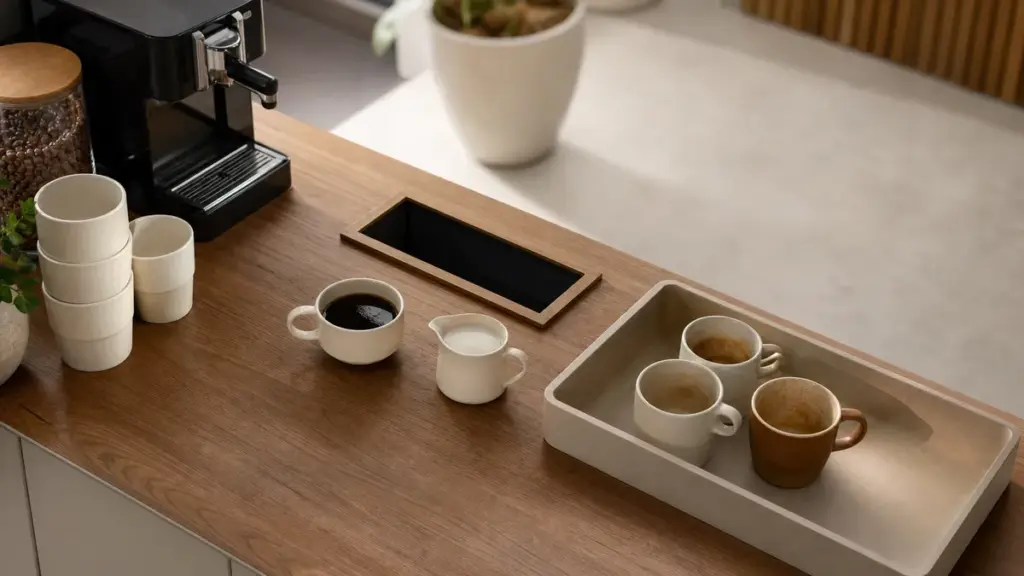
Find the right workplace coffee topic
Choose your starting point by the problem you need to solve. The criteria here are participation, physical usability, service consistency, feedback, hospitality and environmental accountability, rather than equipment prestige.
| Area | Main question | What to examine | Best starting point |
|---|---|---|---|
| Culture | How should shared coffee breaks work? | Inclusion, etiquette and voluntary participation | Office Coffee Culture |
| Environment | Where should people pause and gather? | Seating, noise and separation from focused work | Creating a Coffee-Friendly Office Environment |
| Perks | What should the employer provide? | Choice, availability and fair access | Coffee Stations and Office Perks |
| Station design | How should the tea point function? | User flow, access, storage and cleaning | How to Design an Office Coffee Station |
| Satisfaction | Is the service meeting expectations? | Drink quality, convenience and feedback | Workplace Coffee and Employee Satisfaction |
| Visitors | How should refreshments support a visit? | Hosting responsibilities and meeting timing | Office Coffee for Clients and Visitors |
| Sustainability | What should we measure and improve? | Waste, energy, purchasing evidence and collection routes | Sustainable Coffee in the Office |
Use the table to identify an initial priority, not to split the service into unrelated projects. A layout decision should be checked against the cleaning routine; a new drink choice should be checked against replenishment and visitor arrangements.
Build a coffee culture people can choose to join
Begin with an invitation, not an expectation. Make it acceptable to join a break with tea or water, to bring a drink from elsewhere, or to prefer a quiet pause alone.
Set simple shared expectations: leave the area ready for the next person, report faults and replace something you finish where that is practical. Avoid an arrangement in which the most conscientious colleague quietly becomes the unpaid service manager.
Read office coffee culture when the question is about behaviour rather than hardware. It is the useful next step for agreeing etiquette, welcoming newcomers and making informal gatherings optional.
Keep work decisions accessible outside the coffee area. If a conversation produces an action or changes a plan, put it into the normal team channel rather than leaving absent colleagues to discover it later.
Make participation broader than coffee
Ask about drinks and access before setting the menu. Include questions about decaffeinated options, tea, drinking water, milk preferences and whether people can comfortably use the proposed equipment.
Do not organise every informal activity around tasting coffee. A shared refreshment area should serve the workplace, not require everyone to acquire the same enthusiasm.
For the surroundings, use a coffee-friendly office environment. Read it when you need to decide how a refreshment area should sit alongside desks, meeting rooms and quieter spaces, rather than how the machine itself should be installed.
Design the station around the whole routine
Sketch the complete journey: approach, choose a drink, collect a cup, prepare it, add milk, leave and return used crockery. Then sketch the less glamorous journey of replenishing beans, emptying waste and cleaning equipment.
Keep those activities from competing for the same patch of worktop wherever possible. Provide an obvious destination for used cups rather than allowing the preparation area to become the default collection point.
Use coffee station design for the detailed planning work. It is especially useful before building work, when access to water, drainage, electrical supply and maintenance space can still be discussed.
For any proposed machine, ask the supplier to identify its published installation requirements. Treat advertised output as a manufacturer’s claim, and ask what it means for your actual drink selection, including milk drinks and cleaning interruptions.
Match demand to the busiest part of the day
Count people normally present, not merely contracted headcount. Record visitor demand separately, then observe when drinks are requested together.
The examples below are illustrative planning arithmetic, not consumption forecasts or machine recommendations. Each assumes two coffee drinks per person present per day; substitute your own observed figure.
| People present daily | Assumed drinks per person | Calculated staff drinks daily | Further check |
|---|---|---|---|
| 10 | 2 | 20 | Who replenishes and cleans? |
| 30 | 2 | 60 | What happens during the busiest break? |
| 60 | 2 | 120 | Can drink-making and cup returns coexist? |
| 100 | 2 | 200 | Would separate service points work better? |
Add visitors’ drinks to the calculated total, but assess their timing too. Ask suppliers to demonstrate the proposed service against your busiest observed period, rather than selecting solely from a daily capacity figure.
Make the perk dependable and assess satisfaction honestly
Define the offer before announcing it. Specify which drinks are provided, where they are available, who replenishes them and what happens during a machine fault.
Check access for early starters, late shifts and people working away from the main office area. If provision differs between locations, explain the arrangement rather than describing it as an identical benefit for everyone.
Read coffee stations and office perks when deciding the scope of provision. It helps frame coffee as an ongoing workplace service, with responsibilities, rather than a machine installed and forgotten.
HMRC lists hot drinks and water at work among benefits employees can receive tax-free. That is distinct from using the trivial benefits rules as a general explanation for workplace refreshments.
Ask questions that lead to useful changes
Separate the drink from the experience. Ask whether people enjoy the coffee, can get it when needed, understand the controls and find the area clean and welcoming.
Include people who rarely use the station. Their reasons may point towards a different drink choice, an access problem or a preference that does not require changing anything.
Use workplace coffee and employee satisfaction when planning feedback or reviewing a change. Read it before interpreting a positive coffee survey as evidence about retention, productivity or morale.
For an internal review, compare responses before and after a clearly described change, while recording other workplace changes. Treat the result as feedback on your service, not proof that coffee caused an improvement in overall employee satisfaction.
Welcome clients and visitors without complicating the meeting
Decide who offers refreshments and who prepares them. A host should not have to discover the controls while visitors wait, nor should a receptionist inherit an unspecified drinks service.
Offer a manageable choice, including water and a non-coffee option. For larger meetings, agree the refreshment plan beforehand and test whether the proposed equipment and staffing can deliver it without repeated interruptions.
Read coffee for clients and visitors when hospitality is the main concern. It is the next read for setting responsibilities, preparing meeting rooms and choosing between hosted service and self-service.
Keep ingredient packaging available and establish how staff will answer allergy questions. FSA guidance for food businesses stresses allergen information and preventing cross-contamination; where contamination cannot be avoided, customers should be told rather than promised an allergen-free product. Its published guidance applies to England, Wales and Northern Ireland.
For workplace planning, do not assume that selecting a plant-based drink establishes that the complete preparation process is suitable for someone with a milk allergy. Ask the supplier about shared milk paths and agree an appropriate procedure with whoever manages refreshments.
Make sustainability specific and measurable
Start with a short record of what enters and leaves the service: coffee, milk, packaging, cleaning materials and discarded drinks. Choose a manageable improvement, such as reducing unfinished batches or making the correct waste container easier to identify.
Use sustainable office coffee when reviewing purchasing, waste and operating practices together. It is the useful next step when an attractive packaging claim needs to be tested against the collection arrangements at your premises.
Ask suppliers for evidence behind environmental claims and identify what the evidence actually covers. The CMA Green Claims Code calls for clear, accurate claims supported by credible evidence, with qualifications made clear and relevant whole-life impacts considered. A claim about packaging should not be presented as proof about the entire coffee service.
Check the collection route
In England, workplace recycling requirements took effect on 31 March 2025, with micro-firms employing fewer than 10 full-time-equivalent employees given until 31 March 2027 to comply. The employee count is across the business, not simply the individual office.
Food waste includes coffee grounds and tea bags. DEFRA says packaging labelled compostable or biodegradable cannot go into the ordinary food-waste collection: it should go into non-recyclable waste or a dedicated collection. Compostable caddy liners are a separate permitted case.
These are England’s requirements, not a single UK-wide scheme. Confirm the applicable national rules and your collector’s accepted materials before changing bins or purchasing packaging.
Give the service clear ownership and operating boundaries
Name an owner and deputy, then agree responsibilities for replenishment, cleaning, fault reporting, supplier contact and waste arrangements. Put these duties into the workplace routine rather than relying on whoever notices a problem first.
Keep the legal baseline separate from the optional coffee offer. HSE’s workplace guidance for Great Britain requires access to drinking water and somewhere to rest and eat meals; coffee provision should not be presented as a substitute for those welfare facilities.
Before a plumbed-in installation, ask a competent installer to confirm compliance with the applicable water fittings requirements, including backflow protection, which prevents contaminated fluid returning towards the supply. England and Wales have the Water Supply (Water Fittings) Regulations 1999; Scotland and Northern Ireland have their own frameworks.
For equipment with a steam boiler, check with the supplier and HSE guidance whether the Pressure Systems Safety Regulations 2000 apply in Great Britain. Qualifying equipment requires a written scheme of examination and examination before use; do not assume that ordinary servicing answers the question.
Ask for the premises’ water report rather than adopting a general UK hardness assumption. Thames Water, for example, provides a postcode-based water-quality checker and guidance on hardness; use your own supplier’s information when discussing treatment with the installer.
Finally, obtain itemised written quotations covering equipment provision, installation, water treatment, ingredients, cleaning consumables, servicing, examinations where applicable and waste collections. To assess your own cost per cup, total the relevant expenditure over one consistent period and divide by drinks actually served, recording internal staff time separately and keeping the VAT basis consistent.
FAQ
Should staff help choose the coffee?
Yes, invite staff input while keeping the trial manageable. Offer a small, clearly described selection and collect feedback on taste, strength and suitability with milk. Include non-users, then assess the preferred option alongside cleaning, availability and the practical requirements of serving it consistently.
How should we handle different preferences across sites?
Use a shared minimum service standard rather than insisting on identical equipment. Define the drink choices, cleanliness, reporting arrangements and accessibility you expect everywhere, then let each site propose a suitable way to deliver them. Explain any differences openly and review feedback from smaller or less visible locations.
Is a coffee tasting a useful team activity?
It can be, provided participation is optional and alternatives are welcome. Keep it short, describe flavours in ordinary language and avoid treating anyone’s preference as a test of expertise. Use the session to gather views on the drinks being considered, not as a measure of team engagement.
Where to go next
Read Coffee in the Workplace: The Complete Guide to turn this map into a joined-up plan, then How to Design an Office Coffee Station to work through the physical arrangement. For the next review of coffee in the workplace, use Workplace Coffee and Employee Satisfaction to structure feedback and Sustainable Coffee in the Office to investigate purchasing and waste decisions.
Sources
-
Health and Safety Executive, Have the right workplace facilities: What you must provide for a safe and healthy workplace, current online guidance, accessed 2026.
https://www.hse.gov.uk/simple-health-safety/workplace-facilities/welfare.htm -
HMRC, Tax on company benefits: Tax-free company benefits, current online guidance, accessed 2026.
https://www.gov.uk/tax-company-benefits/taxfree-company-benefits -
Food Standards Agency, Allergen guidance for food businesses, 2020, publication page updated July 2026.
https://www.gov.uk/government/publications/allergen-guidance-for-food-businesses/allergen-guidance-for-food-businesses -
Competition and Markets Authority, The Green Claims Code checklist, 2021.
https://www.gov.uk/government/publications/green-claims-code-making-environmental-claims/green-claims-and-your-business -
Department for Environment, Food & Rural Affairs, Simpler recycling: workplace recycling in England, 2024, updated October 2025.
https://www.gov.uk/guidance/simpler-recycling-workplace-recycling-in-england -
UK legislation, The Water Supply (Water Fittings) Regulations 1999, regulation 3, current amended text.
https://www.legislation.gov.uk/uksi/1999/1148/regulation/3?view=plain -
Water Regs UK, What is a backflow prevention arrangement or device?, undated online guidance, accessed 2026.
https://www.waterregsuk.co.uk/topics/all-faqs/what-is-a-backflow-prevention-arrangement-or-device/ -
Health and Safety Executive, Pressure Systems Safety Regulations 2000 (PSSR), current online guidance, accessed 2026.
https://www.hse.gov.uk/pressure-systems/pssr.htm -
Thames Water, Water quality and Hard water, current online guidance, accessed 2026.
https://www.thameswater.co.uk/help/water-and-waste-help/water-quality
https://www.thameswater.co.uk/help/water-and-waste-help/water-quality/hard-water
This hub was researched using retrieved government, regulator, water-industry and local water-supplier guidance; planning examples are explicitly illustrative, and no machines were tested.
Last checked: November 2026