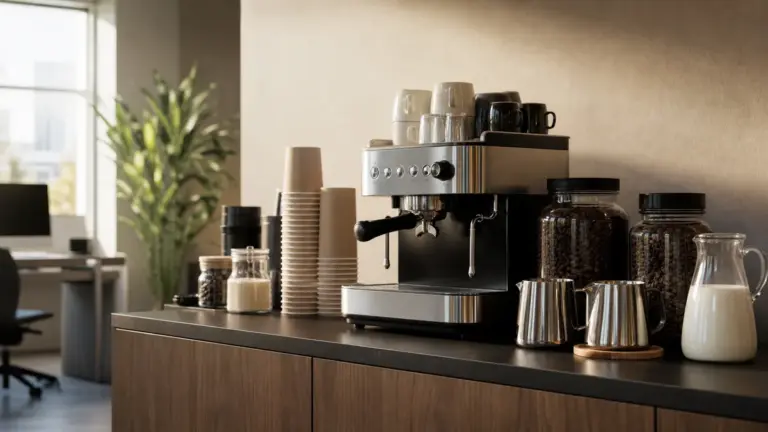
It is first in, last out, and it never once takes a day off.
Meet the hardest working colleague in your office: the bean to cup coffee machine in the kitchen.
Here is its day.
In short
- An office bean to cup machine works from the early morning warm up to the end of day clean, with peaks in the morning and mid afternoon.
- 45% of employees drink three or more cups during working hours, and 44% put their last cup down to routine.
- A machine sized for your busiest morning copes easily with the midweek rush, when offices are fullest.
- A few minutes of cleaning every evening keeps every cup tasting fresh, and the used grounds go in the food waste.
- Fresh beans, cold milk, a named owner and a choice of drinks make the machine’s day a good one.
7.45am: the quiet before the rush
The lights come on and the machine wakes up, warming through and rinsing itself ready for the first cup. Somebody tops up the beans and checks the milk is cold.
It is a calm moment, and an important one. A good morning at the coffee machine sets the tone for the whole office.
8.30am to 9.30am: the morning peak
Here they come. Laptop bags, umbrellas, a few yawns.
One flat white, two americanos, a latte with oat milk, a decaf for the colleague who has given up caffeine for a month. Every drink starts with whole beans ground seconds before brewing, so every cup tastes fresh.
This is the machine’s big moment, and it matters more than you might think. World Coffee Portal’s Coffee At Work Report UK 2026, based on more than 2,000 surveys of UK workplace coffee drinkers, found that 45% of employees drink three or more cups during working hours. The most common reason for that last cup at work? An established routine, cited by 44%.
Routine is a lovely word here. It means people rely on that first coffee to start their day well.
11am: the meeting tray
A quick round of drinks for the client meeting in room two. Six cups, all made properly, all ready before the visitors have taken off their coats.
The machine does not mind. It was built for exactly this.
1pm: lunchtime chat
The queue is shorter now, but the conversations are longer. Two colleagues from different teams discover they are working on the same problem. A new starter gets introduced to half the floor without a single formal introduction.
Coffee is the reason everyone is standing there. The conversation is the bonus.
3pm: the afternoon lift
The second peak arrives right on cue. Energy dips, inboxes fill, and the coffee machine steps up again.
For the colleagues watching their caffeine, there is decaf, tea and a jug of water nearby. The European Food Safety Authority says intakes of up to 400mg of caffeine a day are fine for healthy adults, so a good choice of drinks helps everyone pace themselves.
Busy days, quiet days
Not every day looks the same, and a good machine takes that in its stride. The British Council for Offices found UK office occupancy averages 40% from Tuesday to Thursday, against 30% across the whole week.
So midweek, the machine is the busiest it gets. On Fridays, it enjoys a gentler pace, and so do the people using it. Choosing a machine sized for your busiest morning means it never breaks a sweat.
5.30pm: clean and ready for tomorrow
The last cup is poured. Now comes the bit that keeps every coffee tasting brilliant: the end of day clean.
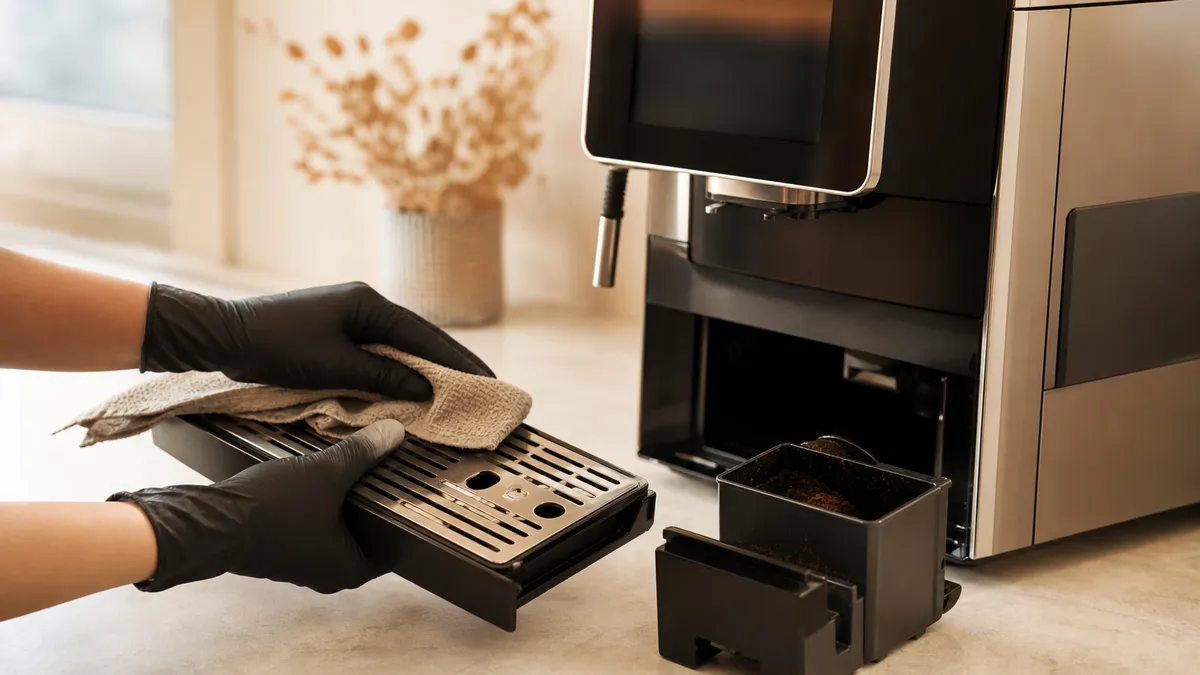
It takes a few minutes. Run the milk clean, empty the grounds and the drip tray, wipe the steam and milk parts, and leave everything tidy for tomorrow. A typical manufacturer’s guidance asks for exactly this kind of daily routine.
Those used grounds are good news too. Under the government’s Simpler Recycling rules, coffee grounds and tea bags go in the food waste, not the general bin.
What makes the machine’s day a good one
- Fresh beans and cold milk, topped up before the morning rush.
- A named owner and a deputy, so nobody wonders whose turn it is.
- The daily clean, done every evening without fail.
- Space to queue and chat, so the kitchen feels like a place to be.
- A choice for everyone, from espresso to decaf to tea.
Do those five things and your coffee machine will repay you every single working day.
The quiet hero of office life
Nobody writes a leaving card for the coffee machine. But it is there for every early start, every celebration and every Friday afternoon.
Our daily cleaning guide shows how to keep yours at its best, step by step: /office-coffee-machine-daily-cleaning/
And if you are choosing a machine, our capacity guide explains how to match it to your busiest morning: /office-coffee-machine-daily-capacity/
What time is the coffee rush in your office? Tell me in the comments.
More in our workplace coffee series: What a Great Office Coffee Partner Looks Like, and Small Team, Great Coffee: Why Size Is No Barrier. For the practical detail behind them, read Coffee in the Workplace: The Complete Guide.
Sources
- World Coffee Portal, analysis of the Coffee At Work Report UK 2026 (more than 2,000 surveys of UK workplace coffee drinkers; 45% drink three or more cups during working hours; 44% cite an established routine), 4 September 2026. https://www.worldcoffeeportal.com/analysis/the-hidden-3-60-opportunity-workplace-coffee-is-worth-more-than-many-suppliers-imagine/
- European Food Safety Authority, “Caffeine” topic page (up to 400mg a day for healthy adults). https://www.efsa.europa.eu/en/topics/topic/caffeine
- British Council for Offices, Review of Post Pandemic UK Office Utilisation by Nigel Oseland, 10 July 2025 (Tuesday to Thursday occupancy averaging 40%, against 30% across all weekdays), as announced online. https://www.e-architect.com/awards/bco-review-of-post-pandemic-uk-office-utilisation
- DEFRA, “Simpler recycling: workplace recycling in England” (coffee grounds and tea bags listed as food waste), read 4 November 2026. https://www.gov.uk/guidance/simpler-recycling-workplace-recycling-in-england
Last checked: November 2026