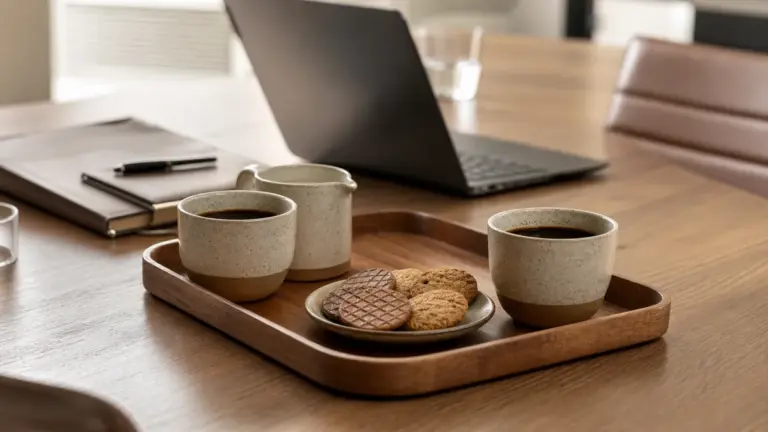
Some of the best conversations in any office happen while the coffee is brewing.
You know the moment. You step away from a tricky problem, wander over for a coffee, and bump into someone from another team. Two minutes later you have an answer, a new contact and a better afternoon.
That is not luck. It is what a good coffee point is for.
In short
- People head to a coffee shop mainly for a break, not the caffeine, so a good office coffee point is really a good break spot.
- 44% of employees named routine as the reason for their last workplace coffee, so people already visit several times a day.
- Make the space welcoming and relaxed, include decaf, tea and plant milk, and let managers lead by example.
- Small rituals such as a welcome coffee for new starters or a tasting morning build culture without a committee.
- Offices are busiest from Tuesday to Thursday (40% occupancy against 30% across the week), the best days for coffee rituals.
It is really about the break
One finding from World Coffee Portal’s Coffee At Work Report UK 2026 stands out. When employees head out to a coffee shop, they are mostly looking for a break rather than caffeine.
The coffee is the reason to stand up. The pause is the real reward.
So the question for any workplace is a happy one: how do you make your own coffee point the best break spot people could wish for?
Coffee is already a daily ritual
You do not have to persuade anyone to use it. The British Coffee Association says 67% of UK adults drink coffee every day. The 2026 report found 44% of employees named routine as the reason for their last workplace coffee.
That routine is a gift. It means people already visit the coffee point several times a day, without being asked. Design it well and every one of those visits becomes a small moment of connection.
Five ways to turn a coffee point into a culture point
- Make it a place people want to be. Room to stand and chat, good light if you can, and a spot just off the main walkway.
- Make it welcoming for everyone. Keep decaf easy to find, give tea and water equal billing, and choose a plant based milk after asking colleagues what they like.
- Keep it relaxed. A coffee break is an invitation, never an obligation. Some people love a chat; others enjoy five quiet minutes. Both are great.
- Lead by example. When managers take a proper break and enjoy a coffee with the team, everyone else feels free to do the same.
- Bring hybrid colleagues in. A short, optional online coffee catch up, where everyone brings their own drink, keeps remote team members part of the ritual.
Small rituals with a big effect
Culture is built from small, repeated habits. A few that work beautifully:
- The welcome coffee. A new starter’s first morning begins with a coffee and a few friendly faces.
- The after meeting coffee. An open invitation once the weekly team meeting wraps up.
- The tasting morning. Two coffees, small cups, simple questions. Nobody needs to be an expert, and tea drinkers are welcome too.
- The thank you round. A team lead making the coffees after a big week says more than a long email.
None of these needs a programme or a committee. They just need a machine that works, supplies that are stocked, and a space people enjoy.
Busy days are the best days
UK offices are busiest in the middle of the week. A British Council for Offices review in July 2025 found occupancy averaging 40% from Tuesday to Thursday, against 30% across the whole week.
That makes midweek the perfect time for coffee rituals. It is when the most people are together, and when a great coffee point can do the most good.
Plan your welcome coffees, tastings and team rounds for those days and they will feel lively and well attended, which is exactly what makes people want to come back for the next one.
Good news for coffee lovers
The European Food Safety Authority says up to 400mg of caffeine a day, spread through the day, raises no safety concerns for healthy adults (200mg a day in pregnancy). So enjoying a few coffees across the working day is perfectly sensible for most people, and good decaf makes the afternoon cup easy for everyone else.
Start with the basics, then add the joy
The Health and Safety Executive asks employers to provide drinking water and somewhere to rest and eat. Great coffee builds on that foundation and turns a rest area into a real heart of the workplace.
Get it right and your coffee machine becomes the friendliest place in the building, and some of your best ideas will start there.
Our guide to building an inclusive office coffee culture covers break habits, drink choices and shared rituals: /office-coffee-culture/
What is the best idea you have ever had while waiting for a coffee?
More in our workplace coffee series: Good Coffee Is the Perk Everyone Actually Uses, and Coffee Shop Quality at Work: Why Bean to Cup Wins the Office. For the practical detail behind them, read Coffee in the Workplace: The Complete Guide.
Sources
- World Coffee Portal, analysis of the Coffee At Work Report UK 2026 (employees who leave the premises mostly want a break rather than caffeine; 44% cite routine), 4 September 2026. https://www.worldcoffeeportal.com/analysis/the-hidden-3-60-opportunity-workplace-coffee-is-worth-more-than-many-suppliers-imagine/
- British Coffee Association, Media Centre, headline figures (67% of UK adults drink coffee daily), read 3 November 2026. https://britishcoffeeassociation.org/media-centre/
- British Council for Offices, Review of Post Pandemic UK Office Utilisation by Nigel Oseland, 10 July 2025, as announced online. https://www.e-architect.com/awards/bco-review-of-post-pandemic-uk-office-utilisation
- European Food Safety Authority, “Caffeine” topic page. https://www.efsa.europa.eu/en/topics/topic/caffeine
- Health and Safety Executive, “Workplace facilities: what you must provide” (welfare facilities). https://www.hse.gov.uk/simple-health-safety/workplace-facilities/welfare.htm
Last checked: November 2026