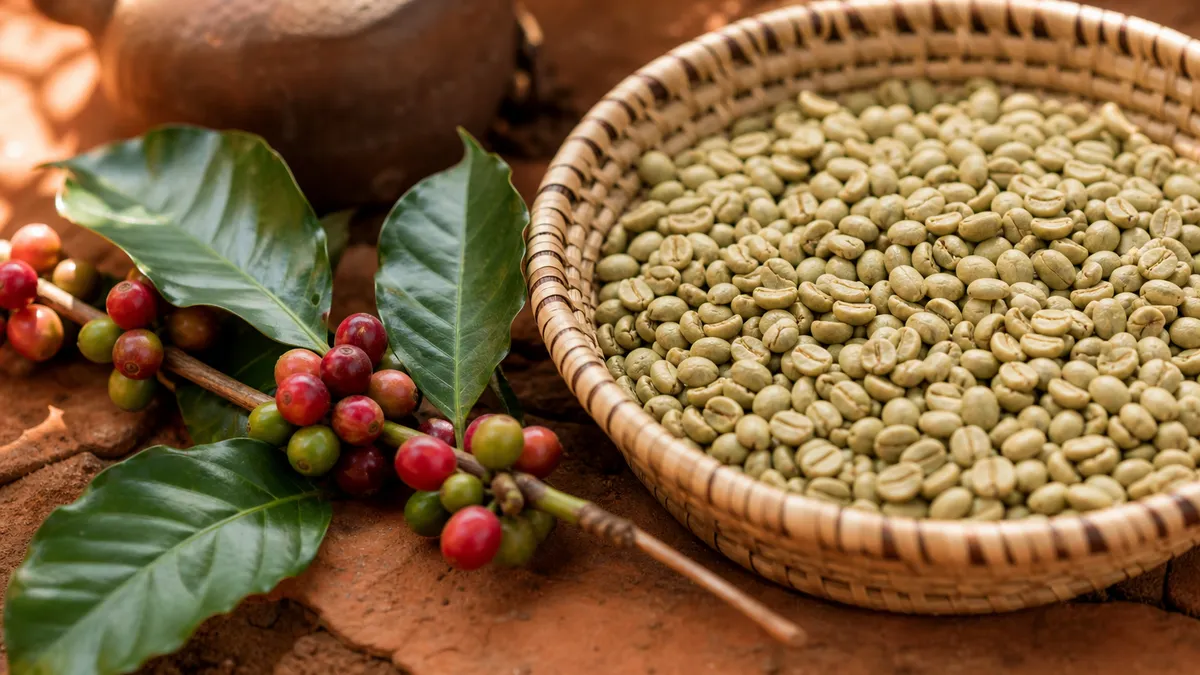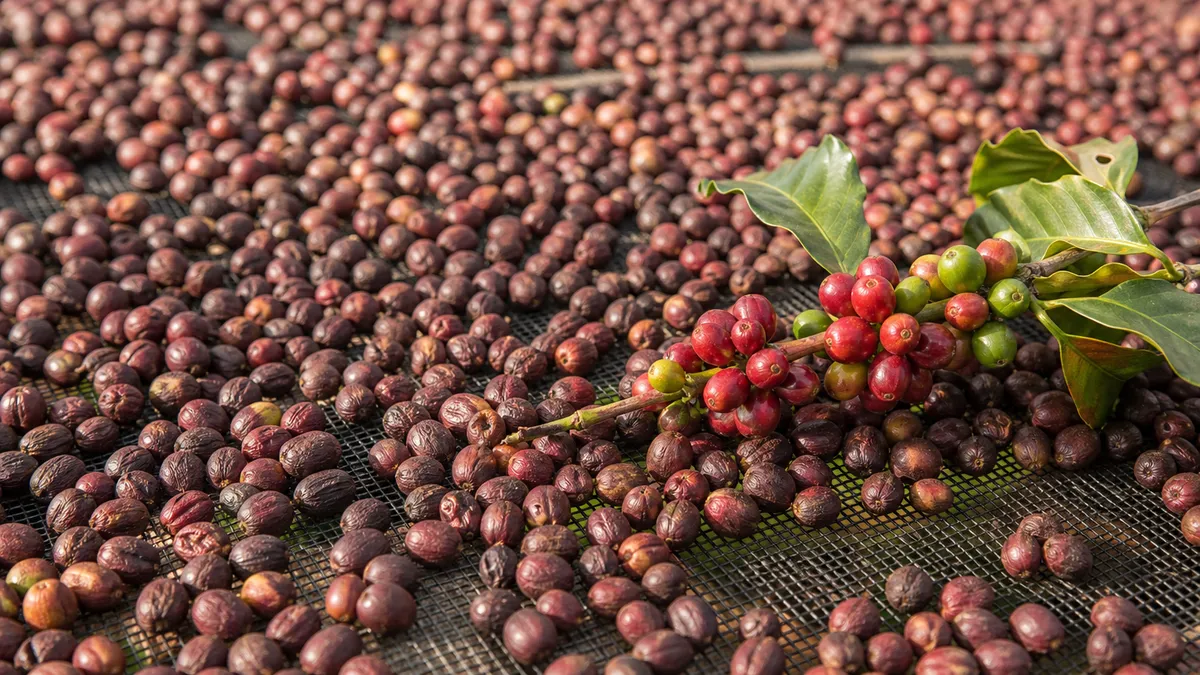
East Africa grows a wide range of coffees, from Ethiopia’s diverse arabicas and Kenya’s SL varieties to Uganda’s substantial robusta crop. Ethiopia, Kenya, Tanzania, Burundi, Uganda, Rwanda and Malawi offer useful starting points, but the country name alone cannot tell you how a coffee will taste: variety, growing conditions, processing and roasting all matter.
In short
- Check the species: Uganda and Tanzania grow both arabica and robusta, so “East African coffee” does not necessarily mean arabica.
- Read beyond “heirloom”: on Ethiopian coffee, this is a broad trade description, not the name of one variety.
- Compare processing: washed coffee is dried after its fruit and sticky coating are removed; natural coffee dries inside the whole cherry.
- Check the crop year: harvest months describe picking at origin, not when roasted coffee reaches a UK shelf.
- Treat grades carefully: Kenyan AA and AB describe physical grading, principally bean size, rather than guaranteeing a particular flavour.
Guides in East Africa
 Burundi CoffeeDiscover Burundi coffee’s bright washed profile, Bourbon varieties and washing stations, plus a clear explanation of potato taste defect and buying tips.Read the guide
 Ethiopian Coffee: Regions, Flavours and ProcessingExplore Ethiopian coffee, from floral washed Sidama to fruity Harrar naturals, with regions, varieties, processing and modern traceability explained.Read the guide
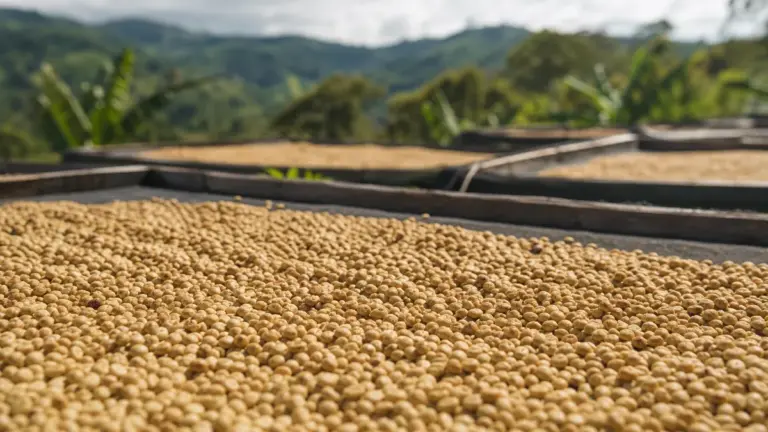 Kenyan Coffee: Flavour, Varieties and GradesDiscover Kenyan coffee’s bright fruit flavours, SL28 and other varieties, washed processing, AA and AB grades, and auction and direct-sale routes.Read the guide
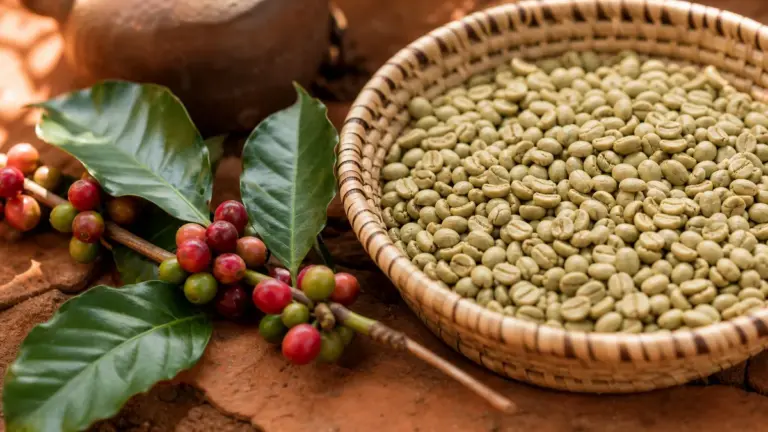 Malawi CoffeeDiscover Malawi coffee, from northern Mzuzu smallholders to southern estates, with its flavours, Geisha and Nyika varieties, processing and UK buying tips.Read the guide
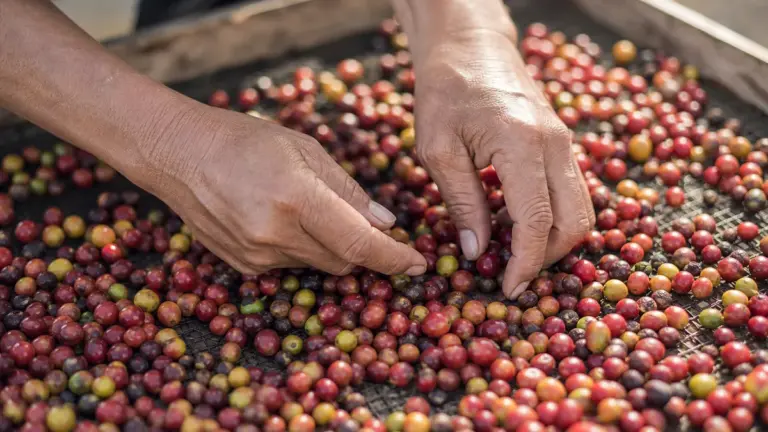 Rwanda CoffeeDiscover Rwandan coffee's citrus, berry and tea-like flavours, how washing stations shaped its quality, and what potato taste defect means for your cup.Read the guide
 Tanzania Coffee: Regions, Flavour and PeaberryDiscover Tanzanian coffee, from Kilimanjaro and southern arabicas to Kagera robusta, with varieties, processing and what peaberry really means explained.Read the guide
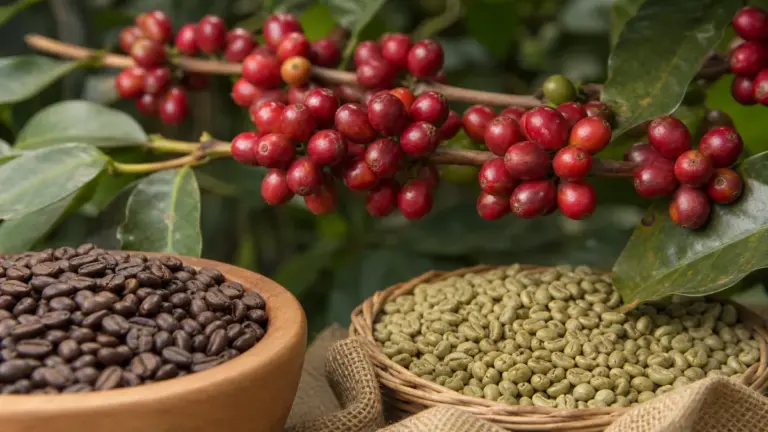 Ugandan Coffee: Robusta, Bugisu and RwenzoriDiscover Uganda’s robusta, washed Bugisu and natural Rwenzori arabica, plus wild coffee forests, excelsa and what to check when choosing your next bag.Read the guide
Start here if you are new
Begin with Ethiopia to understand arabica’s origins and the difference between washed and natural coffees. Follow with Kenya for named varieties and physical grades, then Uganda to see why the region’s coffee cannot be understood through arabica alone.
For the wider context of species, growing conditions and origin labels, return to beans and origins.
East Africa coffee fact panel
The seven countries covered here are a reading route through eastern African coffee, not a claim that their coffees share one identity.
Species: Coffea arabica throughout this selection, with commercially important Coffea canephora, traded as robusta, in Uganda and Tanzania.
Altitude: cultivated examples extend from about 1,000 metres in Malawi’s Nkhata Bay highlands to 2,300 metres for Ugandan arabica. These are illustrative growing elevations, not the region’s absolute limits.
Main varieties and planting material: Ethiopian local landraces and research selections; Kenya’s SL28, SL34, Ruiru 11 and Batian; Bourbon-type arabicas in Rwanda and Burundi; Bourbon and Kent in Tanzania; SL selections and Nyasaland in Uganda; and Nyika, Geisha and Catimor 129 among Malawi’s Mzuzu coffees.
Main processing methods: washed and natural. Their importance varies by country, producer and species.
Harvest: there is no single regional season. Ethiopia’s principal picking windows fall around October to January, Burundi’s around March to July, and Mzuzu’s in Malawi around May to October.
Cup profile: floral, citrus, fruity and wine-like descriptions recur in the region’s arabicas, but so do rounded body and softer sweetness. These are starting points for choosing a lot, not guaranteed national characteristics.
Arabica’s birthplace, with an important qualification
Ethiopia is widely described as the birthplace of arabica. More precisely, Kew identifies southern Ethiopia and South Sudan as its native range, so the botanical story extends beyond Ethiopia’s modern borders.
“Arabica” is a species name, not a statement that the plant originated in the Arabian Peninsula. World Coffee Research describes the movement of coffee from south-western Ethiopia’s forests to Yemen, where it became a cultivated crop.
This distinction also helps explain an apparent puzzle on coffee bags. A plant can have Ethiopian ancestry while the variety, farming system and commercial coffee bearing its name developed elsewhere. Origin, variety and species answer different questions.
East African coffee countries compared
The calendar below gives indicative picking periods, not fixed national deadlines. Elevation, local rainfall and the particular growing district can shift the start and finish; cup descriptions refer mainly to arabicas unless stated otherwise.
| Country | Coffee and example varieties | Main processing | Indicative harvest | Cup descriptions to explore |
|---|---|---|---|---|
| Ethiopia | Arabica; local landraces and Jimma Agricultural Research Centre selections | Washed and natural | October to December at lower elevations; November to January higher up | Floral and bright washed coffees; more intense, wine-like naturals |
| Kenya | Arabica; SL28, SL34, Ruiru 11, Batian | Predominantly washed | October to December main crop; April to June in the ICO’s earlier-crop calendar | Sweetness and lively citrus; grapefruit in Kibirigwi’s published profile |
| Tanzania | Arabica and robusta; Bourbon and Kent among arabicas | Arabica predominantly washed | July to December north and south; May to October west, in TanTrade’s calendar | Sweetness, acidity and body in northern coffees; fruity and floral southern profiles |
| Burundi | Mainly Bourbon-type arabica | Predominantly washed; natural lots also available | March to July | Juicy fruit, sweetness and substantial body |
| Uganda | Robusta and arabica; SL14, SL28 and Nyasaland among arabicas | Washed and natural, depending on coffee | Several regional seasons; central robusta main crop December to February, smaller crop May to August | Arabica examples include citrus, brown sugar and rounded body |
| Rwanda | Mainly Bourbon-type arabica | Washed is prominent; natural lots also available | Starts late February near Lake Kivu and early March elsewhere; some northern picking continues into August | Soft citrus, floral notes, chocolate and silky texture |
| Malawi | Arabica; Mzuzu lists Nyika, Geisha and Catimor 129 | Washed in the Mzuzu cooperative system | May to October for Mzuzu | Softer, creamier body in Mzuzu’s own description |
Ethiopia and Kenya: start with diversity, then compare named varieties
Use the Ethiopia guide when a bag’s description leaves you wondering whether “heirloom”, a research number or a place name identifies the plant. It is also the useful next read for comparing processing within one origin rather than assuming that all Ethiopian coffee should taste alike.
Kenya rewards a different set of questions: which varieties contributed to the lot, which factory processed it, and what does its grade actually mean? Its country guide helps separate these details instead of treating “Kenya AA” as a complete description.
Rwanda and Burundi: follow the washing station
Read Rwanda when the washing-station name on a bag is more prominent than a farm name. It provides the context needed to understand a coffee assembled from smallholders’ cherries and shaped by shared processing.
Choose Burundi next to explore Bourbon-type coffees through their producing areas and processors. It is a particularly useful companion read when comparing washed and natural lots without assuming that processing alone explains every difference.
Tanzania, Uganda and Malawi: widen the comparison
The Tanzania guide is the next step for understanding a country with both arabica and robusta, and distinct northern, southern and western production areas. Read it before treating a national label or physical grade as a flavour promise.
Uganda’s guide helps distinguish species, mountain arabicas and regional harvests. Malawi then adds the perspective of northern and central highland cooperatives, including Mzuzu, rather than another version of the Ethiopian or Kenyan story.
Washed and natural processing: what actually changes?
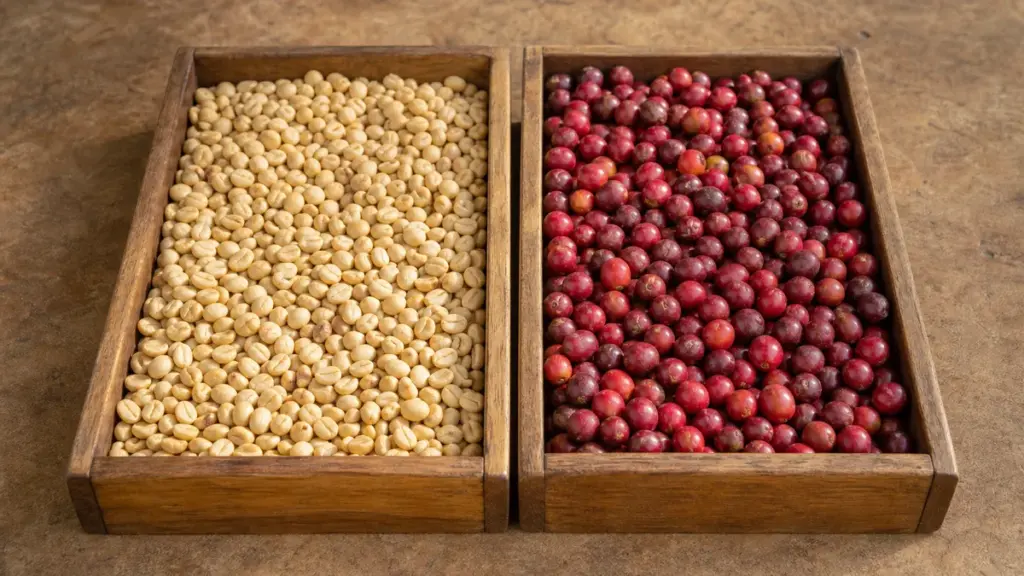
Coffee beans are seeds inside a fruit called a cherry. Processing removes that fruit and prepares the seeds for storage, transport and roasting.
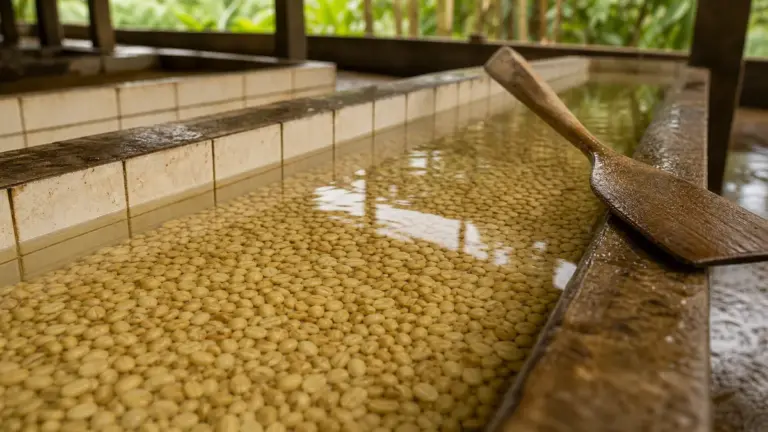
In conventional washed processing, a pulper removes the cherry’s outer skin and flesh. The remaining sticky coating, called mucilage, is removed, commonly through fermentation followed by washing, before the seeds dry inside their protective parchment layer.
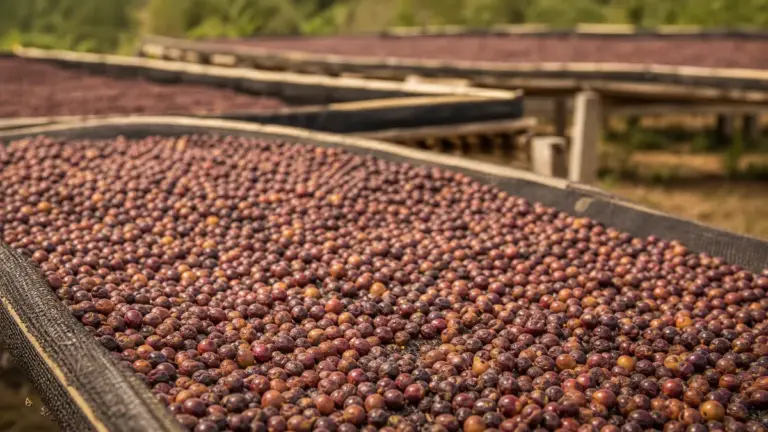
In natural processing, the whole cherry dries before the dried fruit is hulled away. A raised drying bed can therefore hold either whole cherries or washed parchment coffee: the bed itself does not identify the processing method.
Ethiopia offers a useful comparison. Trabocca describes washed Ethiopian coffees ranging towards clean, floral and bright profiles, alongside more intense, wine-like naturals. That is a sourcing observation, not a rule that every washed lot is delicate or every natural tastes fermented.
Care still matters at every stage. Uneven drying, rewetting and contaminated storage can damage coffee regardless of the chosen method. “Natural” describes how the fruit is handled, not a quality grade or an environmental certification.
Altitude and varieties: useful clues, not scores
Why altitude matters
Higher elevation often brings cooler growing conditions, which can slow cherry ripening. FAO’s agronomy guidance connects that longer maturation with the development of arabica’s aroma, acidity and bean characteristics.
However, elevation is not an independent quality score. The plant’s genetics, local environment and management work together, and altitude cannot tell you whether the fruit was picked ripe or dried well. Use it to understand growing conditions, not to rank two bags automatically.
Nor is high elevation exclusive to arabica. Uganda’s country profile records robusta cultivation at 1,200 to 1,500 metres, a useful reminder that “high-grown” and “arabica” are not interchangeable.
From Ethiopian “heirloom” to SL selections
Landraces are locally adapted plant populations maintained through generations of cultivation and selection. Ethiopian coffee labels may group these under “heirloom”, but the word can conceal considerable diversity; research selections are another important part of the country’s planting material.
Kenya’s SL names are more specific. SL28 and SL34 were selected at Scott Agricultural Laboratories, but they should not be treated as genetically identical companions.
World Coffee Research places SL28 in the Bourbon-related genetic group and SL34 in the Typica-related group. It also explains that SL34’s genetic evidence complicates the familiar historical account linking it to French Mission Bourbon.
For buying, the lesson is modest but useful: a named variety provides information, not certainty. Ask whether the coffee is genuinely separated by variety or whether the label lists the varieties contributing to a mixed lot.
Production: a large region with very different national scales
Ethiopia and Uganda dominate production among these seven countries. In its July 2026 report, USDA estimated production for 2025/26 at 11.56 million 60 kg bags for Ethiopia, 7.095 million for Uganda, 1.45 million for Tanzania and 850,000 for Kenya.
These are production estimates, not export totals or measures of speciality quality. Uganda’s figure includes both species: USDA estimated 1.12 million bags of arabica and 5.975 million bags of robusta for that season.
Keep the reporting basis attached to any comparison. National marketing years can begin in different months, while a forecast for a forthcoming crop is not the same thing as an estimate for a completed season. A useful reference page should preserve those distinctions rather than present every figure as an interchangeable annual total.
Buying East African coffee in the UK
Choose a coffee by the information describing the actual lot, then use the country as context.
- Identify the species. This is especially helpful with Ugandan and Tanzanian coffee, where the national name does not settle the question.
- Look for a producing area and processor. A named farm, cooperative or washing station gives you a more specific starting point than the country alone.
- Check processing and variety together. “Washed Bourbon” and “natural Ethiopian landraces” describe different combinations, not competing quality levels.
- Ask for the crop year as well as the roast date. They describe different stages of the coffee’s journey.
- Use the roaster’s preparation advice. Ask which available lot suits your filter brewer, espresso machine or workplace bean-to-cup machine, rather than choosing on origin reputation alone.
For an informative first comparison, ask a roaster for a washed and a natural Ethiopian coffee with similar intended preparation. Alternatively, compare washed coffees from Kenya and Rwanda, while recognising that differences in variety, farm conditions and roasting prevent this from being a controlled test of nationality.
For workplace purchasing, request samples prepared on the intended machine before committing to a regular supply. Agree what information accompanies replacement lots, so “East Africa” does not become a vague substitute for the flavour and consistency your colleagues actually enjoyed.
FAQ
Does Kenyan AA mean it is better than AB?
No, AA is not a guarantee that a coffee will taste better than AB. Kenya’s grading system separates coffees by physical characteristics, including size, shape and density. Cup evaluation remains a separate consideration, so ask for the lot’s tasting description and sample it rather than choosing solely because its beans are larger.
Are peaberries a different coffee variety?
No, peaberry is a bean form, not a variety name. Kenya’s official profile distinguishes oval PB beans from flat-bean grades such as AA and AB. A peaberry designation therefore does not identify the plant’s genetics, and it cannot replace information about origin, processing or the flavour of the particular lot.
Do floral or chocolate tasting notes mean ingredients were added?
Not by themselves: these words are sensory comparisons used to describe coffee. World Coffee Research’s Sensory Lexicon provides reference language for recognising aromas, flavours and textures. Read the product’s ingredients and processing description if you need to establish whether it is plain coffee or a separately flavoured product.
Where to go next
Read Ethiopia for arabica’s origins and processing diversity, then Kenya to understand SL varieties and physical grades. Uganda broadens the picture to robusta and mountain arabicas, while Malawi introduces the Mzuzu cooperative system and another useful route into East African coffee.
Sources
Publication years are given where stated; undated pages are identified as such.
-
Royal Botanic Gardens, Kew. Arabica coffee, undated.
https://www.kew.org/plants/arabica-coffee -
World Coffee Research. Arabica Coffee Varieties, SL28 and SL34, live catalogue entries, undated.
https://varieties.worldcoffeeresearch.org/arabica
https://varieties.worldcoffeeresearch.org/varieties/sl28
https://varieties.worldcoffeeresearch.org/varieties/sl34 -
World Coffee Research. Sensory Lexicon, version 2.0, October 2017.
https://worldcoffeeresearch.org/resources/sensory-lexicon -
International Coffee Organization. Country Coffee Profile: Kenya, ICC 124-7, 14 March 2019.
https://www.ico.org/documents/cy2018-19/icc-124-7e-profile-kenya.pdf -
Uganda Coffee Development Authority. Uganda Country Coffee Profile, 2019; and Uganda Coffee Roasters Company Profile Catalogue, July 2024.
https://ugandacoffee.go.ug/sites/default/files/2022-03/Uganda%20Country%20Coffee%20Profile_1.pdf
https://ugandacoffee.go.ug/sites/default/files/2024-07/Uganda%20Coffee%20Roasters%20Company%20Profile%20Catalogue%20July%202024.pdf -
Tanzania Trade Development Authority, TanTrade. Tanzania Coffee Profile, undated.
https://www.tantrade.go.tz/downloads-prodcut-profile/TANZANIA%20COFEE%20PROFILE -
National Agricultural Export Development Board, Rwanda. About Rwanda coffee, undated.
https://www.naeb.gov.rw/rwanda-coffee/about-rwanda-coffee -
Mzuzu Coffee Planters Cooperative Union. Home and About Us, undated producer descriptions.
http://www.mzuzucoffee.org/
http://www.mzuzucoffee.org/about-us-2/ -
Sucafina. Ethiopia and Burundi, undated origin pages.
https://www.sucafina.com/emea/origins/ethiopia
https://www.sucafina.com/emea/origins/burundi -
Trabocca. Ethiopia, undated origin and sourcing description.
https://www.trabocca.com/our-coffees/ethiopia/ -
Kibirigwi Farmers Co-operative Society. Coffee & Quality, undated producer description.
https://kibirigwifcs.co.ke/coffee-quality/ -
JNP Coffee. What does Burundi coffee taste like?, 2023.
https://www.jnpcoffee.com/post/what-does-burundi-coffee-taste-like -
Union Hand-Roasted Coffee. White Paper: Cupper’s Guide, Rwanda, first published 2009, republished 2018.
https://unionroasted.com/blogs/latest/white-paper-cuppers-guide-rwanda -
Food and Agriculture Organization of the United Nations. Arabica coffee manual for Lao-PDR, August 2005, chapters on site selection and harvesting and processing.
https://www.fao.org/4/ae939e/ae939e00.htm
https://www.fao.org/4/ae939e/ae939e03.htm
https://www.fao.org/4/ae939e/ae939e08.htm -
USDA Foreign Agricultural Service. Coffee: World Markets and Trade, July 2026.
https://apps.fas.usda.gov/psdonline/circulars/coffee.pdf
Research combined botanical and variety references, official country profiles, producer and direct-sourcing descriptions, agronomy guidance and a consistently dated production dataset; no first-hand tasting or testing is claimed.
Last checked: November 2026