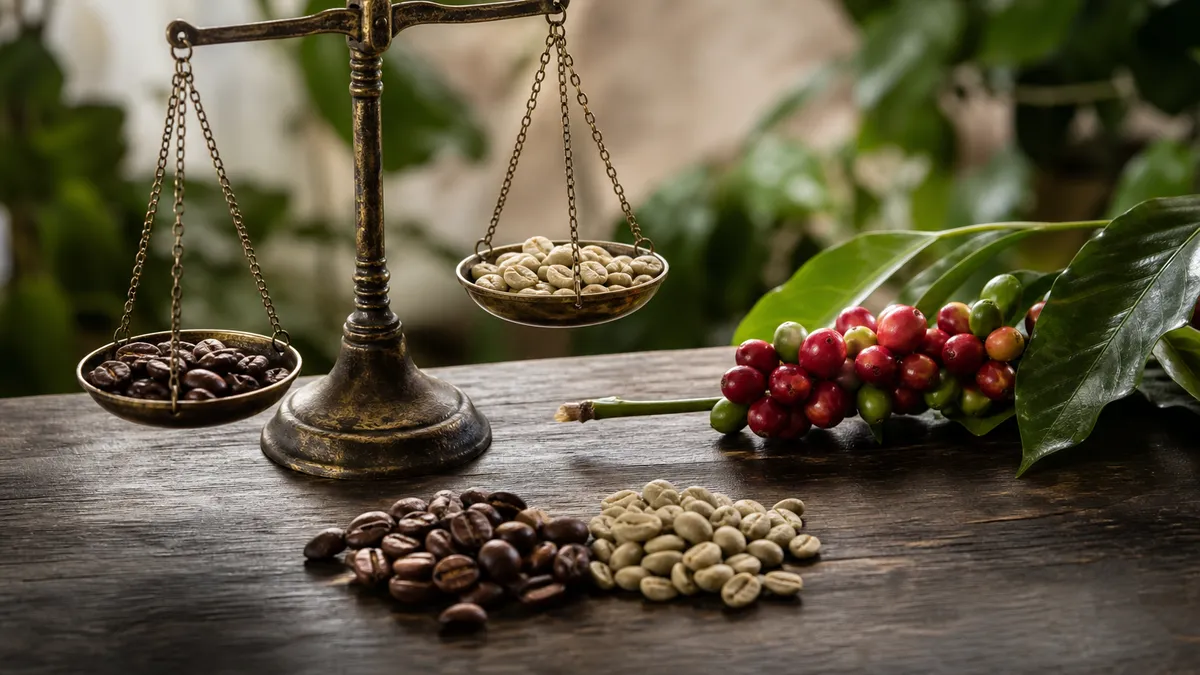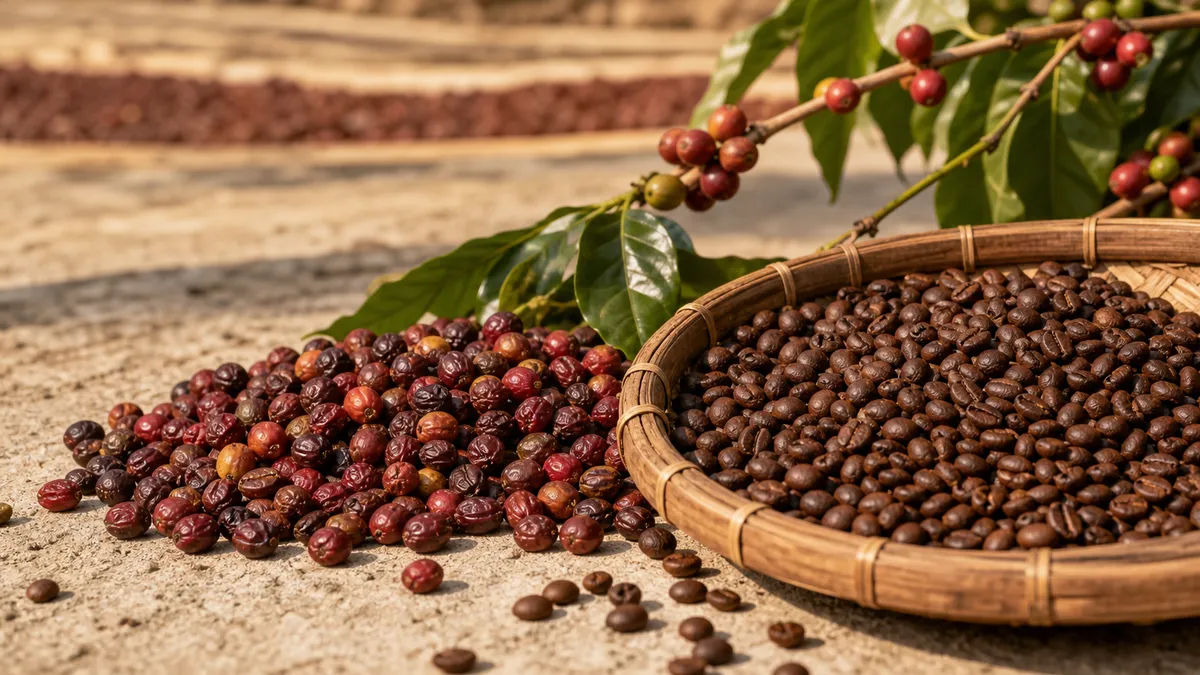
South America grows both arabica and robusta coffee, from Brazil’s extensive plantations to small farms on the slopes of the Andes. Brazil, Colombia and Peru account for much of its production, while Ecuador, Bolivia and Venezuela add distinctive origins worth exploring by region, variety and processing method rather than country name alone.
In short
- Brazil produces both arabica and canephora, including coffee traded as conilon.
- Colombia and Peru are major arabica origins, with substantial smallholder production.
- Altitude needs context: temperature, latitude, variety and farm management matter alongside metres above sea level.
- Harvest calendars vary within countries, especially Colombia.
- For buying, prioritise the named region, process, harvest information and roast suitability over a broad national flavour description.
Guides in South America
 Bolivia CoffeeDiscover Bolivia coffee, from high Yungas farms and Caranavi producers to sweet cup profiles, processing methods and its documented production decline.Read the guide
 Brazilian CoffeeDiscover Brazilian coffee’s chocolate-and-nut flavours, growing regions, arabica and conilon beans, processing methods and what to look for on a bag.Read the guide
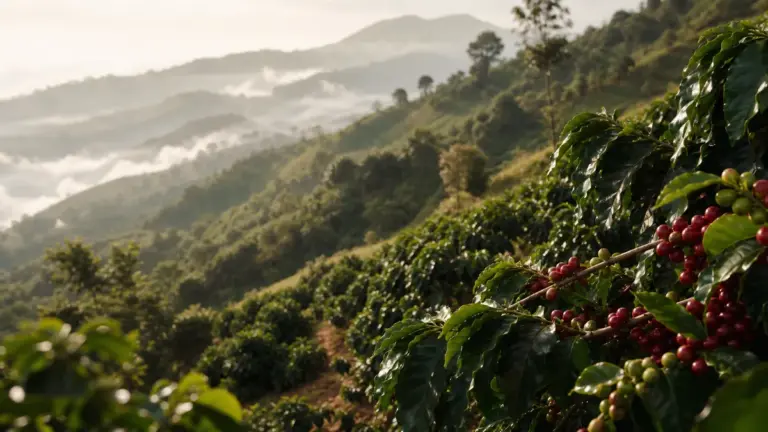 Colombian CoffeeDiscover Colombian coffee through Huila and Nariño: regional flavours, harvest seasons, washed processing, Castillo and what Supremo and Excelso really mean.Read the guide
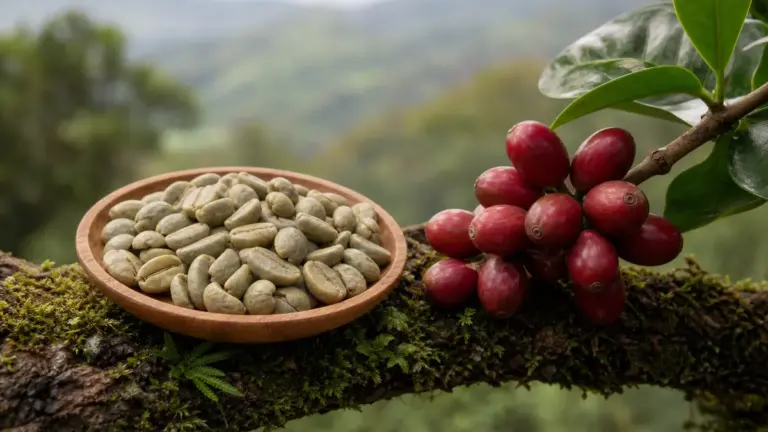 Ecuadorian CoffeeDiscover Ecuadorian coffee’s flavours, growing regions and processing methods, with a careful guide to Sidra, Typica Mejorado and what to look for.Read the guide
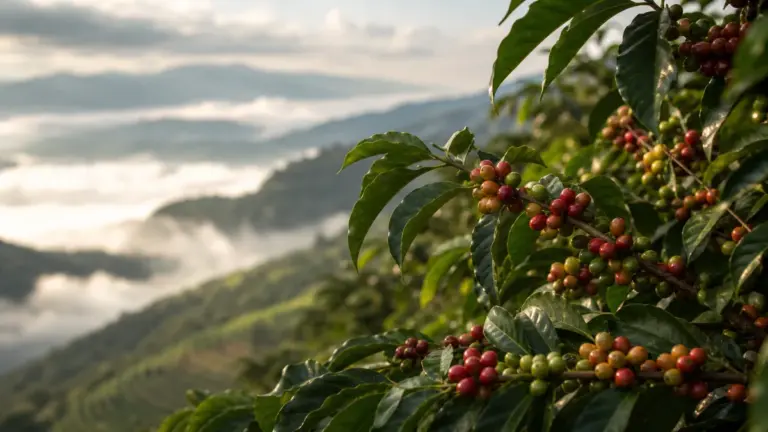 Peru CoffeeDiscover Peruvian coffee, from Cajamarca and Cusco to Junín, with clear guidance on flavour, altitude, varieties, organic certification and Fairtrade.Read the guide
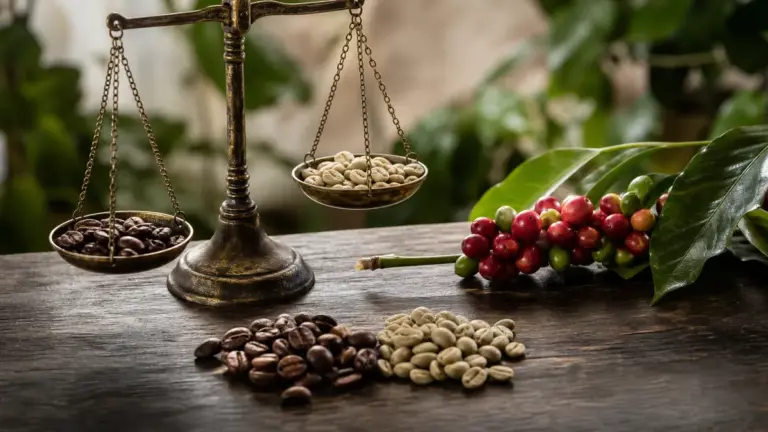 Venezuelan CoffeeDiscover what Venezuelan coffee tastes like, where it grows, why production declined, and what the evidence says about recovery and UK availability.Read the guide
Start here if you are new
Begin with beans and origins for the relationship between the coffee plant, growing conditions and the beans in your bag. Then read brazil and colombia together: their different growing systems and processing traditions provide a useful introduction to the continent’s range.
Use the country guides below when a label names a particular origin. This page explains the regional connections rather than repeating every country’s growing districts and production history.
South America’s coffee at a glance
Regional origin fact panel
- Species: Coffea arabica, generally called arabica, and Coffea canephora, commonly traded as robusta. Brazil and Ecuador grow both.
- Altitude: representative arabica regions include Brazil’s Cerrado Mineiro at 800 to 1,300 metres and Colombia’s Huila at 1,000 to 2,200 metres. These are examples, not the continent’s minimum and maximum elevations.
- Varieties: names to recognise include Typica, Bourbon, Caturra, Mundo Novo, Catuaí and Castillo. These are cultivated arabica varieties, not separate coffee species.
- Processing: whole-cherry natural processing, pulped natural processing and washed processing all occur. Ecuador’s documented specialty lots also include honey processing.
- Harvest: picking takes place in different months across the region. Peru’s season commonly runs from April to September; Colombia has regional harvest patterns and more than one peak.
- Cup profile: documented examples range from Cerrado Mineiro’s chocolate, caramel and nut notes to Huila’s fruit and caramel, and citrus-led Bolivian lots. None describes every coffee from its country.
Country comparison
The calendar below describes picking, not arrival at a UK roastery. Local examples are identified where a single national window would be misleading.
| Country | Growing areas to recognise | Coffee and processing to explore | Harvest guide | Useful buying distinction |
|---|---|---|---|---|
| Brazil | Cerrado Mineiro, Sul de Minas, Espírito Santo | Arabica and canephora; natural and pulped natural examples | May to September in Canastra; other regions differ | Check species and named region |
| Colombia | Huila, Tolima, Antioquia | Arabica; washed regional coffees | October to December and April to June peaks, with regional variation | Check the producing region and crop |
| Ecuador | Loja, Pichincha, Manabí, Amazonian provinces | Arabica and robusta; washed, natural and honey arabica lots | May to September in Fundochamba, Loja | Distinguish highland arabica from other production |
| Peru | Cajamarca, San Martín, Junín, Amazonas | Predominantly arabica; washed coffees worth exploring | April to September, with much picking from April to July | Ask for the cooperative, community or farm |
| Bolivia | Caranavi and the Yungas of La Paz | Arabica; documented washed specialty lots | Main season May to September | Seek a traceable lot rather than a national promise |
| Venezuela | Portuguesa, Lara and the Andean states | Arabica traditions; washed and dry processing documented | Traditionally October to March; confirm the specific crop | Request current harvest and processing details |
From Brazilian plantations to Andean smallholders
The contrast between Brazil and the Andes is useful, but it is not an absolute division between large and small farms. Brazil’s plateaus and rolling terrain support mechanised operations, while its mountainous districts also require different harvesting arrangements. Terrain changes what machinery can reach and how growers organise picking.
Small farms are central to coffee production elsewhere. USDA’s Colombia report estimates that about 60% of production comes from holdings smaller than 5 hectares. Its Peru report describes predominantly small farms, with hand-picking, shade-growing and sun-drying common features.
These systems create different practical challenges. A farm with suitable terrain can organise mechanised harvesting across extensive planted rows; a smallholder may pick and process smaller quantities before delivering coffee through a cooperative or buyer. Neither arrangement, by itself, establishes how good the finished coffee will taste.
How much coffee does South America produce?
A consistent statistical basis matters more than combining attractive-looking figures from different reports. In its July 2026 publication, USDA forecast 2026/27 production of 71.9 million 60 kg bags for Brazil, 13.4 million for Colombia and 4.78 million for Peru. The same table gives 500,000 bags for Venezuela and 350,000 for Ecuador.
These are forecasts, not final harvest totals, and the countries’ marketing years begin in different months. They show Brazil’s exceptional scale without implying that production volume ranks flavour or farming quality. Bolivia is not separately identified in that report’s published production summary.
Brazil: scale, species and regional differences
Brazil is the place to start when you want to understand how production scale and regional identity coexist. Its coffee includes both arabica and canephora, so “Brazilian coffee” does not even specify the species.
For a concrete flavour reference, the Cerrado Mineiro growers’ federation describes its region’s coffees through caramel and nut aromas, delicate citrus acidity and a sweet, chocolate-like flavour. That is a regional description, not a guarantee attached to every Brazilian bag.
Catuaí and Mundo Novo are useful variety names to recognise. Natural and pulped natural coffees offer another productive comparison: read brazilian origins when you want to understand those labels and move beyond the assumption that the whole country tastes alike.
Colombia and Peru: explore the Andean regions
Colombia
Colombia’s regional differences make the department name useful buying information. Huila’s protected origin description, for example, identifies washed arabica with sweetness, fruit and caramel notes, alongside medium to high acidity and body.
Its harvest calendar also resists a simple national date. USDA describes an October to December primary peak and an April to June secondary harvest, called the mitaca, particularly associated with the central coffee region. Other areas have different patterns, including production distributed through the year.
The colombian coffee guide is the useful next read when comparing departments, harvests and varieties. Do not interpret a second harvest as automatically second-rate coffee: it identifies a production period, not a quality grade.
Peru
Peru’s coffee production follows the eastern slopes of the Andes, with Cajamarca, San Martín, Junín and Amazonas among the principal regions. Typica and Caturra are established varieties, while national technical literature also documents Catimor material.
PROMPERÚ’s sensory work identifies floral, sweet, chocolate, nut, spice and acidity attributes across its evaluated coffees. That breadth is more helpful than treating Peru as an origin with one quiet, uniform flavour.
Read peruvian coffee when you want to compare regions and understand cooperative or community information on a bag. For a first purchase, ask the roaster what distinguishes the current lot from its other Peruvian coffees.
Ecuador, Bolivia and Venezuela: look more closely at the lot
Ecuador
Ecuador grows both arabica and robusta across markedly different producing areas. Its agricultural ministry identifies Manabí, Sucumbíos, Orellana, Loja and Zamora Chinchipe among provinces with substantial coffee-growing areas.
Its specialty arabica range should not stand in for the whole sector. Documented competition lots include washed, natural and honey coffees, with names such as Typica, Bourbon, Caturra, Sydra and Typica Mejorado appearing in producer records.
Use ecuadorian coffee to separate those growing areas and label terms. Ask for the producer’s actual variety and processing information rather than assuming a celebrated variety name describes all Ecuadorian production.
Bolivia
Caranavi and the Yungas of La Paz provide a useful starting point for Bolivian arabica. A national competition record offers a precise example: a 2024 washed Red Catuaí lot from Uchumachi, Caranavi, grown at 1,600 metres, described with citrus acidity, caramel, mango and dark chocolate.
That demonstrates what a traceable lot can tell you. It does not establish a national average flavour, nor should a competition selection be treated as representative of every farm.
The bolivian coffee guide is the next step for understanding its producing areas. When buying, favour that level of lot detail over an unsupported claim that altitude alone makes the coffee exceptional.
Venezuela
Venezuela’s coffee-growing areas include Portuguesa, Lara and the Andean states of Trujillo, Táchira and Mérida. Historical sector studies document both dry and wet processing, while CAF’s producer case study examines washed coffee production around Chabasquén and Biscucuy.
Older descriptions remain useful background, but they are not evidence about a current shipment. Ask for present crop information, the producing locality and the actual processing method.
Read venezuelan coffee when you need that national context. For selecting a bag, a current lot description is more useful than borrowing a flavour profile from a neighbouring country.
What altitude, varieties and processing actually tell you
Altitude is a clue to growing conditions
Metres above sea level are not a universal scoring system. A Brazilian coffee and an equatorial Andean coffee grown at the same elevation need not experience the same temperatures.
A 2024 research review by Brazilian coffee scientists explains how cooler conditions can prolong fruit ripening and influence compounds associated with cup quality. It also discusses the interaction between altitude and latitude: farther from the equator, suitable conditions can occur without the same elevation.
The practical lesson is to read altitude alongside location, variety and processing. It describes part of the growing environment, not a quality certificate.
Variety names cross national borders
Caturra is a naturally occurring compact mutation of Bourbon, subsequently selected for cultivation. Catuaí was developed by crossing Mundo Novo with Caturra. Their relationships help explain why familiar names recur across countries.
Breeding also addresses agricultural pressures. Colombia’s adoption of rust-resistant varieties illustrates why growers select plants for more than a fashionable tasting reputation.
Keep three categories separate when reading a label: Huila is a place, Caturra is a variety, and washed is a process. Each answers a different question about the coffee.
Processing describes what happens after picking
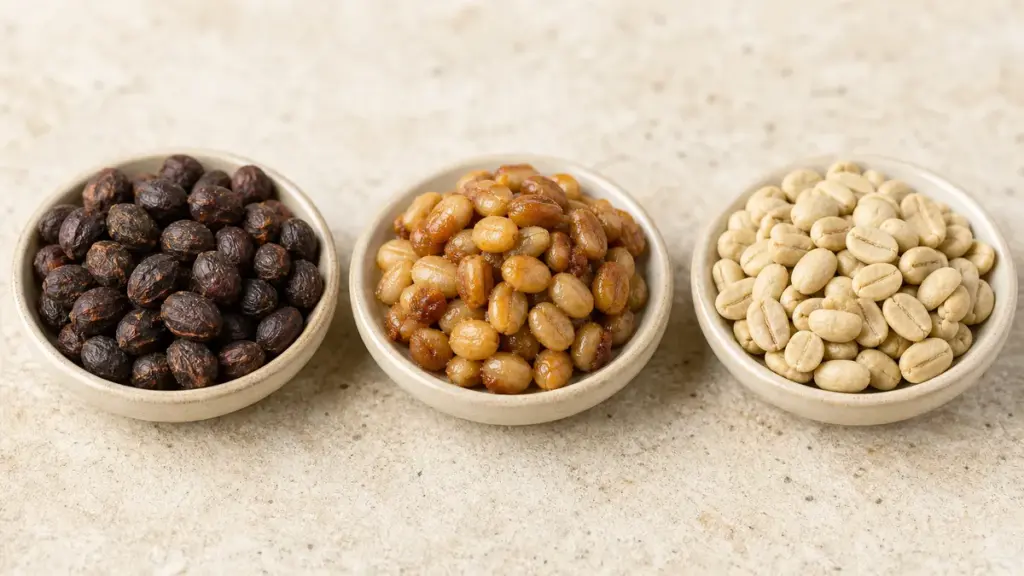
In natural processing, the coffee fruit is dried whole before the dried outer material is removed. In washed processing, the skin and pulp are removed, and the sticky mucilage surrounding the seeds is removed before drying.
Pulped natural processing sits between those descriptions: the fruit skin is removed before drying, without following the full washed route. Honey processing also involves drying depulped coffee with mucilage retained, although producers’ terminology and methods vary.
Processing matters, but a process name is not a complete flavour prediction. World Coffee Research’s sensory guidance identifies genetics, growing conditions, processing, storage, roasting and brewing among the influences on the eventual cup.
Buying South American coffee in the UK
Use country names to find your way around, then narrow the choice with information about the actual coffee.
- Choose the drinking style first. Tell the roaster whether you want a chocolate-led coffee for milk drinks, a fruit-led black coffee or something between them.
- Check the identity. Look for species, region, producer or cooperative, variety and process. Not every good coffee will have every field, but specific information makes comparisons easier.
- Separate harvest from roasting. Ask about both. The picking calendar is not a timetable for when a UK retailer must sell the coffee.
- Compare on fair terms. For an introductory tasting, choose coffees with similar roast intentions before trying to attribute every difference to geography.
- Ask what replaces the lot. For an office or regular household supply, request a consistent sensory description and advance notice when the coffee changes.
My suggested starting comparison is a chocolate-led Cerrado Mineiro arabica against a washed Huila coffee. Then explore a named Peruvian, Ecuadorian, Bolivian or Venezuelan lot using the same questions. That makes South America a set of understandable choices rather than a single flavour category.
FAQ
Do chocolate or fruit tasting notes mean ingredients have been added?
No, tasting notes normally describe perceived similarities in aroma and flavour, not an ingredients list. World Coffee Research’s sensory lexicon provides a vocabulary for describing those qualities. Check the product description separately if you want to establish whether a coffee is flavoured or has undergone processing involving added ingredients.
Is a variety name enough to predict whether I will like a coffee?
No, variety is only part of the picture. Growing conditions, processing, storage, roasting and brewing also influence what reaches the cup. Use the variety as useful background, then give more weight to the roaster’s description of the particular lot and its intended brewing style.
Should I choose a single-country coffee or a blend?
Choose according to your purpose rather than treating either format as inherently better. My preference for learning about origins is a clearly described single-country or regional coffee. For regular workplace drinking, I would prioritise an agreed flavour profile and reliable communication about substitutions, whether the product is a blend or a single origin.
Where to go next
Read Brazil and Colombia together to compare contrasting growing systems and processing traditions. Continue with Peru for another major Andean origin, or Ecuador to explore the distinction between a country’s wider production and its individually identified specialty lots.
Sources
-
USDA Foreign Agricultural Service, Coffee: World Markets and Trade, July 2026. Production forecasts and marketing-year definitions.
https://apps.fas.usda.gov/psdonline/circulars/2026/07/coffee.pdf -
USDA Foreign Agricultural Service, Coffee Annual: Colombia, report CO2026-0008, 20 May 2026. Smallholder production and harvest patterns.
https://apps.fas.usda.gov/newgainapi/api/Report/DownloadReportByFileName?fileName=Coffee+Annual_Bogota_Colombia_CO2026-0008.pdf -
USDA Foreign Agricultural Service, Coffee Annual: Peru, report PE2025-0018, 21 May 2025. Growing regions, farm systems, varieties and harvest season.
https://apps.fas.usda.gov/newgainapi/api/Report/DownloadReportByFileName?fileName=Coffee+Annual_Lima_Peru_PE2025-0018.pdf -
Federação dos Cafeicultores do Cerrado, Nosso Terroir, undated, current page checked in 2026. Regional altitude and sensory description.
https://www.cerradomineiro.org/index.php?pg=nossoterroir -
Federación Nacional de Cafeteros, Regional Designation of Origin, undated, current page checked in 2026. Huila altitude and protected sensory description.
https://cafedecolombia.com/en/regional-designation-of-origin/ -
PROMPERÚ, Regiones Cafetaleras del Perú: Resultados, undated, current page checked in 2026. Evaluated sensory attributes and variety names.
https://sites.peru.info/es-pe/cafesdelperu/regiones-cafetaleras/resultados -
Ministerio de Agricultura y Ganadería, Ecuador, Café: Trazabilidad, undated, current page checked in 2026. Species and producing provinces.
https://trazabilidad.agricultura.gob.ec/?p=408 -
Alliance for Coffee Excellence, Ecuador 2022: Competition Results, 2022. Documented varieties, regions and processing methods.
https://allianceforcoffeeexcellence.org/ecuador-2022/ -
Gobierno Autónomo Descentralizado Parroquial de Fundochamba, Fundochamba, undated, current page checked in 2026. Local agricultural calendar.
https://fundochamba.gob.ec/fundochamba/ -
National Bolivian Coffee Council, Café APRAC de Walter Flores Uluri: X National Tournament Quality Cup Presidential Coffee Bolivia, 2024. Lot origin, variety, altitude, process and cup description.
-
Project Origin, Green Coffee Beans from Bolivia, undated, current page checked in 2026. Sourcing organisation’s harvest calendar.
https://projectorigin.coffee/es/au-home/au-our-coffee/bolivia/ -
CAF, Cafés Aromáticos de Venezuela, November 2012. Producer case study and washed processing.
https://scioteca.caf.com/bitstream/handle/123456789/700/Cafes_aromaticos_de_Venezuela.pdf -
Ediciones IESA, Menéndez and Sabal, Café venezolano: pasando un trago amargo, August 2009. Historical growing areas, processing and harvest pattern. Authorial case study retrieved from a hosted copy.
https://capitaldemarca.wordpress.com/wp-content/uploads/2013/01/cafe-venezolano.pdf -
World Coffee Research, Arabica Varieties Catalog, continuously maintained, entries checked in 2026: Catuaí, Caturra and Mundo Novo.
https://varieties.worldcoffeeresearch.org/varieties/catuai
https://varieties.worldcoffeeresearch.org/varieties/caturra
https://varieties.worldcoffeeresearch.org/varieties/mundo-novo -
World Coffee Research, Sensory Lexicon, version 2.0, 2017. Descriptive sensory language and influences on coffee flavour.
https://worldcoffeeresearch.org/download/bf904452-fc8c-488f-b591-c0b20d9bcab2 -
Alves and colleagues, Embrapa and partner institutions, Efeitos das características ambientais na qualidade do café, Informe Agropecuário, volume 45, number 327, 2024. Research review of environment and cup quality.
https://www.alice.cnptia.embrapa.br/alice/bitstream/doc/1170171/1/Efeitos-das-caracteristicas-ambientais.pdf -
Embrapa Acre, Obtenção de café com qualidade no Acre, Circular Técnica 34, August 2000. Processing definitions and harvesting considerations.
https://www.infoteca.cnptia.embrapa.br/bitstream/doc/495398/1/cirtec34.pdf -
ABDI, ICNA and Sebrae, Brazilian Coffee Regions: Controlled and Sustainable Origins, undated. Regional descriptions and Canastra harvest calendar; retrieved from a hosted copy.
This page was researched from official agricultural statistics, national and regional coffee organisations, original competition records, technical publications and a research review; sensory examples are identified as regional descriptions or individual lots, not first-hand tasting.
Last checked: November 2026