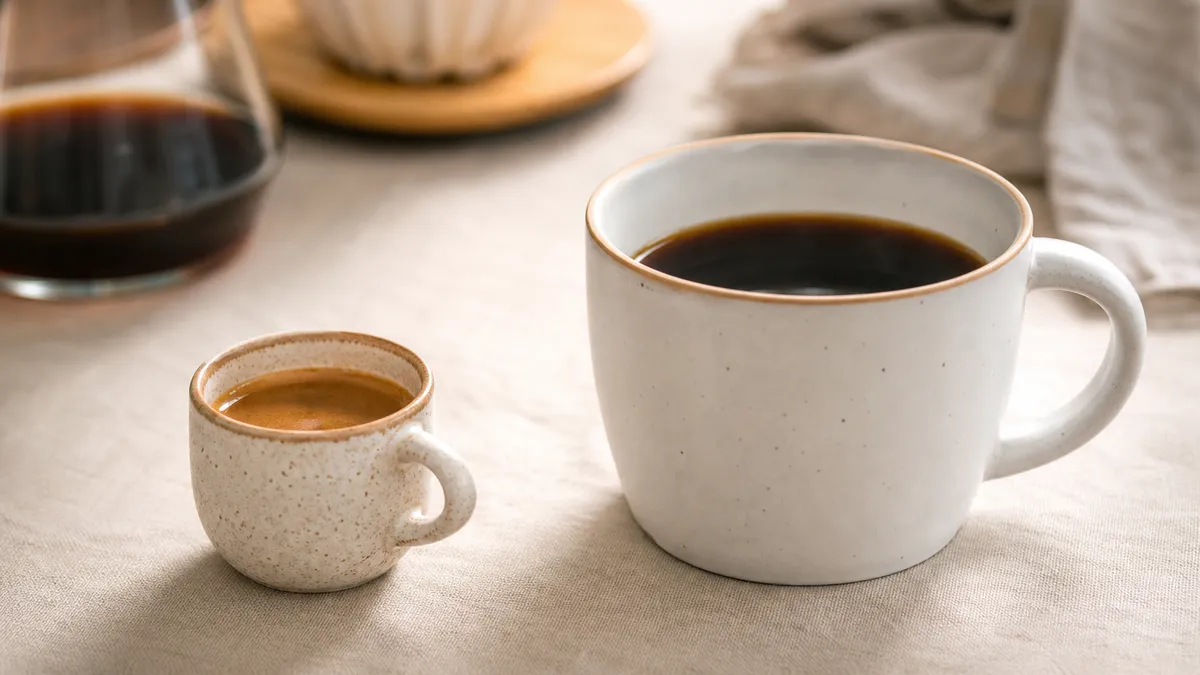
Coffee myths and facts are easiest to separate when you ask what was measured, how much coffee was involved and who was studied. Coffee counts towards fluid intake, while roast colour and a forceful flavour are not reliable measures of caffeine. This hub helps you find the evidence behind familiar claims without replacing one sweeping statement with another.
In short
- Hydration: the NHS includes coffee and tea in daily fluid intake.
- Bone health: bone density and fracture risk are different outcomes, and research does not support a simple blanket verdict.
- Caffeine: compare the amount in the whole serving, not just its concentration or roast colour.
- Acidity: pH and titratable acidity measure different things; neither alone establishes how a drink affects your health.
- Evidence: a finding about teenage bone development is not proof about final adult height.
Guides in Coffee Myths and Facts
 Coffee and Bone HealthIs coffee bad for your bones? Understand caffeine’s small effect on calcium, the limits of fracture studies and who should take extra care with…Read the guide
 Coffee and DehydrationDoes coffee dehydrate you? See what controlled studies and NHS guidance say about fluid intake, caffeine tolerance and counting your daily drinks.Read the guide
 Coffee Science DebunkedTest coffee claims about cancer, metabolism, detox, mould and stomach acidity against research, with clear verdicts and the limits of the evidence.Read the guide
 Common Coffee MisconceptionsCheck common coffee myths about health, caffeine, dark roast, freshness, storage and brewing, with clear explanations of what the evidence actually says.Read the guide
 Does Coffee Stunt Growth?Does coffee stunt growth? Learn where the myth came from, what studies actually measured, and what UK caffeine guidance says for children and teens.Read the guide
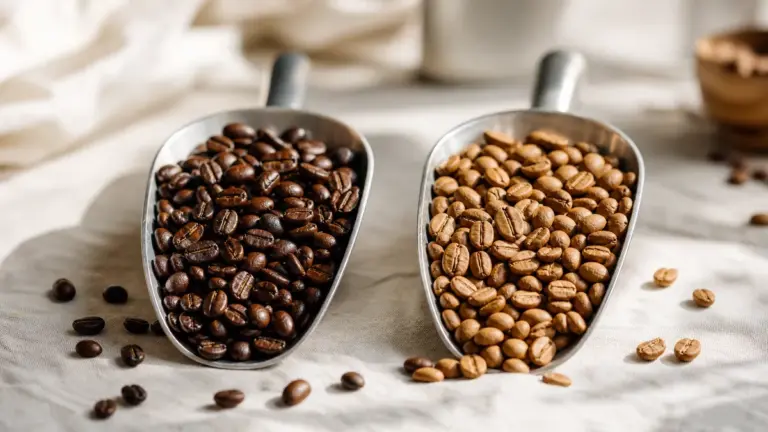 Does Dark Roast Have More Caffeine?Does dark roast have more caffeine? See how weighing beans differs from using a scoop, what roasting changes, and why studies give different answers.Read the guide
 Is Coffee Acidic? The pH Myth ExplainedIs coffee acidic? Understand pH, sour taste, cold brew and low-acid claims, plus what the evidence says about stomach comfort and reflux symptoms.Read the guide
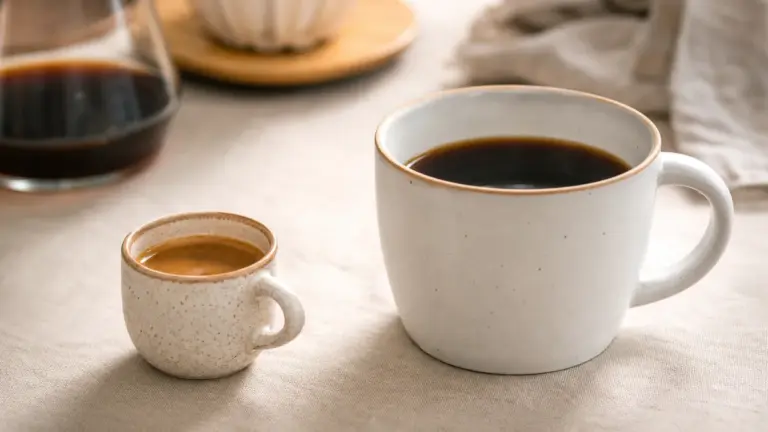 Is Espresso Stronger Than Filter Coffee?Compare espresso and filter coffee by concentration, flavour and caffeine per serving, with sourced ranges explaining why a bigger mug can deliver more.Read the guide
Start here if you are new
Follow this short reading path before tackling an individual claim:
- common misconceptions is the starting point when you want to check several things you have heard about coffee.
- coffee science debunked is the next read when you want to examine the explanation behind a claim, rather than just its verdict.
- espresso versus filter strength gives you a specific comparison through which to explore what “strong” means.
For the wider subject, return to learn coffee. Use this hub as a route into disputed claims, rather than as a substitute for the detailed articles.
You can also begin with the decision you need to make. If you are choosing a drink, start with caffeine and serving size. If a claim concerns your health, read the relevant topic alongside the safety guidance below.
Coffee myths and facts at a glance
The comparison criteria here are the claim, the best-supported short answer and the qualification that prevents it becoming misleading.
| Claim | Short answer | Qualification |
|---|---|---|
| Coffee dehydrates you | Coffee counts towards fluid intake | A controlled hydration study in habitual male coffee drinkers cannot establish every response to every caffeine dose. |
| Coffee inevitably weakens bones | Too broad | Studies have reported different findings for bone density and fractures, with calcium intake relevant in some research. |
| Cold brew is always much less acidic | Not established by pH alone | Laboratory research found similar pH but different titratable acidity in the hot and cold brews tested. |
| Dark roast always contains more caffeine | No dependable rule | Controlled brewing research shows that roast comparisons depend partly on extraction conditions. |
| Coffee stunts growth | Not an established conclusion | Adolescent bone research does not directly settle the separate question of final height. |
| Espresso is always the most caffeinated drink | Not necessarily per serving | Concentration and the total amount consumed are different measurements. |
Treat the final column as part of the answer, not small print. It tells you where a useful general statement stops being reliable.
Health claims: hydration, bones and growth
Does coffee dehydrate you?
Coffee contributes fluid rather than automatically cancelling out the water it contains. The NHS explicitly counts coffee towards daily fluid intake. A controlled crossover study, in which participants received both coffee and water in separate trial periods, also found no significant differences across the hydration measures assessed.
That experiment involved 50 men who habitually drank coffee, with each trial lasting three days. It supports a conclusion about moderate consumption under those conditions, not unlimited coffee intake or every possible drinker.
Read coffee and dehydration when you want to distinguish a diuretic effect, meaning increased urine production, from a net loss of body water. It is the useful next step if you have been told that every coffee needs a matching glass of water.
Does coffee harm bone health?
“Coffee weakens bones” is too blunt to describe the evidence. In a large observational study of Swedish women, higher coffee consumption was associated with slightly lower bone density but not a higher fracture rate. An earlier analysis reported increased fracture risk among women combining high coffee consumption with low calcium intake.
These findings concern associations, not proof that coffee caused an outcome. They also show why bone mineral density, a measurement of mineral content, should not be treated as interchangeable with the occurrence of a broken bone.
Choose coffee and bone health if your question concerns osteoporosis or fracture research. Read it before making a dietary change based on a headline; personal advice belongs with your GP or the clinician managing your bone health.
Does coffee stunt growth?
The claim should not be presented as an established fact. One longitudinal study following adolescent girls found no significant differences in bone mineral gain or anthropometric measurements between its caffeine-intake groups. However, it was not a trial designed to determine whether coffee changes final adult height.
That distinction matters in both directions. A limited study cannot prove that coffee stunts growth, but neither should a reassuring bone result be turned into a claim that unrestricted caffeine is suitable for children. The NHS identifies water and milk as the best drinks for children.
Read coffee and growth when this question arises in a family discussion. It is the place to examine what growth research can establish without confusing height, bone development and adult caffeine guidance.
Acidity: what pH does and does not tell you
Acidity is not one measurement with one meaning. pH describes hydrogen-ion activity in a liquid, whereas titratable acidity measures how much alkali is needed to reach a specified endpoint. Two coffees can therefore have similar pH readings but different titratable acidity.
In a laboratory comparison of hot and cold brewing, the tested coffees had comparable pH values, while the hot brews had higher titratable acidity. This is a useful example of why “less acidic” needs a stated measurement and comparison. It does not establish a universal health advantage for either brewing method.
Use the pH myth when a product claim or brewing discussion treats a pH reading as the whole story. Look for the precise question: is the claim about a laboratory measurement, flavour or a health outcome? Those require different evidence.
For buying decisions, ask what was tested and against what alternative. “Lower than another tested coffee under this method” is a more informative claim than an unexplained “low acid” label.
Caffeine: roast colour, espresso and serving size
Does dark roast have more caffeine?
Dark roast is not a dependable shortcut to a higher caffeine intake. A controlled laboratory study found that darker roasts generally produced lower caffeine concentrations under identical brewing conditions, but higher concentrations when compared at identical extraction yields. Extraction yield is the proportion of the dry coffee dissolved during brewing.
The apparent reversal is the useful lesson. Holding the brewing recipe constant is not the same experiment as holding extraction yield constant, so a simple slogan can hide a change in the comparison.
Read dark roast and caffeine when choosing beans on the assumption that darker means more stimulating. For a fair comparison at home, record the dry coffee mass and brewing method rather than relying on colour alone.
Is espresso stronger than filter coffee?
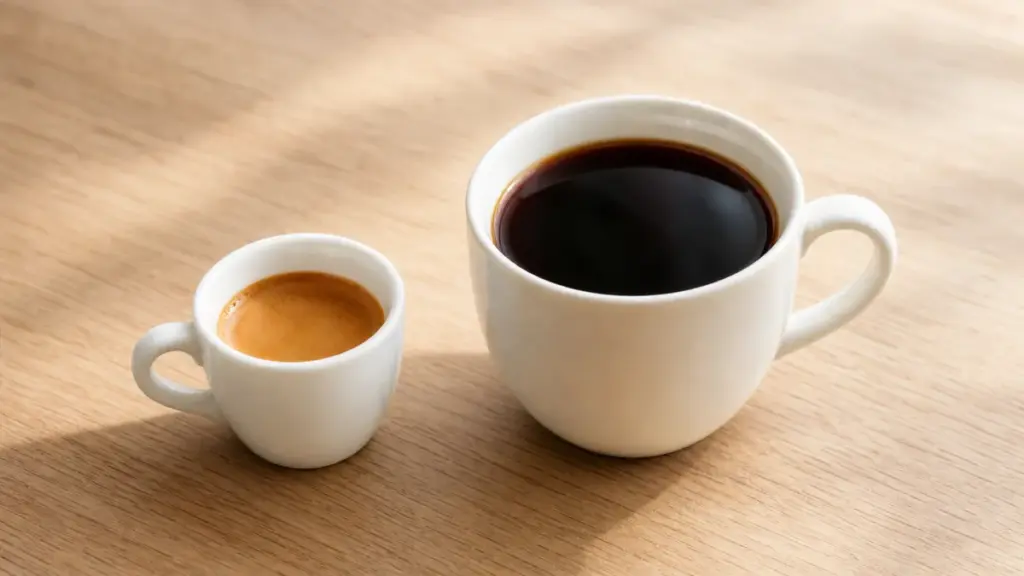
Espresso is concentrated, but concentration does not determine the caffeine total without serving size. Instrumental research comparing brewing methods found higher concentrations in espresso-style drinks, while larger drinks generally contained more of the measured compounds per serving.
Separate three questions:
- How concentrated is the drink?
- How much caffeine is in the complete serving?
- What sensory characteristic do you mean by “strong”?
The first two can be measured separately. The third needs a clearer description before it can support a useful comparison. Research comparing instrumental measurements with sensory profiles illustrates why chemical concentration and perceived characteristics should not simply be treated as the same thing.
Choose espresso and filter strength when comparing a small shot with a full mug. Establish the serving and recipe before deciding which provides more caffeine.
How to judge the evidence behind a claim
Use this checking method when a coffee claim arrives without enough explanation:
- Write down the exact claim. Replace “coffee is strong” with the specific outcome being asserted.
- Identify the comparison. Check whether quantities, serving sizes and preparation methods match.
- Look for the study design. Distinguish a controlled experiment from an observational study or a laboratory analysis.
- Check the participants or samples. Ask whether they resemble the people or coffee involved in your question.
- Read the limitation with the result. Do not remove a condition that changes the meaning.
The studies above illustrate why this matters: the hydration experiment tested people over a short period, the bone studies followed dietary patterns and outcomes, and the acidity work analysed drinks in a laboratory. Each answers a different kind of question.
For deeper reading, coffee science debunked is the route into mechanisms and research interpretation. Return to common misconceptions when you want a broader check rather than a detailed assessment of one study.
Keep safety guidance separate from myth-busting
EFSA’s 2015 assessment found no safety concerns for healthy non-pregnant adults at habitual caffeine intakes up to 400 mg daily, spread across the day, or single doses up to 200 mg. These are population benchmarks, not targets or guarantees for every individual.
The NHS advises no more than 200 mg daily from all sources during pregnancy. Sensitivity, medicines and health conditions require individual consideration; speak to a GP, pharmacist or midwife when the question concerns your own circumstances.
Correcting a myth does not mean recommending more coffee. Use coffee myths and facts to make the question more precise, then follow the evidence relevant to your drink and situation.
FAQ
Should I replace every coffee with an extra glass of water?
No automatic one-for-one replacement is required: coffee counts towards fluid intake. Drink regularly and account for circumstances that increase fluid needs, such as heat or prolonged physical activity. The NHS recommends water as the best way to replace fluid lost through sweating or illness.
Does a caffeine intake below the adult benchmark guarantee good sleep?
No. EFSA reports that even 100 mg of caffeine can affect sleep in some adults, particularly when consumed near bedtime. The daily benchmark addresses safety concerns at population level; it is not a promise that a particular intake or timing will leave your sleep unaffected.
Can a finding about antioxidants prove that one coffee is healthier?
No. A laboratory antioxidant assay measures a property of the tested sample, not a health outcome in the person drinking it. The hot and cold brew acidity study also measured antioxidant activity, but called for further research into possible health differences. Treat a chemical result as evidence about chemistry, not a completed clinical verdict.
Where to go next
Read Common Misconceptions for a wider check of familiar claims, or Coffee Science Debunked to examine how explanations are tested. For a practical drinks comparison, choose Is Espresso Stronger Than Filter Coffee?; for health-related reading, Coffee and Bone Health explores why outcomes and individual circumstances matter.
Sources
-
NHS. Water, drinks and hydration. Reviewed 2023.
https://www.nhs.uk/live-well/eat-well/food-guidelines-and-food-labels/water-drinks-nutrition/ -
European Food Safety Authority. Caffeine, official topic page summarising the Scientific Opinion on the safety of caffeine, 2015.
https://www.efsa.europa.eu/en/topics/topic/caffeine -
NHS. Foods to avoid in pregnancy. Current guidance retrieved November 2026.
https://www.nhs.uk/pregnancy/keeping-well/foods-to-avoid/ -
Killer, Blannin and Jeukendrup, University of Birmingham. No Evidence of Dehydration with Moderate Daily Coffee Intake: A Counterbalanced Cross-Over Study in a Free-Living Population. PLOS ONE, 2014.
https://pure-oai.bham.ac.uk/ws/portalfiles/portal/106347790/KillerSC2014No.PDF -
Hallström and colleagues. Long-term coffee consumption in relation to fracture risk and bone mineral density in women. American Journal of Epidemiology, 2013.
https://pubmed.ncbi.nlm.nih.gov/23880351/ -
Hallström and colleagues. Coffee, tea and caffeine consumption in relation to osteoporotic fracture risk in a cohort of Swedish women. Osteoporosis International, 2006.
https://pubmed.ncbi.nlm.nih.gov/16758142/ -
Lloyd and colleagues, Penn State College of Medicine. Dietary caffeine intake is not correlated with adolescent bone gain. Journal of the American College of Nutrition, 1998.
https://pubmed.ncbi.nlm.nih.gov/9791842/ -
Rao and Fuller. Acidity and Antioxidant Activity of Cold Brew Coffee. Scientific Reports, 2018.
https://pmc.ncbi.nlm.nih.gov/articles/PMC6207714/ -
Scientific Reports. Caffeine content in filter coffee brews as a function of degree of roast and extraction yield. 2024.
https://pmc.ncbi.nlm.nih.gov/articles/PMC11586412/ -
Gloess and colleagues, Zurich University of Applied Sciences. Comparison of nine common coffee extraction methods: instrumental and sensory analysis. European Food Research and Technology, 2013.
Research combined current NHS and EFSA guidance with retrieved original research, distinguishing controlled experiments, observational associations and laboratory measurements.
Last checked: November 2026