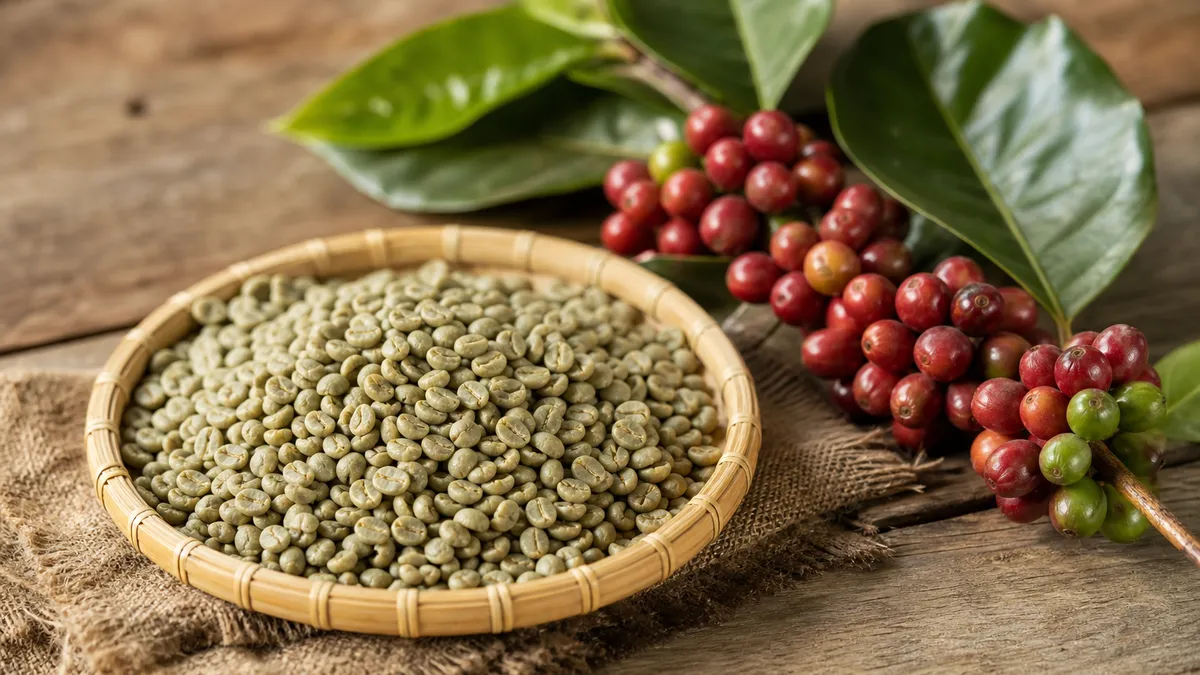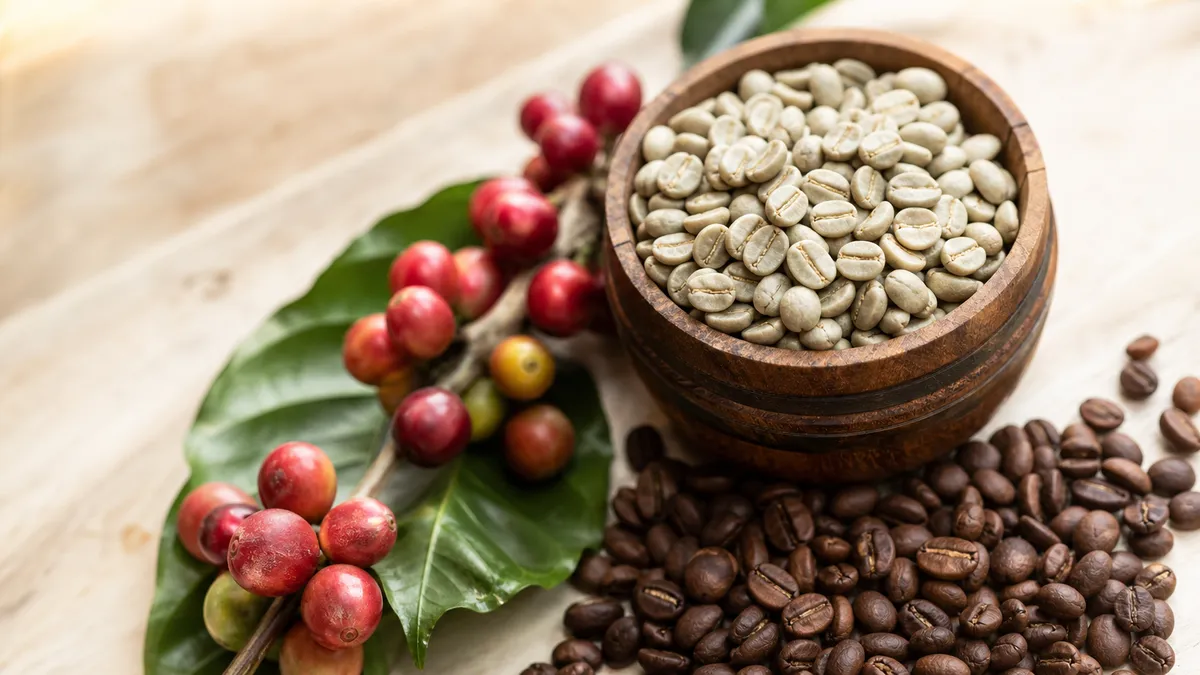
Caribbean coffee comes from mountain-growing areas in Jamaica, Puerto Rico, the Dominican Republic, Cuba and Haiti, with arabica central to the origins explored here. Expect substantial differences between islands and individual lots: Jamaica Blue Mountain is a certified origin, while a Caribbean label alone tells you little about variety, processing or flavour.
In short
- Start with provenance: look for the island, growing district and producer or cooperative, not simply “Caribbean coffee”.
- Altitude varies: published examples below span roughly 400 to 1,700 metres above sea level, but this is not the region’s complete growing range.
- Typica matters, but is not the whole story: Bourbon, Caturra and other cultivated varieties also appear.
- Check processing: washed coffees feature prominently, alongside natural and honey-processed lots.
- Treat harvest calendars as guides: picking periods vary with location, elevation and weather, and are not the same as UK arrival dates.
Guides in Caribbean
 Cuba and HaitiExplore coffee from Cuba and Haiti, from mountain growing areas and flavour to Haitian Blue labels, production challenges and the UK trade position.Read the guide
 Jamaican Blue Mountain CoffeeDiscover what Jamaican Blue Mountain coffee means, how certification and blends differ, Japan’s role, and how to check a UK seller’s origin claims.Read the guide
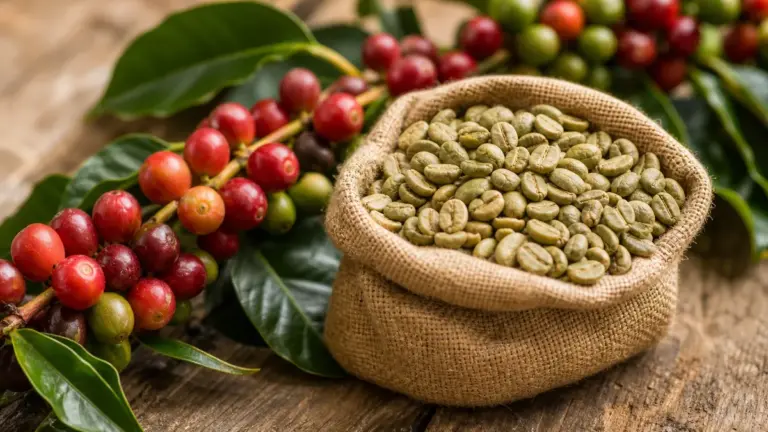 Puerto Rican CoffeeDiscover Puerto Rican coffee’s chocolate and caramel profile, mountain growing areas, varieties, hurricane history and what to check before buying.Read the guide
 The Dominican RepublicExplore Dominican Republic coffee, from Valdesia and Barahona to varieties, processing, domestic drinking and verified export figures. Know what to buy.Read the guide
Start here if you are new
Begin with beans and origins for the distinction between a growing origin, a coffee species and a cultivated variety. Then read Puerto Rican coffee to explore its mountain districts, followed by Dominican coffee for an introduction to the different origins within one country.
This page compares the main origins and helps you choose which country guide to explore next. Detailed estate histories and individual regional classifications belong in those guides.
Caribbean coffee: regional fact panel
Growing areas: Jamaica’s Blue Mountains and High Mountain districts; Puerto Rico’s mountainous interior; the Dominican Republic’s several coffee-growing mountain districts; eastern and central Cuban growing areas; and Haiti’s northern, central and southern coffee districts.
Altitude: representative published references include 500 to 1,400 metres in Dominican agronomic guidance and approximately 900 to 1,700 metres in the Jamaica Tourist Board’s description of Blue Mountain coffee. These are different kinds of reference, not interchangeable legal definitions or regional limits.
Species and varieties: Coffea arabica is central to these origins. Typica, Bourbon and Caturra recur in the sources, alongside other selections and breeding groups; robusta, Coffea canephora, is also documented in the region.
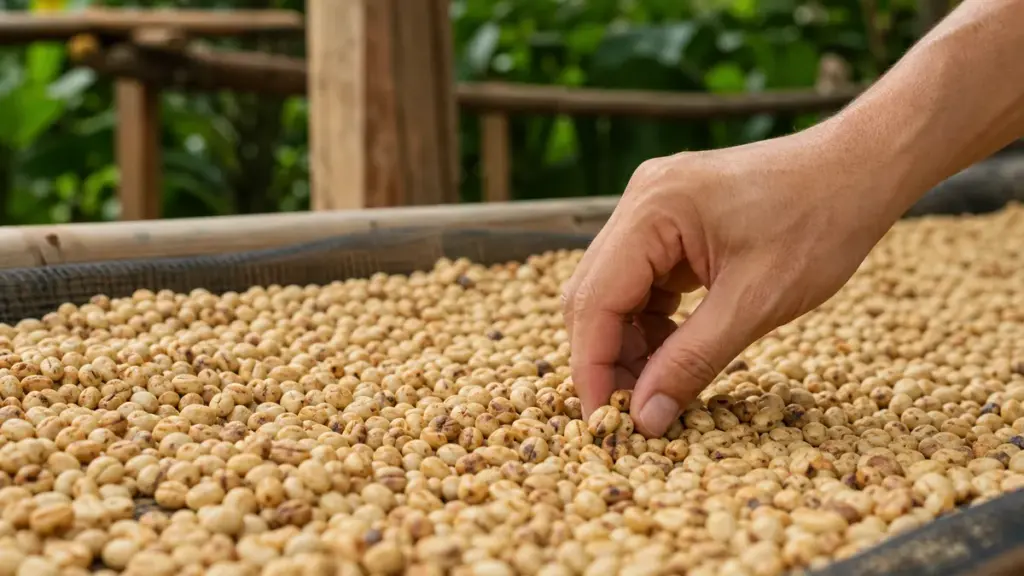
Processing: washed processing removes the fruit flesh and sticky mucilage before the beans finish drying. Natural processing dries the whole cherry first; honey processing dries depulped beans with some mucilage retained.
Harvest and cup: the country table gives indicative picking windows. Published descriptions include sweetness, chocolate, nuts, fruit and floral notes, but these are starting points for choosing a lot, not a single Caribbean flavour specification.
The main origins compared
The altitude and harvest entries below deliberately distinguish national guidance from individual producer examples. They should not be read as complete national boundaries or fixed annual calendars.
| Origin | Published altitude reference | Indicative harvest reference | Published cup description |
|---|---|---|---|
| Jamaica | Blue Mountain reference band approximately 900 to 1,700 m | Supplier describes cycles from late August or September to January, and late January or February to May or June | Balanced acidity and sweetness, with a mellow sweet finish |
| Puerto Rico | Hacienda Mireia in Yauco reports nearly 900 m | Café Peregrino at Gripiñas reports November to February | Tourism-board descriptions include chocolate, nuts, dried fruit and gentle citrus |
| Dominican Republic | INDOCAFE guidance gives 500 to 1,400 m | August in lower areas through June in higher areas | Valdesia’s council describes medium body, gentle acidity, sweetness and occasional nut and chocolate notes |
| Cuba | Moka Trade’s El Nicho, Escambray coffee is listed at 600 to 800 m | October to March for that supplier’s El Nicho coffee | Supplier describes spice, chocolate and tobacco |
| Haiti | World Bank field assessment describes 400 to 1,300 m; not a national maximum | COOPCAB assessment records September to February across its growing elevations | Current cooperative-sourced offerings include chocolate, caramel, citrus and floral descriptions |
The tasting descriptions come from origin bodies or suppliers, not first-hand testing for this website. In particular, the Cuban and Haitian examples describe particular offerings rather than every coffee grown in those countries.
Jamaica and Puerto Rico
Jamaica: distinguish Blue Mountain from other Jamaican coffee
Jamaican coffee cultivation includes the Blue Mountain area in the east and High Mountain production outside it. JACRA, the Jamaica Agricultural Commodities Regulatory Authority, identifies arabica Typica as the dominant variety being propagated in the industry.
Jamaica Blue Mountain is more than a description of coffee grown on a mountain. Its identity depends on the designated origin and certification system, with trademark use subject to licensing. Altitude alone is therefore not enough to authenticate a bag.
Published Blue Mountain descriptions emphasise balance, sweetness and a mellow finish. Washed processing is established, although natural lots are also offered by some estates. Before choosing a bag, ask the seller to explain its certified origin, named producer and supply chain rather than relying on mountain imagery or the word “Jamaican”.
Puerto Rico: mountain districts and named farms
Puerto Rico’s coffee-growing identity centres on its mountainous interior. Places to look for in producer information include Yauco, Adjuntas, Utuado and the central-western growing districts described by USDA.
University of Puerto Rico extension material documents Typica, Bourbon, Caturra, Mundo Novo and Pacas among the cultivated arabicas. Producer information adds useful detail: Café Peregrino, for example, describes washed coffee from Gripiñas and a November to February harvest, but that estate calendar should not be applied to the whole island.
Chocolate and nut descriptions feature prominently in Puerto Rico’s tourism-board account, with dried-fruit and citrus notes also mentioned. Use Puerto Rican growing districts when you want to investigate named locations rather than buy on the strength of an island-wide description.
Hispaniola: the Dominican Republic and Haiti
The Dominican Republic and Haiti share Hispaniola, but deserve separate treatment as coffee origins. Their growing districts, producer organisations and routes to market are not interchangeable.
Dominican Republic: several origins within one country
INDOCAFE lists market names including Barahona, Neyba, Cibao, Cibao Altura, Juncalito and Valdesia. Those distinctions are a useful starting point: “Dominican Republic” is an origin, but it is not yet a precise description of the coffee in the bag.
Typica and Caturra are established varieties. INDOCAFE also records planting of other material selected for resistance to coffee leaf rust, a fungal disease affecting coffee leaves. Avoid assuming that every current planting is an unchanged traditional variety.
Valdesia offers a particularly clear example of a defined origin. Its regulating council describes shaded Typica and Caturra from the specified growing area in Ocoa, Peravia and San Cristóbal, with medium body, soft acidity and sweetness. Read Dominican growing districts to compare these names and decide what provenance to request.
Haiti: cooperative origins and more genetic diversity than labels suggest
Haiti’s national coffee institute identifies important production areas around Thiotte and Belle-Anse, Beaumont and other Grand’Anse districts, Baptiste and Savanette, and northern districts including Dondon. These names are more informative than a generic “Haitian mountain coffee” description.
Traditional coffee production includes mixed tree-cropping systems often called Creole gardens. Historical assessments document natural and washed processing; present-day cooperative-sourced export offerings also include honey processing.
Typica has an important place in Haitian coffee, but “all old Typica” is an oversimplification. A peer-reviewed genetic study published in 2024 sampled 28 farms and identified Typica-related, Bourbon-related and Catimor-related groups, mixed ancestry and limited robusta cultivation in its study areas. This was a genetic field study, not a national planting census or a comparison of cup quality.
Cuba: growing origin is not the same as brewing style
Cuba’s coffee geography includes the eastern Sierra Maestra area and central growing districts such as the Escambray. Supplier information illustrates why lot-level detail matters: Moka Trade lists an El Nicho coffee from the Escambray at 600 to 800 metres, while Café Ético’s Guantánamo specification lists several arabica varieties rather than one uniform national planting.
Washed Cuban export coffees are documented, including Serrano Lavado offerings. Published supplier descriptions often include chocolate, nuts, spice or tobacco, but the roast must be read alongside those notes: Café Ético explicitly describes its smoky, cocoa-toned example as dark roasted.
For buying purposes, separate Cuban-grown beans from Cuban-style coffee. Ask where the beans were cultivated rather than treating a preparation-style description as proof of origin.
The shared Cuba and Haiti guide is the next read for comparing their growing areas, production histories and export identities without confusing the two origins.
Why altitude, variety and processing need to be read together
Altitude is useful information because it helps describe the growing environment, particularly temperature. It is not a tasting score: a higher number does not establish how ripe the cherries were when picked, how carefully the coffee was processed or whether you will enjoy the finished roast.
Variety names answer a different question. Arabica is a species; Typica and Bourbon are varieties within it, while Catimor refers to a breeding group rather than one universal coffee. World Coffee Research describes Typica as valued for quality potential but highly susceptible to coffee leaf rust.
Processing adds another distinction. In washed processing, fruit removal and mucilage removal precede final drying; in natural processing, drying begins with the whole cherry. A honey-processed coffee retains some mucilage during drying, so “honey” describes the method, not an added ingredient.
For a useful comparison, ask for origin, variety, process and roast together. “High-grown Caribbean arabica” leaves too many of those questions unanswered.
History and production in perspective
Caribbean coffee history includes colonial plantation expansion, enslaved labour, migration and the development of smallholder production. UNESCO’s account of south-eastern Cuba explicitly connects its plantation remains with French-Haitian migration and the exploitation of enslaved Africans.
A short timeline provides useful anchors:
- 1736: University of Puerto Rico extension material dates coffee’s introduction to Puerto Rico to this year.
- 1804: Haitian independence followed the revolutionary upheaval that displaced plantation owners, some of whom moved to Cuba with enslaved people.
- 2000: UNESCO inscribed the early coffee plantation sites of south-eastern Cuba on the World Heritage List.
- 2017: Hurricanes Irma and Maria severely damaged Puerto Rico’s coffee sector.
Production figures need equally careful labels. The ICO’s December 2023 report shows Jamaica, Cuba, Haiti and the Dominican Republic as relatively small producers beside Mexico and Honduras in its 2022/23 comparison. Its combined reporting region includes the Caribbean, Central America and Mexico, so that regional total must not be presented as Caribbean production alone.
Puerto Rico also needs separate statistical treatment. USDA’s 2023 review reports 2,445 coffee farms in its 2018 agricultural census data, a historical snapshot rather than a current count. For Haiti, older assessments additionally warn that informal cross-border trade complicates the interpretation of production, exports and domestic consumption.
Buying Caribbean coffee in the UK
Use this checklist when comparing a roaster’s description:
- Confirm where the beans grew. Ask for the country or territory, growing district and producer, estate or cooperative.
- Check what the origin claim covers. For Jamaica Blue Mountain, request clear certification and supply-chain information. If it is a blend, ask what proportion comes from that origin.
- Request the process and variety where known. An honest “mixed varieties” description is preferable to unsupported precision.
- Separate harvest information from roasting information. Ask for the crop or harvest year as well as the roast date; neither replaces the other.
- Choose by the actual tasting description. Treat an island’s reputation as a reason to investigate, not a guarantee of your preferred cup.
Our editorial suggestion is to compare coffees with similar roast descriptions when your aim is to explore origin. Otherwise, you may mainly be comparing the roasters’ different styles.
For an office order, request a sample and written confirmation of the supplied origin before committing to repeat deliveries. Caribbean coffee is best approached as a set of distinct, traceable origins, not a single flavour category.
Where to go next
Read Puerto Rico for its mountain districts and cultivated varieties, then The Dominican Republic to compare its regional names. Continue with Cuba and Haiti for their contrasting histories, growing systems and export identities.
Sources
-
Jamaica Agricultural Commodities Regulatory Authority, About Coffee, Introduction and Licensing & Permits, undated live pages.
https://jacra.org/divisions/coffee/about-coffee/
https://jacra.org/divisions/coffee/introduction/
https://jacra.org/divisions/coffee/licensing-permits/
Used for growing areas, dominant variety and trademark licensing. -
Jamaica Tourist Board, Blue Mountain Coffee, undated live page.
https://www.visitjamaica.com/discover-jamaica/cuisine/blue-mountain-coffee/
Used for its published elevation band, converted and rounded to metric for orientation, not presented as a standalone legal definition. -
Blue Mountain Coffee Jamaica, Specifications & Quality, undated live page.
https://www.bluemountaincoffeejamaica.com/en/specifications-quality
Used for supplier-reported processing, harvest cycles and sensory description. -
JA Coffee, Clifton Mount Estate, undated live page.
https://www.jacoffee.com/pages/clifton-mount
Used for the estate’s listed washed and natural processes. -
University of Puerto Rico, Mayagüez, Miguel F. Monroig Inglés, Descripción de variedades de Coffea arabica más cultivadas en Puerto Rico, undated; Beneficiado de café, undated.
https://www.uprm.edu/ecosdelcafe/wp-content/uploads/sites/133/2018/11/DESCRIPCI_N_DE_VARIEDADES_DE_Coffea_arabica_M_S_CULTIVADAS_EN_PUERTO_RICO.pdf
https://www.uprm.edu/ecosdelcafe/wp-content/uploads/sites/133/2018/11/Beneficiado_de_Caf_1.pdf
Used for varieties, the introduction date and processing explanations. -
Hacienda Mireia, Home, undated live page; Café Peregrino, Sobre la Hacienda, undated live page.
https://www.cafemireia.com/
https://cafeperegrinopr.net/pages/sobre-la-hacienda
Used only for those producers’ published locations, elevation, processing and harvest information. -
Discover Puerto Rico, Specialty Coffee Brands to Taste in Puerto Rico, undated live page.
https://www.discoverpuertorico.com/article/specialty-coffee-brands-to-taste-puerto-rico
Used for published sensory descriptions and named growing locations, not its brewing or quality generalisations. -
INDOCAFE, Preguntas frecuentes, undated; Manual de producción sostenible de café en la República Dominicana, undated document hosted in its 2020 archive.
https://indocafe.gob.do/index.php/en/preguntas-frecuentes
https://www.indocafe.gob.do/transparencia/index.php/portal-t/publicaciones-m/category/618-2020?download=1676%3Amanual-del-cafe
Used for regional names, varieties, agronomic elevation guidance and harvest timing. -
Consejo Regulador del Café de Valdesia, Producción, undated live page.
https://valdesia.org/produccion/
Used for the specified growing area, varieties and published cup description. -
Institut National du Café d’Haïti, coffee information pages, including production-zone information, undated compilation.
https://www.incah-haiti.gouv.ht/index.php/component/content/category/79-cafe
Used for named production districts. -
World Bank, Haiti Coffee Supply Chain Risk Assessment, March 2010.
https://farm-d.org/wp-content/uploads/2024/03/Haiti_SupplyChain_Risk_Assessment.pdf
Used as a dated field assessment for growing elevations, mixed cropping, processing and supply-chain context. -
Sociodig, Rapid Impact Evaluation: COOPCAB, Haiti, March 2013, reproduced by HaitiDocs.
https://www.haitidocs.org/doc/sociodig-2013-coopcab-rapid-impact-evaluation?lang=ht
Used for the assessment’s recorded cooperative harvest window. -
Millet and colleagues, Haitian coffee agroforestry systems harbor complex arabica variety mixtures and under-recognized genetic diversity, PLOS ONE 19(4), 2024.
https://journals.plos.org/plosone/article?id=10.1371/journal.pone.0299493
Used for genetic findings and the limitations of local variety names. -
Singing Rooster, Green Haitian Coffee, undated live page.
https://singingrooster.org/green-haitian-coffee/
Used for its cooperative-sourced washed and honey offerings and supplier tasting descriptions. -
Moka Trade, Cuba Serrano Superior, undated; Café Ético, Cuban Coffee Spec Sheet, undated; Mokaflor, New Specialty Coffee: Cuba Serrano Lavado, 2020.
https://moka-trade.com/en/Coffie.aspx?ID=9
https://static1.squarespace.com/static/59cec8f9b7411c46112b96eb/t/602c5657cfdd4a5a0c59173b/1613518428051/Cuban%2BCoffee%2BSpec%2BSheet.pdf
https://www.mokaflor-italian-coffee.com/new-specialty-coffee-cuba-serrano-lavado/
Used for supplier-specific Cuban growing, variety, process, harvest and sensory information. -
World Coffee Research, Arabica Varieties Catalogue: Typica, undated live edition.
https://varieties.worldcoffeeresearch.org/varieties/typica
Used for Typica’s identity, quality potential and leaf-rust susceptibility. -
UNESCO World Heritage Centre, Archaeological Landscape of the First Coffee Plantations in the South-East of Cuba, inscription 2000; ICOMOS, site evaluation, 2000.
https://whc.unesco.org/en/list/1008/
https://whc.unesco.org/document/1076
Used for plantation history, enslaved labour, migration and inscription date. -
International Coffee Organization, Coffee Report and Outlook, December 2023.
https://icocoffee.org/documents/cy2023-24/Coffee_Report_and_Outlook_December_2023_ICO.pdf
Used for the explicitly dated production comparison and the scope of its combined reporting region. -
USDA Economic Research Service, Puerto Rico’s Agricultural Economy in the Aftermath of Hurricanes Irma and Maria: A Brief Overview, Administrative Publication 114, April 2023.
https://ers.usda.gov/sites/default/files/_laserfiche/publications/106261/AP-114.pdf?v=33551
Used for growing geography, hurricane impacts and the historical farm count.
This guide was researched from retrieved origin-body publications, agricultural extension documents, peer-reviewed genetics research, historical assessments and clearly attributed supplier information; no coffees were independently tested.
Last checked: November 2026