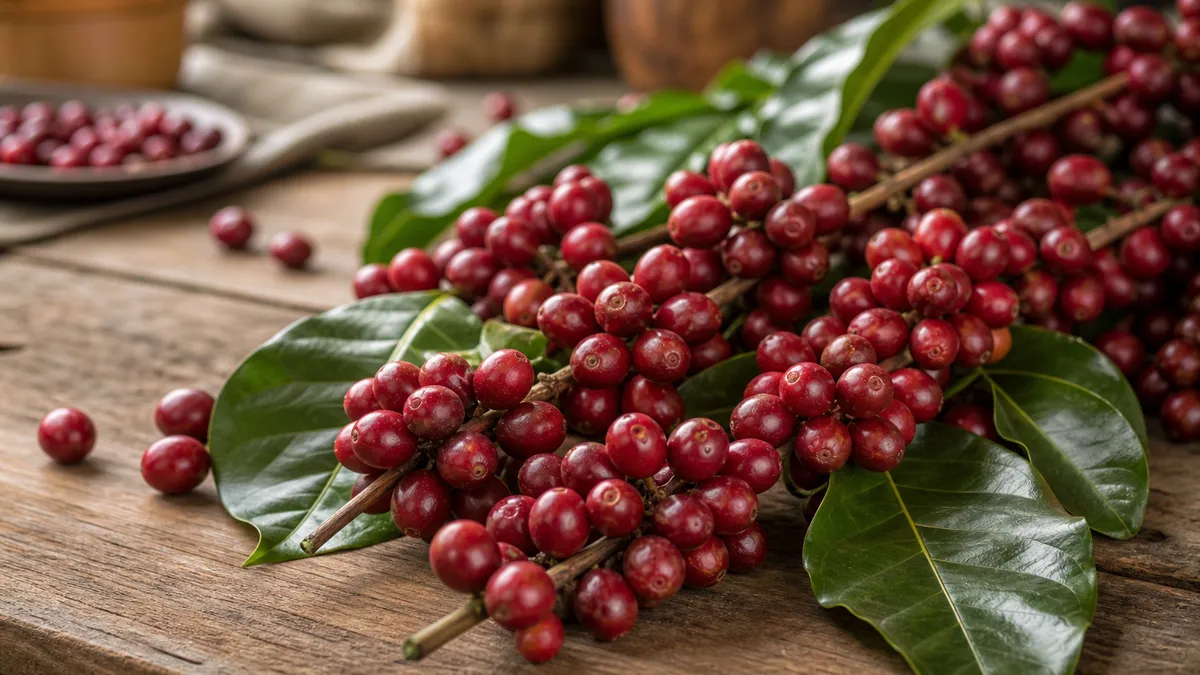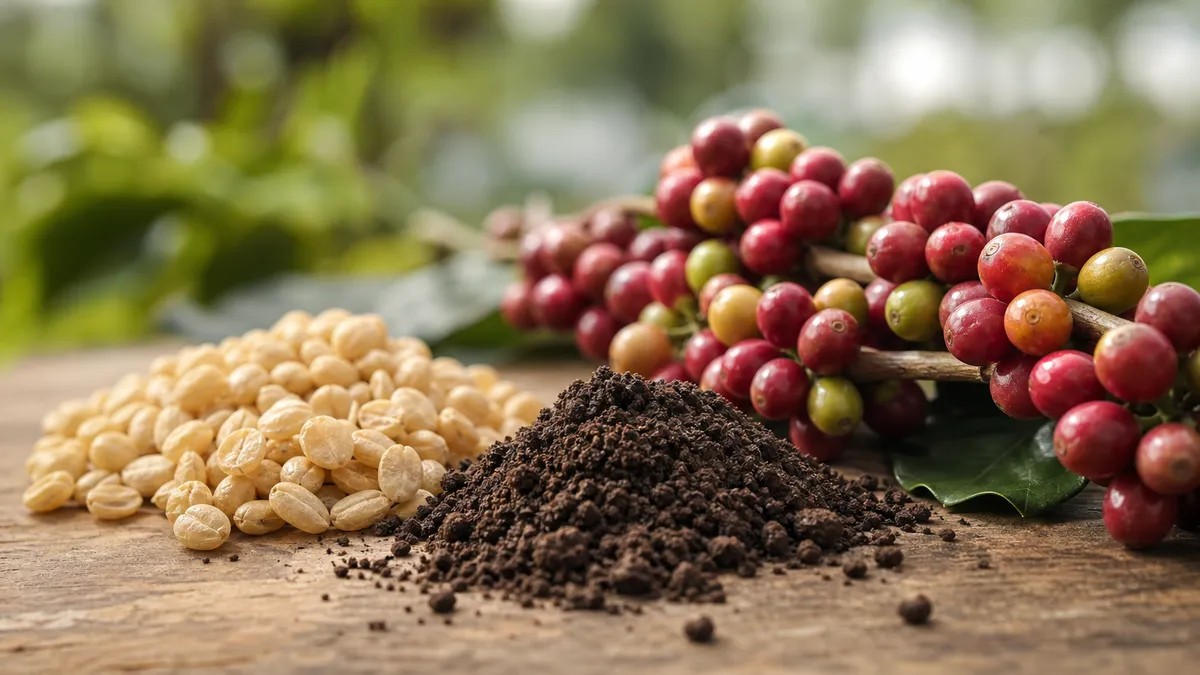
Central America grows predominantly arabica coffee, with Guatemala, Costa Rica, Honduras, Nicaragua, Panama and El Salvador offering everything from chocolatey, rounded washed coffees to floral Gesha and fruit-forward experimental lots. Mountain climates, varieties and processing explain more about an individual coffee than its country name alone.
In short
- Start with a washed coffee if you want a useful introduction to an origin, then compare other processes.
- Volcanic soils feature in several important growing areas, but not across every Central American coffee farm.
- Altitude needs local context: temperature, rainfall, shade and exposure also shape growing conditions.
- Harvest dates vary substantially. Costa Rica’s published regional windows collectively extend from July to March; Panama’s tourism authority identifies December to March as its main harvest months.
- Buy by named producer or cooperative, variety, process and tasting description, rather than treating a country as one fixed flavour.
Guides in Central America
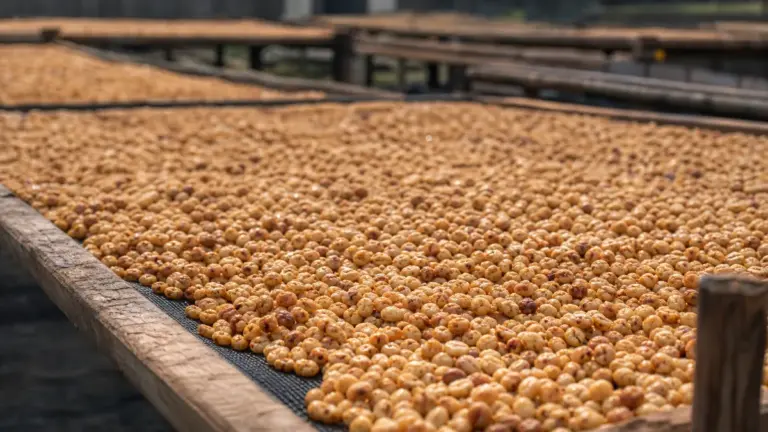 Costa Rican CoffeeDiscover Costa Rican coffee, from Tarrazú and West Valley to micromills and honey processing, with clear cup profiles and the verified arabica rules.Read the guide
 El Salvador CoffeeDiscover El Salvador coffee, from chocolate-sweet Bourbon and Pacas to floral Pacamara, with growing regions, processing and the impact of leaf rust.Read the guide
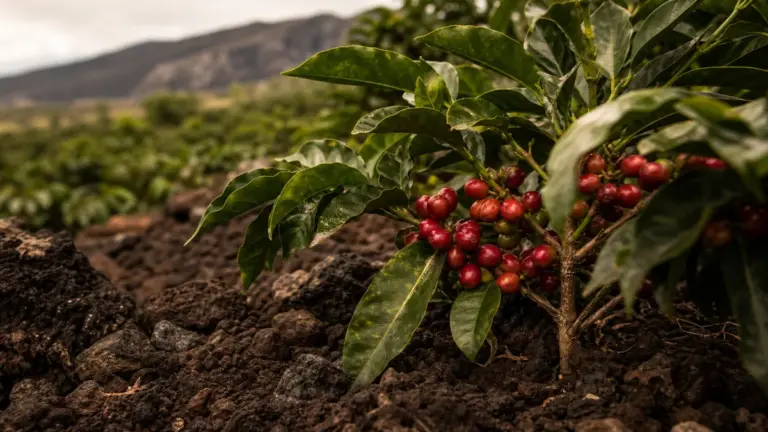 Guatemala CoffeeDiscover Guatemala’s eight coffee regions, typical flavours, varieties and processing, with a closer look at Antigua and its protected origin.Read the guide
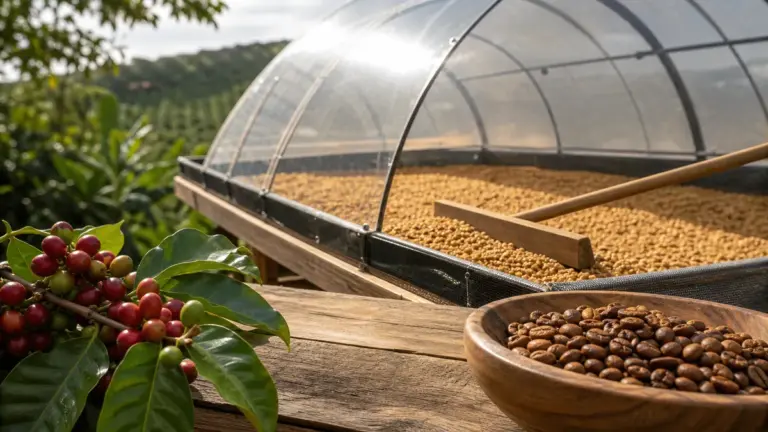 Honduras CoffeeDiscover Honduran coffee's chocolate and citrus flavours, six growing regions, key varieties and processing methods, plus what to check when buying beans.Read the guide
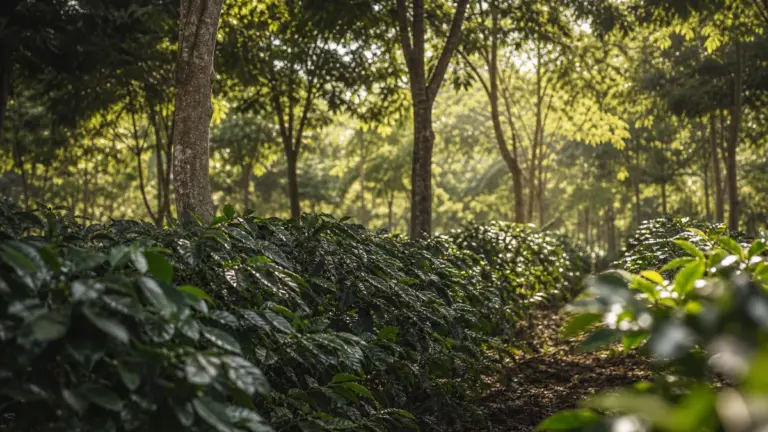 Nicaragua CoffeeDiscover Nicaraguan coffee, from Jinotega and Matagalpa to Nueva Segovia, with clear guidance on varieties, processing, shade and producer co-operatives.Read the guide
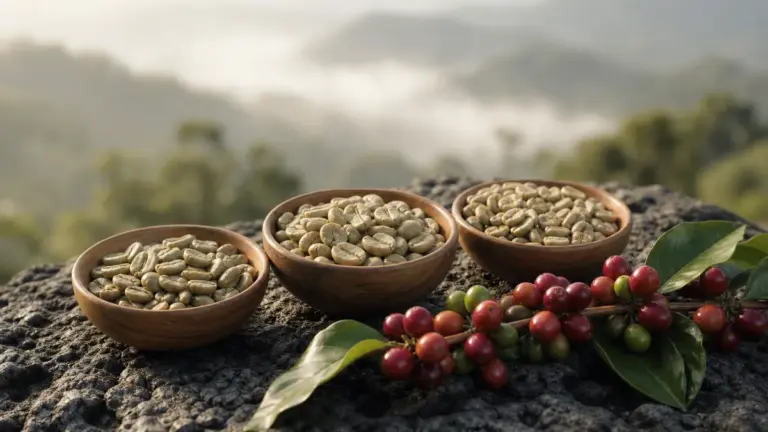 Panama CoffeeExplore Panama coffee beyond Geisha: Boquete, Volcán and Renacimiento, traditional varieties, harvest labour, processing and what to look for in a bag.Read the guide
Start here if you are new
Begin with beans and origins for the wider framework of species, varieties and provenance. Then read Guatemala to explore contrasting growing regions within one country, followed by Costa Rica for a closer look at regional conditions and processing choices.
For a first purchase, our suggested starting point is a washed lot with clear producer information and tasting notes you already enjoy. Chocolate and caramel descriptions offer a different direction from jasmine and peach, even when both coffees come from neighbouring farms.
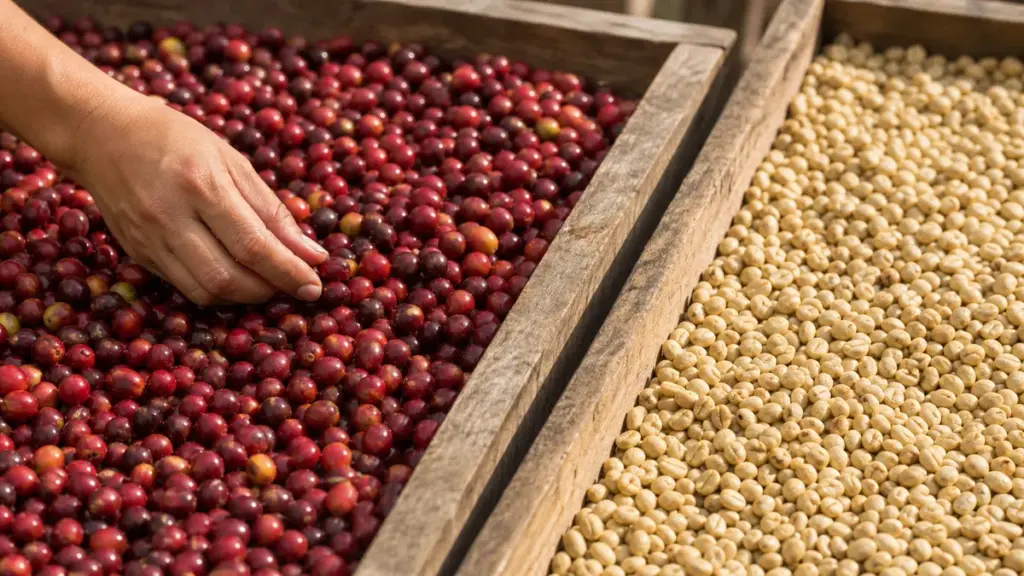
Central American coffee: the regional fact panel
Scope: this guide covers Guatemala, El Salvador, Honduras, Nicaragua, Costa Rica and Panama.
Species and varieties: arabica, Coffea arabica, dominates the coffees discussed here. Important varieties include Bourbon, Typica, Caturra and Catuaí, alongside Pacas, Pacamara, Villa Sarchi, disease-resistant selections and F1 hybrids. Gesha, also written Geisha, is especially associated with Panama’s speciality sector.
Altitude: there is no single useful regional minimum or maximum. As representative examples, ICAFE places Costa Rica’s Central Valley at 800 to 1,600 metres above sea level; Anacafé gives 1,500 to 2,000 metres for Guatemala’s Highland Huehue region. These are regional examples, not boundaries for all Central American production.
Main processing methods: washed processing is a longstanding reference point. Honey, natural and controlled-fermentation coffees provide additional styles.
Harvest months: calendars depend on location and elevation. ICAFE lists July to January for Turrialba and November to March for Tarrazú; Panama’s official tourism guidance gives December to March.
Typical cup direction: expect a broad spectrum, including chocolate, caramel, citrus, stone fruit and flowers. These are recurring descriptions, not a specification that every coffee must meet.
Mountains, volcanic soils and the limits of altitude
Much Central American coffee comes from mountain environments, but “volcanic coffee” is not an accurate description of the entire region. Anacafé’s regional catalogue makes the distinction particularly clear: Acatenango has volcanic soils with pumice, while Highland Huehue has limestone soils.
Costa Rica offers another useful correction to simple origin stories. ICAFE describes acidic soils with low base content in much of the Dota, Tarrazú and León Cortés area. Volcanic associations do not remove the need for soil assessment and careful nutrition.
Altitude matters largely through the conditions associated with it. Cooler growing environments can slow fruit maturation, but elevation is not an independent quality score. In Nicaragua, a CIRAD-led study found bean composition and cup quality varied with region, altitude and farm management, with altitude showing the clearest effects.
For buyers, the useful question is not “Which bag has the highest altitude?” Ask what the elevation means at that particular farm, and whether the resulting coffee matches your taste. A well-described lot is more informative than an impressive height printed without context.
Compare the six coffee origins
This table compares regional examples, useful variety clues and reasons to explore each origin. It is a navigation aid, not a ranking.
| Country | Places to recognise | Useful clues on the bag | Why explore it? |
|---|---|---|---|
| Guatemala | Acatenango, Antigua, Huehuetenango | Named region and producer | To compare volcanic and limestone growing areas, and profiles ranging from balanced to intensely bright |
| Costa Rica | Central Valley, Los Santos, Tarrazú | Caturra, Catuaí, named mill and process | To explore regional harvest differences and coffees combining body, brightness and chocolate notes |
| Honduras | Copán, Montecillos, Opalaca, Comayagua, El Paraíso, Agalta | Bourbon, Catuaí, Caturra, Typica or Parainema | To look beyond a national label across distinct mountain regions |
| Nicaragua | Jinotega, Matagalpa, Nueva Segovia | Producer, variety and fermentation details | To compare northern growing areas and conventional washed processing with experimental lots |
| Panama | Boquete, Tierras Altas, Renacimiento | Gesha or Geisha, Caturra, Catuaí and precise lot identity | To explore both balanced highland coffees and floral varieties |
| El Salvador | Apaneca-Ilamatepec and Alotepec-Metapán | Bourbon, Pacas, Pacamara or Tekisic | To explore distinctive variety heritage and a range of processing styles |
Guatemala and El Salvador: regional character and variety heritage
Read Guatemala when you want to understand why one country can contain several very different coffee environments. Anacafé describes Highland Huehue through fine, intense acidity, full body and wine-like notes, while its Acatenango description emphasises acidity, fragrance and balance.
Choose El Salvador next if variety names interest you. Bourbon, Pacas and Pacamara are particularly useful names to recognise. Pacamara is a cross between Pacas and Maragogipe, not a processing method or a general term for large beans.
Honduras and Nicaragua: look beyond the country label
The Honduras guide is the useful next read for distinguishing its principal producing regions and understanding varieties such as Parainema. USDA’s country reporting identifies six key regions, so a national flavour stereotype leaves considerable detail behind.
Read Nicaragua for the northern producing areas of Jinotega, Matagalpa and Nueva Segovia. Its technical production guidance covers both traditional wet processing and experimental fermentation, making producer and process information valuable buying clues.
Costa Rica and Panama: compare place, variety and process
The Costa Rica guide helps separate regional identity from processing terminology. ICAFE describes Los Santos coffees through good body, fine acidity and a slightly chocolatey character, but an individual honey or natural lot may take another direction.
Use Panama to distinguish the country’s broader coffee production from its celebrated Gesha lots. World Coffee Research associates the Panamanian Gesha lineage with delicate floral, jasmine and peach-like aromas under suitable growing and management conditions. Panama is not exclusively Gesha, however: Caturra and Catuaí also feature among its highland varieties.
Varieties: familiar names and newer planting choices
A variety is a named type within a coffee species. Bourbon, Caturra and Pacamara are therefore different kinds of arabica, not separate species.
World Coffee Research describes Bourbon and Typica as culturally and genetically important arabica varieties. Caturra and Catuaí are compact plants with useful production potential, but both are highly susceptible to coffee leaf rust, a fungal disease affecting the leaves.
That creates a practical farming decision. Growers must consider yield, disease pressure, local conditions and planting material as well as cup potential. WCR identifies Parainema as resistant to coffee leaf rust and some nematodes, while Centroamericano H1 combines high yield potential with very good quality potential under suitable conditions.
F1 means the first generation from a particular parental cross. It does not mean genetically modified coffee. Nor does disease resistance automatically imply poor flavour: WCR’s catalogue assesses agronomic characteristics and cup potential separately.
For drinking, use the variety as one clue alongside the producer, process and roast. A celebrated name cannot guarantee careful harvesting or processing.
Washed tradition and newer processing methods
Processing is the work that turns harvested coffee cherries into dried coffee ready for further preparation. The key distinction is how much fruit material remains around the seed during drying.
Washed coffee has the skin and pulp removed, followed by removal of the sticky mucilage surrounding the parchment-covered seed. Producers may use fermentation and washing, mechanical mucilage removal, or a combination. Parchment is the protective papery layer around the seed at this stage.
Honey coffee is depulped but dried with mucilage remaining. The name describes the sticky material, not an added honey ingredient. El Salvador’s harvest and post-harvest manual documents honey alongside washed and natural methods.
Natural coffee dries within the whole cherry before the dried fruit layers are removed. It offers another route through processing, rather than simply being an unwashed version of an otherwise identical finished coffee.
Controlled fermentation adds further choices. Hacienda La Esmeralda in Panama documents selected-yeast fermentation and closed-container anaerobic fermentation alongside washed and natural processing. “Anaerobic” describes an oxygen-limited fermentation environment, not one universal recipe or guaranteed flavour.
Our suggested comparison is a washed and a differently processed lot from the same producer, preferably sharing a variety. It will not isolate every variable, but it gives you a more focused tasting exercise than comparing unrelated bags.
Harvest seasons and production: read the dates carefully
Harvest is a period of picking, not the date coffee becomes available from a UK roaster. Ask separately about harvest, shipment and roasting.
There is no single Central American picking calendar. Costa Rica illustrates the variation particularly well: ICAFE’s published regional guidance starts Turrialba in July, the Central Valley in October and Tarrazú in November, with the latter continuing to March. Panama’s tourism authority gives December to March as its principal harvest period.
Production statistics need equally careful labelling. The International Coffee Organization reported Honduras as the largest producer within its Caribbean, Central America and Mexico grouping in coffee year 2022/23, at approximately 5.7 million 60 kg bags. That grouping is wider than this guide’s six countries.
For a more recent example of scale, USDA’s April 2026 reports forecast 6.03 million 60 kg bags for Honduras and 542,000 for El Salvador in marketing year 2026/27. These are dated forecasts, not completed-harvest totals or measures of cup quality. Production figures and revisions should therefore be compared within the same source, period and reporting basis.
Buying Central American coffee in the UK
Use this order when comparing bags:
- Choose the flavour direction. Decide whether you want chocolate and rounded sweetness, bright citrus, floral delicacy or pronounced fruit.
- Read the process. Treat washed, honey, natural and fermentation descriptions as meaningful differences, not decorative wording.
- Look for traceability. Prefer a named farm, cooperative or mill, with a region and variety where available.
- Ask about the crop. If harvest information matters to you, request it rather than inferring it from the roast date.
- Match the intended use. Ask the roaster which lot they recommend for your brewing method and whether you drink it with milk.
Our recommendation for a shared workplace is to prioritise a repeatable flavour profile and clear supplier communication over an unusual variety name. For personal exploration, compare small purchases and change one selection criterion at a time.
Central America is most useful as a starting map. The better buying decision comes when you move from the regional name to a specific coffee and the people who produced it.
FAQ
Does honey-processed coffee contain honey?
No, honey processing does not mean honey has been added. The term refers to drying depulped coffee with sticky mucilage still attached to the parchment layer. It describes a processing approach, not an ingredient. If a product separately declares flavourings or added ingredients, assess those independently of its processing description.
Are Gesha and Geisha different coffees?
Not necessarily: World Coffee Research explains that both spellings are used for the well-known Panamanian variety. However, it also warns that genetically different plants have been called Geisha. A precise variety identity and credible producer information are therefore more useful than relying on the spelling alone.
Should I reject a coffee because its variety is disease-resistant?
No, disease resistance is not a reliable reason to reject a coffee. World Coffee Research records varieties combining resistance with good or very good cup potential. Judge the particular lot through its description, provenance and, where possible, tasting, rather than assuming that agricultural resilience and enjoyable flavour cannot coexist.
Where to go next
Read Guatemala and Costa Rica to explore regional contrasts and processing choices in greater detail. Continue with El Salvador for variety heritage, or Panama to put floral Gesha coffees into their wider national context.
Sources
- S1. World Coffee Research, Arabica Coffee Varieties catalogue, live edition, undated; retrieved November 2026. Includes entries for Bourbon, Typica, Caturra, Catuaí, Parainema and Centroamericano H1.
https://varieties.worldcoffeeresearch.org/arabica/varieties - S2. World Coffee Research, Pacamara, live catalogue entry, undated; retrieved November 2026.
https://varieties.worldcoffeeresearch.org/varieties/pacamara - S3. World Coffee Research, Geisha (Panama), live catalogue entry, undated; retrieved November 2026.
https://varieties.worldcoffeeresearch.org/varieties/geisha-panama - S4. Anacafé, Guatemalan Coffees regional catalogue, 2022.
https://www.anacafe.org/uploads/file/28eaca28fe164f6b80eb0808b2117896/Catalogo-GC-2022.pdf - S5. Instituto del Café de Costa Rica, Valle Central and Los Santos, undated regional reference pages; retrieved November 2026 through search-indexed text.
https://www.icafe.cr/nuestro-cafe/regiones-cafetaleras/valle-central/
https://www.icafe.cr/nuestro-cafe/regiones-cafetaleras/lossantos/ - S6. Instituto del Café de Costa Rica, Preguntas frecuentes: Recolección, undated page containing 2020/21 campaign material and regional harvest guidance; retrieved November 2026 through search-indexed text.
https://www.icafe.cr/icafe/preguntas-frecuentes/ - S7. Vaast, P. and colleagues (CIRAD), Mapping of coffee quality in Nicaragua according to regions, ecological conditions and farm management, 20th International Conference on Coffee Science (ASIC), 2005; FAO AGRIS record.
https://agris.fao.org/search/en/records/64745bb796fdec8b71b71881 - S8. Acción contra el Hambre, Guía técnica de producción integral de café, undated, hosted copy uploaded in 2024.
https://accioncontraelhambre.org.gt/wp-content/uploads/2024/06/GUIA-TECNICA-CAFE-1_compressed.pdf - S9. AICS-hosted technical manual, Manual de cosecha y poscosecha del café, 2024.
- S10. Hacienda La Esmeralda, Harvesting and processing, undated producer account; retrieved November 2026.
https://haciendaesmeralda.com/hasvest-wash/ - S11. Autoridad de Turismo de Panamá, Coffee Farms, undated; retrieved November 2026.
https://www.tourismpanama.com/culture-cuisine/tastes-of-panama/coffee-farms/ - S12. Caficultura Panamá, Regiones Cafetaleras, undated; retrieved November 2026.
https://www.caficulturadepanama.org/?lte-sections=regiones-cafetaleras - S13. International Coffee Organization, Coffee Report and Outlook, December 2023.
https://ico.org/documents/cy2023-24/Coffee_Report_and_Outlook_December_2023_ICO.pdf - S14. USDA Foreign Agricultural Service, Coffee Annual: Honduras, report HO2026-0002, 29 April 2026.
https://apps.fas.usda.gov/newgainapi/api/Report/DownloadReportByFileName?fileName=Coffee+Annual_Tegucigalpa_Honduras_HO2026-0002.pdf - S15. USDA Foreign Agricultural Service, Coffee Annual: El Salvador, report ES2026-0004, 20 April 2026.
https://apps.fas.usda.gov/newgainapi/api/Report/DownloadReportByFileName?fileName=Coffee+Annual_San+Salvador_El+Salvador_ES2026-0004.pdf - S16. Ministerio de Agricultura y Ganadería, El Salvador, Pacamara, variedad de alta calidad y de origen nacional, es parte de Café de El Salvador Bicentenario, 10 September 2021.
https://www.mag.gob.sv/2021/09/10/pacamara-variedad-de-alta-calidad-y-de-origen-nacional-es-parte-de-cafe-de-el-salvador-bicentenario/
Research combined national coffee references, World Coffee Research variety records, technical processing manuals and explicitly dated production reports; no first-hand tasting or farm testing is claimed.
Last checked: November 2026