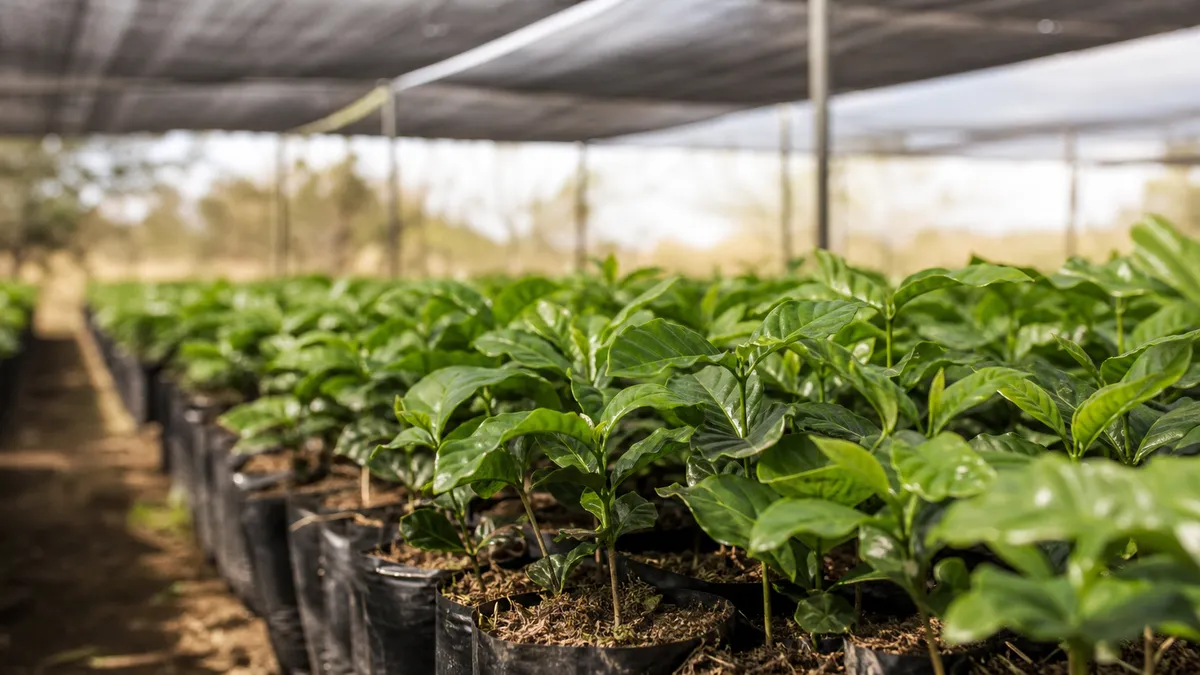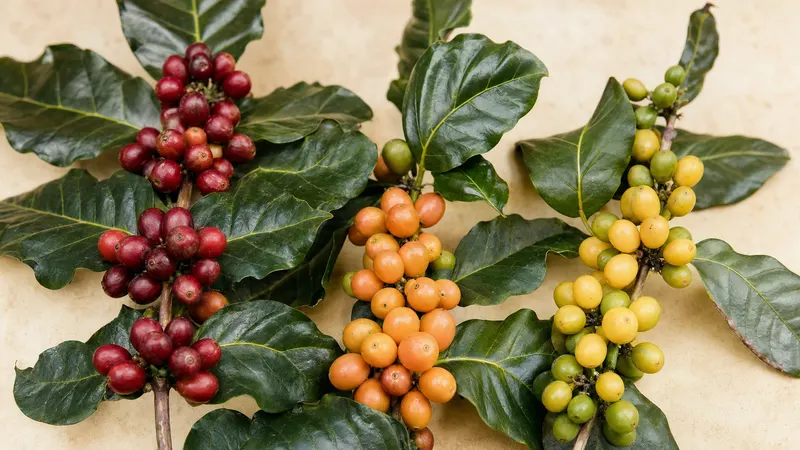
Coffee varieties are distinct plant types within a coffee species: arabica is a species, while Typica, Bourbon and Caturra are varieties within it. Most commercial coffee comes from arabica and robusta, but liberica, excelsa and wild relatives make the family much wider. This guide maps the names, explains how they fit together and points you towards the right next read.
In short
- A species, a cultivated variety, a growing region and a bean grade describe different things.
- Typica and Bourbon are important arabica lineages, not alternatives to arabica.
- A hybrid has genetically different parents; it does not necessarily involve different species.
- “Ethiopian heirloom” is a broad description, not the identity of one verified variety.
- Disease resistance is specific to the plant, disease and growing conditions, not a permanent guarantee.
Guides in Coffee Varieties
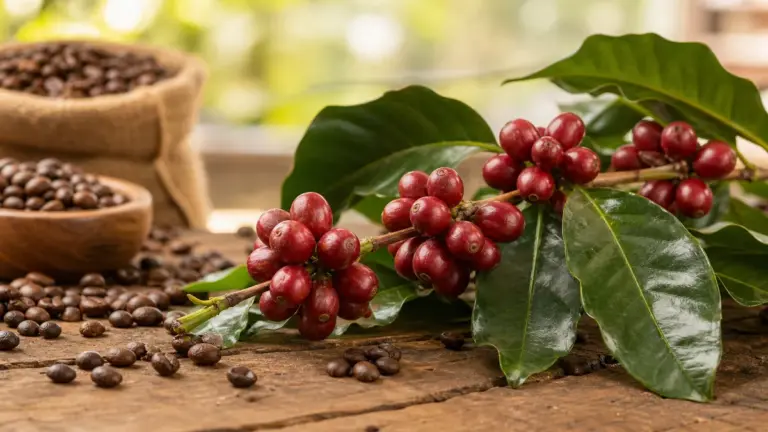 Arabica CoffeeWhat is arabica coffee? Understand its Ethiopian origins, flavour, growing regions and genetic groups, plus the disease and climate risks it faces.Read the guide
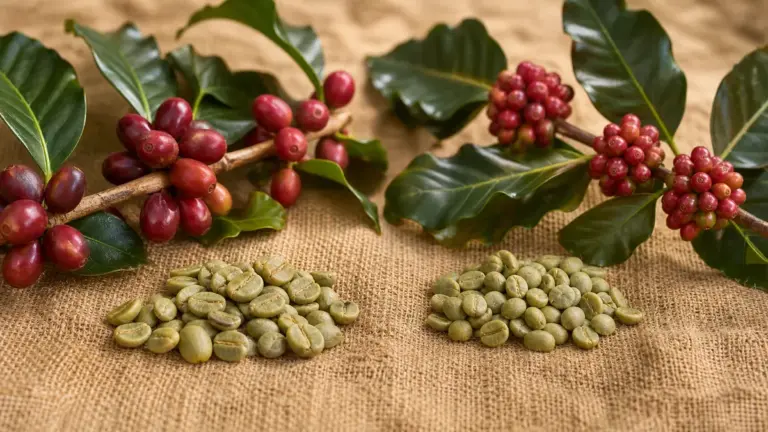 Arabica vs RobustaCompare arabica and robusta by flavour, caffeine, botany and growing conditions, with clear tables and practical advice for choosing your next coffee.Read the guide
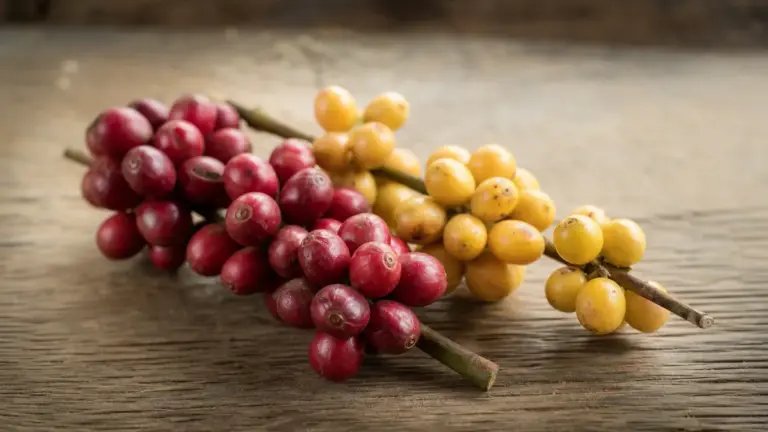 Bourbon Coffee VarietyDiscover Bourbon coffee, from Yemen and Réunion to red, yellow and orange cherries, plant traits, cup quality and its correctly identified descendants.Read the guide
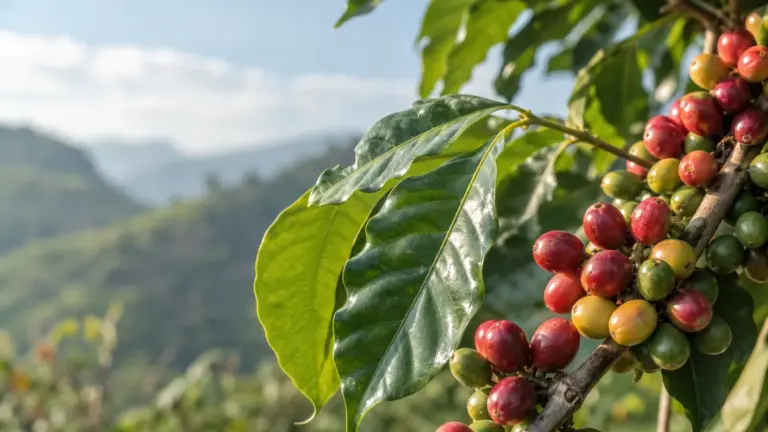 Castillo, Catimor and SarchimorUnderstand Castillo, Catimor and Sarchimor: their Timor Hybrid ancestry, leaf rust resistance, role on farms and what blind tasting says about flavour.Read the guide
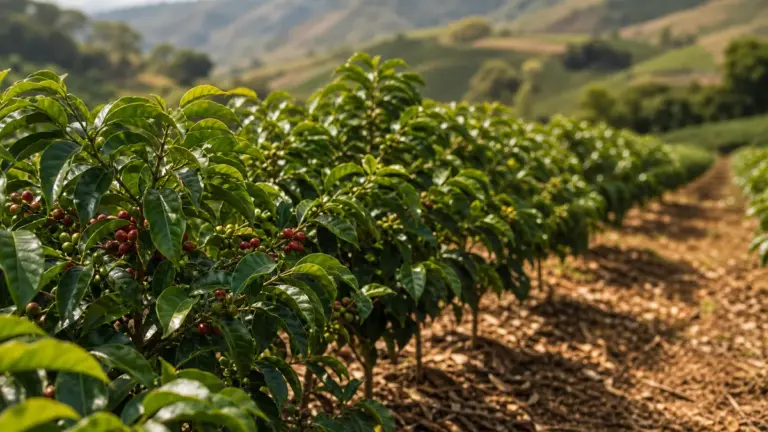 Caturra, Catuai and Mundo NovoUnderstand Caturra, Catuai and Mundo Novo: their family tree, plant size, growing regions, disease risks and what the names can tell you about flavour.Read the guide
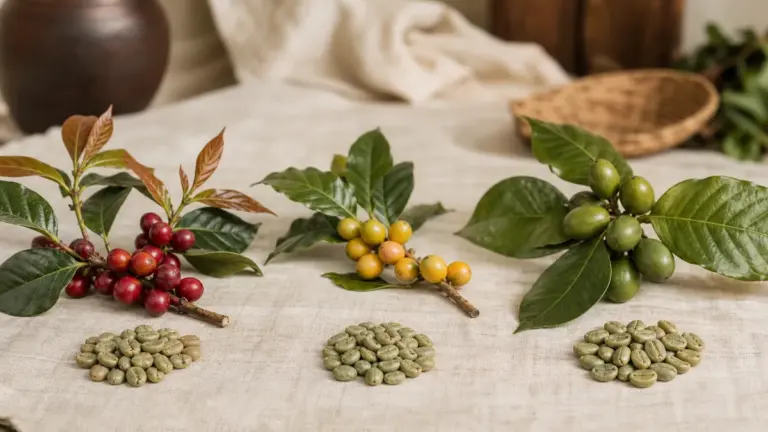 Coffee Species, Varieties and Cultivars ExplainedUnderstand coffee species, varieties, cultivars, landraces and F1 hybrids, with clear definitions and a practical guide to reading names on a coffee bag.Read the guide
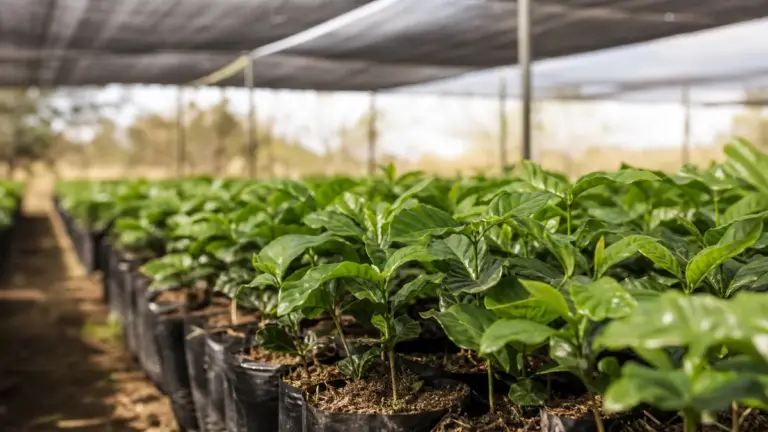 Disease-Resistant and Climate-Resilient Coffee ExplainedHow coffee breeding tackles leaf rust, heat and drought, what climate projections really mean, and why promising varieties need local field trials.Read the guide
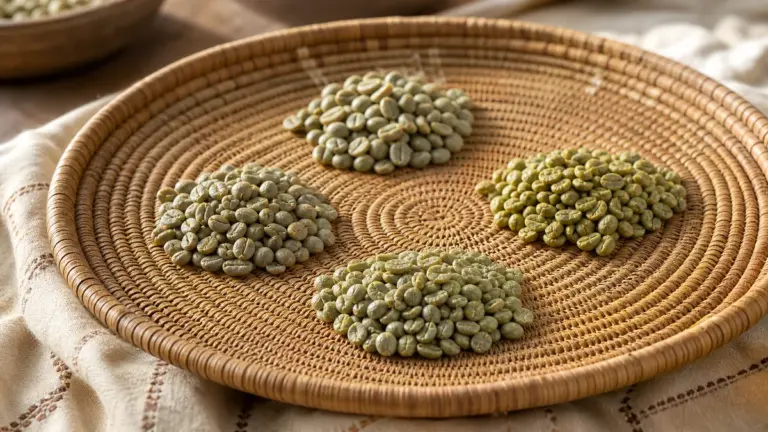 Ethiopian Heirloom and Landrace CoffeesUnderstand Ethiopian heirloom and landrace coffees, JARC numbers such as 74110, regional character and what a more informative coffee label tells you.Read the guide
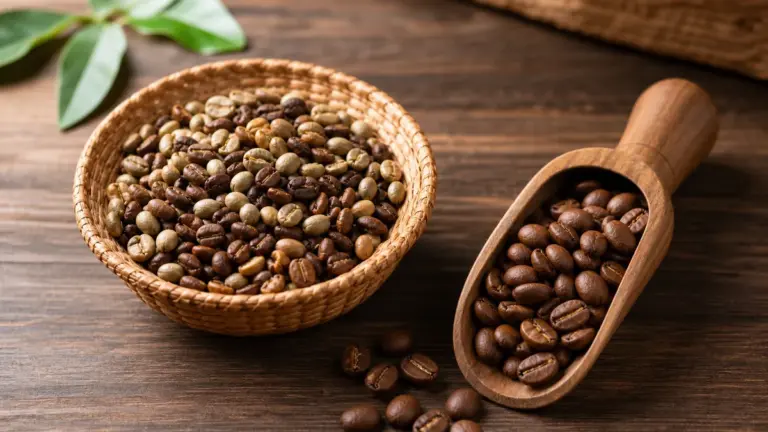 Ethiopian Yirgacheffe and Colombian Supremo ExplainedYirgacheffe names an Ethiopian coffee origin; Supremo names a Colombian bean-size grade. Learn what each reveals and what to check on the coffee bag.Read the guide
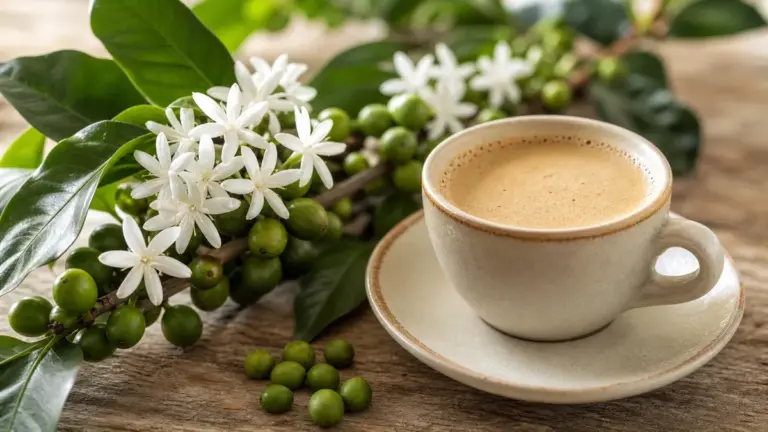 Geisha CoffeeUnderstand Geisha coffee’s Ethiopian roots, Panama auction fame, Gesha variants and floral flavour, with practical advice on buying and brewing it.Read the guide
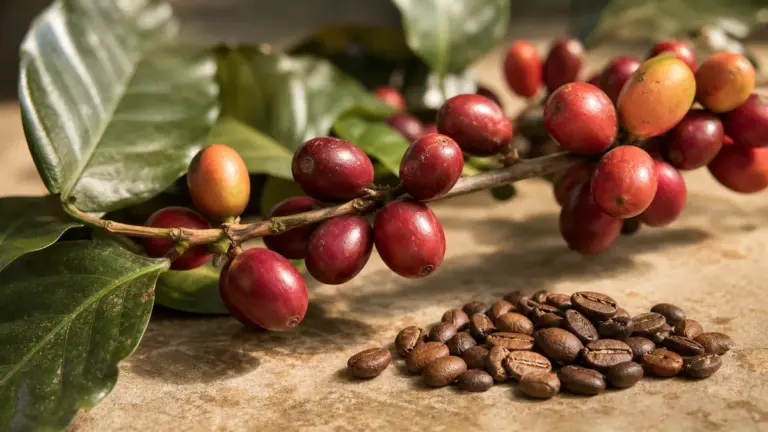 Liberica and Excelsa CoffeeDiscover liberica and excelsa coffee, their updated species names, growing regions, distinctive flavours and what research says about climate resilience.Read the guide
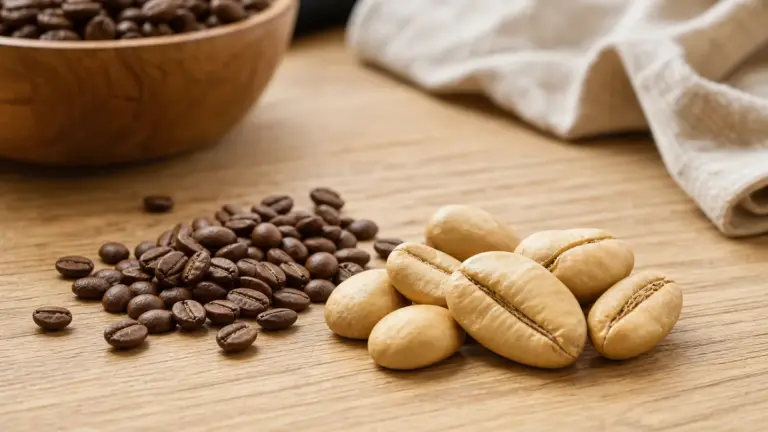 Maragogipe and PacasCompare Maragogipe’s giant beans with compact Pacas: their origins, growing traits, flavour expectations and roles as the parents of Pacamara coffee.Read the guide
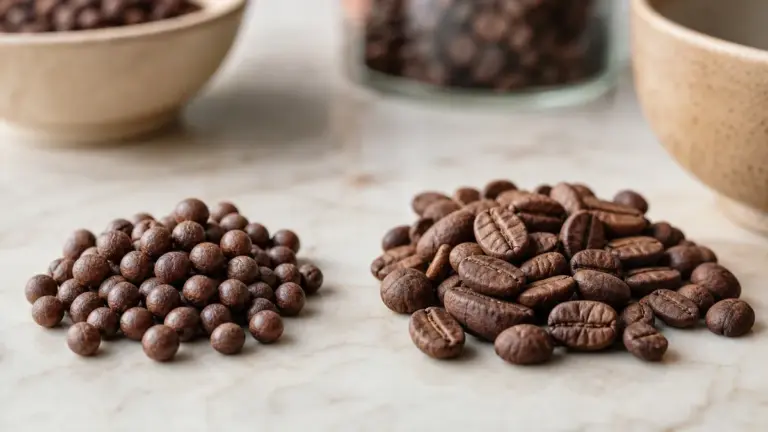 Peaberry CoffeeWhat is peaberry coffee? Learn how the single round bean forms, how mills sort it, and what research says about roasting and claims of…Read the guide
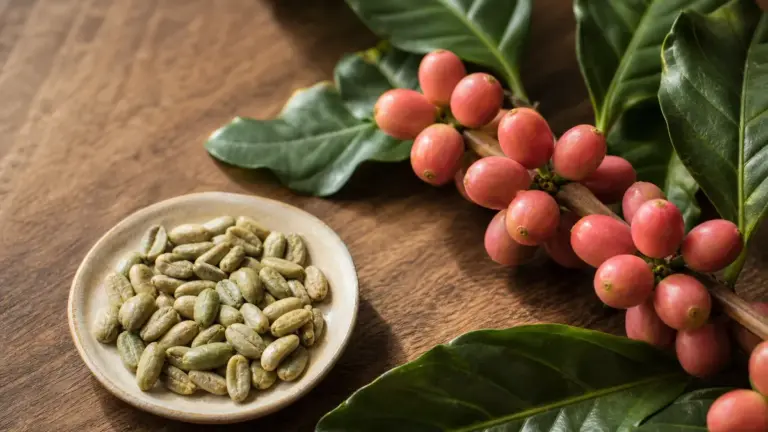 Pink Bourbon and Sudan RumeDiscover Pink Bourbon and Sudan Rume: what genetic testing shows, their origins, breeding roles and flavours, plus how to judge a traceable coffee lot.Read the guide
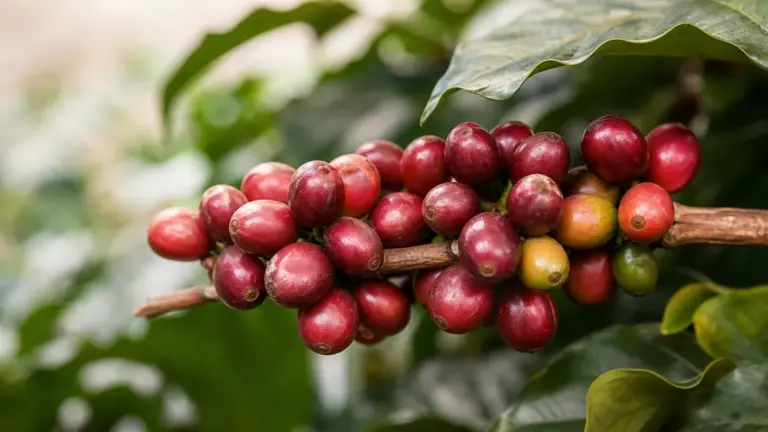 Robusta CoffeeWhat is robusta coffee? Explore Coffea canephora, its growing regions, caffeine, genetic groups and the qualities behind Vietnamese and Ugandan lots.Read the guide
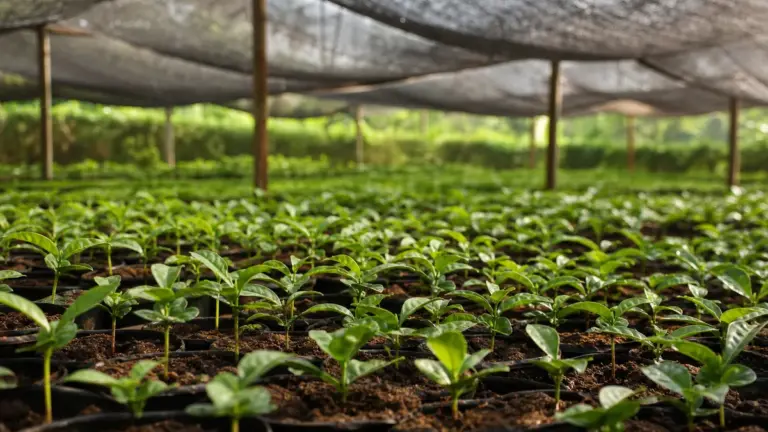 Ruiru 11, Batian and F1 HybridsUnderstand Kenya’s Ruiru 11 and Batian, how F1 coffee hybrids are propagated, and what research shows about disease resistance, vigour and cup quality.Read the guide
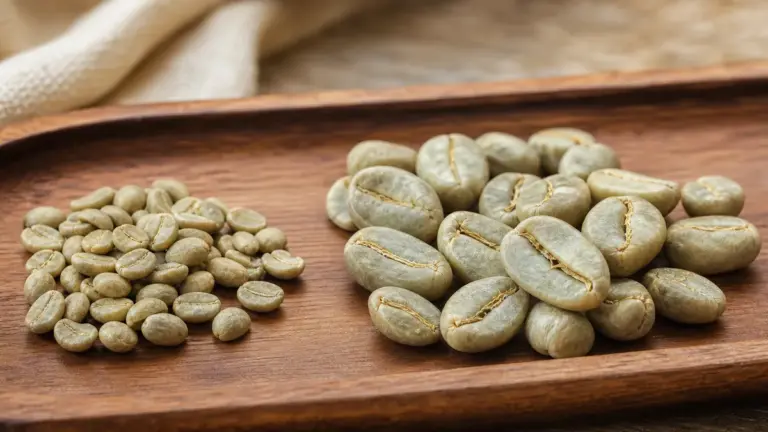 Specialty Coffee VarietalsUnderstand Pacamara, SL28 and SL34: their origins, genetics, bean sizes, cup potential and disease risks, plus what variety names tell you on a coffee…Read the guide
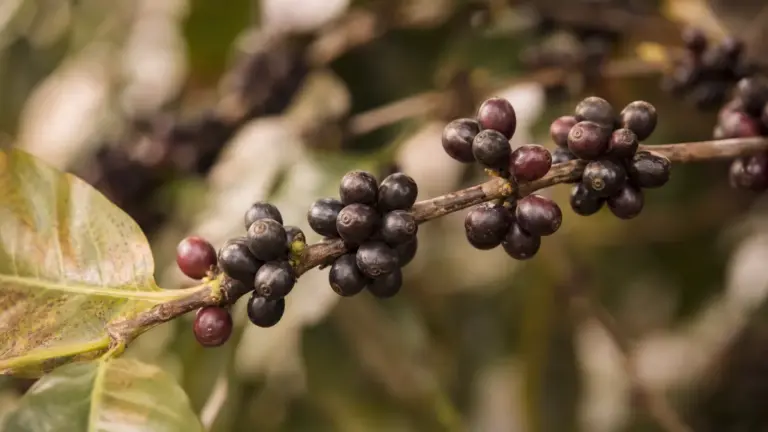 Stenophylla and Climate-Resilient Wild Coffee SpeciesExplore stenophylla, racemosa and other wild coffees: what research shows about flavour, heat tolerance, conservation and realistic farming timelines.Read the guide
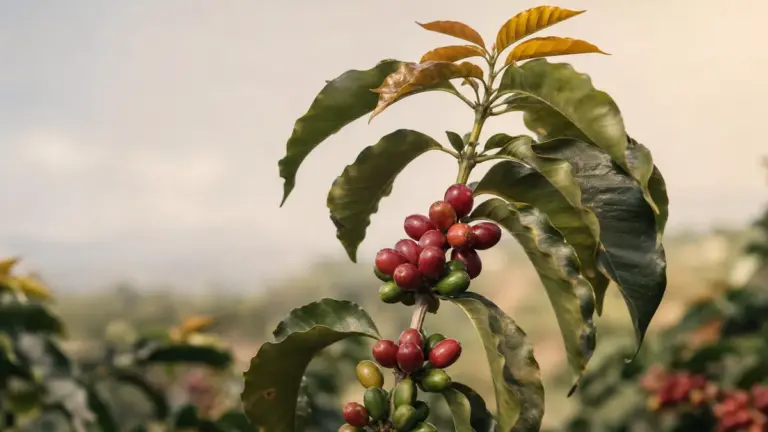 Typica CoffeeLearn what Typica coffee is, how it spread from Yemen via Java, where it grows today, and why its flavour potential comes with farming…Read the guide
Start here if you are new
Follow this short path before trying to memorise names:
- Read species, varieties and cultivars explained to understand the categories. It gives you the vocabulary needed to read the rest without confusing ancestry with origin.
- Continue with arabica vs robusta for the main commercial comparison. This is the useful next step when a bag or blend lists a species but no variety.
- Explore specialty coffee varietals when you want to connect plant names with buying and tasting. Use it to choose comparisons rather than treating a celebrated name as a quality certificate.
For the wider picture, beans and origins connects plant identity with where coffee grows and what happens after harvest.
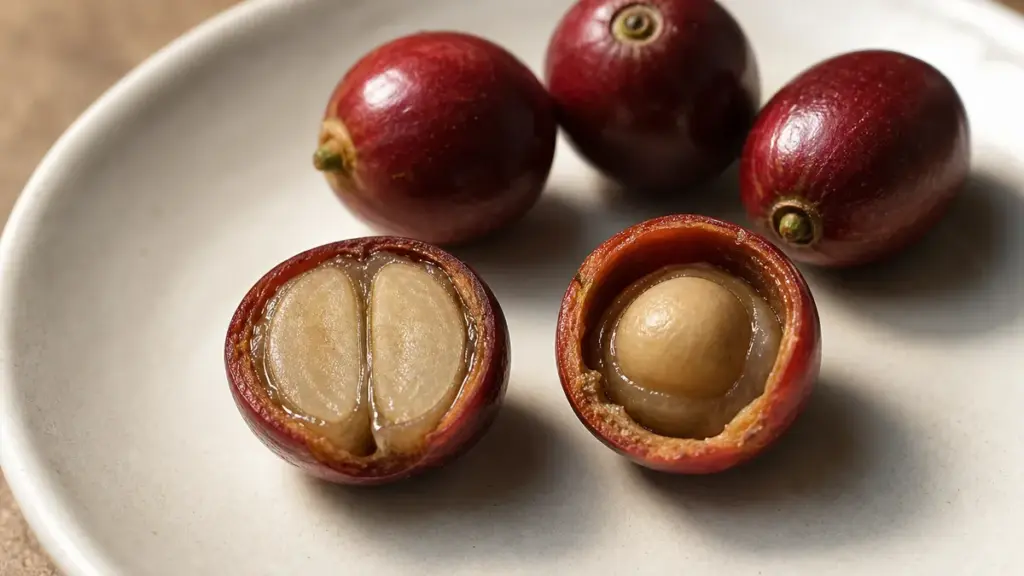
How coffee varieties fit into the family
Think of a coffee description as several separate pieces of information. The species identifies the broader plant group; the variety or cultivar identifies a more particular cultivated type. Origin, processing and grading add other information, but do not replace that identity.
A cultivar is a cultivated plant type selected for distinctive characteristics that can be maintained through appropriate propagation. It need not have been created by crossing plants: people can also select and reproduce a naturally occurring mutation.
In everyday coffee language, variety often means a cultivated variety. Botanists also use the word for a formal rank below species, written var. in a scientific name. Those meanings overlap in conversation, but they are not interchangeable in precise botany.
The table compares categories, not cup quality.
| Category | What it tells you | Examples | What it does not establish |
|---|---|---|---|
| Species | The broader botanical identity | Coffea arabica, Coffea canephora | A particular cultivar or flavour |
| Cultivated variety or cultivar | A selected plant type | Bourbon, Caturra, Catuai | That every harvest will taste alike |
| Landrace | A traditional population shaped by local cultivation and adaptation | Ethiopian landrace populations | Complete genetic uniformity |
| Hybrid | Ancestry involving genetically different parents | Centroamericano | Automatically superior quality or resistance |
| Origin or grade | Where coffee comes from, or how it is classified for trade | Yirgacheffe, Supremo | The plant’s variety |
World Coffee Research’s catalogue is a practical reference for cultivated coffee, not an exhaustive inventory of every coffee plant. Its variety descriptions cover characteristics such as stature, yield potential, disease response and quality potential. Those are useful comparisons, but growing conditions can change the outcome.
The main coffee species
Arabica: the species behind many familiar variety names
Arabica, Coffea arabica, contains familiar names such as Typica, Bourbon, Caturra and Geisha. Its cultivated diversity includes traditional landraces, selections, mutations and deliberately bred crosses.
Read arabica coffee when you want the species-level explanation before following individual branches. It is the place to understand what these plants share, rather than assuming every arabica variety behaves alike.
Typica and Bourbon are especially useful starting points because their descendants underpin much cultivated arabica. They are important branches of the family, not the whole family: Ethiopian landraces and other genetic groups also matter.
Robusta: a species with varieties of its own
Robusta is the usual commercial name for Coffea canephora. It has substantial genetic diversity and its own cultivated varieties, so “robusta” is not the equivalent of one arabica cultivar such as Bourbon.
Explore robusta coffee to move beyond treating it as a single uniform ingredient. The detailed guide is useful when you want to understand the species on its own terms, rather than only through comparison with arabica.
Liberica and excelsa: why the names have changed
Liberica is Coffea liberica. Excelsa was long treated as a botanical variety of liberica, commonly written Coffea liberica var. dewevrei.
This guide follows Davis and colleagues’ 2025 genomic, morphological and geographical study, which recognises excelsa as the separate species Coffea dewevrei. Kew’s current development project also uses that distinction. Older books, research and commercial descriptions may therefore group the plants differently without referring to a different coffee altogether.
Read liberica and excelsa coffee when you encounter either name on a bag or in an older reference. It explains the plants and the naming history in greater depth.
Named arabica varieties: choose a branch to explore
Learning a few relationships is more useful than collecting a long list of names. Start with the older lineages, then follow mutations, crosses and less straightforward identities.
Typica and Bourbon
Typica is the useful starting point for one of arabica’s foundational cultivated lineages. Read it when a coffee’s description makes ancestry central to its identity.
Bourbon introduces another foundational lineage and provides context for several compact varieties. Neither name, by itself, guarantees the quality of an individual lot.
Compact plants, crosses and unusually large beans
Caturra is a naturally occurring compact mutation of Bourbon. Pacas is another compact Bourbon mutation, while Maragogipe is a mutation of Typica associated with very large beans. These examples show why selection can create a recognised cultivated type without a deliberate cross.
Caturra, Catuai and Mundo Novo is the next read for understanding related but distinct routes through arabica breeding. Catuai comes from a cross between Caturra and Mundo Novo, illustrating how breeders can combine existing cultivated types.
Maragogipe and Pacas is useful when bean size or plant stature attracts your attention. It separates visible characteristics from assumptions about what the finished coffee must taste like.
Geisha and names that need closer scrutiny
Geisha, also spelled Gesha, needs more care than a simple name-to-flavour equation. World Coffee Research distinguishes the Panamanian lineage descended from accession T2722, a documented plant collection, from other genetically different material carrying similar names.
Read geisha to understand why lineage and traceability matter. The name is associated with floral quality potential, but it is not proof that every lot has identical genetics or cup character.
Pink Bourbon and Sudan Rume is useful when a familiar-looking name tempts you to infer ancestry. Cafe Imports’ commissioned DNA testing identified Ethiopian landrace material in its Pink Bourbon samples, rather than confirming the often-repeated Bourbon parentage story. That evidence concerns the material tested, not every plant sold under the name.
Ethiopian heirloom and landrace coffees
A landrace is a traditional cultivated population shaped over time by local conditions and farming practices. It is often genetically diverse, rather than a uniform line maintained to a tightly specified identity.
“Heirloom” is looser coffee-trade language. On an Ethiopian coffee description, it should not be read as the name of one precisely identified cultivar. Nor should “landrace” be taken to mean that the coffee necessarily came from unmanaged wild trees: cultivation and farmer selection are central to the concept.
Read ethiopian heirloom and landrace coffees when you want to understand what these descriptions reveal and what they leave unspecified. It is particularly useful before comparing a broadly labelled lot with one carrying a documented selection or variety name.
As a buying habit, ask what the producer or roaster actually knows: a named population, a selected line, mixed planting material or simply the customary description used for that lot. Honest uncertainty is more informative than a precise-sounding guess.
Hybrids and disease-resistant varieties
Hybrid ancestry is not one single category
A hybrid results from crossing genetically different parents. The parents may belong to the same species or to different species.
An F1 hybrid is the first generation from a particular cross. This differs from a variety whose ancestors were crossed and then selected over subsequent generations. Having hybrid ancestry does not make every descendant an F1.
Centroamericano, for example, is an F1 cross between T5296 and Rume Sudan. Its background combines breeding for agronomic performance with quality potential.
Ruiru 11, Batian and F1 Hybrids helps disentangle these breeding routes. Read it before assuming that modern Kenyan varieties and first-generation hybrids all belong to the same genetic category.
How resistance entered arabica breeding
The Timor Hybrid arose from a cross between arabica and Coffea canephora. It became important to breeding because it carried resistance to coffee leaf rust.
Breeders crossed Timor Hybrid material with arabica varieties, producing groups including Catimors and Sarchimors. These are families of related breeding material, not each one uniform variety. Introgressed describes genetic material brought into a population from another species through crossing and subsequent breeding.
Castillo, Catimor and Sarchimor is the useful next read for separating named releases from broader breeding families.
Resistance is not immunity
Coffee leaf rust is a fungal disease that damages foliage and can cause substantial crop losses. A plant’s resistance can depend on which rust races occur locally, and previously resistant material can become susceptible.
Resistance also needs a named target. Protection against leaf rust does not automatically establish protection against coffee berry disease, drought or heat. WCR describes Batian, for example, separately in terms of leaf-rust tolerance, coffee-berry-disease resistance and quality potential.
Read disease-resistant and climate-resilient varieties for this distinction. It helps explain why a cultivar must be assessed against local conditions rather than labelled simply “resilient”.
Wild species and coffee’s future
Wild coffee relatives widen the genetic possibilities beyond familiar commercial plants. Their value may lie in their own cultivation potential, useful breeding traits or the conservation of diversity that is poorly represented on farms.
Stenophylla, Coffea stenophylla, is an important example. Research has found Arabica-like sensory qualities in a heat-tolerant wild species, while Kew’s continuing work addresses propagation, variation and the practical requirements for renewed cultivation.
That is promising evidence, not proof that a ready replacement for arabica can be planted everywhere. Sensory assessment and climate research answer different questions from long-term farm trials, reliable planting-material supply and commercial-scale production.
Stenophylla and climate-resilient wild species is the next read for the research beyond today’s main crops. It explains why conservation and crop development belong together, without treating every interesting wild plant as an immediate farming solution.
Reading coffee labels without mixing categories
Yirgacheffe identifies an Ethiopian coffee origin, not one variety. Supremo describes a Colombian commercial preparation associated with bean size, not genetic ancestry.
Read ethiopian yirgacheffe and colombian supremo explained when a bag mixes geographical, grading and botanical names. It helps you identify which question each word actually answers.
Peaberry is different again: it describes a seed that develops singly within the coffee fruit rather than as the usual pair. Peaberry coffee explains this physical form and why it should not be mistaken for a species or cultivar.
For practical comparison, read the variety alongside the producer, origin, processing and roast description. WCR’s multilocation sensory work shows that genetics and growing environment interact, so a variety offers potential rather than a fixed flavour recipe.
When exploring coffee varieties, choose one relationship to investigate at a time. Compare related plants, check how confidently the lot is identified, and let the actual coffee matter more than the reputation of its name.
FAQ
Can I identify a variety just by looking at the beans?
Not reliably from appearance alone. Bean size can provide a clue, as with Maragogipe’s very large seeds, but a clue is not confirmation of ancestry. WCR’s variety descriptions also use plant characteristics such as stature and leaf-tip colour. Treat a photograph of roasted beans as insufficient evidence for a confident cultivar identification.
How many coffee varieties are there?
There is no single complete total supplied by the WCR catalogue. It explicitly states that it is not an exhaustive list, and familiar commercial names do not always identify equally uniform plant material. A useful count therefore needs a defined scope: species, formally described cultivated varieties, breeding lines or locally named populations.
Does a variety name mean the coffee will taste the same each year?
No, a variety name does not fix the finished flavour. WCR’s variety trials show that growing environment interacts with genetics, while its catalogue cautions that farm conditions affect quality potential. Use the name to build expectations and guide comparisons, but judge each lot from its own description and, ultimately, the cup.
Where to go next
Begin with Coffee Species, Varieties and Cultivars Explained for the terminology, then use Arabica vs Robusta for the main commercial comparison. Continue to Specialty Coffee Varietals for tasting-led exploration, or Disease-Resistant and Climate-Resilient Varieties to understand the plants being developed for changing farming conditions.
Sources
-
Royal Horticultural Society, Roses: choosing the best, undated, terminology section on cultivars and botanical varieties.
https://www.rhs.org.uk/plants/roses/choosing-the-best -
World Coffee Research, Coffee Varieties Catalog: What’s included and About the Catalog, undated live editions. Scope, variety criteria and limits on predicted performance.
https://varieties.worldcoffeeresearch.org/about-the-catalog/whats-included
https://varieties.worldcoffeeresearch.org/about-the-catalog -
World Coffee Research, History of Arabica and History of Robusta, undated live editions. Cultivated lineages, species diversity and introgressed breeding groups.
https://varieties.worldcoffeeresearch.org/arabica-2/history-of-arabica
https://varieties.worldcoffeeresearch.org/robusta-2/history-of-robusta -
World Coffee Research, Coffee Varieties Catalog, individual entries: Caturra, Catuai, Pacas and Maragogipe, undated live editions.
https://varieties.worldcoffeeresearch.org/varieties/caturra
https://varieties.worldcoffeeresearch.org/varieties/catuai
https://varieties.worldcoffeeresearch.org/varieties/pacas
https://varieties.worldcoffeeresearch.org/varieties/maragogipe -
World Coffee Research, Geisha (Panama), undated live catalogue entry.
https://varieties.worldcoffeeresearch.org/varieties/geisha-panama -
Cafe Imports, Pink…Bourbon?: Cryptozoology and Genetics in Specialty Coffee, 2023. First-party report of commissioned genetic testing, with sampling limitations.
https://www.cafeimports.com/north-america/blog/2023/09/26/pink-bourbon-cryptozoology-and-genetics-in-specialty-coffee/ -
Camacho Villa and colleagues, Defining and identifying crop landraces, 2005, Plant Genetic Resources, volume 3, issue 3. Author-institution research record.
https://research.wur.nl/en/publications/defining-and-identifying-crop-landraces/ -
World Coffee Research, Coffee Varieties Catalog, individual entries: Centroamericano and Batian, undated live editions.
https://varieties.worldcoffeeresearch.org/varieties/centroamericano
https://varieties.worldcoffeeresearch.org/varieties/batian -
Davis and colleagues, Genomic data define species delimitation in Liberica coffee with implications for crop development and conservation, 2025, Nature Plants. Published 8 August 2025.
https://www.nature.com/articles/s41477-025-02073-y.pdf
Royal Botanic Gardens, Kew, Excelsa and Liberica coffee development, undated live project page.
https://www.kew.org/science/our-science/projects/excelsa-and-Liberica-coffee-development -
Royal Botanic Gardens, Kew, ‘Forgotten’ coffee species that grows at higher temperatures and boasts a superior flavour could help to futureproof the coffee industry under climate change, says new study, 2021; and The revitalization of stenophylla coffee (Coffea stenophylla) in Sierra Leone, undated live project page.
https://www.kew.org/about-us/press-media/forgotten-coffee-species-futureproofing-industry-against-climate-change
https://www.kew.org/science/our-science/projects/revitalization-stenophylla-coffee-sierra-leone -
World Coffee Research, Evaluating cup quality in global arabica variety trial reveals complex interaction between genetics and environment, 2024.
https://worldcoffeeresearch.org/news/2024/cup-quality-gxe-imlvt -
Federación Nacional de Cafeteros de Colombia, Sostenibilidad en acción 2014, 2014, section on preparation coffees; Yirgacheffe Coffee Farmers Cooperative Union, official origin information, undated live page.
https://publicaciones.cenicafe.org/index.php/inf-fnc/article/view/4216
https://yirgacheffe.love/ -
Anthony and colleagues, The Rise of Coffee, 2008, American Scientist, hosted by the United States Department of Agriculture Agricultural Research Service. Botanical illustration caption describing paired seeds and peaberry.
https://www.ars.usda.gov/arsuserfiles/5818/The%20Rise%20of%20Coffee%20-%20American%20Scientist%202008.pdf
This guide was researched from live botanical and agronomic references, original research records and first-party testing reports; no first-hand growing or tasting is claimed.
Last checked: November 2026