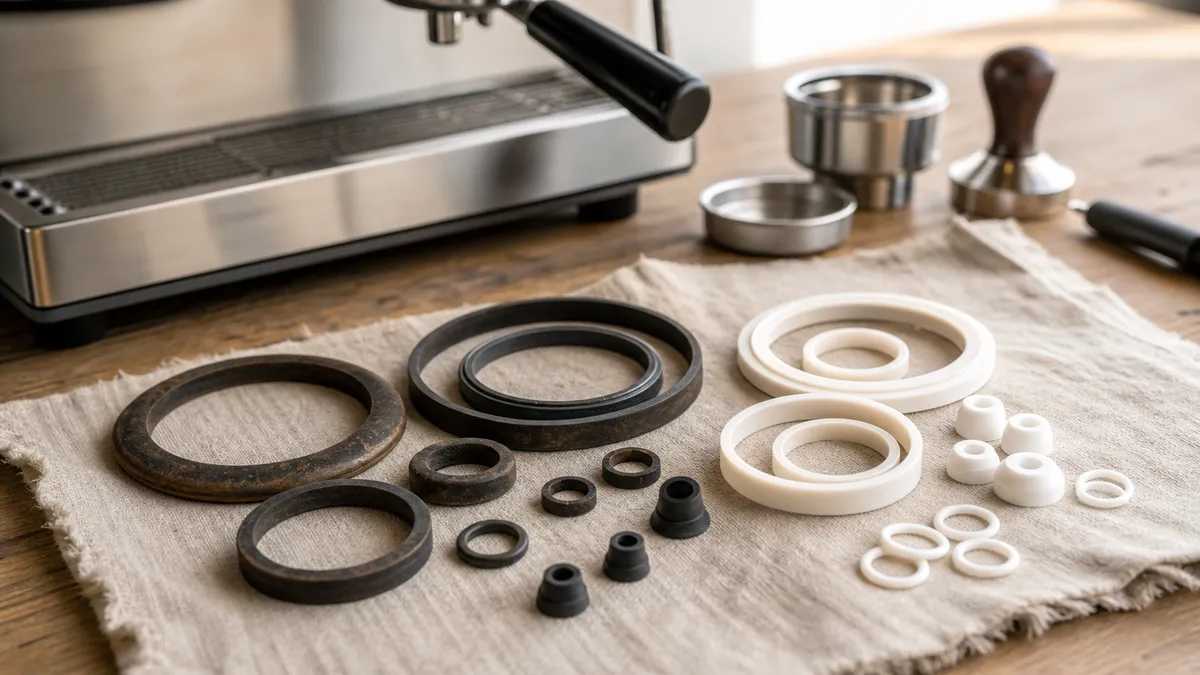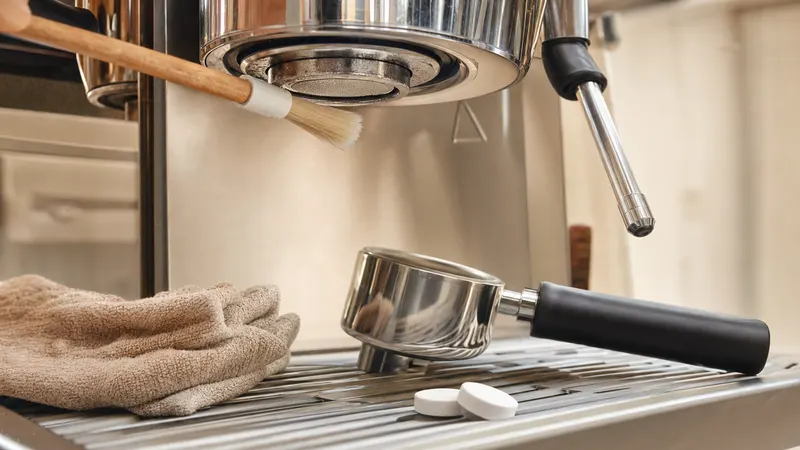
Keep coffee equipment working by separating four jobs: removing coffee residue, descaling the water circuit, cleaning milk-contact parts and checking faults safely. This coffee equipment care and repairs hub helps you choose the right guide, without treating every slow pour as limescale or every warning light as a breakdown.
In short
- Cleaning removes coffee residue; descaling tackles mineral deposits. One does not replace the other.
- Backflush only when your espresso machine’s instructions explicitly provide a backflushing or pressure-cleaning procedure.
- Follow the milk-system cleaning programme after milk use, not just the automatic rinse.
- Match water-hardness settings and filter maintenance to your actual supply and machine instructions.
- Stop using equipment with electrical damage or signs of overheating, and arrange competent assessment.
Guides in Coffee Equipment Care and Repairs
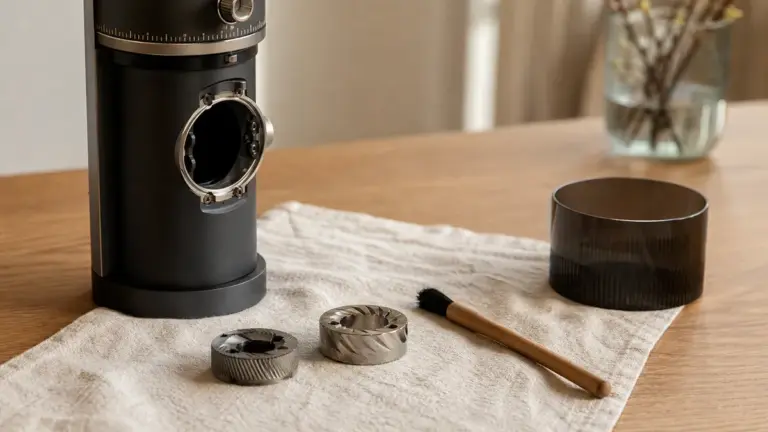 Cleaning a Coffee GrinderLearn how to brush grinder burrs, use compatible cleaning tablets, clear the chute and reassemble correctly without disturbing factory calibration.Read the guide
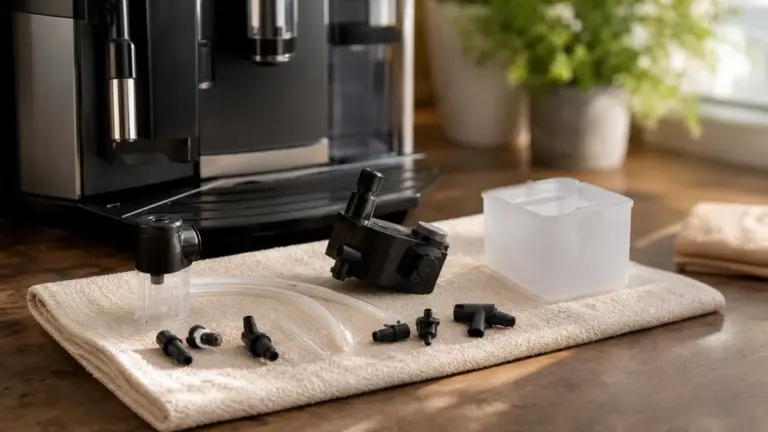 Cleaning Bean-to-Cup Milk SystemsClean bean-to-cup milk systems with model-specific daily routines, safe dismantling, milk-fridge care and practical fixes for poor foam and blockages.Read the guide
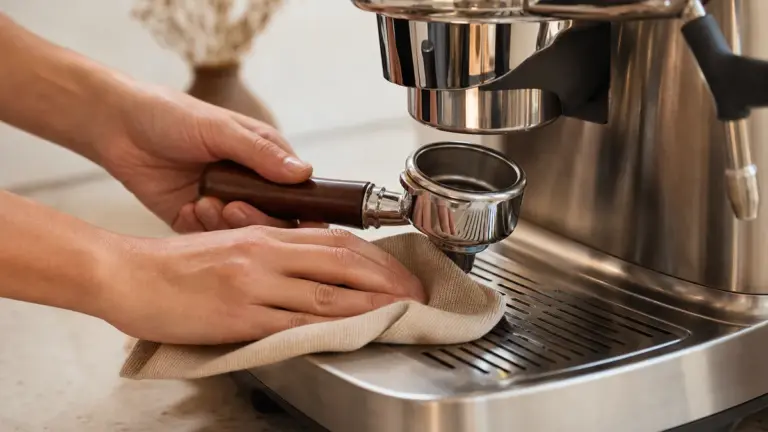 Coffee Machine Cleaning GuideClean bean-to-cup, espresso, capsule and filter machines properly, with daily routines, safe products, milk-system care and practical fixes.Read the guide
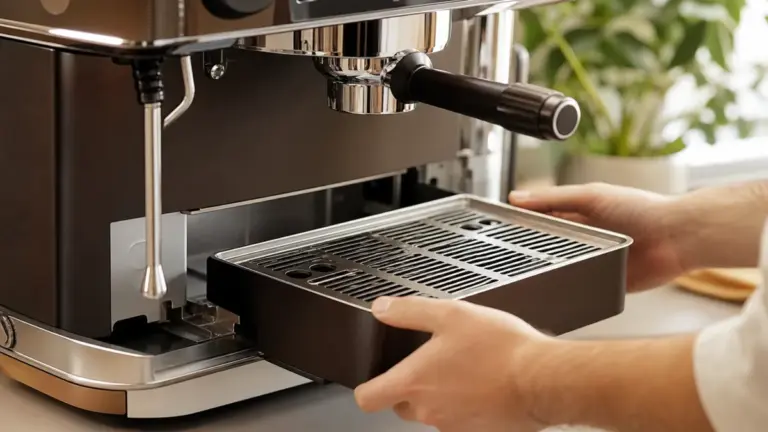 Coffee Machine TroubleshootingDiagnose no water flow, slow shots, weak coffee, leaks, steam and temperature problems, with safe checks and clear advice on when to call a…Read the guide
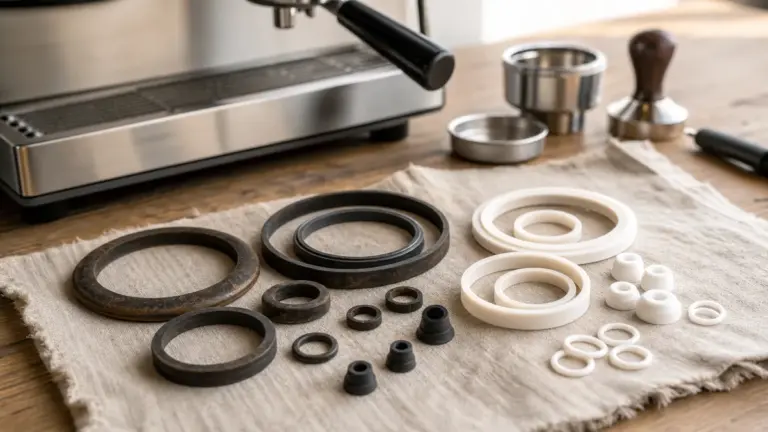 Common Coffee Machine FaultsUnderstand common coffee machine faults, from scale and worn seals to pump, sensor, brew unit and grinder problems, with safe next steps explained.Read the guide
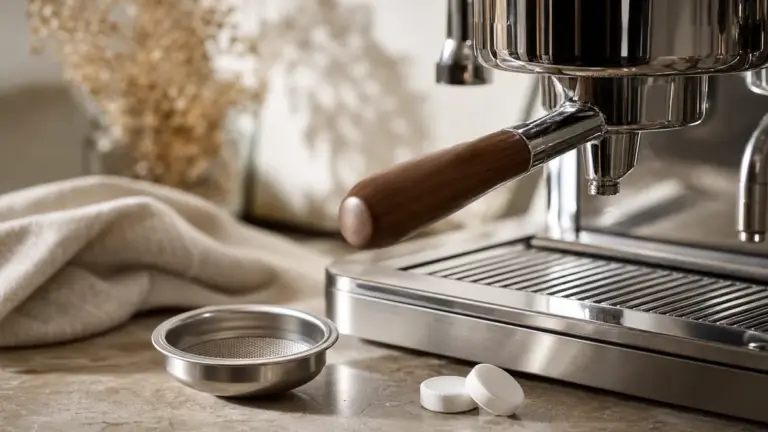 Espresso Machine BackflushingLearn which espresso machines can be backflushed, how to use a blind basket and detergent, when to clean, and how to rinse safely without…Read the guide
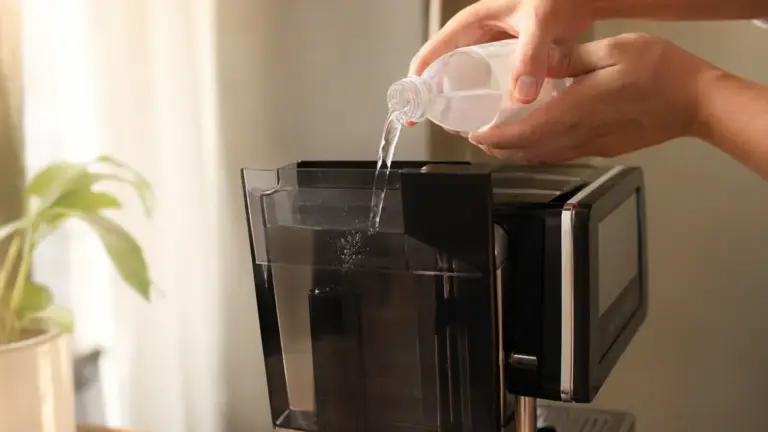 How to Descale a Coffee Machine in UK Hard WaterDescale safely in UK hard water: find local hardness, choose compatible products, follow the rinse cycle and understand filters and maintenance timing.Read the guide
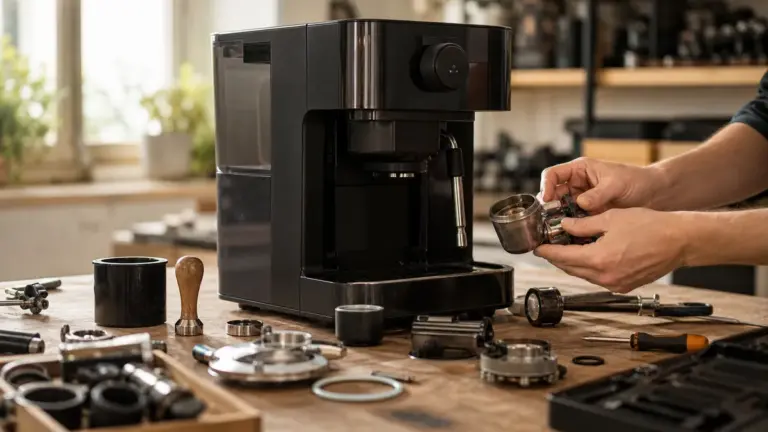 Repair or Replace a Coffee Machine?Decide whether to repair or replace a coffee machine using condition, parts availability, UK consumer rights and a practical repair quotation checklist.Read the guide
Start here if you are new
Start with the task you need to do, rather than buying a collection of cleaning products.
- Read the cleaning basics to distinguish everyday washing from the machine’s internal cleaning programme. Use it to build a routine around the equipment you actually own.
- Follow the UK descaling guide when you need to understand local hardness, descaling prompts and compatible products. Keep your model’s manual beside you for the procedure.
- If something is already wrong, use safe troubleshooting before changing settings or running another cleaning cycle. It helps you record the symptom and decide whether further use is sensible.
For choosing equipment rather than maintaining it, return to machines and equipment. The guides below take over once you need to look after a machine, brewer or grinder.
Before starting, find the exact model number and its manufacturer’s instructions. Similar-looking machines can have different cleaning programmes, removable components and approved chemicals, so a video for a neighbouring model is not necessarily a suitable method.
Choose the right care task
Use this overview to identify the job. It is a route into the detailed guides, not a universal maintenance schedule.
| Area | What the task addresses | When to investigate | Important boundary |
|---|---|---|---|
| General cleaning | Coffee residue on accessible parts and in designated cleaning circuits | After use and when the manual specifies | Check which parts may be washed or soaked |
| Descaling | Mineral deposits in the water circuit | At the model’s prescribed interval or prompt | Use its specified product and programme |
| Backflushing | Coffee residue in a compatible espresso group’s cleaning circuit | When the manufacturer specifies | Not a procedure for every espresso machine |
| Milk-system care | Residue in milk pipes, outlets, frothers and containers | After milk preparation, following the manual | A rinse is not necessarily the full clean |
| Grinder cleaning | Retained grounds and deposits around burrs and the outlet | At the prescribed interval or when investigating delivery problems | Keep water away from burrs unless expressly permitted |
| Troubleshooting | A change in operation or a warning message | When a repeatable symptom appears | Stop if there is an electrical or overheating concern |
| Repair assessment | A persistent fault or damaged component | After safe user checks, or immediately for safety concerns | Obtain a diagnosis before deciding to replace |
There is no useful single answer to “How often should everything be cleaned?” A steam wand needs attention after milk texturing, while descaling depends on the machine’s instructions and water conditions. Write separate reminders for separate jobs.
Cleaning: remove coffee residue first
Cleaning covers the surfaces and passages that collect coffee oils and grounds. A descaling programme has a different purpose, so running it is not a substitute for washing a coffee jug or completing a designated coffee-cleaning cycle.
Start with the accessible parts named in the manual: these might include the jug, filter holder, portafilter, baskets, drip tray and grounds container. A portafilter is the handled holder that locks into an espresso machine; its basket holds the ground coffee.
Do not assume that every detachable component belongs in the dishwasher. Moccamaster, for example, advises against dishwashing its removable brewer parts, while Baratza gives hand-washing instructions for the hopper and grounds bin on its Vario W+.
The coffee machine cleaning guide is the next read when you want to turn these distinctions into a practical routine. It is also the place to start if your current approach consists mainly of emptying the drip tray.
Keep washing separate from powered programmes
For manual cleaning, switch off, unplug and allow the equipment to cool as its instructions require. A powered cleaning programme is different: prepare the machine as directed, keep clear of hot discharge and let the prescribed sequence finish.
Use only the access and dismantling steps intended for the user. If the instructions do not describe removing a panel or component, ask the manufacturer or repairer rather than assuming that visibility makes it user-serviceable.
Descaling: deal with your water, not a national average
Water hardness comes principally from dissolved calcium and magnesium, and varies with the supply. The Drinking Water Inspectorate advises asking the local water company for an accurate figure because broad maps cannot show every local variation.
Look up your supplier’s published water information for the equipment’s address. Thames Water’s guidance, for example, explains why its region has hard water, but that regional description is not a numerical setting for every appliance.
Check the units before entering a hardness value. Reports and manuals may use milligrams per litre expressed as calcium carbonate, Clark degrees or German degrees; these are different reporting scales, so do not copy a bare number between them without the appropriate conversion.
Use the hard-water descaling guide when you need help matching the report, a test result and the machine’s settings. It explains the decisions without replacing the manufacturer’s chemical dose, water volume or rinse instructions.
A filter is not permission to ignore maintenance
Follow the particular filter and machine instructions together. Sage’s Barista Touch Impress manual, for example, still calls for descaling where scale builds up despite the supplied filter.
Likewise, do not assume vinegar is universally suitable. Moccamaster explicitly advises against it. The useful question is not whether an ingredient can dissolve scale, but whether the manufacturer approves the formulation and procedure for that appliance.
SCA equipment certification assesses defined coffee-quality and performance requirements. It does not replace the maintenance instructions supplied with your machine.
Backflushing: only for a compatible espresso machine
Backflushing is a pressure-cleaning procedure used on compatible espresso machines to clean the brewing group’s designated circuit. The group is the assembly into which the portafilter locks.
In the Sage Barista Touch Impress instructions, pressure builds against a cleaning disc and the cleaning discharge empties into the drip tray. That is a distinct operation from sending descaler through the water circuit.
Read espresso backflushing when your manual specifies this procedure and you need to understand its purpose. The guide is particularly useful for distinguishing a water-only flush from a chemical cleaning cycle.
Do not fit a blocked basket or improvise a pressure cycle on a machine whose instructions do not provide for it. Use the specified disc or basket, cleaning product and rinsing sequence, rather than borrowing another machine’s button presses.
Milk systems: distinguish rinsing from cleaning
Automatic milk systems can offer both a rinse and a cleaning programme. JURA’s E8 instructions distinguish these explicitly and require daily milk-system cleaning when milk has been prepared.
For a manual steam wand, Sage instructs users to wipe it after texturing milk and briefly purge it towards the drip tray. Purging means releasing steam to clear remaining milk from inside the wand; keep hands away from the discharge.
The bean-to-cup milk-system guide is the useful next step for machines with milk pipes, detachable frothers or automatic milk delivery. Read it when you need to organise the full cleaning job rather than rely on the rinse that happens at shutdown.
Follow the model’s instructions for dismantling milk-contact components, preparing cleaner and rinsing afterwards. Do not treat the coffee-cleaning tablet, milk cleaner and descaler as interchangeable products.
For shared equipment, make the handover explicit: record whether milk was used and whether the required clean was completed. That is a suggested organisational routine, not a claim that every machine has the same programme.
Grinders: clean the coffee path without wetting the mechanism
Burrs are the paired cutting surfaces that break beans into grounds. Cleaning may involve brushing these surfaces, the grind chamber and the outlet, while treating a detachable hopper separately.
Baratza’s Vario W+ manual specifies brushing the burrs and warns against washing them with water or immersing the grinder housing. Its instructions also distinguish upper-burr removal from work on the lower burr carrier.
Use grinder cleaning when you need to identify the parts you can safely access. It is especially useful before your first clean, when photographs of each stage can help you keep track of the assembly.
Unplug before putting tools near the burrs. Note your grind setting, keep removed components in order and follow the model’s reassembly instructions; do not extend a routine clean into an undocumented adjustment.
Faults: investigate the symptom, not a guessed component
A slow espresso pour is not a diagnosis of pump failure. Sage’s troubleshooting guidance lists several possible causes, including excessively fine grounds, an excessive dose and a blocked filter basket.
Make your first distinction between a coffee-preparation problem and a wider operating problem. Record what happens, whether the machine displays a message and whether the symptom started after cleaning, reassembly or a setting change.
Choose the guide that matches your question:
- Use coffee machine troubleshooting for a structured sequence of safe checks. Start here when you know what the machine is doing but not why.
- Use common machine faults when you want to understand a diagnosed or suspected component problem. It helps you prepare useful questions for the service provider without treating a symptom list as proof.
Avoid changing several variables at once. A brief record of the original symptom, the permitted check and its result will be more useful to a technician than a list of cleaning programmes run repeatedly.
Know when to stop
Stop using equipment with damaged electrical parts, burn marks or other signs of overheating. Isolate it safely and arrange assessment by someone competent to carry out the work.
Do not remove the casing to investigate mains wiring, heaters or internal connections. HSE guidance for Great Britain places emphasis on safe maintenance, competent people and arrangements for reporting defective workplace equipment.
Repair or replace: get the diagnosis first
Judge repair against safety, the identified fault, parts availability, the condition of the rest of the machine and its suitability for future use. Age alone is not enough information to make that decision.
Ask for an itemised written quotation covering diagnosis, parts, labour, transport or attendance, post-repair testing and the repair guarantee. For workplace equipment, also ask who will maintain it afterwards and how disruption will be managed.
Read repair or replace once you have those answers. It provides a decision framework, rather than a reason to discard equipment because the first troubleshooting attempt failed.
Check the purchase route before authorising work
For UK consumer purchases, statutory rights against the retailer are separate from a manufacturer’s warranty. GOV.UK explains that the retailer generally must repair or replace faulty goods reported within six months unless it can show the goods were not faulty when supplied.
This is not an automatic six-month guarantee against every failure, including misuse or wear. Keep purchase evidence and contact the retailer before commissioning work that could complicate the claim.
Business purchases need separate consideration. The Consumer Rights Act 2015 defines a consumer as an individual acting wholly or mainly outside their trade or profession, so an office purchase should not automatically be treated as a domestic consumer transaction.
FAQ
Can I use a dishwasher tablet to clean any coffee machine?
No, a dishwasher tablet is not a universal coffee-machine cleaner. Approval for cleaning a particular removable vessel does not establish suitability for an internal circuit, milk system or grinder. Use the product specified for the task and model, and follow its rinsing instructions rather than improvising a stronger mixture.
Should I descale a machine before sending it for repair?
Only if the manufacturer or repairer advises it and the machine remains safe to operate. Do not run a programme on equipment with an electrical safety concern. Describe the fault first, including any warning message and recent maintenance, then ask whether further user action would help the assessment.
What should go in a shared-office maintenance record?
Record the task, date, person responsible, warnings observed and any work still outstanding. Include filter changes and service visits where relevant. This is a suggested practical format; HSE guidance for Great Britain says that, where work equipment has a maintenance log, it must be kept up to date.
Where to go next
Begin with Coffee Machine Cleaning Guide to organise routine coffee equipment care and repairs, then read How to Descale a Coffee Machine in UK Hard Water for water-related maintenance. If equipment is already misbehaving, Coffee Machine Troubleshooting helps you investigate safely, while Repair or Replace? helps you assess the next step after diagnosis.
Sources
Manufacturer instructions below support model-specific examples, not a claim that every machine uses the same procedure.
-
Sage, The Barista Express BES875/SES875: Quick Guide, undated retrieved edition, sections on safety, care and troubleshooting.
https://assets.sageappliances.com/BES875/SES875_EU_UG8_I23_LR.pdf -
Sage, Barista Touch Impress: Instruction Book, revision identified by file code SES882 EU UG8 B25, undated retrieved edition, care, backflushing, grinder and descaling instructions.
https://assets.sageappliances.com/BES882/SES882_EU_UG8_B25_LR.pdf -
JURA, E8/E800 Instructions for Use, v19 file edition, undated retrieved document, maintenance and milk-system cleaning.
https://www.jura.com/-/media/global/pdf/manuals-global/home/E-Line-2019/download_manual_v19_E8_e800.pdf -
Baratza, Vario W+ Operations Manual, document marked January 2022, v1.5, grinder cleaning and component removal.
https://assets.breville.com/ZCG987/manual-variowplus-en-v1-6_082123.pdf -
Moccamaster, How do I maintain my Moccamaster?, 2024, cleaning, descaling and removable parts.
https://www.moccamaster.eu/blog/post/how-maintain-moccamaster -
Moccamaster, Frequently Asked Questions, undated current page, vinegar restriction and maintenance guidance.
https://www.moccamaster.eu/faq -
Drinking Water Inspectorate, Water Hardness / Hard Water, undated current page, dissolved minerals, local variation and reporting units.
https://www.dwi.gov.uk/consumers/learn-more-about-your-water/water-hardness-hard-water/ -
Thames Water, Hard water, undated current page, regional water-hardness context.
https://www.thameswater.co.uk/help/water-and-waste-help/water-quality/hard-water -
Specialty Coffee Association, SCA Certified Equipment Program, undated current page, scope of equipment certification.
https://sca.coffee/certified-home-brewer -
Health and Safety Executive, Work using electrically powered equipment, undated current page, electrical checks and competent assessment.
https://www.hse.gov.uk/electricity/electricequip.htm -
Health and Safety Executive, Maintenance of work equipment, undated current page, maintenance arrangements, competence and logs.
https://www.hse.gov.uk/work-equipment-machinery/maintenance.htm -
GOV.UK, Accepting returns and giving refunds: the law, undated current page, faulty goods, evidence and warranties.
https://www.gov.uk/accepting-returns-and-giving-refunds -
UK legislation, Consumer Rights Act 2015: Explanatory Notes, 2015, paragraph 36 on the definition of a consumer.
https://www.legislation.gov.uk/ukpga/2015/15/pdfs/ukpgaen_20150015_en.pdf
This hub was researched through retrieved manufacturer instructions, water-supplier and regulatory guidance, SCA programme information and UK consumer-law sources; it does not report hands-on testing.
Last checked: November 2026