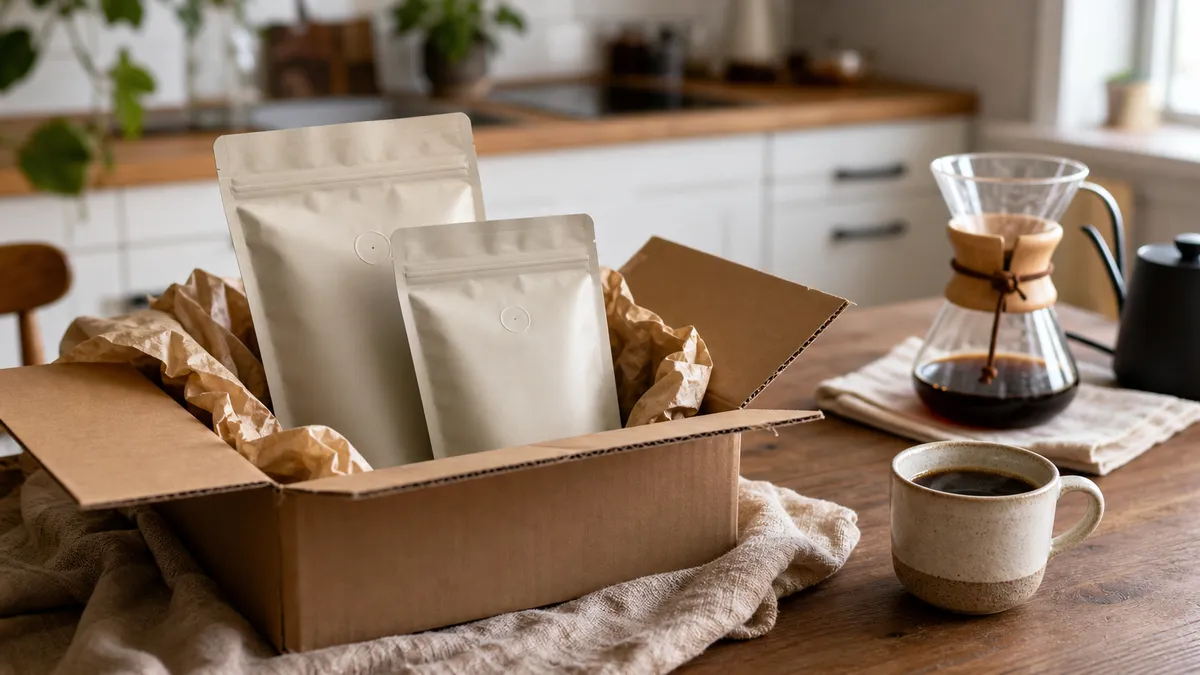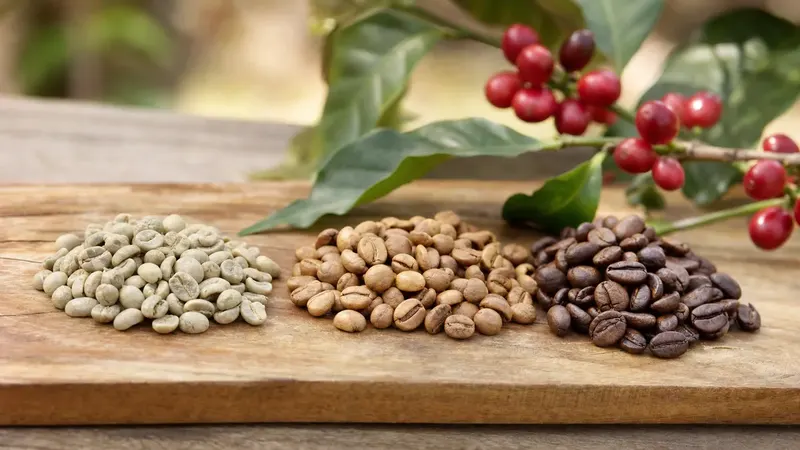
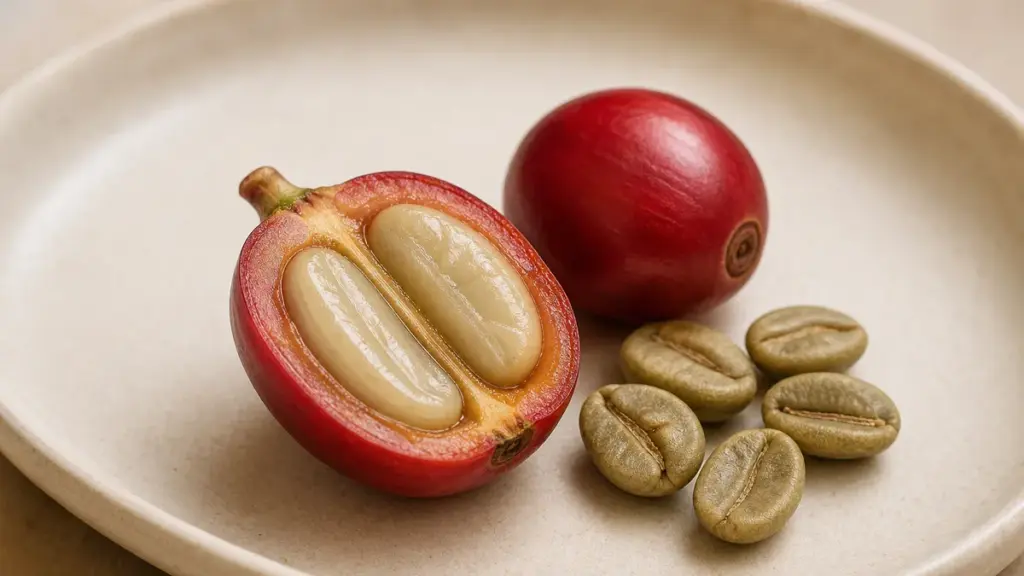
Coffee beans are the seeds of a fruit, usually called a coffee cherry, grown mainly in tropical regions. What makes one coffee taste different from another is the whole journey: the plant’s genetics, its growing conditions, harvesting, processing, roasting and, finally, storage and brewing. Beans & Origins follows that journey, helping you connect what is printed on the bag with what you enjoy in the cup.
In short
- Separate the labels: species, variety, origin, processing method and roast describe different things.
- Treat altitude and country as clues, not guarantees of quality or flavour.
- Washed, natural and honey processing describe how the fruit is removed and the seeds are dried.
- Choose single-origin coffee to explore a particular source, or a blend for a roaster’s intended combination of characteristics.
- Buy quantities you can use steadily, protect them from air, moisture, heat and light, and match deliveries to consumption.
Explore the topics
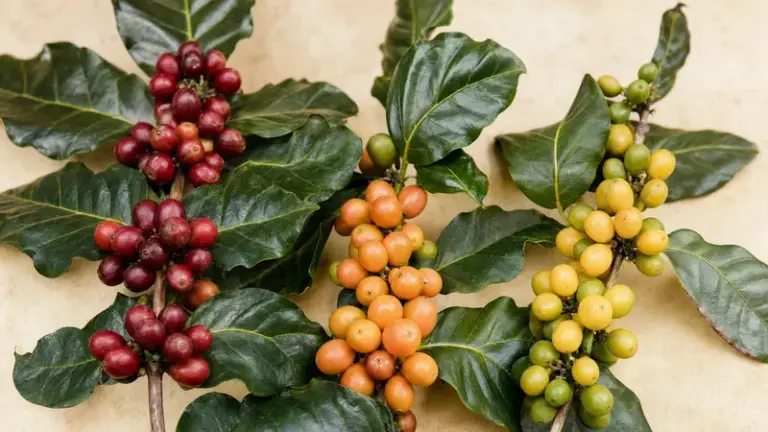
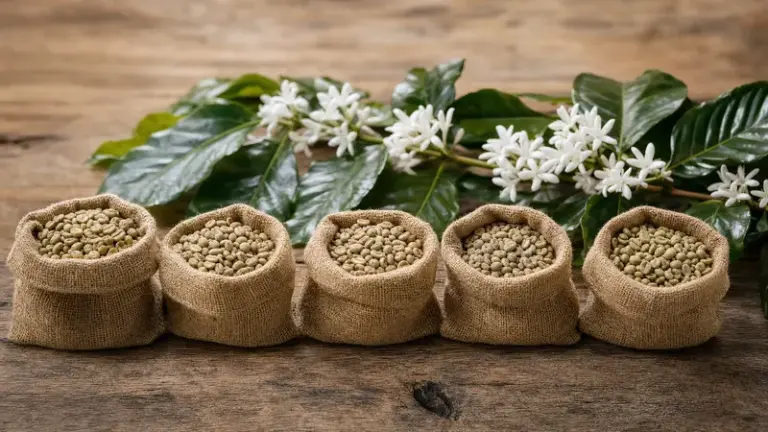
Start here if you are new
Follow these three guides in order for a manageable route from plant to cup:
- Meet the plant: begin with coffee varieties. This makes the names on bags less mysterious and separates a species such as arabica from a variety such as Bourbon.
- Follow the harvested fruit: move to coffee processing methods. Read this when you want to understand what happens between picking a cherry and preparing green coffee for roasting.
- Choose and care for your coffee: finish with buying and storing coffee. Use it to turn the background knowledge into a sensible buying routine.
You do not need to memorise producing countries or recognise every tasting note before choosing a bag. Start by recording what you like: a floral aroma, a citrus-like brightness, a rounded chocolate character or a fuller texture. Those observations give you something useful to ask a roaster for next time.
For the longer route, follow the sections below in sequence. Each introduces one stage without replacing the detailed guide that owns it.
Find your route through Beans & Origins
The ten hubs divide the subject by the questions readers actually ask. Use this overview to find the right depth, rather than reading everything before making your next coffee.
| Hub | Main question | Read it when |
|---|---|---|
| coffee varieties | What kind of coffee plant produced these beans? | Species, cultivar or hybrid names need explaining. |
| coffee growing regions | Where is coffee grown? | You want to explore origins beyond a familiar country name. |
| coffee farming | How is the crop grown and managed? | You want to understand the work behind the harvest. |
| coffee harvesting | How are cherries picked and selected? | You are comparing picking methods and ripeness. |
| coffee terroir | How does the growing environment influence coffee? | Altitude, shade, soil and climate claims need context. |
| coffee processing methods | How does fruit become green coffee? | A processing label is unfamiliar. |
| coffee roasting | How does heat change the bean? | You want to connect roast choices with flavour. |
| coffee beans and blends | How are coffees selected and combined? | You are choosing between a blend and a single origin. |
| buying and storing coffee | How do I choose coffee and preserve its character? | You need a practical routine for home or work. |
| coffee subscription services | Would regular deliveries suit me? | You want to assess selection, quantities and flexibility. |
The plant: species, varieties and hybrids
Arabica, Coffea arabica, and robusta, the trade name commonly used for Coffea canephora, underpin the global coffee supply. They are different species, not roast levels or quality grades. Neither name, by itself, tells you precisely how a finished coffee will taste.
Within those species are named varieties and cultivated selections. Bourbon and Caturra, for example, belong within arabica. A cultivar is a cultivated plant selection maintained for particular characteristics; coffee’s everyday use of “variety” often includes these cultivated types.
Breeding introduces another layer. An F1 hybrid is the first-generation offspring of genetically distinct parents. It is a type of breeding outcome, not another species, and breeders may seek combinations of cup quality, productivity and disease resistance.
Less familiar commercial coffees include Liberica, Coffea liberica, and excelsa, Coffea dewevrei. Older references often place excelsa within Liberica as Coffea liberica var. dewevrei. This guide follows the genomic, morphological and geographical evidence published by Davis and colleagues in Nature Plants in 2025, which supports recognising them as separate species, consistent with Kew’s current project terminology.
Read coffee varieties when you want to untangle a particular name or understand why farmers choose one plant over another. It is the place for genetic relationships and growing characteristics, rather than assumptions that a fashionable variety must always make the best drink.
Place: where coffee grows and why
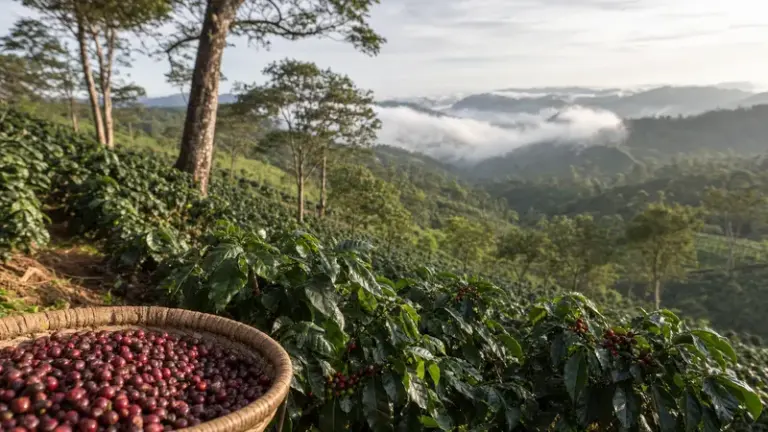
Coffee production is concentrated in tropical regions across the Americas, Africa, Asia and the Pacific. Suitable growing conditions depend on the plant involved and the local combination of temperature, rainfall, soil and exposure. A country name therefore identifies a source, not a complete growing environment.
Altitude matters partly because it changes the conditions around the plant. Cooler conditions can extend fruit maturation, giving the developing seeds a different growing period. But elevation interacts with shade, water availability, variety and farm management, so “higher is better” is too simple.
Field research illustrates the difficulty of reducing this to one number. A study on Gorongosa Mountain in Mozambique found altitude-related changes in green-bean characteristics alongside differences in temperature, water availability and maturation. The researchers did not find a uniformly beneficial effect of shade across all the characteristics examined.
For a reader, the useful distinction is between origin and terroir. Origin says where coffee comes from; terroir concerns how its growing environment and local production practices contribute to its character. Processing and roasting then complicate how clearly that character can be perceived.
Use coffee growing regions to explore producing areas and the differences within them. Turn to coffee terroir when you want the explanation behind an altitude claim or a discussion of place that goes beyond a national flavour stereotype.
When shopping, ask for the most specific origin information available, then taste without treating that information as a verdict. A named region is a useful starting point for exploration, not an instruction about what you must find in the cup.
Farming and harvesting: quality begins before processing
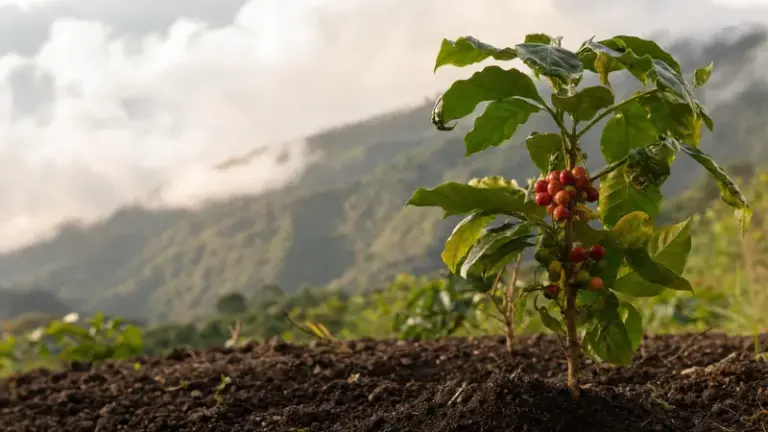
Growing coffee involves establishing plants and managing the crop before any cherries reach a processing station. Variety choice has practical consequences: World Coffee Research’s catalogue considers traits including yield, nutritional needs, disease susceptibility and suitability for different growing conditions.
This makes farming a balancing exercise, not simply a search for the most celebrated variety. A plant with attractive cup potential still has to suit the farm where it grows. For readers interested in the work behind the bag, coffee farming explains these choices and their consequences.
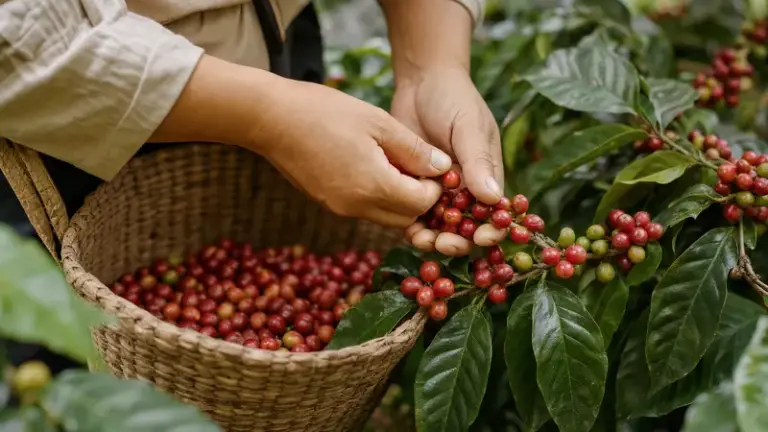
Harvesting introduces a different set of decisions. Selective picking removes chosen ripe cherries, while strip picking removes cherries from a branch together. Harvesting may be manual or mechanised, depending on the production system.
The useful question is not merely whether hands or machinery were involved. Ask how ripeness was managed and how the harvested material was selected afterwards. A harvesting label describes an operation; it does not replace an assessment of the resulting coffee.
Read coffee harvesting to compare those approaches and understand the relationship between picking and selection. It is especially useful when a coffee’s description makes hand-picking sound like a complete explanation of quality.
Processing: from coffee cherry to green bean
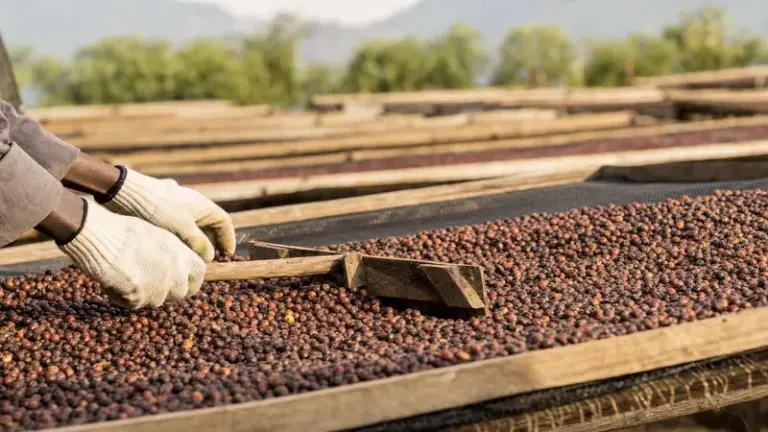
Processing prepares the harvested seeds for storage, transport and roasting. Its central tasks include removing fruit material and drying the coffee, but the order and extent of those operations vary.
The main labels provide a useful first orientation:
- Natural: the coffee dries within the whole fruit before the dried outer material is removed.
- Washed: fruit material is removed before the seeds are dried in their protective parchment layer.
- Honey or pulped natural: the skin and much of the pulp are removed, while some sticky mucilage remains during drying.
Mucilage is the slippery layer around the seed. “Honey” refers to its sticky character, not the addition of honey.
These processes can contribute different sensory tendencies. Naturals may show pronounced fruit or fermented characteristics; washed coffees may have a more clearly defined, clean character. Those are possibilities, not fixed recipes, and processing names should not be read as guaranteed tasting notes.
For the simplest comparison, keep two questions separate: what was done to the fruit, and what does the resulting coffee taste like? The first is production information; the second requires tasting. A process you enjoy in one coffee may give a different result in another.
Use coffee processing methods when a label needs decoding or you want to follow the stages more closely. It explains the operations without making one method a universal winner.
Roasting: developing the coffee’s character
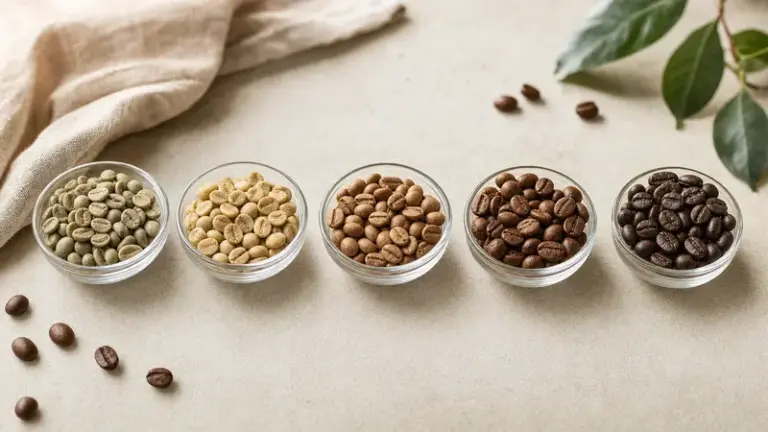
Roasting changes green coffee into the brown, aromatic beans used for brewing. It is a chemical transformation, not just a colour change. Time and temperature influence the compounds produced and the resulting aroma.
Controlled roasting research on Yellow Bourbon arabica found differences in volatile and odour-active compound profiles under different heating conditions. That supports an essential distinction: a coffee’s origin establishes part of its potential, while roasting changes how that potential is expressed.
Light, medium and dark are useful broad descriptions, but roast terminology varies between sellers. An “espresso roast” is not a separate species or one fixed roast level. It describes a roaster’s intention for how the coffee will be used.
Read coffee roasting if you want to understand roast development and why colour alone leaves questions unanswered. For buying, ask what flavour the roaster intended and how they suggest preparing the coffee, rather than relying on a roast label alone.
A helpful learning exercise is to compare different roasts of the same coffee when a roaster offers them. Keep your preparation as consistent as you can and describe the differences before deciding which you prefer. Treat this as an exploration, not a contest in which the lightest or darkest roast must win.
Beans and blends: choosing a source or a composition
Single-origin coffee comes from one identified source, but that source may be a country, region or farm. The term does not automatically mean one variety, one field or one narrowly defined batch.
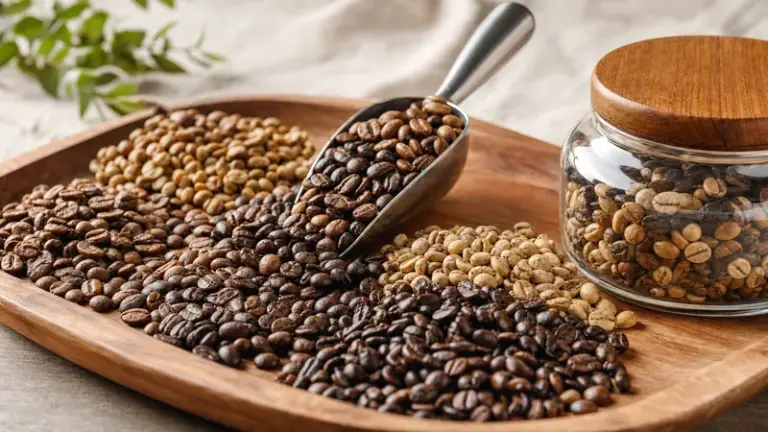
A blend combines coffees to achieve an intended combination of characteristics. Roasters may use complementary components to pursue balance or a more consistent profile. Blending is therefore a design choice, not evidence that the coffee lacks a worthwhile identity.
Choose according to your purpose. If you want to investigate a particular source, ask how specifically the single origin is defined. If you want a familiar everyday profile, ask what character a blend is designed to deliver and whether its components change.
For a workplace, make the choice around the drinks people actually prepare. Ask for a sample suitable for your machine, try it with your usual milk where relevant, and collect plain descriptions of what people liked or disliked. Do not substitute a prestigious origin name for that practical check.
Use coffee beans and blends to understand composition, labelling and selection in more detail. It is the next read when you know the kind of cup you want but are unsure which bag description best matches it.
Buying, storing and arranging deliveries
Begin with information you can use: origin, processing description, roast information, tasting notes and the supplier’s preparation advice. Ask questions where the description is vague, especially if a broad label is carrying most of the sales pitch.
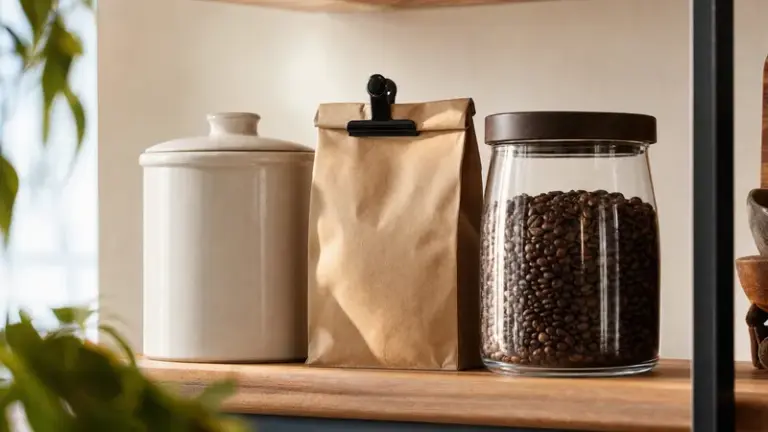
At home or work, protect roasted coffee from air, moisture, heat and light. Keep it in a cool, dark place in an effective airtight container, and grind what you need near brewing time where your equipment allows. There is no need to turn the kitchen or tea point into a display of exposed beans.
Choose a bag quantity against actual consumption. For an office, record how much coffee is used over representative working days, including quieter periods, before setting the reorder routine. That is more useful than estimating demand from headcount alone.
Read buying and storing coffee for the detailed selection and storage decisions. Keep this gateway’s rule simple: buy deliberately, store carefully and avoid accumulating coffee faster than you use it.
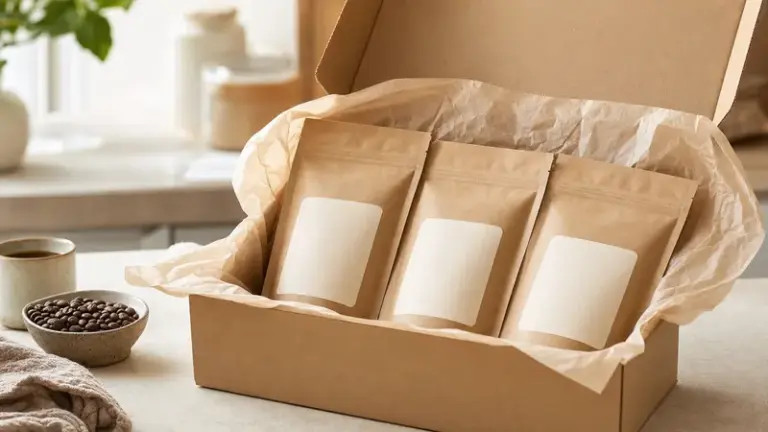
For subscriptions, assess the arrangement as well as the coffee. Check whether you can choose whole beans or an appropriate grind, control quantities, change delivery intervals, pause deliveries and understand the selection policy. These are questions to verify with each service, not features to assume.
Use coffee subscription services when you are deciding between repeated favourites and rotating discoveries. Set the delivery pattern around your consumption, rather than rearranging your drinking to accommodate the parcel.
Understanding flavour without oversimplifying it
The deeper lesson is that coffee flavour is an interaction, not a single-origin signature. Genetics, growing conditions and everything after harvest contribute to the sensory result. Trying to identify one cause from one cup can therefore overstate what the evidence shows.
Professionals distinguish description from preference. The World Coffee Research Sensory Lexicon provides defined attributes and reference materials for describing aroma, flavour and texture. Describing something as fruity or bitter does not, on its own, establish whether it is desirable.
The Specialty Coffee Association’s Coffee Value Assessment also separates different questions. Physical assessment considers characteristics such as defects, moisture and size; descriptive assessment records sensory attributes; affective assessment concerns perceived quality; extrinsic assessment records information beyond the cup.
That distinction is useful even without professional training. Ask separately: what is this coffee, what do I perceive, and do I like it? A detailed label answers part of the first question, but cannot answer the last for you.
For your next Beans & Origins comparison, choose one question worth exploring and keep a brief record. Note the coffee’s stated details, your preparation and your own sensory observations. The aim is a more informed next choice, not perfect agreement with somebody else’s tasting notes.
FAQ
Does coffee have to be roasted where it was grown?
No, growing and roasting can take place in different countries. The International Coffee Organization describes a global value chain with distinct cultivation, processing, trading and roasting activities. When reading a bag, distinguish the coffee’s agricultural origin from the roaster’s location: a UK roasting address tells you where that stage happened, not where the plant grew.
Are tasting notes a list of ingredients?
Tasting notes describe sensory impressions, not necessarily added ingredients. Words such as chocolate, jasmine or blackberry can describe characteristics perceived in coffee itself, as illustrated by the World Coffee Research Sensory Lexicon. Do not use them as a substitute for ingredient information, however: check the product description and ingredients if you need to establish whether anything has been added.
Must I identify the same flavours as the roaster?
No, you do not need to reproduce the roaster’s wording to enjoy or compare coffees. Professional sensory description uses defined references and trained assessment, rather than relying only on spontaneous impressions. For everyday learning, begin with broader observations such as fruity, floral, bitter or full-bodied, then use more specific comparisons when they genuinely help you.
Where to go next
Read Coffee Growing Regions to choose an origin to explore, then Coffee Processing Methods to understand another major part of its journey. For your next purchase, Coffee Beans and Blends helps interpret the selection, while Buying and Storing Coffee turns Beans & Origins knowledge into a practical routine.
Sources
-
World Coffee Research, Coffee Varieties Catalog, live catalogue, undated. Species, named varieties and agronomic selection information.
https://varieties.worldcoffeeresearch.org/ -
World Coffee Research, F1 Hybrids Explainer, 2019. First-generation hybrid definition and breeding context.
https://worldcoffeeresearch.org/news/2019/f1-hybrids-explainer -
Davis, A. P. and colleagues, Genomic data define species delimitation in Liberica coffee with implications for crop development and conservation, Nature Plants, 2025. Primary genomic, morphological and geographical research.
https://pmc.ncbi.nlm.nih.gov/articles/PMC12449269/ -
Royal Botanic Gardens, Kew, Excelsa and Liberica coffee development, live project page, undated. Current species terminology and research context.
https://www.kew.org/science/our-science/projects/excelsa-and-Liberica-coffee-development -
National Coffee Association, Coffee regions of the world, undated. Growing geography and the scope of single-origin descriptions.
https://www.aboutcoffee.org/origins/coffee-regions-of-the-world/ -
National Coffee Association, Lifecycle of Coffee, undated. Growing, harvesting and blend composition.
https://www.aboutcoffee.org/origins/lifecycle-of-coffee/ -
National Coffee Association, Processes, undated. Natural, washed and honey processing definitions.
https://www.aboutcoffee.org/beans/processes/ -
National Coffee Association, Roasts, undated. Broad roast descriptions and espresso-roast terminology.
https://www.aboutcoffee.org/beans/roasts/ -
National Coffee Association, Storage and shelf life, undated. Protection from air, moisture, heat and light, and grinding near brewing.
https://www.aboutcoffee.org/beans/storage-and-shelf-life/ -
International Coffee Organization, Coffee Development Report 2020: The Value of Coffee, 2020. Stages of the global coffee value chain; historical statistics were not used as current figures.
https://www.ico.org/wp-content/uploads/2022/11/CDR2020.pdf -
World Coffee Research, Sensory Lexicon, version 2.0, 2017. Flavour influences, sensory terminology and the distinction between description and quality judgement.
https://worldcoffeeresearch.org/download/bf904452-fc8c-488f-b591-c0b20d9bcab2 -
Specialty Coffee Association, Coffee Value Assessment, live framework page, undated. Physical, descriptive, affective and extrinsic assessment categories.
https://sca.coffee/value-assessment -
** Shade and Altitude Implications on the Physical and Chemical Attributes of Green Coffee Beans from Gorongosa Mountain, Mozambique, Agronomy, 2022.** Primary field research on environmental interactions and green-bean characteristics.
https://horizon.documentation.ird.fr/exl-doc/pleins_textes/2022-12/010086414.pdf -
Hong, S. J. and colleagues, Impact of roasting conditions on physicochemical, taste, volatile, and odor-active compound profiles of Coffea arabica L. (cv. Yellow Bourbon) using electronic sensors and GC-MS-O using a multivariate approach, Food Chemistry: X, 2024. Controlled roasting experiment.
https://pubmed.ncbi.nlm.nih.gov/38282827/
This page was researched using botanical and agronomic research, coffee research organisations, industry reference material and the SCA assessment framework; it does not report first-hand testing.
Last checked: November 2026