Coffee is a drink brewed from the roasted seeds of the coffee plant, and getting started means learning three things: which flavours you enjoy, which brewing method fits your routine, and how to repeat a cup you like. This Coffee for Beginners guide maps those essentials, so you can choose your next step without learning everything at once.
In short
- Choose a brewing method before buying ground coffee, so the grind matches the equipment.
- Treat light, medium and dark roast as flavour signposts, not a ranking of quality or caffeine.
- Measure coffee and water by weight, then change one brewing variable at a time.
- Start with one brewer, suitable coffee, a kettle, scales and a timer. A grinder can follow.
- Use the guides below in the order that answers your immediate question, rather than treating them as a compulsory syllabus.
Guides in Coffee for Beginners
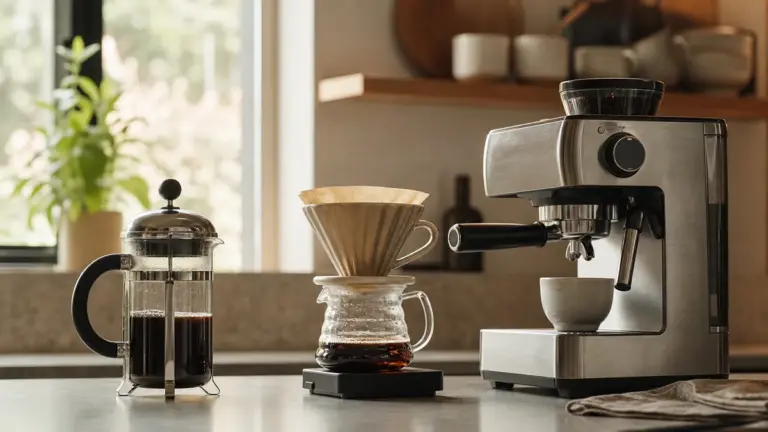 Choosing Your First Coffee MakerChoose your first coffee maker by drink style, effort and space. Compare cafetières, filter, capsules, espresso and bean-to-cup, plus grinder needs.Read the guide
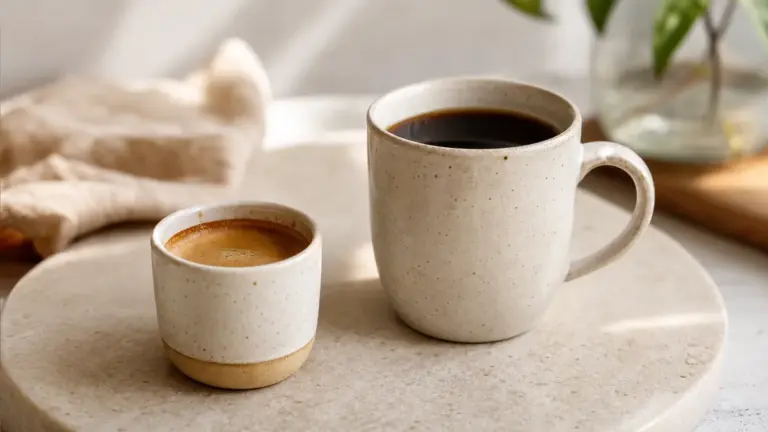 Coffee Strength vs CaffeineStrong flavour does not mean more caffeine. Learn how TDS, roast colour and serving size differ, with sourced coffee figures and a simple dilution…Read the guide
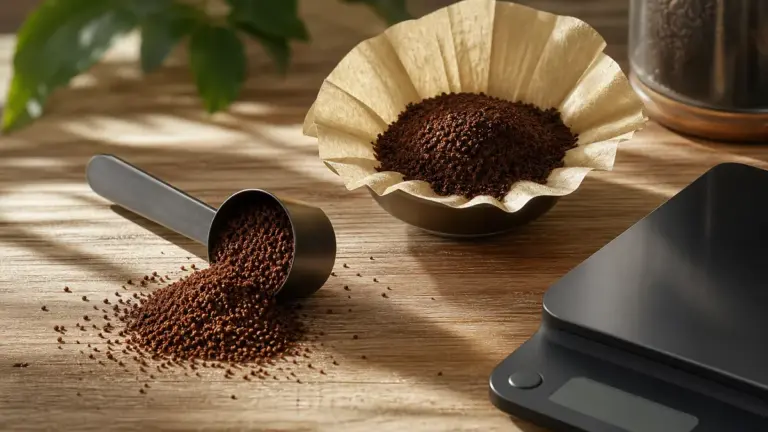 Common Beginner Coffee MistakesFix common beginner coffee mistakes with practical advice on freshness, grind, scales, water temperature, storage and cleaning, plus a simple brew reset.Read the guide
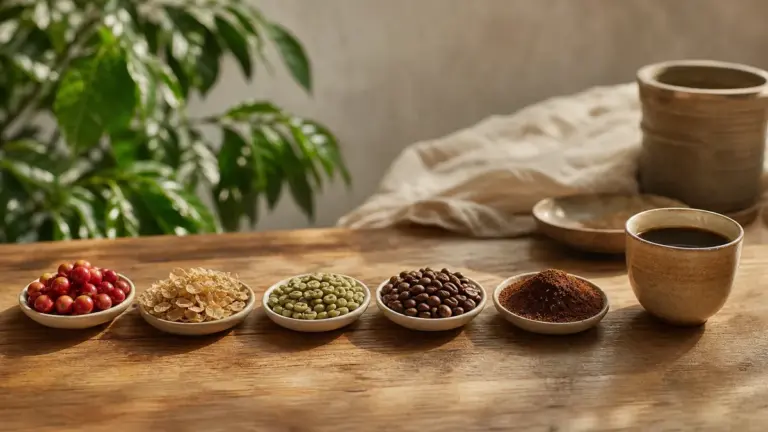 How Coffee Is Made: From Seed to CupFollow coffee from nursery and harvest through processing, drying, export and roasting to grinding and brewing, with a clear guide to who does each…Read the guide
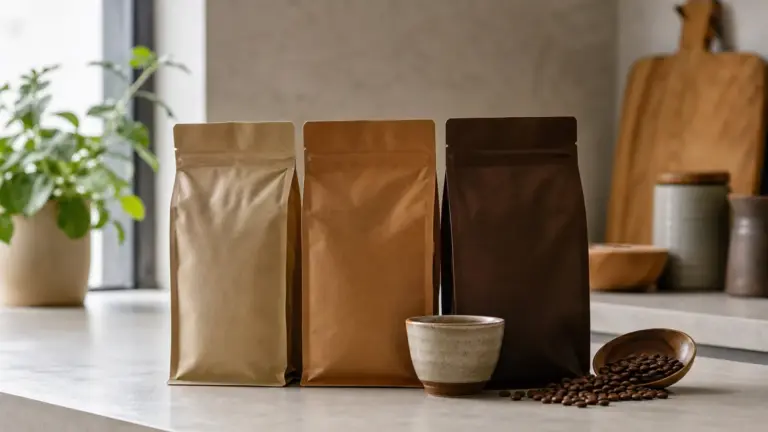 How to Choose Your First Coffee BeansChoose your first coffee beans by roast, flavour and freshness. Understand blends, whole beans and ground coffee, with three easy starting suggestions.Read the guide
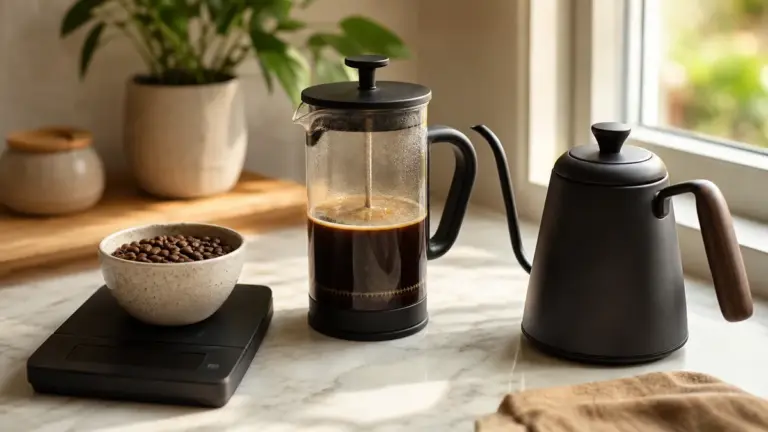 How to Make Good Coffee at HomeMake better coffee at home with fresh beans, weighed doses and clean kit. Includes a simple cafetière recipe, water advice and fixes for common…Read the guide
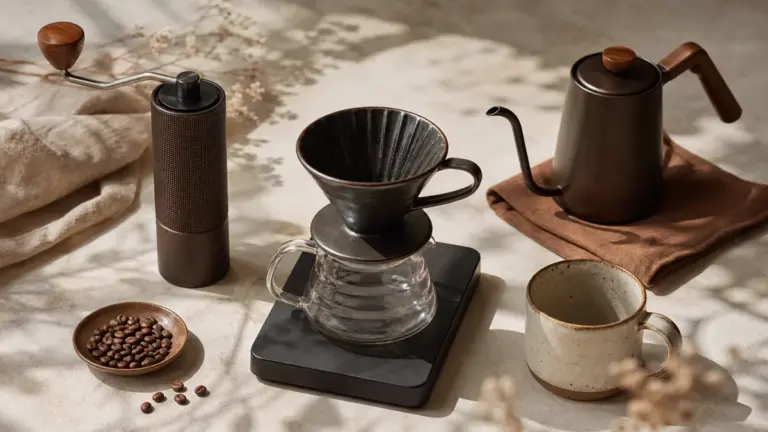 The Home Coffee Starter KitBuild a home coffee starter kit with three sensible equipment levels, from ready-ground coffee and a cafetière to a grinder-led setup. Know what to…Read the guide
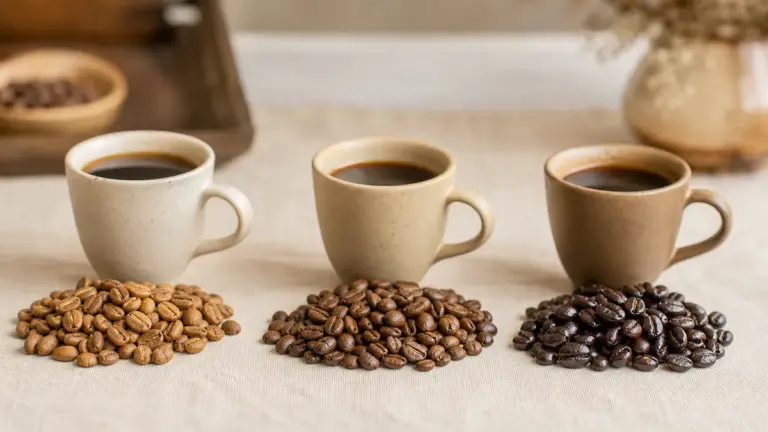 Understanding Roast LevelsUnderstand light, medium and dark coffee roasts, decode bag labels, learn what the cracks mean, and choose beans that suit your brewer and taste.Read the guide
 What Does Specialty Coffee Mean?Understand specialty coffee, the historical 80-point threshold and the SCA’s Coffee Value Assessment, plus what to check on a coffee bag before buying.Read the guide
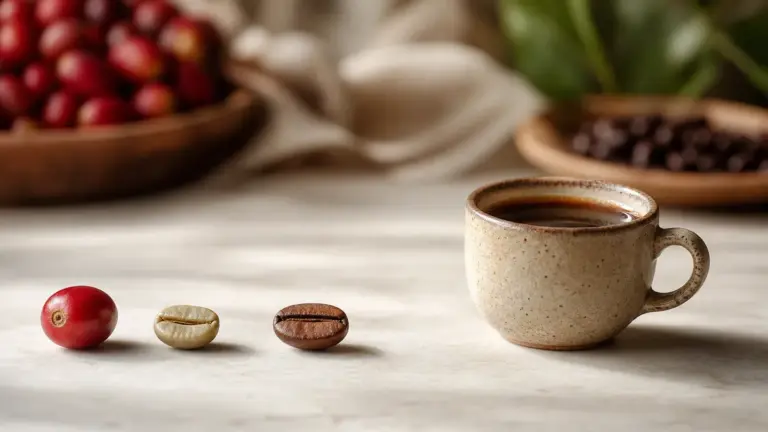 What Is Coffee?What is coffee? Learn how a fruit's seeds become roasted beans and a familiar drink, with clear explanations of species, flavour and caffeine basics.Read the guide
Start here if you are new
Follow this short route from understanding coffee to making your first repeatable brew:
- Understand the ingredient. Read what coffee is if beans, grounds and instant coffee still seem like unrelated products. It gives you the vocabulary needed to make sense of the rest.
- Choose something you want to drink. Use choosing your first coffee beans before browsing unfamiliar bags. Start with the flavours you already enjoy rather than the most elaborate description.
- Make a repeatable cup. Move to making good coffee at home when you have coffee and a brewer ready. This is the practical next step, not an invitation to assemble a collection of equipment.
Already have a particular problem? Skip straight to the relevant section below. The wider learn coffee guide is there when you want to explore beyond the beginner essentials.
The beginner essentials at a glance
| Area | Your first question | Useful first action |
|---|---|---|
| Coffee itself | What am I actually brewing? | Learn the difference between a seed, a roasted bean and ground coffee |
| Seed to cup | Why do coffees taste different? | Follow growing, processing, roasting and brewing as separate stages |
| Roast and beans | Which bag should I try? | Choose a flavour direction and the correct grind |
| Brewing equipment | What should I make it with? | Match the brewer to your drink and daily routine |
| Brewing technique | How do I make it consistent? | Record coffee weight, water weight and brewing time |
| Strength and caffeine | What does “strong” mean? | Separate concentration, roast flavour and caffeine |
| Troubleshooting | Why did this cup disappoint? | Describe the problem before changing the recipe |
| Starter kit | What do I actually need? | Gather the essentials for one method |
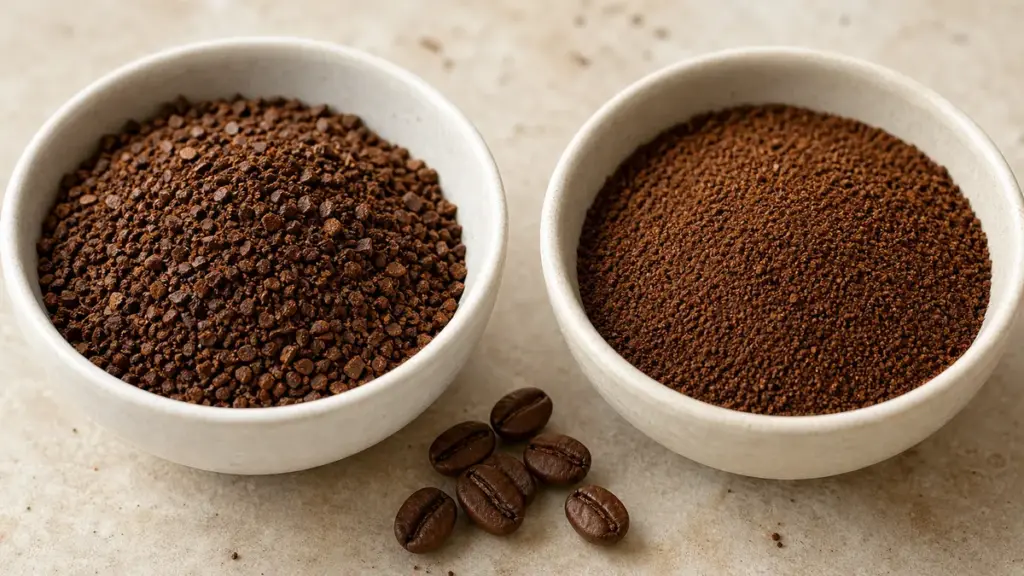
Understand what coffee is and how it reaches your cup
The objects sold as coffee beans are seeds inside a fruit commonly called a coffee cherry. For ordinary roasted coffee, those seeds are separated from the surrounding fruit, dried, prepared for roasting, then roasted and ground before brewing.
Brewing extracts material from the grounds into water. Extraction means that transfer of soluble substances, including compounds responsible for flavour and aroma. The grounds left behind are not supposed to dissolve completely.
Keep the main stages separate in your mind:
- Growing produces the cherries and seeds.
- Processing prepares the harvested coffee and removes the fruit layers, with the sequence depending on the method.
- Roasting transforms green coffee into the fragrant brown beans used for brewing.
- Grinding breaks roasted beans into particles suitable for the chosen method.
- Brewing brings those particles into contact with water.
The practical lesson is that roasting is only one influence on the cup. Changing the brewer cannot make every coffee taste alike, and choosing a particular origin does not remove the effects of processing or preparation.
Read the seed-to-cup journey when you want to understand what happens before a bag reaches your kitchen. It is the useful next read when terms such as “washed” or “natural” begin appearing on labels, rather than something you must master before making breakfast coffee.
Find your preferred roast and first beans
Start with the cup you want, not a rule about what beginners ought to like. Would you prefer something gently fruity, something rounded and chocolate-like, or a distinctly roasted flavour?
Light, medium and dark describe broad roast categories. Lighter roasting generally preserves more of a coffee’s distinctive original character; darker roasting makes the roast character more prominent. The boundaries vary between roasters, so one company’s “medium” need not match another’s.
Our suggested starting point is a medium roast described in familiar terms, such as chocolate, nuts or caramel, if those flavours appeal to you. That is an editorial recommendation for finding an accessible reference point, not a claim that medium roast is inherently better. Choose a lighter or darker option instead if its description sounds more inviting.
Use understanding roast levels when you are deciding between roast styles or trying to understand why two bags taste so different. It helps you interpret the roast description without mistaking darkness for quality.
Before choosing your first bag, check:
- Format: whole beans require a grinder; ground coffee needs to suit the brewer.
- Flavour description: choose a direction you would genuinely like to explore.
- Roaster guidance: ask which preparation method the coffee is intended to suit.
- Quantity: begin with an amount you can use regularly rather than several unfamiliar coffees at once.
Keep coffee sealed, cool, dry and away from strong light. If you buy whole beans, grind the portion you need shortly before brewing. Freshness matters, but there is no need to turn the first purchase into a search for a single universally perfect roast age.
Choose your first coffee maker around your routine
Judge a first brewer by drink style, batch size, hands-on attention and cleaning, rather than by how impressive it looks.
A cafetière steeps grounds in water before a mesh plunger separates them from the drink. A pour-over sends hand-poured water through grounds held in a filter. An automatic filter machine handles the water delivery for you, while espresso is a concentrated brewing style using pressure.
Those differences suggest different starting points. Consider a cafetière if you want straightforward steeping, a pour-over if you enjoy an attentive manual routine, or an automatic filter machine if you would rather delegate the pouring. If your main aim is espresso-based drinks, make that requirement explicit before choosing equipment.
There is no obligation to begin with espresso. Equally, buying a filter brewer when you only want espresso-based drinks may leave you learning a method you never particularly wanted.
Read choosing your first coffee maker before committing to a brewing system. Use it to compare the whole routine, including preparation and washing up, rather than concentrating only on the moment coffee comes out.
For shared use at home or work, add another question: can the next person reproduce the drink without a lesson? A clearly written recipe and an agreed cleaning routine deserve a place in the decision.
Build a small starter kit and a repeatable routine
For one manual brewing method, gather:
- The brewer and any filters it requires.
- Coffee ground appropriately for it, or whole beans and a suitable grinder.
- A kettle or other appropriate hot-water source.
- Scales that display grams.
- A timer, including the one on your phone.
- A cup or serving vessel and the cleaning equipment specified for the brewer.
A grinder lets you grind shortly before brewing and adjust particle size. A burr grinder crushes beans between grinding surfaces and generally produces a more consistent grind than a blade grinder. Nevertheless, correctly ground coffee is a sensible way to start while you decide whether grinding belongs in your routine.
Use the home coffee starter kit to distinguish essentials from accessories. Read it before adding equipment simply because it appears in someone else’s brewing set-up.
Then build a repeatable learning routine:
- Choose one recipe suitable for your brewer.
- Weigh the coffee and brewing water.
- Record the grind setting, water temperature where specified, and brewing time.
- Taste the result and write a short description.
- Change one thing for the next brew.
For filter and immersion recipes, 1:16 means one part dry coffee to sixteen parts brewing water by weight. For example, 15 g of coffee and 240 g of water give that ratio. This illustrates the notation, not a universal recipe or a guarantee of the final drink volume.
Separate strength, extraction and caffeine
“Strong coffee” is an ambiguous request. It might mean a concentrated drink, a dark roasted flavour, pronounced bitterness, or a drink containing more caffeine.
In brewing science, strength means the concentration of dissolved coffee material in the drink. Extraction describes how much material has been removed from the dry grounds. They are related, but they are not the same measurement.
That distinction explains an otherwise puzzling cup: coffee can be concentrated yet still taste poorly extracted. Conversely, a drink can be dilute without having the same flavour problem. Adding more coffee is therefore not the answer to every disappointing brew.
Caffeine is a separate question again. Dark roasted flavour is not a dependable indicator of caffeine content, so do not use roast darkness as a caffeine measurement.
Read coffee strength versus caffeine when a bag, menu or machine uses the word “strength” without explaining it. It is especially useful before deciding that a lighter-tasting drink must contain less caffeine.
For now, use more precise requests: “less concentrated”, “less roasted”, “less bitter” or “lower caffeine”. Each points towards a different decision and makes advice from a roaster or barista more useful.
Understand specialty coffee without chasing a score
Specialty coffee, also written “speciality coffee” in British English, is not a brewing method or a roast level. The Specialty Coffee Association’s definition centres on distinctive attributes that give a coffee or coffee experience additional value.
Those attributes can include what is in the cup, such as aroma and texture, and information about the coffee, such as its producer, origin and processing. The current definition is broader than a single numerical score.
The SCA’s Coffee Value Assessment reflects that distinction. It separates physical characteristics, sensory description, judgements of quality and information about the coffee. For a beginner, the useful insight is that describing what a coffee tastes like and deciding how much you enjoy it are different activities.
Read what specialty coffee means when labels and quality claims start influencing your choices. It helps you ask what is distinctive about a coffee rather than assuming that the label guarantees your favourite flavour.
You do not need a trained taster’s vocabulary to begin. “Lighter than my usual coffee, pleasantly fruity, but not what I want with breakfast” is a perfectly useful observation.
Avoid the mistakes that make learning harder
The most useful beginner habit is to describe the result before prescribing a fix. “Not good” gives you little to work with; “too concentrated”, “gritty” or “bitter after swallowing” gives the next experiment a purpose.
Three habits commonly obstruct that process:
- Changing everything together. A new bag, grind setting and recipe leave you unable to identify which change helped. Keep a baseline and alter one variable.
- Treating every flavour problem as weak coffee. Strength and extraction are different, so increasing the dose may not address the problem you actually dislike.
- Neglecting cleaning. Retained grounds and coffee oils can affect the next brew. Follow the equipment’s cleaning instructions rather than relying on an occasional rinse.
Use common beginner mistakes when you are repeating the same disappointment or receiving contradictory advice. It is the troubleshooting route, not a checklist of things you must worry about before starting.
For your own notes, record the coffee, recipe, result and next change. Aim first for a cup you can reproduce, then explore alternatives because you are curious, not because someone else’s preference is supposed to replace yours.
FAQ
Do I have to drink coffee black to appreciate it?
No, drinking coffee black is not an entry requirement. If you want to explore a coffee’s character, try a small sip before adding your usual milk or other additions, then prepare the drink you actually enjoy. Keep those additions consistent when comparing brews so that your own comparison remains useful.
Should I buy several coffees to learn faster?
You do not need several bags to begin. Our suggested approach is to learn one coffee and one recipe first, then introduce a contrasting coffee while keeping the brewing method stable. Side-by-side exploration can be enjoyable later, but the first goal is to recognise your preferences without changing every part of the process.
Do I need a coffee course before brewing at home?
No, you can begin with a suitable recipe, the brewer’s instructions and a few written observations. Consider a course if guided practice appeals to you or you want help with a particular skill. For independent learning, choose one question at a time and use the relevant guide rather than trying to memorise the entire subject.
Where to go next
Continue with How to Choose Your First Coffee Beans to select a flavour direction, then Choosing Your First Coffee Maker to match the brewing routine to your needs. Keep How to Make Good Coffee at Home beside your brewer for practical help, and return to Learn Coffee when you are ready to explore beyond Coffee for Beginners.
Sources
Undated pages below are identified as such rather than assigned an inferred publication year.
- National Coffee Association, What is coffee?, undated.
https://www.aboutcoffee.org/origins/what-is-coffee/ - National Coffee Association, Lifecycle of Coffee, undated.
https://www.aboutcoffee.org/origins/lifecycle-of-coffee/ - National Coffee Association, Roasts, undated.
https://www.aboutcoffee.org/beans/roasts/ - National Coffee Association, Storage and shelf life, undated.
https://www.aboutcoffee.org/beans/storage-and-shelf-life/ - National Coffee Association, French press coffee, undated.
https://www.aboutcoffee.org/brewing/french-press-coffee/ - National Coffee Association, Pour-over coffee, undated.
https://www.aboutcoffee.org/brewing/pour-over-coffee/ - Specialty Coffee Association, Coffee Decoded: The Science of “Dialing-In”, 2026.
https://sca.coffee/sca-news/coffee-decoded-14-dialling-in - Specialty Coffee Association, What is Specialty Coffee?, undated, current definition page.
https://sca.coffee/what-is-specialty-coffee - Specialty Coffee Association, Coffee Value Assessment, undated, current programme page.
https://sca.coffee/value-assessment - Specialty Coffee Association, Coffee Brewing Control Chart, version 3, file identified as revised March 2019.
https://static1.squarespace.com/static/587af1d4db29d69a1a226b95/t/60aece65e4f2134d99f6e646/1622068839009/SCA%2BBrewing%2BChart%2B-%2BRevised%2BMarch%2B2019-US-Letter.pdf
Research used live-retrieved coffee-industry educational pages, SCA definitions and brewing resources; suggested learning sequences and starting choices are editorial guidance, not claims of first-hand equipment testing.
Last checked: November 2026