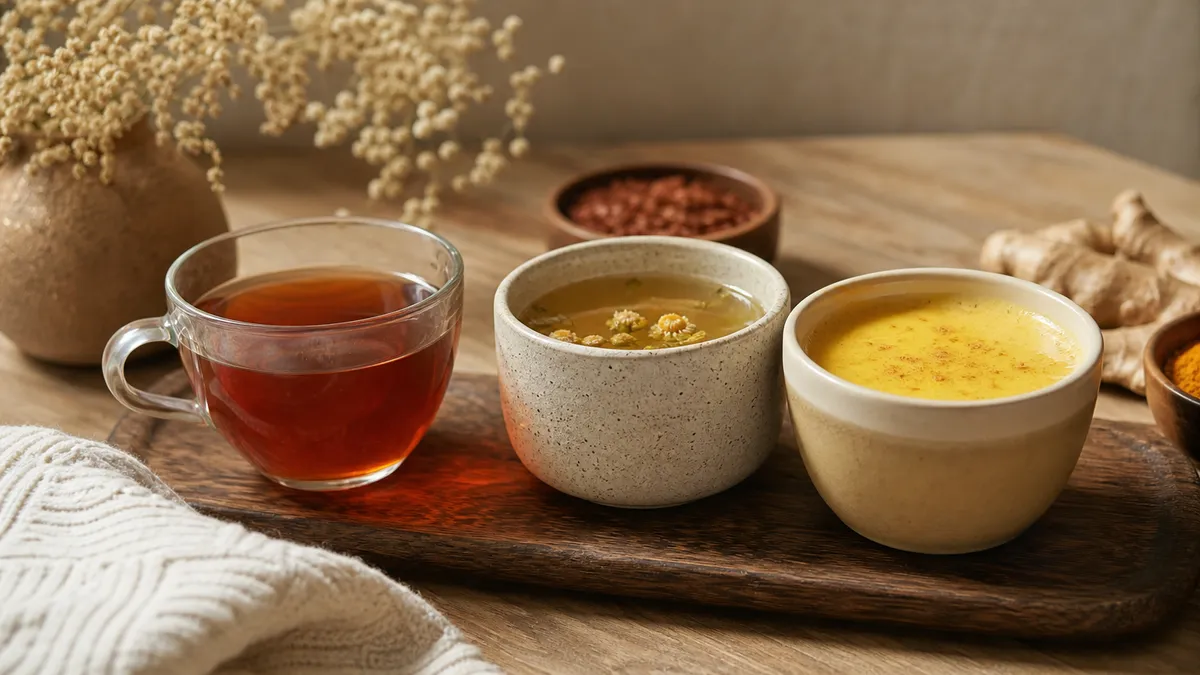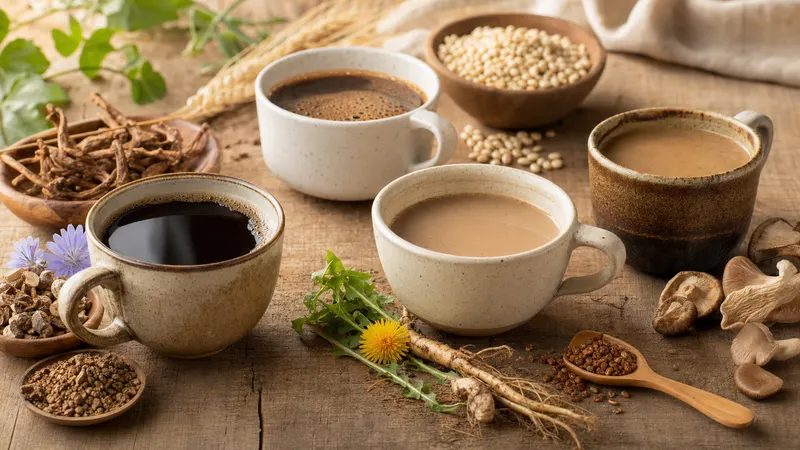
Coffee substitutes include roasted-root drinks such as chicory and dandelion, cereal drinks such as barley coffee, and caffeine-free infusions such as rooibos. Choose first whether you want to replace coffee’s roasted flavour, reduce caffeine or simply find another satisfying hot drink: those are different jobs, and one substitute need not do them all.
In short
- For a roasted alternative, explore chicory, dandelion root and cereal-based drinks.
- Coffee-free does not necessarily mean caffeine-free: black tea, green tea and cocoa contain caffeine.
- Decaffeinated coffee still contains some caffeine; mushroom coffee may contain ordinary coffee.
- Barley and rye contain gluten. Check the complete blend, not just the ingredient named on the front.
- Treat claims about “detox”, immunity or better concentration separately from whether you enjoy the drink.
Guides in Coffee Substitutes
 Alternatives to CoffeeCompare alternatives to coffee by flavour, caffeine and evidence. Find out which substitutes are caffeine-free and what to check before you switch.Read the guide
 Barley CoffeeWhat is barley coffee? Learn about Italian caffè d'orzo, roasted-barley tea, its malty taste, gluten warning and practical ways to prepare it at home.Read the guide
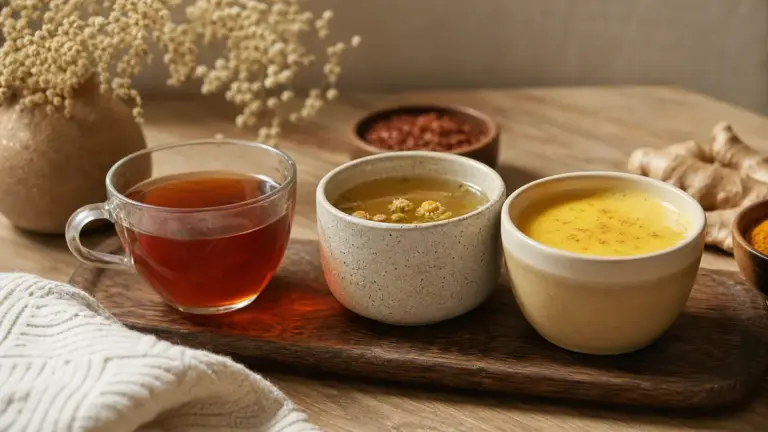 Caffeine-Free Hot DrinksCompare caffeine-free hot drinks, from rooibos and herbal teas to golden milk, and learn why decaf and hot chocolate need a separate check.Read the guide
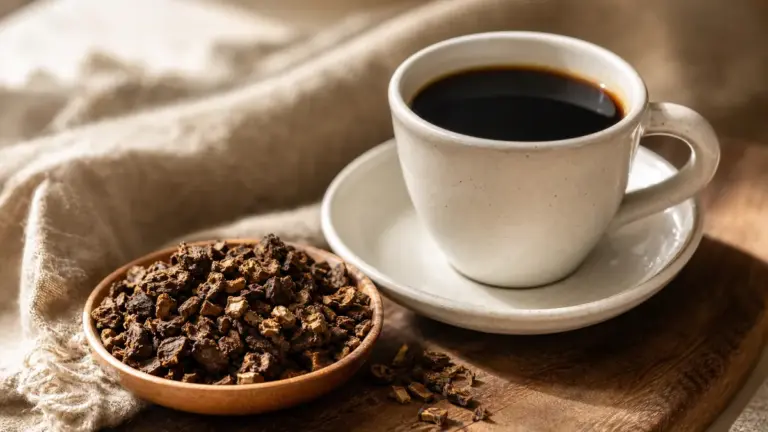 Chicory CoffeeWhat is chicory coffee? Learn how roasted root tastes, which blends contain caffeine, how to brew it, and what inulin research really means for…Read the guide
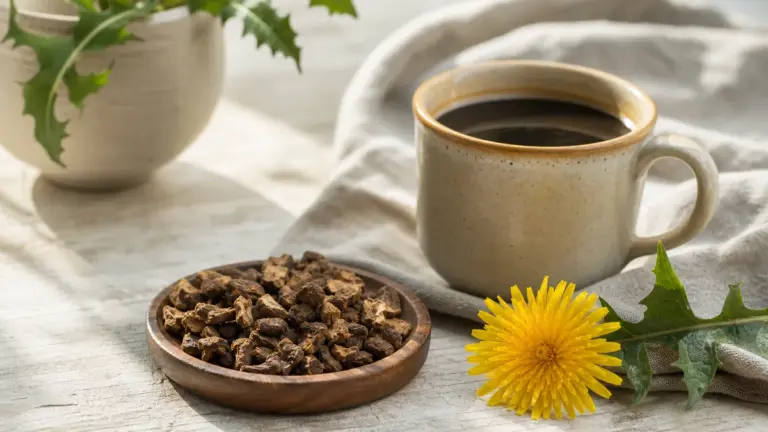 Dandelion Root CoffeeDiscover what dandelion root coffee tastes like, how to brew the roasted root, why blends need checking, and what health claims the evidence supports.Read the guide
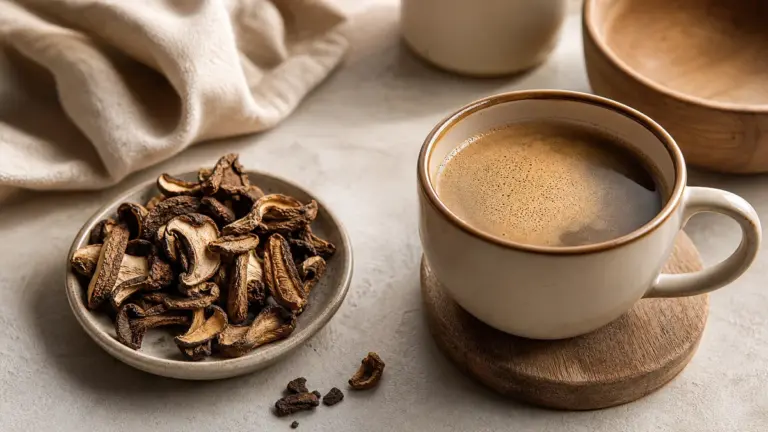 Mushroom CoffeeWhat mushroom coffee contains, how much caffeine to expect, and what human trials show about focus, immunity and safety. Includes UK claims rules.Read the guide
Start here if you are new
- Read alternatives to coffee to decide what you want to replace: flavour, caffeine, brewing routine or your usual milky drink.
- Try chicory coffee as an introduction to roasted-root substitutes, particularly if you want something darker and more coffee-like than an infusion.
- Explore caffeine-free hot drinks if avoiding caffeine matters more than reproducing coffee’s taste.
You do not have to find an exact imitation. A roasted drink can occupy the same place in your morning without tasting like espresso, while an evening infusion can be enjoyable precisely because it is different.
This hub maps the main choices and directs you to their individual guides. For the wider context of caffeine, ingredients and the strength of health evidence, return to health and science.
Coffee substitutes at a glance
Use these criteria in order: whether the ingredients meet your dietary needs, whether the finished drink contains caffeine, and whether you prefer roasted flavour or a lighter infusion. The descriptions below are broad starting points, not promises about every product.
| Alternative | What it offers | Caffeine position | Main check |
|---|---|---|---|
| Chicory coffee | Roasted-root aroma with woody and caramel-like notes | Pure chicory is naturally caffeine-free | Some products blend chicory with coffee |
| Dandelion root coffee | A roasted-root alternative rather than a leaf infusion | Pure dandelion root is naturally caffeine-free | Check other roots, cereals and herbs in the blend |
| Barley coffee | A roasted-cereal route to a dark hot drink | Barley itself is naturally caffeine-free | Barley contains gluten; blends may include rye |
| Mushroom coffee | Coffee combined with mushroom ingredients, depending on the product | May contain caffeine from actual coffee | Read the coffee content, serving information and claims |
| Rooibos and other infusions | A different hot-drink experience rather than an imitation | Pure rooibos is caffeine-free; blends vary | Check for tea, guarana or other caffeine sources |
| Decaffeinated coffee | Actual coffee with much of its caffeine removed | Lower caffeine, not necessarily none | Unsuitable as a guaranteed zero-caffeine choice |
For a broader comparison, use the alternatives guide. It is the useful next step when you have not yet decided whether to stay close to coffee or move towards another kind of drink.
Roasted roots: chicory and dandelion
Chicory: start here for a distinctive roasted aroma
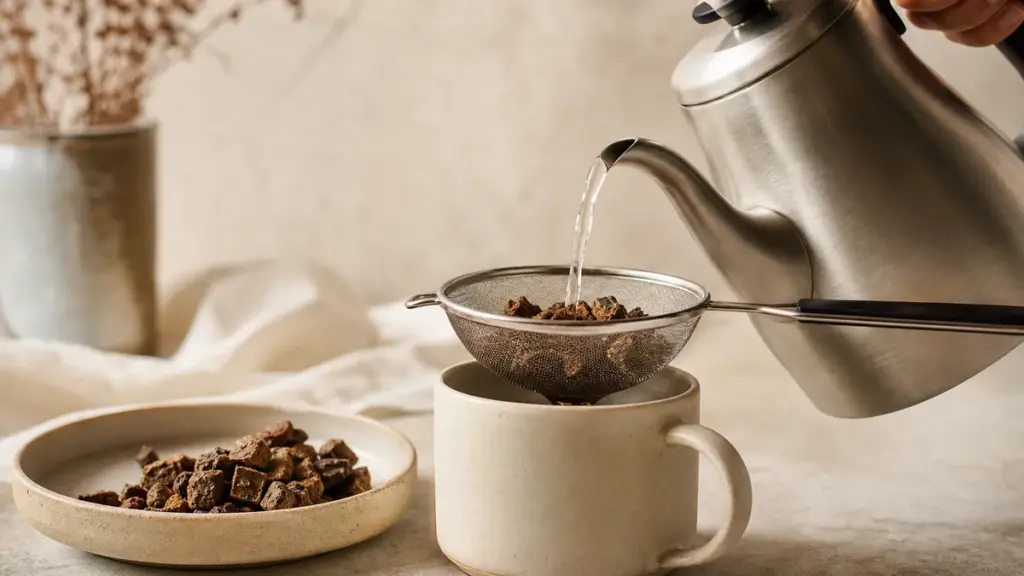
Chicory coffee is made from roasted chicory root. It can be sold on its own or combined with coffee, so “chicory” on the packaging is not enough to establish that a drink is caffeine-free.
Its resemblance to coffee is more than its brown colour. Laboratory analysis of roasted chicory brews has identified woody, peppery and caramel-like aroma contributors, giving it a recognisable character of its own. Think of it as a separate roasted drink, not coffee with something missing.
Read the chicory guide when you want to distinguish pure chicory from coffee-chicory mixtures and understand what to expect in the cup. It is also the place to explore preparation without assuming that every root product behaves like ground coffee.
One useful boundary concerns fibre claims. Chicory-derived inulin, a fermentable dietary fibre, has been studied separately from the everyday drink. A benefit demonstrated for a measured amount of extracted inulin does not establish the same benefit from an unspecified mug of roasted chicory.
Dandelion: choose the root product deliberately
Dandelion root coffee belongs to the roasted-root family of substitutes. It is not the same product as an infusion made from dandelion leaves, and a blend carrying the dandelion name may contain several other ingredients.
Use the dandelion root guide if this is the alternative you want to try. It helps you focus on the actual drink rather than transferring claims about extracts, leaves or traditional remedies to roasted root.
The health boundary matters here. The US National Center for Complementary and Integrative Health reports no compelling scientific evidence supporting dandelion for any health condition. It considers food amounts likely safe, but says less is known about larger amounts and advises checking possible interactions with medicines.
Choose it because you want a roasted-root drink, not because it promises to “cleanse” your liver. If you take medicines, discuss regular use of herbal products with a pharmacist or GP.
Roasted cereals: barley coffee and mixed grain drinks
Barley coffee takes a different route to the same role: a dark, roasted hot drink without coffee beans. Commercial cereal substitutes can combine barley with rye and chicory, so the front-of-pack name may describe only part of the recipe.
This category is worth exploring if you prefer the idea of roasted grain to a strongly distinctive root drink. Product formats vary, however. Check whether you are buying a soluble powder or something that needs brewing and straining, rather than choosing equipment from the word “coffee”.
Read barley coffee when you want to understand cereal-based substitutes and compare their preparation formats. Keep this separate from the dietary question: whether you like a drink does not establish whether it is suitable for you.
Barley and rye contain gluten. For someone with coeliac disease, an ordinary barley-based drink is not a suitable default. Do not infer gluten-free status because a drink is filtered, soluble, organic or caffeine-free; use product-specific gluten-free information and seek advice if the labelling is unclear.
For a shared workplace cupboard, keep the original packaging available. Colleagues need access to the ingredient list and allergen information, not just an unlabelled jar described as “coffee alternative”.
Mushroom coffee: check whether it replaces coffee at all
Mushroom coffee is not a reliable synonym for a coffee-free or caffeine-free drink. Products can combine ordinary coffee with mushroom ingredients; Four Sigmatic’s published description, for example, lists instant Arabica coffee alongside mushroom extracts.
That makes the first question straightforward: does this product contain coffee? Next, check its stated caffeine per prepared serving. Neither the mushroom name nor a claim about “calm energy” answers that question.
Read mushroom coffee when you need to separate the coffee component, mushroom species, preparation and evidence behind the claims. It is a different decision from choosing between roasted chicory and barley.
The distinction between ingredient research and product evidence is especially useful here. A controlled trial of a specified mushroom extract cannot automatically validate a commercial coffee blend containing a different amount or preparation. Taste, caffeine reduction and a claimed cognitive benefit are separate questions.
Caffeine-free hot drinks that do not imitate coffee
You may find the best substitute by dropping the imitation requirement altogether. Pure rooibos is one option: analytical research using sensitive laboratory methods detected no caffeine in the rooibos samples tested.
Herbal and fruit infusions offer another direction, but the complete ingredient list still matters. A blend can combine herbs with black or green tea, and ingredients such as guarana also supply caffeine. “Herbal” is not a substitute for checking the contents.
Use the caffeine-free drinks guide when you want to compare infusions and other warm drinks rather than recreate roasted coffee. Start with whether you want something plain, aromatic or milky, then narrow the ingredients.
Warm milk or an unsweetened plant-based drink may also suit the occasion. The NHS includes lower-fat milk and unsweetened plant-based drinks among its practical drink choices. Check any added powders or flavourings separately, especially if your aim is to avoid caffeine or keep added sugar down.
For an evening routine, the simplest useful question is not “Which tastes most like coffee?” but “Which drink would I willingly choose again?”
Match the choice to your reason for switching
If you want less caffeine
Decaffeinated coffee may be the most direct option if you still want actual coffee, although it is not guaranteed caffeine-free. If avoiding coffee ingredients is also part of your aim, look instead at pure roasted roots, suitable cereal substitutes or caffeine-free infusions.
EFSA’s 2015 scientific risk assessment found that, for healthy non-pregnant adults, single caffeine doses up to 200 mg and habitual intake up to 400 mg across the day raise no safety concerns. These are population benchmarks, not targets or assurances that everyone will feel comfortable at those levels.
The same assessment found that 100 mg close to bedtime may affect sleep in some adults. Your reason for switching can therefore be valid even when your intake is below the general adult benchmark.
If you are pregnant
The NHS advises no more than 200 mg of caffeine a day from all sources during pregnancy. Count tea, chocolate, supplements and any coffee-containing substitute alongside your usual drinks.
Caffeine-free does not automatically establish pregnancy suitability. Current NHS advice is to avoid drinking more than four cups of herbal tea a day and to avoid teas containing liquorice root. Ask your midwife or pharmacist about unfamiliar herbal blends or concentrated extracts.
If you are choosing for general health
Judge a substitute by its ingredients and your needs, not by the number of benefits printed beside its name. Removing caffeine, avoiding an allergen and treating a health condition require different evidence.
A useful example is a 2025 double-blind, randomised crossover trial of a specified lion’s mane extract drink in 18 healthy younger adults. It found no significant overall improvement in the combined measures of cognition or mood, although performance on some individual tasks improved. It did not test a commercial mushroom coffee.
Likewise, a placebo-controlled chicory inulin trial used a measured daily fibre supplement, not an ordinary roasted-root brew. These studies illustrate why preparation, dose and outcome matter: “contains the ingredient” is not the same as “shown to deliver the benefit”.
FAQ
Should I replace all my coffee at once?
Reducing caffeine gradually is usually a more comfortable approach than stopping abruptly. NHS advice notes that suddenly cutting it out can cause headaches and recommends gradual reduction. You could begin by replacing one regular drink with a suitable alternative, then adjust further according to how you feel, rather than treating the change as an overnight test of willpower.
Is hot chocolate a caffeine-free alternative?
Hot chocolate is not reliably caffeine-free because cocoa naturally contains caffeine. The amount depends on the ingredients and serving, so do not assume that a drink without coffee meets a strict caffeine-avoidance requirement. If this matters for pregnancy, sensitivity or medical advice, check product information and include the drink in your total intake.
Do I need to stop coffee to stay hydrated?
No, coffee counts towards fluid intake. The NHS includes tea and coffee alongside water, milk and other lower-sugar drinks in its hydration guidance. You can still choose a substitute for flavour, sleep-related concerns or personal preference, but replacing coffee is not automatically necessary for hydration. Consider caffeine and added sugar separately from the fluid itself.
Where to go next
Alternatives to Coffee helps you turn this map of coffee substitutes into a shortlist, while Chicory Coffee explores the roasted-root route in more detail. Read Mushroom Coffee to examine coffee-containing blends and their claims, or Caffeine-Free Hot Drinks when avoiding caffeine matters more than copying coffee.
Sources
-
Institute of Food Technologists, Coffee substitutes: A review of the technology, characteristics, application, and future perspective (2024). Research review used for the main substitute categories and caffeine-free plant materials.
https://pubmed.ncbi.nlm.nih.gov/39385342/ -
European Food Safety Authority, Caffeine, summarising the Scientific Opinion on the safety of caffeine (2015), current topic page checked November 2026.
https://www.efsa.europa.eu/en/topics/topic/caffeine -
NHS, Foods to avoid in pregnancy (reviewed 15 June 2026).
https://www.nhs.uk/pregnancy/keeping-well/foods-to-avoid/ -
US Food and Drug Administration, Spilling the Beans: How Much Caffeine is Too Much? (current online guidance, checked November 2026).
https://www.fda.gov/consumers/consumer-updates/spilling-beans-how-much-caffeine-too-much -
GOV.UK, Understanding food labelling: Allergen labelling (current online guidance, checked November 2026).
https://www.gov.uk/understanding-food-labelling/allergen-labelling -
Coeliac UK, What is the gluten free diet? (current online guidance, checked November 2026).
https://www.coeliac.org.uk/living-with-coeliac-disease/food-and-drink/the-gluten-free-diet/what-is-the-gluten-free-diet/ -
US National Center for Complementary and Integrative Health, Dandelion (current online evidence and safety summary, checked November 2026).
https://www.nccih.nih.gov/health/dandelion -
American Chemical Society, Journal of Agricultural and Food Chemistry, Wu and Cadwallader, Identification of Characterizing Aroma Components of Roasted Chicory “Coffee” Brews (2019).
https://pubs.acs.org/doi/10.1021/acs.jafc.9b00776 -
International Journal of Food Sciences and Nutrition, Micka and colleagues, Effect of consumption of chicory inulin on bowel function in healthy subjects with constipation: a randomized, double-blind, placebo-controlled trial (2017; published online 2016).
https://pubmed.ncbi.nlm.nih.gov/27492975/ -
Frontiers in Nutrition, Surendran and colleagues, Acute effects of a standardised extract of Hericium erinaceus (Lion’s Mane mushroom) on cognition and mood in healthy younger adults: a double-blind randomised placebo-controlled study (2025).
https://www.frontiersin.org/journals/nutrition/articles/10.3389/fnut.2025.1405796/full -
Journal of Food Composition and Analysis, Revisiting the caffeine-free status of rooibos and honeybush herbal teas using specific MRM and high resolution LC-MS methods (2019).
https://www.sciencedirect.com/science/article/pii/S0889157518308500 -
Barleycup, Barleycup in powder (undated manufacturer ingredient and preparation information, checked November 2026). Used for product composition and format, not health claims.
https://barleycup.com/products/barleycup-in-powder/ -
Four Sigmatic, Original Mushroom Coffee (undated manufacturer ingredient information, checked November 2026). Used to establish that a mushroom coffee product contains actual coffee, not to substantiate advertised benefits.
https://us.foursigmatic.com/pages/original-mushroom-coffee -
NHS, Self-help tips to fight tiredness (current online guidance, checked November 2026).
https://www.nhs.uk/live-well/sleep-and-tiredness/self-help-tips-to-fight-fatigue/ -
NHS, Water, drinks and hydration (current online guidance, checked November 2026).
https://www.nhs.uk/live-well/eat-well/food-guidelines-and-food-labels/water-drinks-nutrition/
This hub was researched using current public-health guidance, peer-reviewed research and manufacturer ingredient information, with ingredient findings distinguished from evidence about finished drinks.
Last checked: November 2026