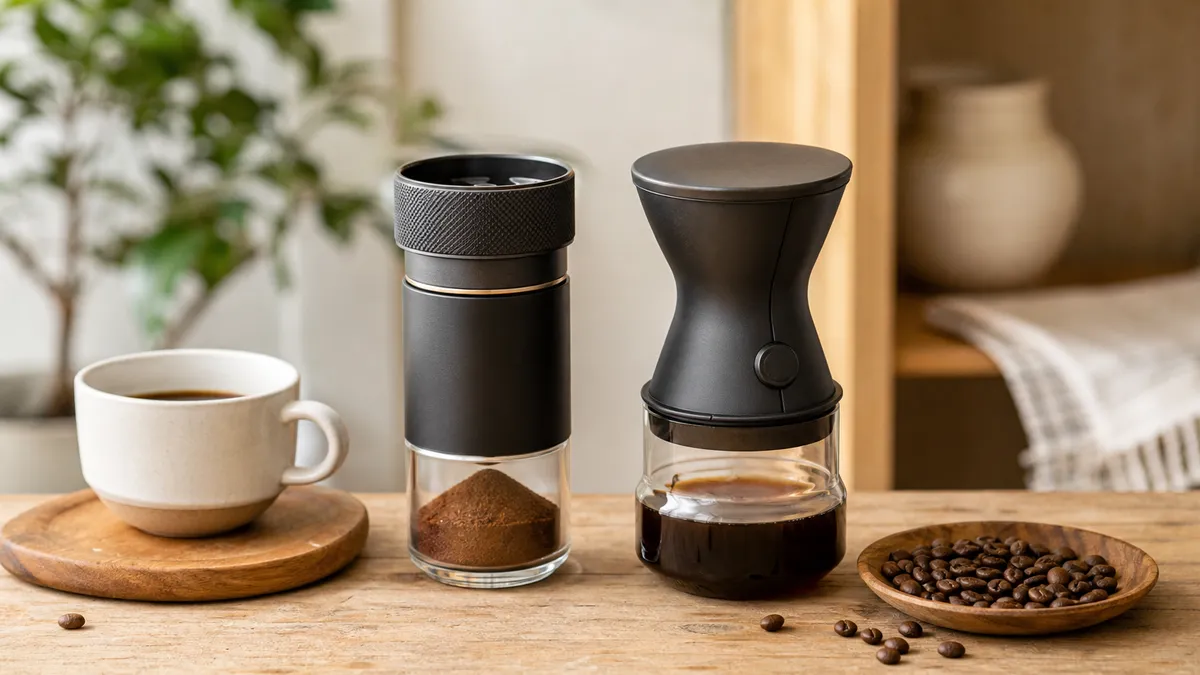
Coffee industry news covers what has changed, which developments deserve attention and what new products actually offer. This hub separates dated updates from longer-term trends and product announcements, with a verified snapshot checked on 2 November 2026.
In short
- Start with the event date and the reporting period, not just the date a story appeared.
- Use Latest Updates for individual developments, Coffee Industry Trends for analysis and New Coffee Product Releases for equipment announcements.
- Separate a product announcement, an award and confirmed UK availability. They answer different questions.
- For regulatory news, check the territory, affected businesses and application date before acting.
- Treat this page as a dated guide, not a live news ticker.
Guides in Coffee Industry News
 Coffee Industry TrendsTrack coffee supply, climate risks, specialty demand, processing technology and sustainability deadlines, with dated evidence for UK workplace decisions.Read the guide
 Latest Coffee Industry News and UpdatesCoffee industry updates checked on 2 November 2026: market direction, EU rules, new arabica research, championship results and UK workplace reminders.Read the guide
 New Coffee Product ReleasesExplore new coffee machines, grinders and concentrates, with dated announcements, UK availability checks and clear limits on manufacturer claims.Read the guide
Start here if you are new
Follow these three routes in order, or go straight to the one that answers your question:
- Latest updates is the starting point for finding out what happened and when. Read it when you need the immediate facts behind a headline, rather than a broad explanation of the industry.
- Coffee industry trends puts individual stories into context. Choose it when you want to judge whether a development signals a lasting change or remains an interesting exception.
- New coffee product releases covers announcements about machines, grinders, brewing equipment and related products. Use it to understand what is new, what the maker claims and what still needs independent assessment.
For the wider context behind these stories, return to industry and sustainability. That is the better starting point when your question concerns the coffee sector as a whole rather than its latest developments.
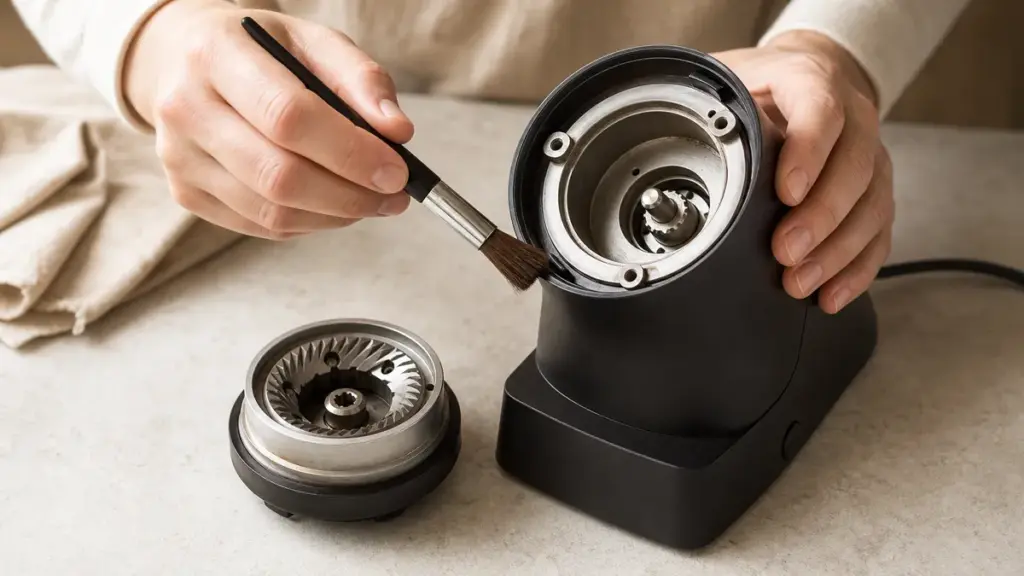
Choose the right coffee industry news route
The distinction between news, analysis and product coverage matters. A useful update establishes a change; a useful trends article tests its significance; a useful product report explains the proposed benefit without treating the announcement as proof.
| Route | Main question | What to look for | Useful next step |
|---|---|---|---|
| Latest Updates | What has happened? | Event date, original source and confirmed outcome | Decide whether the development affects you |
| Coffee Industry Trends | Is this a lasting change? | Repeated evidence, comparable data and limits | Follow the underlying issue rather than one headline |
| New Coffee Product Releases | What is new about this product? | Claimed features, release status and intended user | Check UK availability, documentation and support |
| Industry & Sustainability | Why does this matter? | Supply-chain, environmental and social context | Read the background before judging the announcement |
A beginner need not follow every part of the trade. Pick a question first: whether your coffee supply is changing, whether a rule affects your organisation, or whether a new piece of equipment solves a problem you already have.
Latest updates: the November 2026 snapshot
The following items are selected developments verified for this edition, not a claim to cover every announcement worldwide.
Coffee trade: distinguish the report month from the data month
The International Coffee Organization’s latest monthly market report listed when checked was September 2026. Its trade figures include August 2026, when global green coffee exports increased by 15.6% compared with August 2025. The report also records differences between coffee groups, so the global increase should not be read as uniform growth across origins.
The useful reading habit is to keep three dates separate: publication, the period covered by the report and the period covered by each statistic. Before repeating an export headline, ask whether it concerns green coffee alone or all forms of coffee, and whether the comparison is monthly or cumulative.
For a workplace buyer, use such reporting to frame questions for suppliers rather than to predict a particular delivery. Ask which origins are affected, whether substitutions are proposed and whether the supplier expects any change to the agreed coffee specification.
Competitions: the latest World Barista Champion
Pan Wei, representing the Competition Body of China, is the 2026 World Barista Champion, according to the official World Coffee Championships website. The championship took place in Panama City from 22 to 25 October 2026.
Competition coverage is most useful when it explains the coffee and preparation choices behind a performance. Watch with a specific question in mind: what was the competitor trying to achieve, and which parts of the approach might be relevant to your own brewing?
Keep the result separate from product endorsement. A championship title answers who won that competition; it should not replace a suitability assessment for an office machine or everyday brewing setup.
Deforestation rules: dates and territories matter
The European Commission’s current EUDR guidance lists 30 December 2026 as the application date for large and medium operators, and 30 June 2027 for micro and small operators, with an exception for smaller operators already covered by the EU Timber Regulation. EUDR is the EU regulation addressing specified commodities and products associated with deforestation, including coffee within its scope.
For UK readers, do not turn those dates into a single UK-wide deadline. DEFRA’s 23 June 2026 announcement states that EUDR will apply in Northern Ireland in phases beginning 30 December 2026; it separately describes proposals for a Great Britain regime. That announcement is evidence of the government’s stated plans, not a substitute for checking the legislation and guidance relevant to a particular business.
If this affects your supply chain, ask who is responsible for the relevant checks and documentation. An office buying finished coffee should not assume it has the same role as an importer placing products on a market.
Coffee industry trends: signals worth following
For this hub, three useful themes connect the selected developments: supply-chain evidence, more specific agricultural standards and equipment designed around everyday workflow. These are editorial priorities for further reading, not a ranking of the fastest-growing markets.
Traceability: ask what information supports the claim
EUDR places evidence about product origin and deforestation at the centre of its requirements for covered operators and traders. The Commission describes the obligation to demonstrate that relevant products do not originate from recently deforested land or contribute to forest degradation.
When reading a traceability announcement, look beyond a general promise of transparency. Ask what information is recorded, which product it follows and who can inspect it. Keep a distinction between knowing a coffee’s origin and demonstrating compliance with a particular requirement.
For procurement, turn that into a practical request: ask your supplier to identify the documentation it can provide for the coffee actually supplied, rather than accepting a general corporate statement.
Regenerative agriculture: read the named standard
The Rainforest Alliance published its Regenerative Agriculture Standard on 8 September 2025. Its February 2026 development account describes a framework addressing soil health, biodiversity, climate resilience, water stewardship and farmer livelihoods, available as a standalone standard or an optional addition to its Sustainable Agriculture Standard.
That gives readers something more specific to examine than the word “regenerative” alone. For any announcement using the term, ask which standard or defined programme applies, what is assessed and whether the report describes intended practices or measured outcomes.
Do not expect one agricultural label to answer every question about coffee. Read the actual scope before drawing conclusions about flavour, environmental performance or conditions elsewhere in the supply chain.
Equipment workflow: investigate the job being improved
Varia’s current VS4 product page illustrates a workflow-focused announcement. The manufacturer describes a single-dose home grinder with adjustable speed and burr access that preserves the grind setting. These are the maker’s claims, not findings from testing by this website.
The useful question is not simply whether a feature is new. Ask which recurring task it changes: switching coffees, accessing parts for cleaning or returning to a previous setting.
For an office, begin with your own workflow instead. Consider who makes drinks, who cleans the equipment and how much intervention users can reasonably provide. A feature worth investigating for a hands-on home brewer may not address the priorities of a shared tea point.
New coffee product releases: what deserves a closer look?
Use new product coverage when you want the distinction between an announcement and an assessed product kept clear. A sensible reading order is intended use, claimed improvement, release status, supporting documentation and then independent evidence.
Recent award-recognised products
The Specialty Coffee Association’s current Best New Product winners list includes these examples from its 2026 events:
- Varia VS4, consumer coffee preparation and serving equipment, World of Coffee San Diego.
- TIMEMORE Millab M01 Coffee Grinder, consumer coffee preparation and serving equipment, World of Coffee Brussels.
- Sovda Precision Fill Mini v2, Open Class, World of Coffee San Diego.
These are useful starting points for investigating product innovation, not an office equipment shortlist. The SCA describes an award process involving category assessment and judging; an award should not be treated as evidence of long-term reliability or suitability for your workplace.
Separate the stages of a release
When checking a new product, record its status explicitly:
- Announced: the maker has described it.
- Demonstrated: there is a working example to inspect.
- Available to order: ordering is open in a stated market.
- Available for UK delivery: the relevant configuration and delivery position are confirmed.
- Independently assessed: a reviewer has published a method and findings.
Use those as questions, not assumptions about any product named here. Before placing an order, request the current manual, intended-use statement, warranty conditions and written confirmation of UK support.
For commercial equipment, also request an itemised written quotation covering installation, commissioning, training, maintenance, consumables and the arrangements if the machine is unavailable.
How to judge the evidence behind a headline
The deeper question is often not “is this source reputable?” but “does this source establish the particular claim being made?”
Match the source to the claim
Use official organisers for competition results, manufacturers for their published specifications and regulators for current application guidance. For performance claims, look for a disclosed test method, conditions and limitations rather than treating a specification sheet as a review.
For market reporting, preserve the original category and comparison period. For scientific reporting, identify whether the evidence comes from an experiment, an observational study, a model or a review.
Compare environmental studies on like-for-like terms
A 2024 systematic review of coffee life cycle assessments examined 34 studies covering 234 coffee systems. It found substantial variation in results and investigated both differences between coffee systems and differences in assessment methods. Life cycle assessment estimates environmental impacts across specified stages of a product’s life.
That makes the study boundary essential. Before accepting a claim that one coffee format is environmentally preferable, ask whether the comparison covers cultivation, preparation and disposal, and whether it compares equivalent servings. A result for green beans is not automatically a result for a finished drink.
Keep a short decision record
For any story that might change a workplace decision, write down:
- What changed, and on what date?
- Which original document establishes it?
- What remains a forecast or manufacturer claim?
- Does it affect your organisation directly?
- What must be confirmed before action?
This is also the right discipline for following coffee industry news over time. Keep the original claim beside later evidence, and change the decision when the evidence changes.
FAQ
Is this page updated continuously?
No. This is a dated navigation hub with a selected snapshot checked on 2 November 2026, not a continuously monitored feed. Use the linked sections to choose the kind of coverage you need, and consult the original organiser, regulator or manufacturer before acting on a time-sensitive announcement.
Can I suggest a story without a company press release?
Yes, a story suggestion can begin with an original document rather than a press release. A published research paper, official result, regulatory notice or public company filing is a useful starting point. Include the document, the relevant date and a brief explanation of what has changed; keep your interpretation separate from what the document establishes.
Should an office replace equipment because a new model has launched?
Not on the announcement alone. Start with an unmet requirement in your workplace, then investigate whether the new model addresses it. Ask for evidence relevant to your expected use, clear cleaning instructions and written support arrangements. Keep any claims awaiting independent assessment visible in your decision record.
Where to go next
Read Latest Updates for individual developments, then Coffee Industry Trends when you need the longer view. Choose New Coffee Product Releases to investigate equipment announcements, or return to Industry & Sustainability for the wider context behind coffee industry news.
Sources
-
International Coffee Organization, Specialized Reports, listing checked in 2026.
https://ico.org/specialized-reports/ -
International Coffee Organization, Coffee Market Report: September 2026, 2026.
https://www.ico.org/documents/cy2025-26/cmr-0926-e.pdf -
World Coffee Championships, official homepage, 2026 championship result and event information, 2026.
https://wcc.coffee/ -
European Commission, Regulation on Deforestation-free Products, current implementation overview, checked 2026.
https://environment.ec.europa.eu/topics/forests/deforestation/regulation-deforestation-free-products_en -
Department for Environment, Food & Rural Affairs, Government Steps Up Action to Tackle Illegal Deforestation, 23 June 2026.
https://www.gov.uk/government/news/government-steps-up-action-to-tackle-illegal-deforestation -
Rainforest Alliance, How the Rainforest Alliance Developed the Regenerative Agriculture Standard, 19 February 2026.
https://knowledge.rainforest-alliance.org/docs/how-the-rainforest-alliance-developed-the-regenerative-agriculture-standard -
Specialty Coffee Association, Best New Product Awards, current winners and assessment process, checked 2026.
https://sca.coffee/best-new-product-awards -
Varia Brewing, Varia VS4 Grinder, manufacturer’s product description and specifications, checked 2026.
https://www.variabrewing.com/collections/vs4/products/varia-vs4-grinder -
Chéron-Bessou, C., and colleagues, Unravelling Life Cycle Impacts of Coffee: Why Do Results Differ So Much Among Studies?, Sustainable Production and Consumption, volume 47, pages 251 to 266, 2024; full paper retrieved from James Cook University’s research repository.
https://researchonline.jcu.edu.au/85847/1/85847.pdf
Research used live searches and retrieved primary documents, official results, regulatory guidance, manufacturer information and a peer-reviewed systematic review; no first-hand product testing was undertaken.
Last checked: November 2026