
Coffee is fun because it gives people something to share: a favourite saying, a ridiculous joke, a surprising fact or a conversation over a cup. Coffee Fun and Community brings together the playful side of coffee, with routes into quotations, quizzes, social media and ways to meet other enthusiasts.
In short
- Choose sayings for a caption or conversation starter, but check the original source before attaching a famous name.
- Build quizzes around clear, verifiable answers rather than disputed legends or changing statistics.
- Look for coffee groups that welcome questions and different tastes, not just impressive equipment.
- Check an event organiser’s current programme and visitor requirements before making plans.
- Treat social media popularity as a measure of attention, not proof that a coffee claim is correct.
Guides in Coffee Fun and Community
 Coffee and Social MediaExplore coffee influencers, useful hashtags and verified TikTok trends, from dalgona to proffee, with practical checks before copying viral recipes.Read the guide
 Coffee Jokes and HumourEnjoy freshly written coffee jokes, clean puns and one-liners, plus original meme ideas for family breakfasts, office breaks, cards and captions.Read the guide
 Coffee Quotes and SayingsFind funny, comforting and reflective coffee quotes with checked sources, plus popular sayings clearly separated from attributed literary quotations.Read the guide
 Coffee Quotes by Famous PersonalitiesDiscover sourced coffee quotes from Balzac, Eliot and Bach, plus the truth about Einstein attributions and a practical checklist for checking quotations.Read the guide
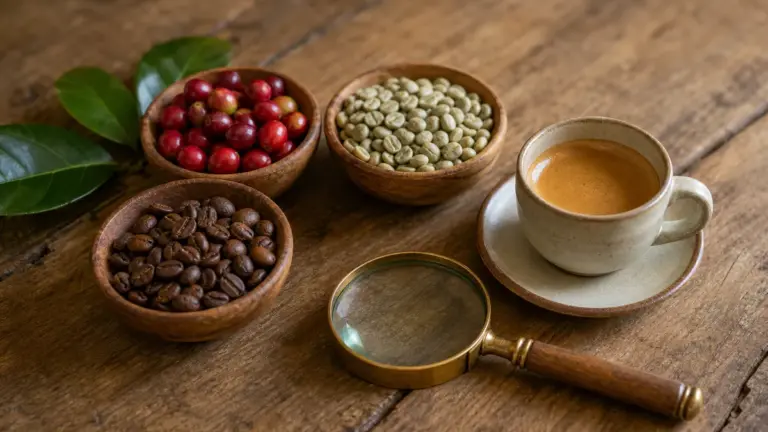 Coffee Trivia and QuizzesTest your coffee knowledge with 12 verified questions, explained answers and surprising facts, then try a playful, non-scientific coffee personality quiz.Read the guide
Start here if you are new
Begin with coffee jokes and humour if you want something immediately shareable, without needing any technical background. Next, try coffee trivia and quizzes for a playful way to discover what you know and find a few questions worth investigating.
Then visit coffee and social media if you would like to turn that interest into conversation, photographs or participation in an online community. There is no need to become a content creator: asking a thoughtful question is participation too.
This hub belongs within culture and travel. Stay here for words, games and connections; use the wider subject when your curiosity turns towards the places, customs and people behind the drink.
Choose your kind of coffee fun
Start with what you want to do, rather than how much you already know. A caption, a team quiz and a first visit to a tasting need different kinds of guidance.
| Area | Best for | A useful starting activity | What to check |
|---|---|---|---|
| Quotes and sayings | Captions, cards and conversation | Choose a line that fits the occasion | Whether it is attributed or anonymous |
| Famous quotations | Literary interest and reliable attribution | Trace a quotation to its original work | Exact wording, speaker and context |
| Jokes and humour | Shared amusement | Write an observation about your own coffee routine | Whether the joke welcomes rather than belittles |
| Trivia and quizzes | Groups, informal learning and friendly competition | Make a short round with explained answers | Sources, ambiguity and changing facts |
| Social media | Sharing images, questions and discoveries | Post one useful observation and invite replies | Evidence, permissions and commercial interests |
| Clubs, groups and events | Meeting people and learning together | Find a beginner-friendly gathering | Audience, accessibility and current arrangements |
You can combine these routes. A coffee club might begin with a quiz, a reading group might discuss a coffee quotation, and a photograph might prompt a conversation about somebody else’s morning ritual. The activity is a starting point, not an examination.
Coffee quotes and sayings: find the right words
Use coffee quotes and sayings when you want a line for a card, a noticeboard, a personal caption or a conversation starter. This is the route for choosing words by mood and purpose, rather than looking for a particular celebrity or writer.
Decide what the line needs to do. A warm invitation suits a shared break; an exaggerated complaint about mornings belongs in a more playful setting. Read it aloud before using it: a sentence that looks clever on a screen may sound surprisingly unfriendly when addressed to a colleague.
For something personal, consider writing your own. “The kettle is on, and there is room at the table” says more about welcome than a borrowed declaration about needing caffeine. That is an original example for this guide, not a historical quotation.
Keep three categories separate:
- Attributed quotation: wording traced to an identifiable work, recording or other source.
- Traditional or anonymous saying: wording shared without a verified individual author.
- Original caption: something you have written yourself.
None is automatically better. The difference is whether you describe it honestly.
Famous coffee quotes: enjoy the context as well as the line
Choose coffee quotes by famous personalities when the person behind the words matters. It is the useful next stop for readers who want a source they can name, rather than a quotation image with an impressive signature.
A verifiable example is T. S. Eliot’s line in The Love Song of J. Alfred Prufrock:
“I have measured out my life with coffee spoons;”
The wording is spoken by the poem’s narrator. Read in context, it can suggest a life measured through repeated, small routines; that is a literary interpretation, not evidence of Eliot describing his own coffee habits.
This distinction makes famous quotations more interesting, not less. A novelist’s character, a poet’s narrator and a person speaking in an interview are different kinds of speaker. Keep the work’s title beside a literary quotation so readers can find the surrounding passage.
Before sharing an attributed line, look for the original book, letter, interview or recording. Check the wording there, and distinguish a translation or paraphrase from an exact quotation. If you cannot establish the attribution, choose another line rather than making the famous name do the work.
Coffee jokes and humour: keep the invitation open
The jokes route is for shared amusement, not for deciding who drinks coffee correctly. Start with recognisable behaviour: the colleague who forgets where they put their mug, the elaborate home routine, or the person whose tasting notes become more confident after hearing everyone else’s.
Two original examples for this guide:
- “My coffee routine is very efficient. I make a cup, forget it, and immediately begin looking for it.”
- “We agreed not to discuss coffee equipment at lunch. The meeting about that decision lasted all afternoon.”
Both make the routine the target. Neither requires somebody’s preferred drink, level of knowledge or access to equipment to be the punchline.
For a workplace message, favour humour people can join without having to explain themselves. Avoid jokes that equate drinking coffee with working harder, or suggest that someone who chooses another drink does not belong.
Read the joke from the recipient’s position. Would it still feel friendly if they were new to the group? If the answer is uncertain, a gentle observation about your own habits is usually the better editorial choice.
Coffee trivia and quizzes: make curiosity the prize
A good coffee quiz should leave people with something worth remembering, including those who score poorly. Use the dedicated trivia guide for a fuller activity; here, the useful distinction is between a surprising answer and an unfair question.
Try these source-checked starters:
-
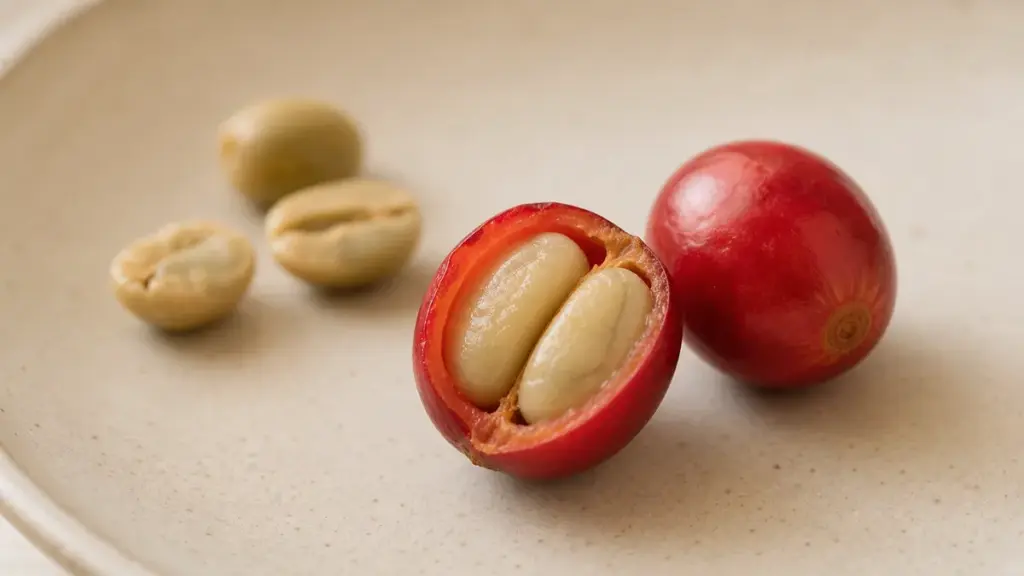
Is the part of coffee that we roast botanically a bean or a seed?
A seed. Kew describes the seeds of the arabica coffee fruit as the parts commonly called coffee beans. -
How many seeds does an arabica coffee fruit usually contain?
Two. Keep “usually” in the question rather than implying there are no exceptions. -
Which coffee tradition did UNESCO inscribe on its Representative List of the Intangible Cultural Heritage of Humanity in 2013?
Turkish coffee culture and tradition. Use the full description in the answer, rather than treating the inscription as an award for a drink’s quality.
For your own round, write the answer and its source before polishing the question. If the answer needs several qualifications, either include those conditions or choose a cleaner question.
Mix accessible questions with a few that invite discussion. Avoid making every question a date, a production ranking or a piece of specialist vocabulary. Picture rounds can be welcoming too, provided the images are yours or you have permission to use them.
Finish by explaining the answers. A short explanation gives the group something to talk about after the score has been forgotten.
Coffee and social media: share something worth replying to
Use the social media guide when you want help moving from looking at coffee posts to participating thoughtfully. A useful contribution can be small: a clear question, a photograph of a detail, or an honest account of what you noticed in your cup.
Give people something specific to respond to. “What do you think?” leaves the conversation wide open; “Which part of your coffee routine would you most like to simplify?” gives it a direction.
Keep observation separate from explanation. “This tasted sharper to me” reports an experience. “This proves the method is wrong” makes a much larger claim.
TikTok’s own explanation says its recommendations use signals including user interactions, content information and user information. The practical implication is limited but useful: what appears repeatedly in your feed is not necessarily a representative picture of coffee knowledge or opinion.
For worthwhile participation:
- Give enough context for someone to understand your question.
- Credit the person whose idea or photograph you are discussing.
- Ask before publishing identifiable images of other people.
- Be clear about any commercial interest.
- Welcome different preferences without turning them into a contest.
A small exchange that helps somebody understand their coffee is a perfectly good outcome. It does not need to become a widely shared post.
Coffee clubs, community groups and events
Coffee community can mean meeting in person, joining a discussion online or organising an occasional shared break. Choose the format by the kind of interaction you want, not by how serious it sounds.
There is a cultural foundation for treating coffee as an invitation. UNESCO’s account of Turkish coffee describes conversation, hospitality, friendship and the sharing of daily concerns as part of the tradition. That is a specific cultural example, not a claim that every coffee gathering follows the same customs.
Find a club or local group
Ask a local café or roaster whether it hosts public tastings or knows of an active group. Check whether “coffee club” means a social gathering or simply a subscription service.
Before attending, ask whether beginners are welcome, whether booking is required, and what participation involves. For a tasting, ask about cupping, the practice of assessing coffees side by side, if the term is unfamiliar.
If you organise your own group, give the first gathering one clear purpose: compare impressions, discuss a quotation or share a short quiz. Let people choose another drink or attend without tasting. Make space for ordinary descriptions such as “dry”, “chocolatey” or “not for me”.
Choose an event with the right audience
The London Coffee Festival’s visitor information describes tastings, demonstrations and workshops, with separate industry and consumer attendance arrangements. It is one example to investigate, not a recommendation that everyone should travel to London.
Check the organiser’s current programme, admission conditions and accessibility information directly. A public festival, a professional gathering and a small guided tasting offer different experiences.
For a professional community, the Barista Guild describes its purpose in terms of barista development, education and collaboration. That makes its stated focus different from an informal club for home drinkers. Match the organisation to your interests before joining.
Find a worthwhile online community
Read recent discussions before posting. Look for clear rules, constructive replies and moderators who explain decisions.
For practical questions, describe what you did and what you want to change. For social conversation, offer a question that allows more than one reasonable answer. If a group treats every preference as a test of belonging, you can leave.
The best editorial principle for Coffee Fun and Community is simple: use the interest to bring people into the conversation, not to rank them.
FAQ
Can I take part if I do not drink coffee?
Yes, you can enjoy the conversation, literature, jokes and quizzes without drinking coffee. Tell an organiser beforehand if a gathering is built around tasting, so expectations are clear. If you host, explicitly welcome other drinks and make tasting optional. The shared activity should not require anyone to explain their personal choices.
How can I include remote colleagues in a coffee activity?
Choose an activity that does not depend on everyone having the same drink or equipment. A short quiz, an original-caption round or a discussion of favourite break rituals can work around a shared call. Send the activity in advance, make speaking optional and avoid requiring photographs of people’s homes.
What should I do if somebody corrects a fact I have shared?
Check their source, then correct the original post or quiz answer clearly if the correction is justified. Thank them for the useful information rather than quietly changing the wording and leaving others confused. If the evidence remains uncertain, say so and replace the question or claim with something you can substantiate.
Where to go next
For words to share, read Coffee Quotes and Sayings, then Coffee Quotes by Famous Personalities when you need a traceable attribution. Choose Coffee Trivia and Quizzes for a group activity, or Coffee and Social Media to carry the conversation into an online community.
Sources
-
Royal Botanic Gardens, Kew, Arabica coffee, undated web profile, checked November 2026.
https://www.kew.org/plants/arabica-coffee
Botanical basis for the quiz answers about coffee seeds and fruit. -
UNESCO, Turkish coffee culture and tradition, inscription 2013, listing checked November 2026.
https://ich.unesco.org/en/RL/-00645
Source for the inscription and the tradition’s documented social role. -
Poetry Foundation, T. S. Eliot, The Love Song of J. Alfred Prufrock, text credited to Collected Poems 1909-1962, web reproduction checked November 2026.
https://www.poetryfoundation.org/poetrymagazine/poems/44212/the-love-song-of-j-alfred-prufrock
Source for the exact quotation and its surrounding literary context. -
TikTok Help Center, How TikTok recommends content, undated live guidance, checked November 2026.
https://support.tiktok.com/en/using-tiktok/exploring-videos/how-tiktok-recommends-content
Platform’s own account of recommendation signals. -
The London Coffee Festival, Visit The London Coffee Festival, undated visitor information, checked November 2026.
https://www.londoncoffeefestival.com/visiting
Organiser’s description of activities and industry and consumer attendance arrangements. -
Barista Guild, About Us, undated organisational statement, checked November 2026.
https://baristaguild.coffee/about
Guild’s stated professional, educational and collaborative purpose.
Research combined live searches of botanical, cultural, literary, platform and organiser sources; activity suggestions and the labelled original examples are editorial material, not claims of first-hand testing.
Last checked: November 2026