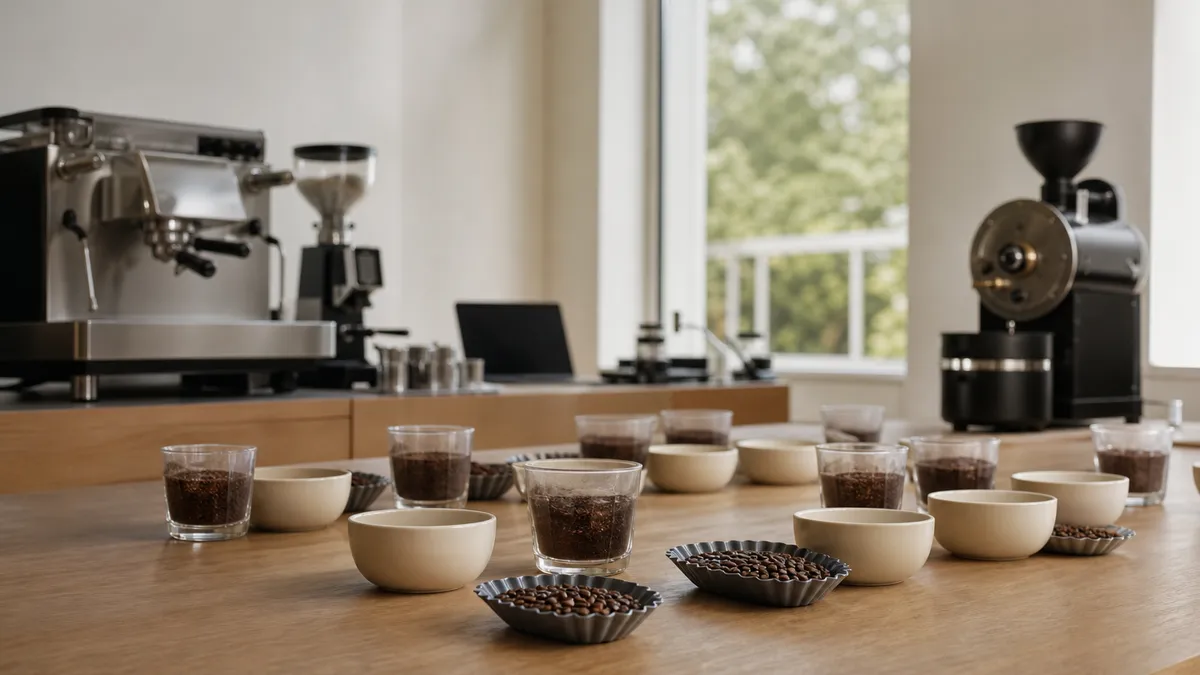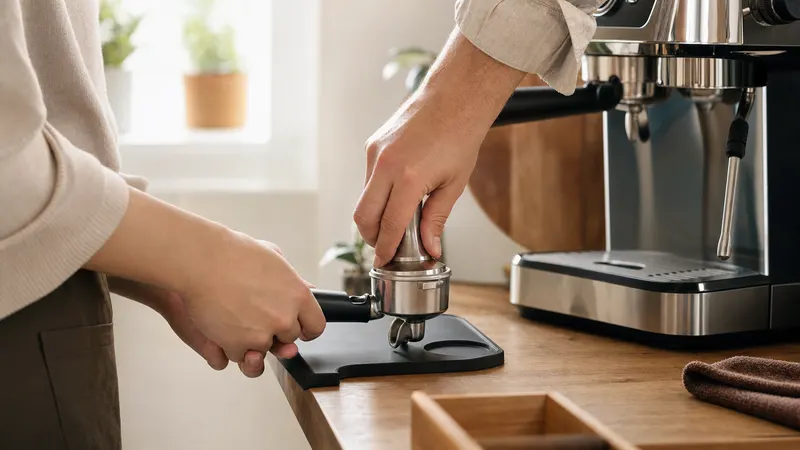
Coffee education works best when you choose a practical goal, learn the relevant skills and practise them with useful feedback. Start with brewing or barista training for making drinks, sensory education for evaluating coffee, and specialist qualifications only when they support the work you want to do.
In short
- Choose the task before the qualification: better home brewing, café service, roasting and quality evaluation need different training.
- The SCA Coffee Skills Program covers five specialist subjects, each at Foundation, Intermediate and Professional levels.
- A workshop, an assessed course certificate, an SCA Skills Diploma and a Q Grader licence are different outcomes.
- Since 1 October 2025, the SCA has operated the evolved Q Grader programme, previously operated by CQI.
- CQI remains a separate education organisation with specialist post-harvest processing courses and certifications.
Guides in Coffee Education
 Barista Training ProgramsCompare barista training programmes, employer training, SCA courses and current apprenticeships, with practical checks before choosing your route.Read the guide
 Coffee CertificationsCompare SCA coffee certificates, Q Grader and CQI processing qualifications, with guidance on choosing a route and understanding employer recognition.Read the guide
 Coffee CoursesCompare UK coffee courses, SCA modules, independent schools and online learning, with course durations and a practical checklist for choosing your training.Read the guide
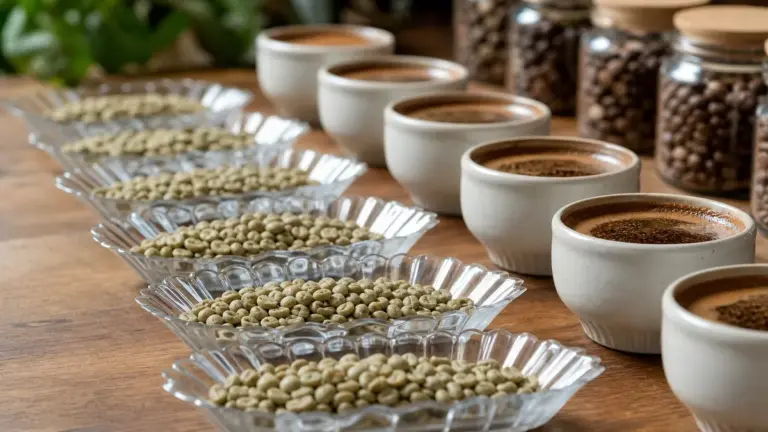 Coffee Quality Institute (CQI)Understand CQI’s history, producer support and processing education, plus what changed when the SCA took over Q Grader operations in October 2025.Read the guide
 Home Brewing WorkshopsAre home brewing workshops worth it? Compare formats, check practical teaching time and find a course that fits your brewer, equipment and goals.Read the guide
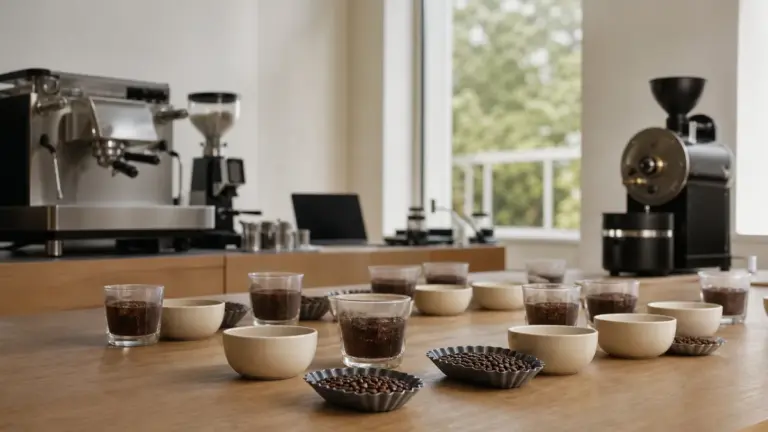 How to Become a Barista, Roaster or Q GraderExplore UK routes into barista work, coffee roasting and Q Grader qualification, with practical skills, training choices and career progression explained.Read the guide
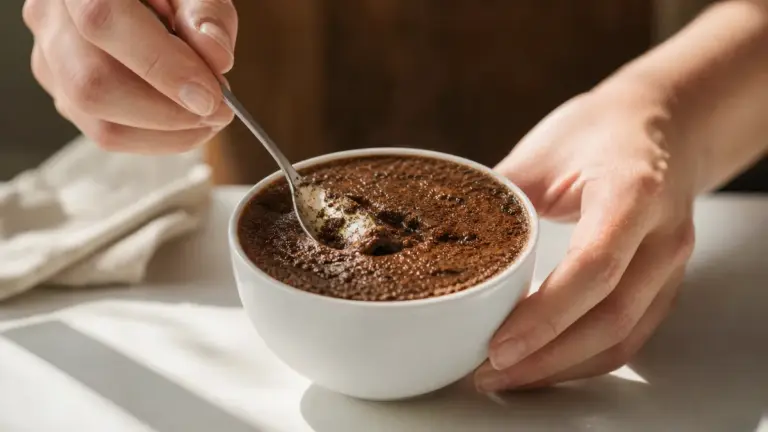 How to Taste Coffee: Cupping and the Flavour WheelLearn to cup coffee at home, break the crust and use the SCA/WCR flavour wheel, with clear steps and the distinction between practice and…Read the guide
 Q Grader CertificationLearn what Q Graders do, how the current SCA course and nine assessments work, how to prepare, and what three-year licence renewal involves today.Read the guide
 SCA Barista SkillsUnderstand SCA Barista Skills Foundation, Intermediate and Professional: course content, assessments, prerequisites and how to choose a UK provider.Read the guide
 SCA Coffee DiplomaUnderstand the retired 100-point SCA Coffee Diploma, current Skills Diploma requirements, study time and how to choose the right professional pathway.Read the guide
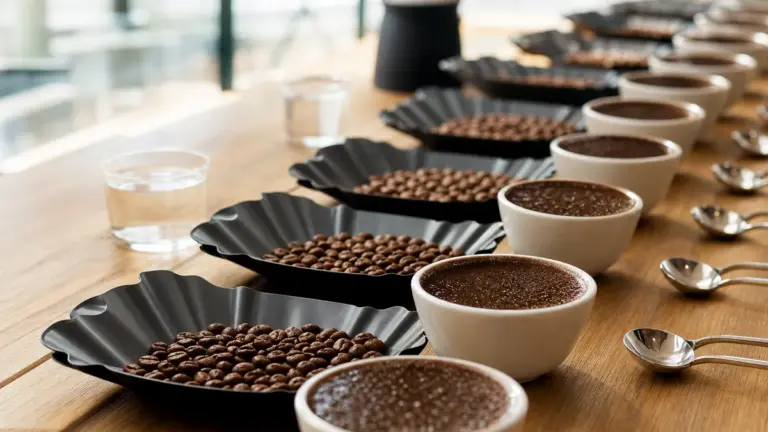 Specialty Coffee Association (SCA)What the SCA does: its history, coffee standards, education, CVA, Q Grader programme, World of Coffee events, membership and volunteer-led UK chapter.Read the guide
Start here if you are new
Follow this reading path before choosing a course:
- Explore the learning routes. Use this to match a course to your experience, intended skills and preferred way of learning.
- Try a home brewing workshop. This is the useful next step if your immediate aim is a more repeatable, enjoyable cup rather than a professional qualification.
- Build your tasting skills. Read this when you want to describe differences between coffees and understand the feedback a trainer gives you.
If employment is your immediate goal, move from the first step to the barista training section below. You do not need to work through every branch of coffee education in sequence.
For broader reading alongside practical study, return to learn coffee. Treat this hub as your map of training and qualifications, rather than a replacement for the individual guides.
Choose your coffee education route
The most useful starting question is not “Which certificate is best?” but “What should I be able to do afterwards?”
Write an answer you could demonstrate: adjust a brew confidently, prepare consistent espresso drinks, explain a coffee’s sensory character, or understand a processing decision. Then look for teaching, practice and assessment that match that outcome.
| Learning route | Main focus | Who it suits | What to check |
|---|---|---|---|
| Home brewing workshop | Preparing and comparing drinks | Home brewers and enthusiasts | Equipment used and individual practice |
| Barista training | Espresso preparation and service | New baristas and café teams | Cleaning, workflow and trainer feedback |
| SCA skills course | A defined specialist subject | Learners seeking structured progression | Module, level and assessment |
| SCA Skills Diploma | A combination of course certificates | Professionals planning broader development | Current pathway requirements |
| SCA Q Grader | Professional coffee evaluation | Experienced cuppers and quality specialists | Sensory readiness and licence requirements |
| CQI processing education | Post-harvest methods and quality | Processing professionals and supply-chain learners | Intended audience and practical access |
These routes are not competing versions of the same course. A home brewer does not need to follow a green coffee buying pathway, and an experienced barista may still be a beginner in roasting.
Read the certification guide when a course description uses terms such as certificate, diploma or licence without explaining what they mean. Use it to separate the organisation awarding the credential from the business delivering the training.
Courses, workshops and useful practice
For a first practical session, favour a clear teaching plan over a long list of impressive-sounding topics. Ask what you will do yourself, what the trainer will demonstrate and how they will correct your technique.
A useful booking checklist is:
- What knowledge or experience does the course assume?
- How much individual equipment time is available?
- Which skills receive personal feedback?
- Is the outcome attendance, assessed competence or preparation for another course?
- What equipment or ingredients will you need afterwards?
- Can the provider accommodate your access requirements?
Ask for a written outline and an itemised written quotation, including materials, assessments and any separate registration or reassessment arrangements.
Make workshops part of a learning loop
Our suggested approach is simple: arrive with a problem, practise the relevant technique, then repeat it afterwards under comparable conditions. Keep brief notes about what you changed and what happened.
For brewing, that might mean recording your recipe and comparing the results of a grind adjustment. For espresso, it might mean checking whether you can repeat the trainer’s method without prompting. Avoid changing everything at once, because you want to know which adjustment helped.
Use the course selection guide when comparing teaching formats. Choose home brewing workshops when you want practical help with your own brewing habits, rather than a professional syllabus.
Barista training and workplace skills
Barista education should prepare you to make drinks and work effectively around other people. The National Careers Service describes the role as including customer service, preparation, cleaning and stock tasks, not simply espresso technique.
For UK readers, its England-focused careers guidance identifies several entry routes, including college, apprenticeships, direct applications and professional-body training. It also explains that employers can provide barista training after recruitment. A specialist coffee qualification is therefore not the only starting point.
Read barista training programmes when you need to compare employer training with independent courses. It is the useful next read for deciding what a beginner should learn before taking on more demanding service responsibilities.
Our recommendation is to prioritise repeatability before decorative presentation. Ask a trainer to watch your complete working sequence, including preparation, cleaning and recovery when something goes wrong, rather than judging only the finished drink.
For an office team using a bean-to-cup machine, start with training on that machine’s operation, cleaning and approved adjustments. Choose a wider barista course if staff also need to use a traditional espresso machine or develop broader coffee preparation skills. Make the training brief fit the equipment and responsibilities.
SCA skills, certificates and diplomas
The Specialty Coffee Association, usually shortened to SCA, provides a structured education route. When comparing courses, distinguish its syllabus and credentials from the training provider delivering the teaching.
The Coffee Skills Program
The SCA Coffee Skills Program offers Introduction to Coffee and five specialist subjects: Barista Skills, Brewing, Green Coffee, Roasting and Sensory Skills. Each specialist subject has Foundation, Intermediate and Professional levels.
Choose the subject before the level. Someone with substantial espresso experience may need advanced barista teaching but introductory green coffee education. Experience in one area should not be treated as proof of competence in another.
For espresso-focused study, use the barista skills pathway to decide where you fit. Read it before booking if your uncertainty concerns the syllabus or progression, rather than the choice of training provider.
What an SCA diploma means
An SCA Skills Diploma combines certificates across subjects and levels. It is not a single introductory course.
The current pathways are Café, Roastery, Coffee Trade and Sustainable Coffee. They address different professional directions, so start with your intended work and check the required combination of courses.
Use the diploma guide when planning that combination. Ask the SCA or your trainer to confirm how certificates you already hold count towards the current pathway before booking further study.
Do not assume an industry diploma has a particular UK academic equivalence unless that equivalence is explicitly documented. Its immediate value to your learning plan is the skills it requires you to develop.
Cupping, sensory skills and the flavour wheel
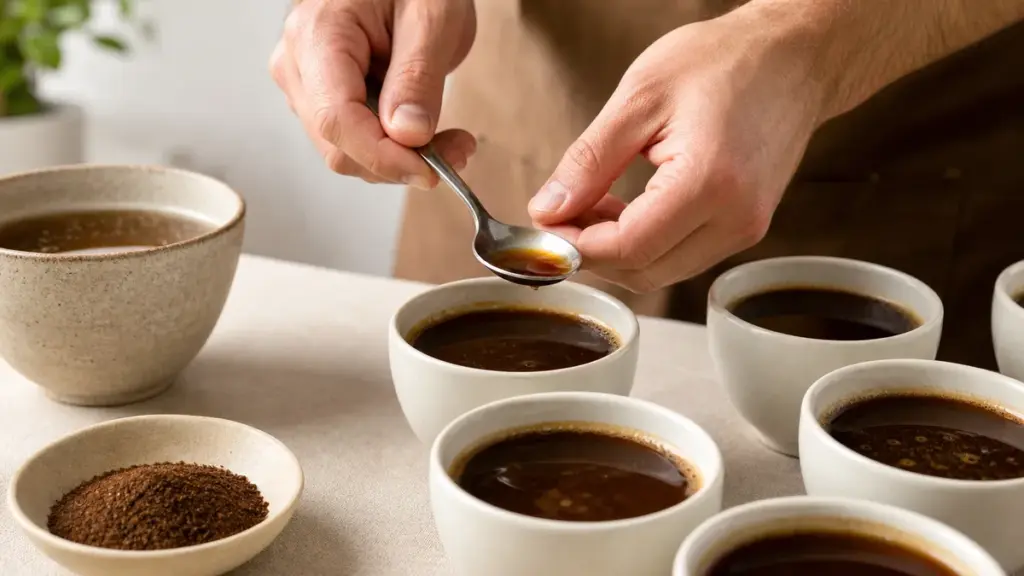
Cupping is a method of sensory assessment in which independently prepared cups of a coffee sample are evaluated. It gives learners a structured setting for comparing coffees, rather than relying only on casual impressions from drinks prepared in different ways.
For a beginner, the useful goal is clearer observation, not an elaborate tasting vocabulary. Start with what you can recognise and explain: the aroma, the character of the acidity, the texture and what remains after swallowing.
The SCA’s Coffee Value Assessment, or CVA, separates several kinds of information:
- Physical assessment: characteristics of the coffee itself, such as defects and size.
- Descriptive assessment: the sensory attributes you perceive.
- Affective assessment: your impression of quality, including preferences relevant to you or your market.
- Extrinsic assessment: information beyond the cup, such as traceability and processing details.
That distinction matters in education. Describing a coffee and deciding how much you value it are related tasks, but they are not identical.
Read the cupping and flavour wheel guide when you are ready to practise. It is the next step for learning the method and using shared sensory language, rather than trying to memorise descriptors in isolation.
Q Grader and CQI: understand the current distinction
Older course pages can be confusing because responsibility for Q Grader changed. Keep the organisation, programme and date separate when comparing information.
SCA evolved Q Grader
From 1 October 2025, the SCA took over operation of the evolved Q Grader programme, built around CVA. CQI no longer operates that programme.
The current SCA course is intended for people with cupping and sensory experience. It runs over six consecutive days, with eight practical assessments and one written examination. All assessments must be passed to earn the licence, which is valid for three years and requires continuing professional development for renewal.
This is a specialist evaluation route, not the default finishing point for every coffee learner. Before enrolling, ask an instructor to discuss your practical readiness and familiarity with CVA.
Read the Q Grader guide when professional evaluation is your intended work. Use it to examine preparation and current requirements rather than relying on descriptions of the former CQI course.
CQI post-harvest processing
The Coffee Quality Institute, or CQI, remains a separate organisation offering post-harvest processing education. This concerns what happens to coffee after harvesting, rather than espresso preparation or general café service.
Its catalogue includes a non-certificate Introduction to Processing, Processing Generalist certification and more specialised field-based education. Processing Generalist is aimed at coffee professionals seeking to understand processing methods and their effects; certification requires passing a multiple-choice examination.
Consider CQI’s processing education if your interests lie in processing, production or understanding decisions made before coffee reaches a roastery. Check each course’s audience carefully: an introductory explanation and training for someone actively processing coffee serve different needs.
Turn learning into a career plan
Choose a role to investigate before collecting qualifications. Our suggested planning exercise is to compare a job description with the tasks you can already demonstrate, then identify the gaps that need training or supervised experience.
For barista work, include service and teamwork alongside drink preparation. For roasting, ask how you will gain supervised equipment practice and evaluate results. For quality roles, ask how you will develop consistent sensory judgement and communicate it clearly.
Read the coffee careers guide when deciding between these directions. It is the useful next step for turning an interest in coffee into a realistic sequence of learning and experience.
Keep a simple learning record: the skill practised, feedback received, changes made and evidence that you can repeat the task. Coffee education becomes more useful when each course answers a specific need and leads to deliberate practice afterwards.
FAQ
Can I study coffee online?
Yes, some SCA and CQI courses offer online or mixed delivery. Check the format for the particular course and level rather than assuming an entire programme is available remotely. Before booking practical training, ask what equipment you need, how the trainer observes your work and how any practical assessment is conducted.
Should I take several courses back to back?
Our recommendation is to leave room for practice between courses unless there is a clear reason to combine them. Use that interval to repeat the skills, identify uncertainties and gather questions. Ask the trainer what experience they expect before the next level, rather than treating attendance at the previous course as sufficient preparation.
How can an employer judge whether training helped?
Set a practical outcome before training and review the same task afterwards. Depending on the role, you might observe recipe consistency, completion of cleaning routines or the clarity of tasting notes. Keep the exercise supportive: use it to identify further coaching needs, not to turn a newly learned technique into an immediate speed test.
Where to go next
Start with Coffee Courses to compare learning routes, then use Coffee Certifications to understand the credential being offered. For practical tasting, continue to How to Taste Coffee: Cupping and the Flavour Wheel; for a professional direction, read How to Become a Barista, Roaster or Q Grader and build your coffee education around the work you want to do.
Sources
-
Specialty Coffee Association, Education: Courses, undated, current programme page. Source for Coffee Skills subjects, levels, delivery formats and barista learning outcomes.
https://sca.coffee/education/courses/ -
Specialty Coffee Association, Education: Diplomas, undated, current programme page. Source for cumulative certificates, current diploma pathways and assessments.
https://sca.coffee/education/diplomas -
Specialty Coffee Association, Education: Q Grader, undated, current programme page. Source for intended learners, course duration, assessments, licence validity and renewal.
https://sca.coffee/education/q-grader -
Specialty Coffee Association and Coffee Quality Institute, The Specialty Coffee Association and the Coffee Quality Institute Announce Historic Partnership to Provide Better Support and Education to the Coffee Industry, 2025. Source for the operational transfer on 1 October 2025, retrieved from the SCA’s Squarespace-hosted announcement.
https://tetra-pentagon-2dmy.squarespace.com/sca-news/2025/4/22/the-specialty-coffee-association-and-the-coffee-quality-institute-announce-historic-partnership-to-provide-better-support-and-education-to-the-coffee-industrynbsp-ng7ff -
Coffee Quality Institute, Processing Program, undated, current course catalogue. Source for introductory, Generalist and field-based processing education, intended audiences and assessment.
https://www.coffeeinstitute.org/education/processing/courses -
National Careers Service, Barista, undated, current careers profile. Source for entry routes, employer training, duties and workplace skills. Its apprenticeship guidance concerns England.
https://nationalcareers.service.gov.uk/job-profiles/barista -
Specialty Coffee Association, Coffee Value Assessment, undated, current framework page. Source for physical, descriptive, affective and extrinsic assessment.
https://sca.coffee/value-assessment -
Specialty Coffee Association, SCA Standard 103-2024: Coffee Value Assessment, Descriptive Assessment, September 2024. Source for the definition of cupping and the relationship between sensory descriptors and the flavour wheel.
https://sca.coffee/s/AW_SCA-103_Descriptive-Assessment_Sept2024_Secured.pdf
This hub was researched using current programme-owner documentation, the SCA descriptive assessment standard and official careers guidance; suggested learning sequences are editorial recommendations.
Last checked: November 2026