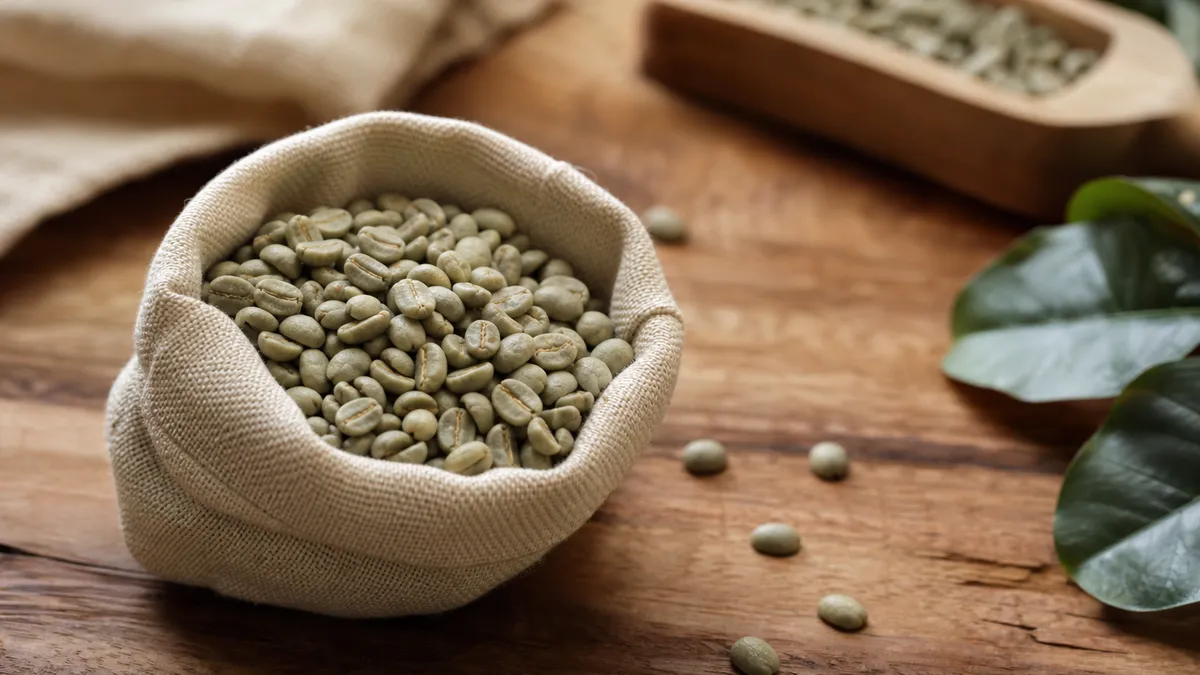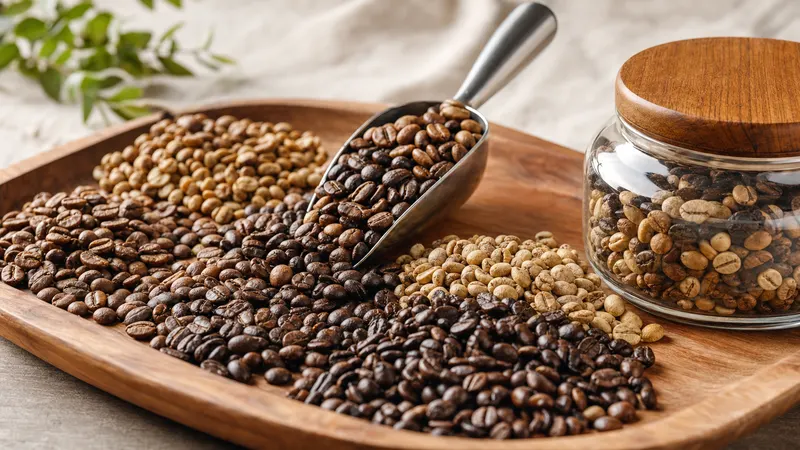
Coffee beans are the seeds of the coffee plant’s fruit, prepared and usually roasted before brewing. Single-origin coffees identify where those beans were grown, blends combine different coffees, and micro-lots identify smaller, separately handled batches. This Coffee Beans and Blends hub helps you understand those labels and choose the right next guide, including an introduction to green, unroasted coffee.
In short
- Origin is not a quality grade. Ask how precisely the coffee can be traced, rather than assuming that “single origin” means one farm.
- Single estate and micro-lot describe different things. One identifies a farm or estate; the other identifies a separately managed batch.
- Blending is a deliberate choice. It can bring together complementary flavours or help maintain a recognisable cup.
- Green means unroasted. It describes the coffee’s stage of preparation, not its species or geographical origin.
- Choose by purpose. Exploring a particular producer’s coffee and finding a dependable everyday drink are different starting points.
Guides in Coffee Beans and Blends
 Coffee Beans and Blends: The Complete GuideUnderstand coffee beans, blends, origins and roast labels, with a practical checklist for choosing coffee that suits your drinks at home or at work.Read the guide
 Coffee BlendingLearn how coffee blending works, compare pre-roast and post-roast methods, and use measured trials to develop espresso and everyday coffee blends.Read the guide
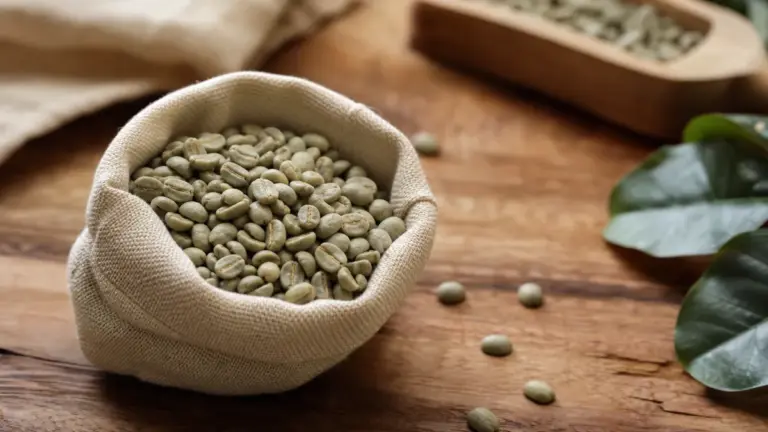 Green Coffee Beans ExplainedWhat are green coffee beans? Understand moisture, colour, density and storage, choose beans for home roasting, and assess green coffee extract claims.Read the guide
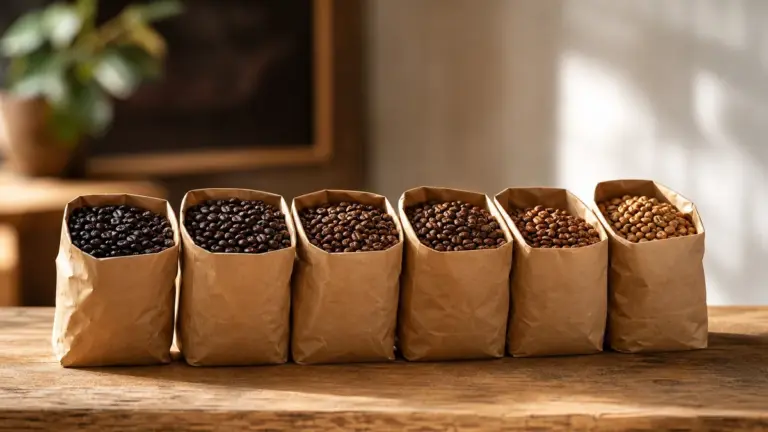 Micro-Lot and Single Estate CoffeeUnderstand micro-lot and single estate coffee, how lots stay separate, what competition awards prove and which details to check before choosing beans.Read the guide
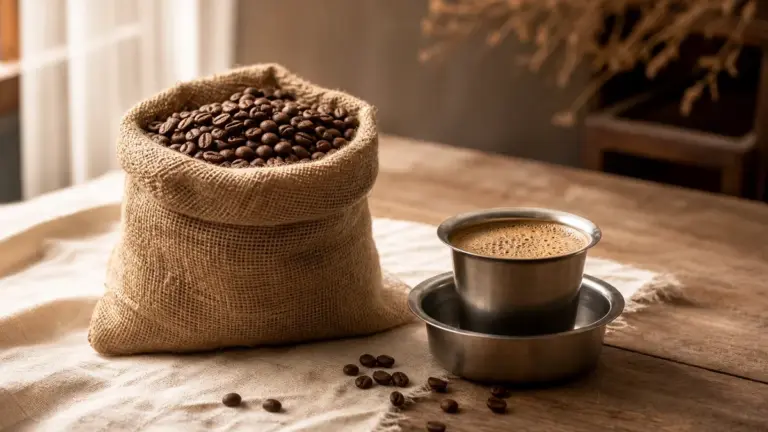 Single-Origin CoffeesWhat single-origin coffee means, from country to individual lot. Understand traceability, seasonal changes and choosing beans for filter, espresso or milk.Read the guide
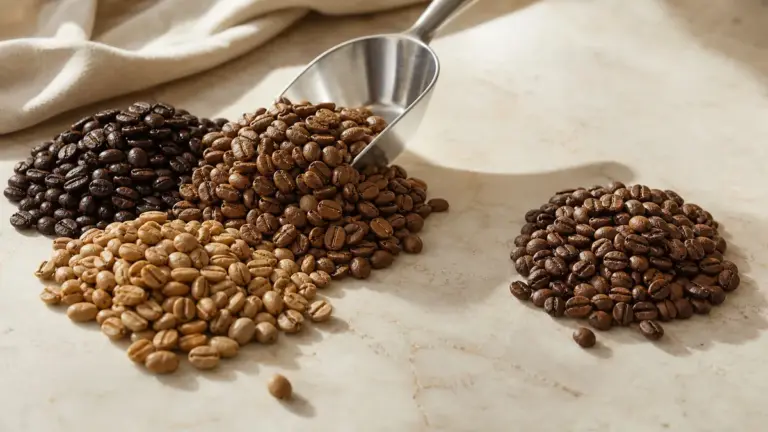 Single-Origin vs BlendsCompare single-origin coffee and blends for flavour, consistency, milk drinks and office machines, with practical advice for choosing your next bag.Read the guide
Start here if you are new
Begin with the complete guide for a connected explanation of the terminology. It is the useful first read if a coffee bag’s description feels like a collection of unrelated clues.
Next, read single origins versus blends to turn those terms into a practical choice. If you are considering roasting coffee yourself, follow with green coffee basics before selecting unroasted beans.
This hub maps those routes rather than replacing the detailed articles. For the wider context of growing regions and the coffee plant, return to beans and origins.
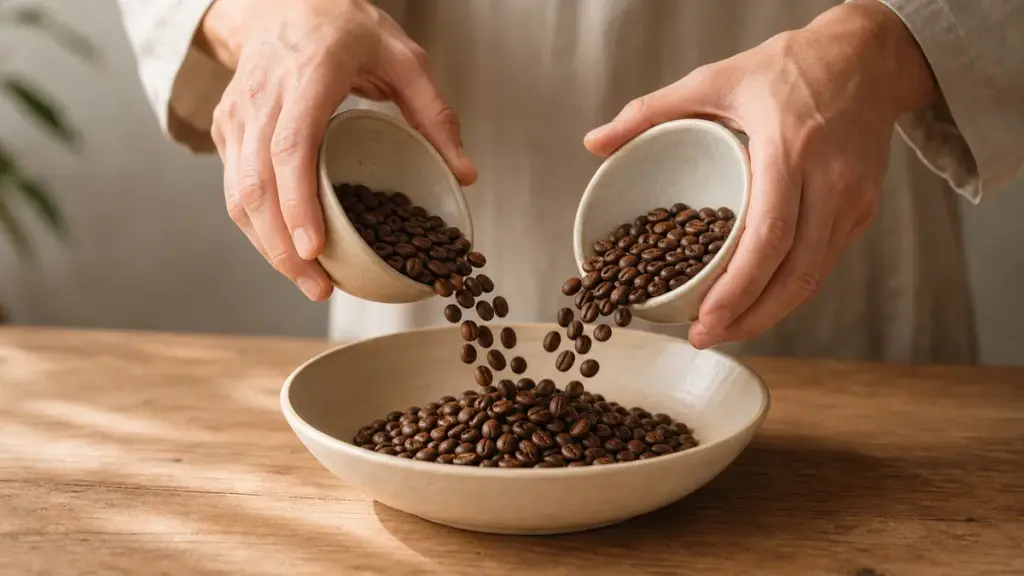
Coffee beans and blends at a glance
These terms do not all classify coffee in the same way. Some describe provenance, some describe how batches are assembled, and one describes whether roasting has happened.
Use the table to identify the question you actually need answered.
| Area | What it describes | Useful when you want to | What to check |
|---|---|---|---|
| Single origin | Coffee identified with a particular geographical source | Explore a named place or producer | Whether the source is a country, region, group or farm |
| Single estate | Coffee attributed to one farm or estate | Follow an individual growing operation | Whether the offering is the whole estate’s output or a selected lot |
| Micro-lot | A smaller batch kept separate from a larger supply | Explore a particular selection | What was separated and how its identity was maintained |
| Blend | A deliberate combination of different coffees | Find a chosen flavour balance or repeatable style | Components, intended use and substitution policy |
| Green coffee | Coffee before roasting | Understand raw material or begin home roasting | Lot identity, harvest information and condition |
These categories can overlap. A micro-lot may also be single estate and single origin; a blend may combine coffees grown within one country. Treat the words as information about the coffee, not as places on a ladder from ordinary to exceptional.
Single origins: understanding where coffee comes from
“Single origin” identifies a source, but the scale of that source matters. A country-level description gives a broad geographical identity; a named farm or traceable producer lot gives a more specific one.
That distinction explains why two bags can both say “single origin” while offering quite different levels of information. Neither label, by itself, tells you whether the coffee will suit your taste.
Read single-origin coffees when you want to understand those levels of provenance. It is particularly useful when comparing a bag naming only a country with one naming a producer, processing site and individual lot.
For a practical label check, ask the seller: “What does the origin refer to in this particular coffee?” Follow that with a request for the producer or producer group, the processing method and the harvest information. A specific answer is more useful than another adjective.
Origin is different from species and variety
Arabica, Coffea arabica, and robusta, Coffea canephora, are species, not geographical origins. Names such as Bourbon and Typica identify arabica varieties, meaning distinct groups within the species.
World Coffee Research’s varieties catalogue records differences in characteristics such as disease resistance, growing requirements and quality potential. A variety name is therefore meaningful information, but it is not a complete prediction of the finished drink.
When reading a bag, keep separate questions separate: where was it grown, what plant produced it, and how was this coffee prepared? That habit makes descriptions easier to understand without requiring you to memorise a catalogue of names.
Micro-lots and single estates: looking more closely
Single estate points to a farm or estate. Micro-lot points to a batch that has been identified and handled separately, perhaps because of its variety, location within a farm, picking period or processing treatment.
The useful distinction is between ownership or provenance and batch separation. A named estate does not necessarily mean every bean came from the same plot or picking.
There is no consistently applied industry-wide micro-lot size or quality threshold. Sellers use the term differently, so avoid translating it into an assumed number of bags or an automatic promise of superior flavour.
Read micro-lots and single estates when a producer’s name or limited release has caught your attention. It explains which details help distinguish a genuinely specific offering from an attractive but incomplete description.
Ask what made the batch separate. Was it a variety selection, an individual producer’s delivery or another identifiable portion of production? Then ask how that identity was preserved through processing and shipment.
Keeping coffee separate is a real part of the story. Café Imports, for example, describes variety-specific selections maintained through harvesting, processing, drying, milling and shipping. That is evidence of a particular sourcing practice, not a definition that every seller must follow.
For your own reading, look for an explanation of the separation rather than simply counting how many details appear on the packet. A short, clear account of the lot can be more informative than a long list of impressive-sounding terms.
Blending: creating a chosen cup
A coffee blend deliberately combines different coffees. The intention may be to bring sweetness, acidity, body and aroma into a particular balance, or to maintain a recognisable style when individual supplies change.
Read coffee blending if you want to understand the decisions behind that combination. It is the next step for readers interested in how a roaster builds a flavour profile, rather than simply where each component was grown.
For choosing a blend, begin with its intended use. Ask whether the roaster developed it for black coffee, milk drinks or a particular brewing method, and request a description of the result they were trying to achieve.
Before roasting or afterwards?
Roasters can combine green coffees and roast them together, or roast the components separately before mixing them. Post-roast blending allows different roast treatments for the individual coffees; pre-roast blending requires components that work together under the chosen roasting conditions.
Neither approach is automatically better. Differences in bean size, density and moisture help explain why the same approach will not suit every combination.
You do not need to choose a roasting philosophy before buying a blend. A more useful question is whether the roaster can explain why the chosen components and roasting approach suit the intended drink.
Also ask what remains consistent when the recipe changes. You might want the same named components, or you might care more about a familiar chocolate-like sweetness and rounded texture. Make that preference explicit rather than assuming the blend name answers it.
Single-origin versus blends: make a fair comparison
Use the single-origin and blend comparison when you are ready to choose between actual coffees. Read it for a decision based on your drink and preferences, not a contest between two labels.
For exploring provenance, choose an offering with a clearly explained source. For a regular household or workplace drink, ask the supplier to demonstrate how the coffee fits the way it will actually be served.
A sensible tasting comparison starts with a written purpose:
- For black coffee: decide whether you want to explore distinctive flavours or find a familiar everyday profile.
- For milk drinks: judge the finished drink, not only the espresso tasted on its own.
- For an office: gather reactions from the people who will drink it, including those who prefer less conspicuous acidity or aroma.
- For learning: keep a note of what you enjoyed before looking again at the origin story.
Use the same equipment and water for an initial comparison, record the preparation, and follow each supplier’s starting guidance. If a coffee seems unsuitable, ask whether the preparation needs adjustment before rejecting the entire category.
This is a suggested selection exercise, not a formal grading protocol. Its purpose is to replace “single origin must be better” or “blends are always easier” with a more useful question: which of these coffees works for this drink?
Green beans: the coffee before roasting
Green coffee is the hulled, unroasted seed. “Green” describes its preparation stage, not whether it belongs to a single origin, a micro-lot or a blend.
Read green coffee explained if you want to understand what roasters buy and assess. It is also the essential next read before moving from buying roasted coffee to buying material for home roasting.
The Specialty Coffee Association’s June 2024 assessment handbook describes physical checks including colour, defects, moisture and bean size. Those checks address the raw material; they do not replace tasting roasted and brewed samples.
Green coffee also changes during storage. The SCA explains that ageing depends on conditions and varies between coffees, so there is no single freshness period that can be applied confidently to every lot.
For a first enquiry, request the lot’s identity, harvest information, storage history and the supplier’s description of its current condition. Ask what information accompanies the coffee when it reaches you, rather than relying on a photograph of green beans.
If your aim is simply to make better drinks at home or work, start with roasted coffee. Choose green coffee when you specifically want to learn about the raw material and roasting, not because the word “green” sounds like a higher grade.
Reading beyond the label: flavour, quality and preference
For a more precise comparison, separate three questions: what is this coffee, what does it taste like, and do I enjoy it? Provenance answers part of the first question, not all three.
World Coffee Research’s Sensory Lexicon supplies defined flavour, aroma and texture attributes with references for assessing intensity. It helps make descriptions more consistent, rather than providing a ranking of the coffees described.
The SCA similarly distinguishes descriptive assessment, which asks what a coffee tastes like, from affective assessment, which considers an impression of quality or preference. Stronger intensity does not automatically mean greater desirability.
Try that distinction in your own notes. Write “pronounced citrus-like acidity” as the observation, then “I prefer less acidity in my morning drink” as the preference. Both statements are useful, and neither requires dismissing the coffee.
Use this Coffee Beans and Blends hub to choose the next question worth pursuing. Follow provenance when you want to understand a source, blending when you want to understand a composition, and green coffee when you want to understand the material before roasting.
FAQ
Can a single-origin coffee contain several varieties?
Yes, single origin does not necessarily mean single variety. Origin describes geographical provenance, while variety describes the coffee plant. A source may include several varieties, so check whether the offering identifies one variety or a mixture. Keep those details separate when comparing bags rather than treating one as proof of the other.
Can a blend be traceable?
Yes, a blend can have clearly identified components. Combining coffees does not inherently prevent a roaster from naming their sources. Ask for the current component information and how substitutions are communicated. A blend name alone is not enough to establish traceability, but neither is a single-origin label without supporting detail.
Does a more intense flavour mean better coffee?
No, intensity and preference are different judgements. A powerful aroma or pronounced acidity describes how strongly something is perceived, not whether you will enjoy it. Record the characteristic first and your reaction second. This makes your notes more useful when asking a roaster for another coffee with more, or less, of that feature.
Where to go next
Read Coffee Beans and Blends: The Complete Guide for the connected explanation, then Single-Origin vs Blends when choosing between coffees. Follow Micro-Lot and Single Estate Coffee to investigate a particular producer or lot, or Green Coffee Beans Explained to move upstream into the raw material.
Sources
-
Royal Botanic Gardens, Kew. Arabica coffee, Coffea arabica. Undated plant profile. Used for coffee beans as seeds and their use after roasting.
https://www.kew.org/plants/arabica-coffee -
World Coffee Research. Coffee Varieties Catalog. Live catalogue, consulted November 2026. Used for species, variety terminology and the purpose of variety information.
https://varieties.worldcoffeeresearch.org/
https://worldcoffeeresearch.org/resources/coffee-varieties-catalog -
World Coffee Research. Sensory Lexicon, version 2.0, October 2017. Used for sensory attributes, references and intensity assessment.
https://worldcoffeeresearch.org/resources/sensory-lexicon -
Royal Coffee, Chris Kornman. What is a Blend of Coffee? Guide to Coffee Blending, 14 May 2021. Used for overlapping origin and blend categories, composition, flavour balance and component replacement.
https://royalcoffee.com/blogs/blog/roasters-practical-guide-to-coffee-blending -
KAHA Coffee Roasters, Tyler Workman. What is a Microlot?, 16 November 2020. Used as a primary account of variation in trade usage, not as a formal standard.
https://kahacoffee.com/blogs/news/what-is-a-micro-lot -
Café Imports. Microlots. Undated sourcing page. Used for that importer’s producer-specific and variety-specific separation practices.
https://www.cafeimports.com/australia/blog/microlots-cia/ -
Josuma Coffee Company, Joseph John. Blending for Italian Espresso, Part 1: Background and a Rationale for Blending, originally published in Roast, January/February 2008. Used only for pre-roast and post-roast blending mechanics.
https://josuma.com/wp-content/uploads/2013/09/Blending_reprint_Jan08.pdf -
Specialty Coffee Association. A System to Assess Coffee Value, June 2024 edition. Used for green coffee assessment and the distinction between description, intensity and preference.
-
Specialty Coffee Association, Peter Giuliano. Coffee Decoded: What is “fresh crop” coffee? Undated year on retrieved page. Used for green coffee ageing, seasonality and storage-dependent freshness.
https://sca.coffee/sca-news/coffee-decoded-10-fresh-green-coffee
Research combined botanical and sensory references, the SCA’s assessment handbook and clearly attributed first-party sourcing and roasting explanations; the selection exercises are editorial suggestions, not first-hand testing.
Last checked: November 2026