
Caffeine is a naturally occurring stimulant in coffee; decaf is coffee that has had most of its caffeine removed, not necessarily all of it. This Caffeine and Decaf hub helps you understand the effects, estimate what is in your drink and choose between regular coffee, decaf and lower-caffeine alternatives.
In short
- Count caffeine in milligrams per serving, not simply in “cups”, because recipes and serving sizes vary.
- EFSA’s guidance for healthy, non-pregnant adults identifies up to 400 mg across the day and single doses up to 200 mg as raising no safety concerns, not as intake targets.
- The NHS advises no more than 200 mg a day from all sources during pregnancy.
- Decaf can still contain caffeine. A processing method or removal percentage does not tell you the exact amount in your cup.
- Cutting down gradually can make the change more comfortable than stopping abruptly.
Guides in Caffeine and Decaf
 Caffeine Content of Coffee DrinksCompare caffeine in espresso, filter, instant, pods and decaf, with defined serving sizes, NHS figures and advice on checking your daily caffeine intake.Read the guide
 Caffeine SensitivityWhy caffeine affects some people strongly, how genes and medicines contribute, practical ways to reduce intake, and when symptoms need medical advice.Read the guide
 Caffeine WithdrawalUnderstand caffeine withdrawal symptoms, the usual timeline and practical tapering steps, with evidence explained and advice on when to seek medical help.Read the guide
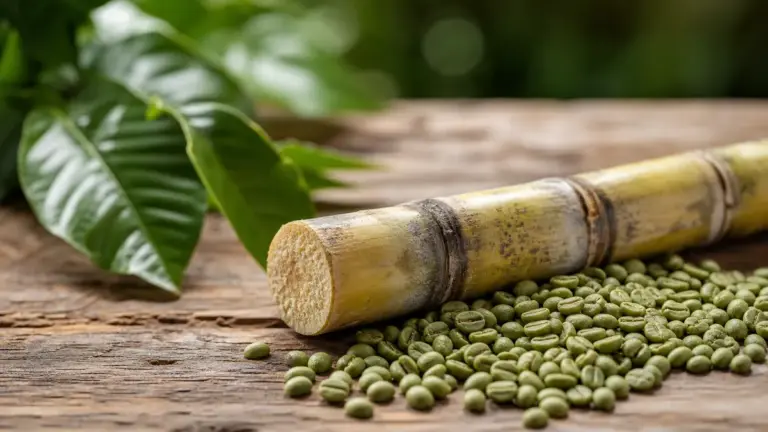 CO2 and Sugarcane DecafLearn how CO2 and sugarcane decaf remove caffeine, why ethyl acetate is still a solvent, and what process labels reveal about safety and flavour.Read the guide
 Decaffeinated Coffee ExplainedWhat is decaffeinated coffee? Understand residual caffeine, UK and EU definitions, flavour differences and the myths behind a much-misunderstood drink.Read the guide
 Half-Caf and Low-Caffeine Coffee Varieties ExplainedUnderstand half-caf blends, naturally low-caffeine Laurina and Aramosa, arabica versus robusta, and tea alternatives, with clear caffeine guidance.Read the guide
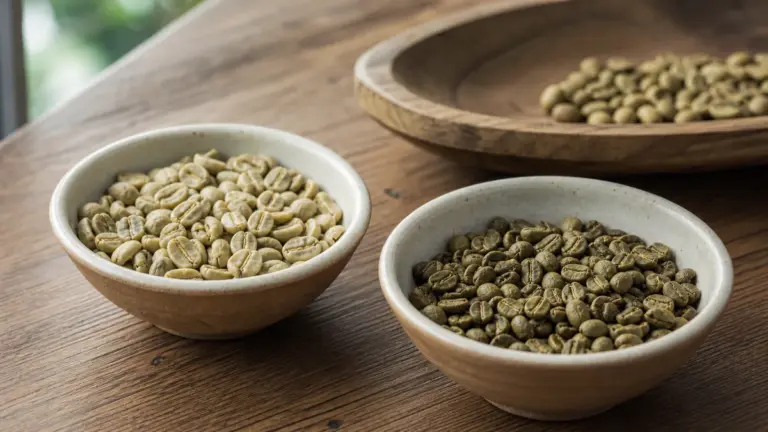 How Coffee Is DecaffeinatedLearn how solvent, Swiss Water, Mountain Water and CO₂ decaffeination work, what safety evidence shows, and what process labels tell you about coffee.Read the guide
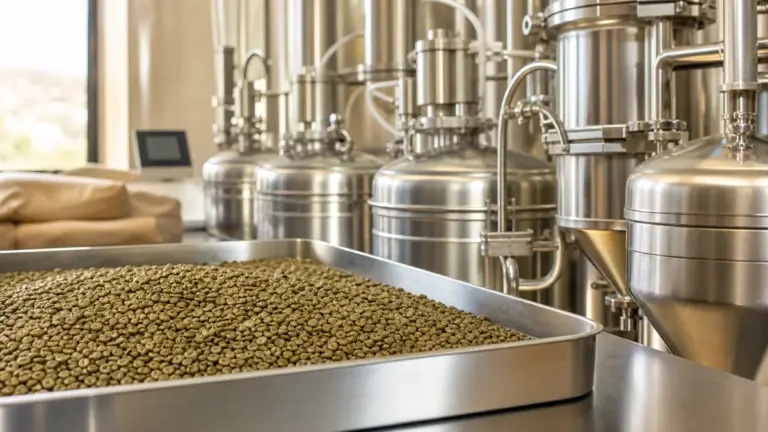 Swiss Water and Mountain Water ProcessHow Swiss Water and Mountain Water decaf work, where they happen, what carbon filters remove, and what chemical-free claims really mean for your coffee.Read the guide
 What Is Caffeine and How It WorksLearn what caffeine is, how it blocks adenosine, why its effects last for hours, and what research says about tolerance, sleep and adult safety…Read the guide
Start here if you are new
Follow these three pieces in order:
- what caffeine does explains the stimulant before introducing the detail of how your body responds. Start here if “a caffeine boost” is familiar but its mechanism is not.
- caffeine in coffee drinks helps you move from counting drinks to estimating intake. Read it before comparing espresso, filter coffee or an office machine’s different recipes.
- decaf explained introduces the main alternative. It is the next step if you want less caffeine without giving up coffee itself.
For the wider context, health and science connects this area with the site’s broader explanations of coffee research. Here, the focus stays on caffeine exposure, individual response and the ways caffeine is reduced or removed.
Caffeine and decaf at a glance
The useful comparison is not simply “strong coffee versus weak coffee”. These terms describe different things: a stimulant, a treatment process, a blend or a naturally occurring characteristic.
| Area | What it means | Main question to ask | Best starting point |
|---|---|---|---|
| Caffeine science | How the stimulant acts in the body | What effect am I trying to understand? | What Is Caffeine and How It Works |
| Caffeine content | The amount in a particular serving | How much am I actually drinking? | Caffeine Content of Coffee Drinks |
| Sensitivity and withdrawal | Responses during use or after reducing it | Is the issue intake, timing or a recent change? | Caffeine Sensitivity; Caffeine Withdrawal |
| Decaffeinated coffee | Coffee processed to remove most caffeine | What process was used, and what remains? | Decaffeinated Coffee Explained |
| Half-caf and naturally low-caffeine coffee | Blended or naturally lower-caffeine alternatives | What evidence supports the caffeine claim? | Half-Caf and Low-Caffeine Varieties |
Use the table to choose a route rather than treating every topic as required reading. Someone changing an afternoon drink needs a different starting point from someone comparing decaffeination chemistry.
Understand the stimulant before counting it
Caffeine acts partly by blocking adenosine receptors, the sites through which adenosine influences processes including sleepiness. In plain terms, it interferes with a signal involved in feeling tired rather than removing the underlying need for sleep.
This distinction helps explain why feeling more alert and being adequately rested are different questions. It also separates caffeine’s effects from coffee’s flavour: a drink can taste intense without providing a predictable caffeine dose.
Read how caffeine works when you want the mechanism behind alertness and stimulation. It provides the foundation for understanding why dose and timing matter, without turning this hub into a detailed account of brain chemistry.
Read safety guidance in context
EFSA’s 2015 scientific assessment found no safety concerns for the general healthy adult population from single doses up to 200 mg or habitual intake up to 400 mg spread throughout the day. It also identified that 100 mg close to bedtime may affect sleep in some adults.
These are population-level assessment benchmarks. They are not recommended daily allowances, guarantees of comfortable sleep or instructions to increase consumption.
Pregnancy needs separate guidance: the NHS advises no more than 200 mg daily from all sources. Its breastfeeding page currently says it is sensible to cut caffeine out because it can make a baby restless; if caffeine is consumed, it advises trying not to exceed 300 mg daily. EFSA’s assessment identifies up to 200 mg daily during lactation as raising no safety concerns for breastfed infants, so the published benchmarks differ.
Ask a midwife, health visitor, GP or pharmacist about your circumstances, particularly where medicines, a health condition or an infant’s response complicate the decision.
Find out what is in your drink
A coffee’s name is not a caffeine measurement. For a useful estimate, look for information tied to the actual serving, including its size and recipe, rather than borrowing a figure from another drink.
The NHS gives approximate reference amounts of 100 mg in a mug of instant coffee, 140 mg in a mug of filter coffee and 75 mg in a mug of tea. These are useful orientation figures, not laboratory results for your own mug.
Coffee-shop measurements illustrate the uncertainty. A 2014 analytical study published in the Royal Society of Chemistry’s Food & Function found 66 to 276 mg per serving among the Scottish espressos sampled. That is evidence of variation in those samples, not a current range for every UK espresso.
Use caffeine content by drink when comparing preparation methods or checking the implications of a different recipe. The article owns the detailed drink comparisons; this hub supplies the route into them.
For a practical intake record:
- Write down each caffeinated product and when you consume it.
- Record the actual serving and any published caffeine amount.
- Mark estimates as estimates rather than giving them false precision.
- Include tea, chocolate, energy drinks and caffeine-containing supplements.
The Food Standards Agency warns that supplements may supply caffeine from several ingredients, including guarana. Coffee is therefore only one part of the total.
Separate sensitivity from withdrawal
Sensitivity concerns what happens when you consume caffeine. Withdrawal concerns what can happen after you reduce or stop a regular intake. Keeping those questions separate makes a symptom diary more useful.
When caffeine itself feels uncomfortable
Jitteriness, anxiety, sleeplessness and palpitations can occur with caffeine, and sensitive people may experience effects at relatively low doses. A population benchmark should not override a consistent, uncomfortable personal response.
Research also indicates that response is not uniform. A double-blind caffeine study found associations between variation in the ADORA2A receptor gene and reported anxiety after caffeine. That supports biological variation, but does not turn a genetic result into a personal drinking prescription.
Read caffeine sensitivity if the same drink seems to affect you differently from colleagues or family. It is the right route for considering symptoms and individual response, rather than assuming everyone should tolerate the same amount.
Persistent or concerning symptoms deserve medical advice rather than repeated experiments with different coffees.
When reducing intake brings symptoms
Headache, fatigue, drowsiness, irritability and difficulty concentrating are recognised caffeine-withdrawal symptoms. A critical review of experimental and survey evidence reported typical onset within 12 to 24 hours after stopping, peak intensity at 20 to 51 hours and duration of 2 to 9 days.
Those timings describe a typical pattern, not a diagnostic test. Do not automatically attribute a new or severe headache to caffeine.
Use caffeine withdrawal when planning a reduction or trying to understand symptoms following a change. Gradual reduction is generally more comfortable than an abrupt stop; the detailed article explains that transition without assuming everyone needs the same schedule.
Understand what decaf changes
Decaffeination removes caffeine from coffee beans. It does not turn coffee into a different plant product, and it does not necessarily remove every trace of caffeine.
The US Food and Drug Administration gives a typical decaf reference of 2 to 15 mg per approximately 237 ml serving, originally expressed as 8 US fluid ounces. This is a broad US reference, not a guaranteed specification for a UK product or a decaf espresso.
For an everyday switch, the main point is that decaf substantially reduces exposure without promising zero. If you have been advised to avoid caffeine strictly, ask your clinician whether decaf is suitable rather than assuming the label settles the question.
Read decaffeinated coffee explained for the meaning of decaf and the implications of residual caffeine. Choose how decaffeination works when your question is about the industrial process instead.
That distinction keeps two useful subjects separate: what the finished coffee offers the drinker, and how the processor produces it.
Compare decaffeination methods
Commercial processes work on green, unroasted coffee. Their shared challenge is to extract caffeine selectively while retaining as much of the coffee’s other material as practical.
A solvent is a substance that dissolves another substance. Water is a solvent too, so “chemical-free” is not a precise scientific description of water processing.
Swiss Water and Mountain Water
Swiss Water describes a process using green coffee extract, a water-based mixture containing coffee compounds, alongside carbon filtration to remove caffeine from the circulating extract. Descamex describes its Mountain Water process as using a water-based solution containing soluble coffee solids.
These are distinct commercial processes, not interchangeable brand names. Their descriptions explain their own methods; they are not independent proof that either produces the best-tasting coffee.
Read Swiss Water and Mountain Water when comparing those names on packets. It is the useful next step for understanding what a water-process claim does, and does not, establish.
CO2 and sugarcane decaf
CO2 processing uses concentrated carbon dioxide to dissolve and extract caffeine. Sugarcane decaf instead uses ethyl acetate, often shortened to EA, which can be derived from sugarcane molasses.
Sucafina describes its EA process as moistening the beans, circulating ethyl acetate to extract caffeine, then steaming away residual processing solvent. “Sugarcane” identifies the solvent’s source in that process, not a serving of sugar added to the cup.
Use CO2 and sugarcane methods to compare these approaches. Read it before interpreting “natural” as a complete explanation of chemistry, flavour or suitability.
Other solvent-based methods include methylene chloride, also called dichloromethane. The broader methods article provides the place to compare the full set rather than treating water, CO2 and sugarcane as the only possibilities.
Explore half-caf and naturally low-caffeine coffee
Half-caf and naturally low-caffeine coffee offer different routes to reducing intake. A half-caf blend combines regular and decaffeinated coffee; a naturally low-caffeine variety starts with a different caffeine characteristic in the plant.
An equal-weight blend does not guarantee exactly half the caffeine of an unspecified regular coffee. The result depends on both components, including the caffeine remaining in the decaf, and on how the blend is brewed. Treat a blend ratio as a recipe description unless the supplier also provides appropriate caffeine measurements.
Laurina is a naturally low-caffeine variety of Coffea arabica, not a decaffeination method. Laboratory research has documented variation between individual Laurina beans, which is a useful reminder that “naturally low” is not an exact drink specification.
Read half-caf and low-caffeine varieties if you want an intermediate option or an explanation of the plant-based alternatives. It helps separate blend claims, variety names and measured caffeine content.
For any caffeine and decaf choice, ask three separate questions: what is the product, what evidence supports its caffeine description, and does the resulting drink suit your needs?
FAQ
Does adding milk reduce the caffeine in coffee?
Adding milk does not remove the caffeine already present in the coffee. If the coffee portion stays unchanged, milk increases the drink’s volume and lowers its caffeine concentration, but not its total caffeine amount. Compare the underlying coffee recipe rather than assuming a larger, milkier drink contains less.
Can I judge caffeine content from roast colour?
Roast colour is not a dependable guide to caffeine per serving. The Royal Society of Chemistry study found caffeine comparatively stable across its experimental roasting conditions, while purchased drinks varied substantially. Use information about the actual coffee and serving rather than treating “dark roast” as shorthand for either high or low caffeine.
What should I ask a decaf supplier?
Ask for the decaffeination method and any caffeine analysis available for the product. Check whether a result describes dry beans, ground coffee or a prepared serving, because those are different measurements. If strict caffeine restriction matters, ask your clinician what information is needed rather than accepting a general removal claim as a cup-level guarantee.
Where to go next
Read What Is Caffeine and How It Works for the mechanism, then Caffeine Content of Coffee Drinks to assess exposure. If you are changing your coffee, Decaffeinated Coffee Explained establishes the essentials, while Half-Caf and Low-Caffeine Varieties explores the alternatives between regular coffee and decaf.
Sources
-
EFSA, Caffeine, current topic page summarising the 2015 Scientific Opinion on the safety of caffeine.
https://www.efsa.europa.eu/en/topics/topic/caffeine -
NHS, Foods to avoid in pregnancy, current guidance, checked 2026.
https://www.nhs.uk/pregnancy/keeping-well/foods-to-avoid/ -
NHS, Best Start in Life, Food and drinks to avoid when breastfeeding, current guidance, checked 2026.
https://www.nhs.uk/best-start-in-life/baby/feeding-your-baby/breastfeeding/healthy-diet-when-breastfeeding/food-and-drinks-to-avoid-when-breastfeeding/ -
Food Standards Agency, Food supplements containing caffeine, current consumer guidance, checked 2026.
https://www.gov.uk/government/publications/food-supplements-containing-caffeine -
US Food and Drug Administration, Spilling the Beans: How Much Caffeine is Too Much?, 2024 consumer update.
https://www.fda.gov/consumers/consumer-updates/spilling-beans-how-much-caffeine-too-much -
Royal Society of Chemistry, Food & Function, Ludwig and colleagues, Variations in caffeine and chlorogenic acid contents of coffees: what are we drinking?, 2014, DOI 10.1039/C4FO00290C.
https://pubs.rsc.org/en/content/articlehtml/2014/fo/c4fo00290c -
Neuropsychopharmacology, Childs and colleagues, Association between ADORA2A and DRD2 polymorphisms and caffeine-induced anxiety, 2008, research abstract retrieved through PubMed.
https://pubmed.ncbi.nlm.nih.gov/18305461/ -
Psychopharmacology, Juliano and Griffiths, A critical review of caffeine withdrawal: Empirical validation of symptoms and signs, incidence, severity, and associated features, 2004, abstract and publication record retrieved through Johns Hopkins University.
https://pure.johnshopkins.edu/en/publications/a-critical-review-of-caffeine-withdrawal-empirical-validation-of--5/ -
Specialty Coffee Association, Coffee Decoded: The Chemistry of Decaffeination, undated page, checked 2026.
https://sca.coffee/sca-news/coffee-decoded-21-chemistry-of-decaf -
Swiss Water, Our Coffee Decaffeination Process, undated processor description, checked 2026.
https://www.swisswater.com/pages/coffee-decaffeination-process -
Descamex, MountainWater Process, undated processor description, checked 2026.
https://en.descamex.com.mx/mountainwaterprocess -
Sucafina, Sugarcane EA Decaf, undated supplier process description, checked 2026.
https://sucafina.com/apac/offerings/sugarcane-ea-decaf -
Phytochemistry, Baumann and colleagues, Non-destructive analysis of natural variability in bean caffeine content of Laurina coffee, 1998, research abstract retrieved through PubMed.
https://pubmed.ncbi.nlm.nih.gov/11711066/
This hub was researched using official health guidance, retrieved research abstracts and analytical findings, and processor descriptions used specifically to explain their own methods, without first-hand product testing.
Last checked: November 2026