Coffee certification means that a product or its supply chain has been assessed against a defined set of requirements, but different labels answer different questions. Organic concerns production methods; Fairtrade includes trading terms and producer organisation; Rainforest Alliance covers farming, environmental and social requirements. Use this hub to choose the right guide, understand what each label supports and recognise what it cannot guarantee.
In short
- Start with the standard behind the label, not the appearance of the badge.
- Organic certification does not automatically mean Fairtrade, and neither label replaces the other.
- Fairtrade coffee is physically traceable, rather than traded through the mass balance system used for some other Fairtrade commodities.
- UTZ merged with Rainforest Alliance in 2018 and is a legacy programme, not a separate option for new certification.
- A living income for farming households and a living wage for workers are different goals. Neither should be assumed from a logo alone.
Guides in Coffee Certification
 Coffee Certification Labels ComparedCompare Fairtrade, organic, Rainforest Alliance, Bird Friendly and other coffee labels by trading rules, environment, labour and what they leave out.Read the guide
 Coffee Certification: The Complete GuideUnderstand Fairtrade, organic, Rainforest Alliance and other coffee labels, what they require, their limitations and the evidence for their impact.Read the guide
 Coffee Traceability: Understanding Supply Chain ClaimsLearn what coffee traceability proves, how to read bags and transparency reports, and why QR codes and blockchain claims need supporting evidence.Read the guide
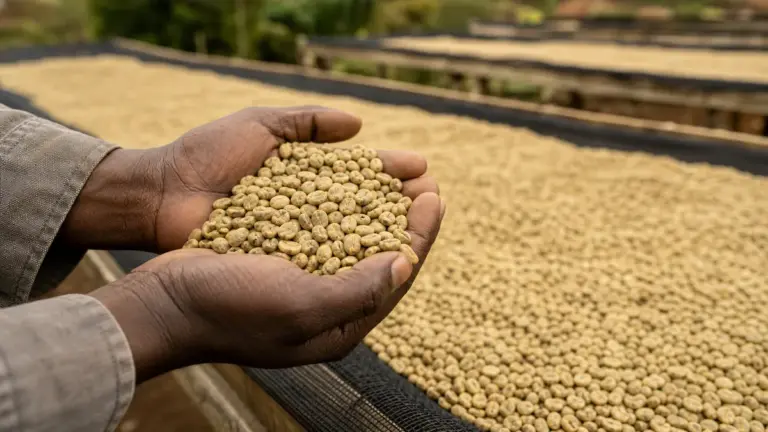 Fair Trade CoffeeUnderstand Fairtrade coffee, its minimum-price safety net, Premium, certification rules and community impact, plus what UK buyers should check on the label.Read the guide
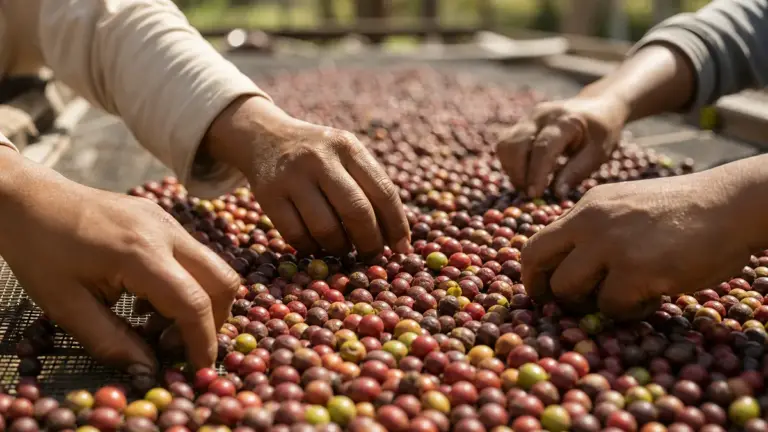 Living Income and Labour Rights in CoffeeUnderstand coffee farmers’ living income gaps, seasonal workers’ rights, child and forced labour evidence, and what UK buyers can ask suppliers.Read the guide
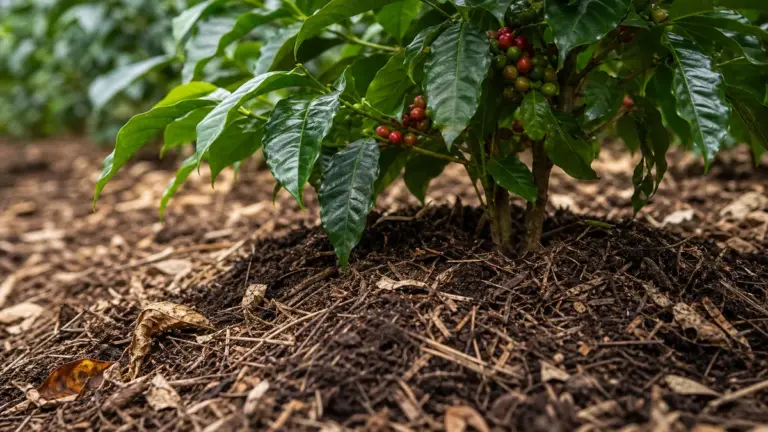 Organic Coffee CertificationWhat organic coffee certification means: UK and EU rules, soil standards, pest control, packet labels and the evidence behind environmental benefits.Read the guide
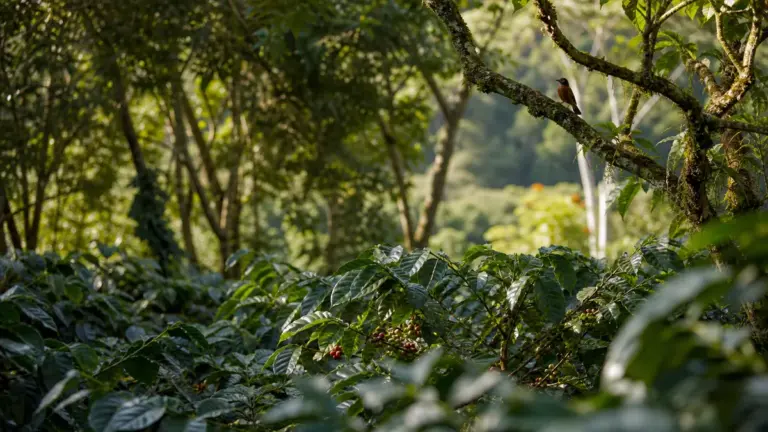 Rainforest Alliance Coffee Certification: What the Frog Seal MeansUnderstand Rainforest Alliance coffee certification, the frog seal, current standards, the UTZ merger and what independent evidence says about its impact.Read the guide
 UTZ Certification: What Happened After the Merger?What happened to UTZ? Understand its coffee certification origins, the Rainforest Alliance merger and how to check old labels and supplier claims today.Read the guide
Start here if you are new
- Read the certification guide to understand standards, audits and the evidence behind a certified claim. It is the best starting point if the terminology on a coffee bag feels interchangeable.
- Move to labels compared when you want to choose between coffees or write a purchasing requirement. It helps you compare schemes against the same questions instead of treating them as competing versions of one promise.
- Follow living income and labour rights to understand the people behind those requirements. Read it before turning a certification commitment into a claim about household prosperity or working conditions.
This hub belongs to industry and sustainability, which places certification within the wider coffee trade. Here, the focus is narrower: what the principal labels mean, how coffee is traced and which questions deserve a closer look.
Coffee certification labels at a glance
Compare these approaches by their scope, their trading requirements and the evidence they provide. This is not a ranking: a scheme designed around agricultural inputs cannot be judged as though its main purpose were producer bargaining power.
| Label or approach | Main scope | Trading or income feature | What not to assume |
|---|---|---|---|
| Organic | Regulated production, processing and handling methods | Organic status alone does not establish Fairtrade trading terms | No pesticides whatsoever, or a guaranteed living income |
| Fairtrade | Producer organisation, trading terms, environmental and social requirements | Minimum-price mechanism and an additional Fairtrade Premium | Every farming household earns a living income |
| Rainforest Alliance | Farm management, environmental protection and social requirements | Coffee buyers must agree and pay a certification premium | Organic production or the same trading mechanism as Fairtrade |
| UTZ | Legacy programme now incorporated into Rainforest Alliance | Historical requirements should be read in their original context | A separate current programme available to new applicants |
| Traceability | Evidence connecting coffee with its supply-chain sources | Can support checks on purchases and sourcing claims | Proof of good labour conditions simply because an origin is known |
| Living-income commitment | Household livelihoods assessed against a local benchmark | Requires evidence about income, not just a purchasing statement | A separate, universally interchangeable coffee certification |
The table is a starting point, not a substitute for the applicable standard. When assessing a particular product, check the exact scheme, the product covered and the wording of the claim.
Organic: production methods and a regulated claim
Organic is not simply a description of a farm that uses few inputs. In UK food labelling, it is a regulated claim supported by certification, with requirements applying to production and subsequent handling.
Organic systems restrict agricultural inputs and emphasise preventive approaches to soil fertility, pests and disease. They do not mean that every pesticide is prohibited: under EU organic rules, permitted plant-protection substances must be specifically authorised. “Organic” and “pesticide-free” are therefore not interchangeable claims.
For UK readers, the control-body code is a useful detail to inspect alongside any organic logo. GOV.UK specifies the formats GB-ORG-XX for products labelled in Great Britain and XI-ORG-XX for those labelled in Northern Ireland; imported products can carry other recognised codes. The code identifies the certifying control body, not the coffee farm.
Read organic certification when your question concerns farming methods, permitted inputs or the details on a UK coffee packet. It is also the useful next step if you need to distinguish the legal organic claim from broader environmental language.
Organic certification should not be treated as a promise about all aspects of sustainability. Its production requirements do not, by themselves, establish Fairtrade trading terms or demonstrate that a particular household has reached a living income.
Fairtrade: trading terms and producer organisation
Fairtrade combines requirements for producers and traders. Its coffee standard applies to small-producer organisations and traders, while its producer-organisation standard includes democratic participation and collective decisions about the Fairtrade Premium.
The Fairtrade Minimum Price provides a trading safety net. When the market price is higher, the applicable market price or the price negotiated at contract signing takes precedence. The Fairtrade Premium is an additional payment, with members of producer organisations deciding collectively how to use it within the scheme’s requirements.
These mechanisms concern coffee traded on Fairtrade terms. They are not a statement that every individual member receives an identical household income, or that certification alone closes the gap to a decent standard of living.
Read fair trade coffee when you want to understand the FAIRTRADE Mark, the role of producer organisations and how the trading mechanisms work. Use that guide rather than assuming that a supplier’s general statement about “fair trade” identifies the certification covering your coffee.
Fairtrade also has environmental requirements, but Fairtrade and organic remain separate certifications. If both matter to your purchasing policy, ask for evidence of both on the actual product.
Rainforest Alliance and the UTZ transition
Rainforest Alliance
Rainforest Alliance’s Sustainable Agriculture Standard addresses farm management, environmental and social requirements. Its human-rights approach includes systems for identifying risks, preventing abuses and responding when problems are found.
For coffee, its current premium requirements place responsibility on the first buyer to negotiate the premium with the farm certificate holder, record the agreement and make the payment. That mechanism should not be described as identical to Fairtrade’s minimum-price system.
The seal also has specific product-content rules. Under the Rainforest Alliance Labeling and Claims Policy version 1.2, binding from 14 October 2026, a single-ingredient coffee product generally needs at least 90% physically present certified content through an eligible traceability model. The seal alone should not therefore be translated into a claim that every bean is certified.
Read rainforest alliance certification when you want to investigate the farming requirements, premium mechanism or meaning of the seal. Check which standard a claim refers to, because the organisation also operates a distinct Regenerative Agriculture Standard.
Where UTZ fits now
UTZ and Rainforest Alliance merged in 2018. The combined organisation subsequently introduced its 2020 certification programme and began phasing out the UTZ programme and label.
New companies do not register for a separate UTZ programme. Nevertheless, the name remains relevant when reading older packaging, sourcing policies and reports.
Read the UTZ background when you encounter that older terminology. It will help you interpret historical claims without mistaking an earlier programme for an additional current certification requirement.
Traceability: following coffee through the chain
Traceability means being able to follow a product and its records through the supply chain. For coffee certification, the crucial question is whether the evidence concerns the physical coffee, an equivalent certified volume or a specifically identified source.
Three terms help:
- Identity preserved: certified coffee remains linked to an identified certified source, subject to the scheme’s precise rules.
- Segregated: certified coffee stays separate from non-certified coffee, but coffee from different certified sources may be combined.
- Mass balance: certified and non-certified material may mix, while accounting controls limit certified claims to the eligible purchased volume.
Do not transfer rules from chocolate or tea to coffee. Fairtrade states that all its coffee is physically traceable and kept separate from non-Fairtrade products. Rainforest Alliance’s traceability annex does not list coffee among the crops eligible for mass balance.
Physical traceability does not necessarily mean that a retail bag can be traced to one individual farmer. A certified group or a mixture of certified sources may be involved, depending on the model.
Read coffee traceability when a supplier gives you a farm name, cooperative name or digital sourcing record and you want to understand what it demonstrates. The distinction to keep in mind is simple: knowing where coffee came from is different from proving how people were treated there.
Living income, labour rights and the limits of certification
A living income concerns the net annual income a household needs for a decent standard of living in its particular location. It includes essentials such as food, housing, education and healthcare, plus provision for unexpected events.
A living wage concerns remuneration for workers. A coffee-growing household’s income and a hired picker’s wage therefore require different evidence, even when both people work on the same farm.
Fairtrade explicitly states that paying a Living Income Reference Price does not guarantee that a farmer earns a living income. Farm size, productivity and the volume purchased on those terms are among the factors affecting the result. An export-level payment is not automatically the same as money received by a household.
Labour-rights assurance has similar limits. Rainforest Alliance explains that audits provide a snapshot and may fail to uncover hidden abuses; its assess-and-address approach combines risk assessment, prevention, monitoring and remediation. Certification should not be represented as a guarantee that violations never occur.
For a more searching assessment, ask:
- Which workers are covered, including seasonal and migrant workers?
- How can workers raise concerns safely?
- What happens when an abuse is identified?
- Does the supplier report actual outcomes, or only policies and training?
- Does an income claim measure household income against a relevant local benchmark?
These are questions to investigate, not reasons to dismiss certification. They help distinguish a defined assurance system from an absolute promise that no responsible scheme can make.
Choosing evidence for home or workplace buying
Start with the outcome you want to support, then choose the evidence required. A workplace policy might prioritise regulated organic production, specified Fairtrade trading terms, environmental and social farm requirements, or a combination.
Use this purchasing sequence:
- Name the requirement. Replace “ethical coffee” with the particular certification or documented outcome you mean.
- Identify the product. Ask which blend, single-origin coffee or decaffeinated option the evidence covers.
- Check the scope. Request the relevant certificate details, validity information and product claim rather than relying on a supplier’s general credentials.
- Clarify traceability. Ask whether the evidence reaches a certified organisation, a group of farms or an identified lot.
- Record substitutions. Require notice before a replacement product changes the certification you specified.
- Keep claims narrow. Describe the certified coffee accurately rather than extending its label to the whole workplace or supplier.
For an office, a useful specification is one that another person can check when a delivery arrives. Keep the product description, supporting evidence and agreed substitution process together.
Use the detailed label comparison to turn your priorities into consistent questions. Coffee certification is most useful when the requirement, the supplied product and the supporting evidence all match.
FAQ
Can one coffee carry more than one certification?
Yes, a coffee can meet more than one certification scheme. Organic and Fairtrade, for example, address different requirements rather than being mutually exclusive alternatives. Check that each claim applies to the specific product you are buying. Multiple logos still do not establish that every possible environmental or social outcome has been achieved.
Does a certification label guarantee better flavour?
No, the certifications discussed here should not be read as flavour guarantees. Their stated requirements concern production, trading, environmental or social matters, rather than promising that you will prefer the finished drink. Assess the sourcing evidence and the coffee’s suitability for your taste separately; neither question needs to stand in for the other.
Is a coffee without these labels necessarily irresponsible?
No, absence of these labels is not sufficient evidence to reach that conclusion. It means you cannot rely on those particular certification claims for that product. Ask what other verifiable evidence the supplier provides, who checks it and what it covers. A persuasive account of sourcing should still be examined rather than accepted solely on its wording.
Where to go next
Read Coffee Certification: The Complete Guide for the full explanation of standards and assurance, then Certification Labels Compared to assess alternatives consistently. Choose Traceability to investigate sourcing records, or Living Income and Labour Rights in Coffee to examine what coffee certification can and cannot demonstrate about people’s livelihoods.
Sources
-
Rainforest Alliance, Credibility Matters: The Value of Third-Party Certification in Sustainability Claims, 2026. Explains independent assurance and the limits of periodic audits.
URL: https://www.rainforest-alliance.org/business/certification/third-party-certification-sustainability-claims/ -
Department for Environment, Food & Rural Affairs, Organic food: labelling and advertising rules, updated 20 August 2025. UK certification, labelling and control-body-code requirements.
URL: https://www.gov.uk/guidance/organic-food-labelling-rules -
European Commission, Organic production and products, undated, current guidance retrieved November 2026. Organic production principles and permitted-input controls.
URL: https://agriculture.ec.europa.eu/farming/organic-farming/organic-production-and-products_en -
Fairtrade International, Fairtrade Standard for Coffee, version 15.07.2021_v.2.9. Scope and coffee trading requirements.
URL: https://www.fairtrade.net/content/dam/fairtrade/fairtrade-international/standards/small-scale-producer/coffee/Coffee_SPO_EN.pdf -
Fairtrade International, Standards for small-scale producers, undated, current guidance retrieved November 2026. Democratic organisation and collective Premium decisions.
URL: https://www.fairtrade.net/en/why-fairtrade/how-we-do-it/standards/who-we-have-standards-for/standards-for-small-scale-producer-organisations.html -
Fairtrade International, Fairtrade Minimum Prices and Premiums, current database retrieved November 2026. Relationship between the minimum-price mechanism and higher market prices.
URL: https://www.fairtrade.net/en/why-fairtrade/how-we-do-it/standards/fairtrade-minimum-price-and-premium-information.html -
Rainforest Alliance, Premium Annex, version 1.4, updated 28 October 2026. Coffee first-buyer responsibilities and contractual premium requirements.
URL: https://knowledge.rainforest-alliance.org/docs/premium-annex-v14 -
Rainforest Alliance, Labeling and Claims Policy, version 1.2, effective 14 October 2026. Certified-content thresholds and standard-specific seal requirements.
URL: https://knowledge.rainforest-alliance.org/docs/labeling-and-claims-policy-v1-2 -
Rainforest Alliance, UTZ Certification (Now Part of the Rainforest Alliance), undated, retrieved November 2026. Merger, programme transition and registration position.
URL: https://www.rainforest-alliance.org/utz/ -
Rainforest Alliance, Traceability Annex, version 1.4, current document retrieved November 2026. Definitions and crop eligibility for traceability models.
URL: https://knowledge.rainforest-alliance.org/docs/traceability-annex-v14 -
Fairtrade International, Traceability in Fairtrade supply chains, undated, retrieved November 2026. Physical traceability of Fairtrade coffee.
URL: https://www.fairtrade.net/en/why-fairtrade/how-we-do-it/how-does-the-label-work/traceability-in-fairtrade-supply-chains.html -
Living Income Community of Practice, The Concept, undated, retrieved November 2026. Household living-income definition and distinction from wages.
URL: https://www.living-income.com/the-concept/ -
Fairtrade International, FAQ: About living incomes and Fairtrade Living Income Reference Prices, undated, retrieved November 2026. Reference-price assumptions, household outcomes and payment-chain limitations.
URL: https://reference-prices.fairtrade.net/faq -
Rainforest Alliance, Our Assess-and-Address Approach to Human Rights Issues, undated, retrieved November 2026. Prevention, monitoring and remediation of human-rights abuses.
URL: https://www.rainforest-alliance.org/business/certification/how-our-assess-and-address-approach-is-tackling-human-rights-issues/
This hub was researched using retrieved government guidance, scheme standards and official explanations; scheme requirements are distinguished from demonstrated outcomes, and purchasing recommendations are editorial guidance.
Last checked: November 2026