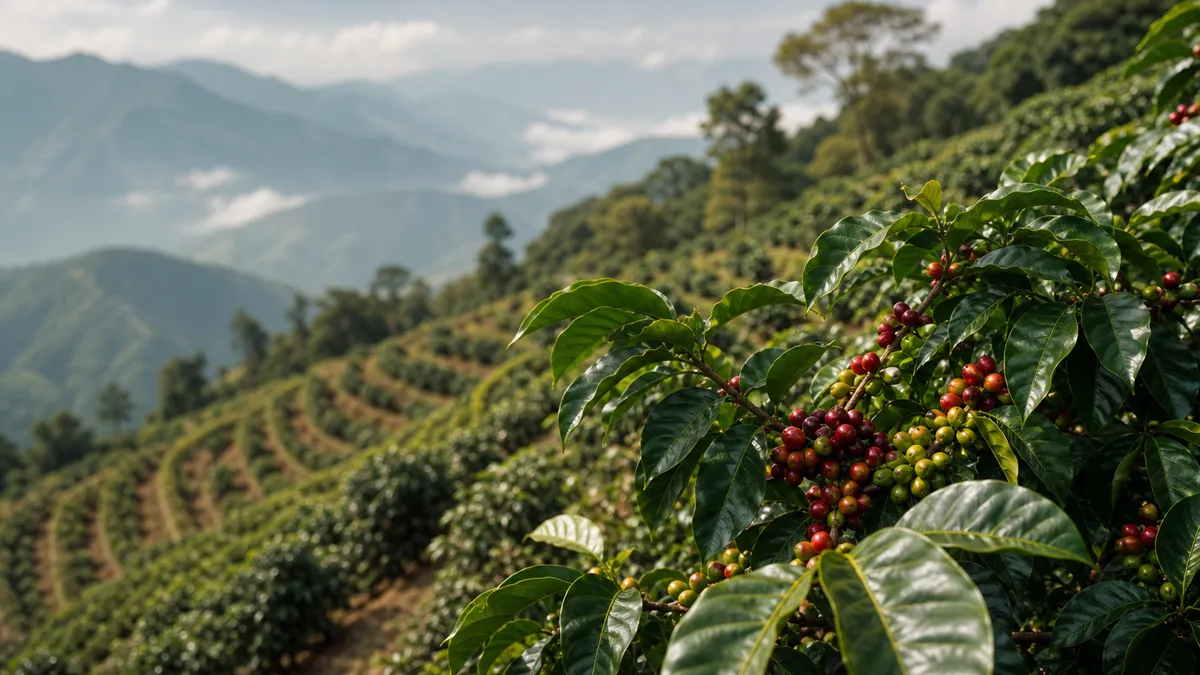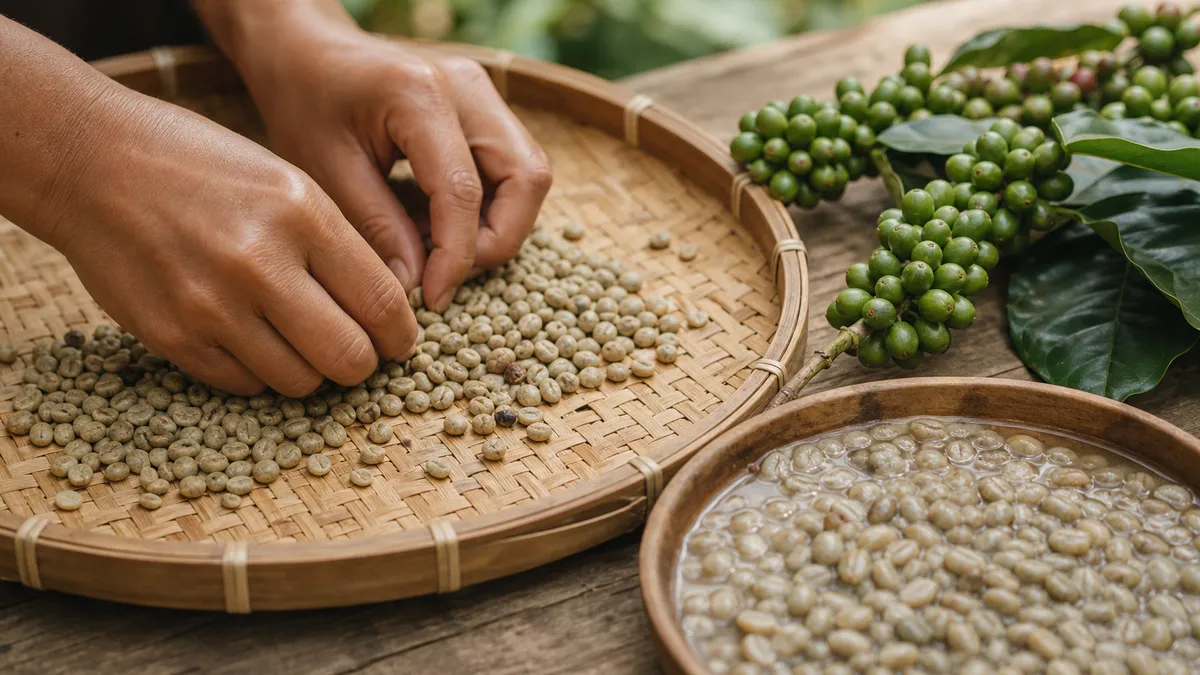
East and Southeast Asia grows vast quantities of robusta alongside highland arabica, with smaller but distinctive crops of liberica and excelsa. Vietnam and Indonesia dominate production, but Laos, the Philippines, Thailand, Myanmar, Timor-Leste and China offer very different coffees: species, growing area and processing method tell you more than “Asian coffee” alone.
In short
- Vietnam and Indonesia are robusta-dominated producers, although both also grow arabica.
- Wet hulling removes the bean’s parchment covering before drying is complete. It is not another name for washed processing.
- Highland origins include the Bolaven Plateau, northern Thailand, Myanmar’s Shan Highlands, Timor-Leste and Yunnan.
- Catimor describes a family of arabica varieties, not one uniform variety or flavour.
- For buying, prioritise a named growing area, species, process and lot description over a broad national flavour stereotype.
Guides in East and Southeast Asia
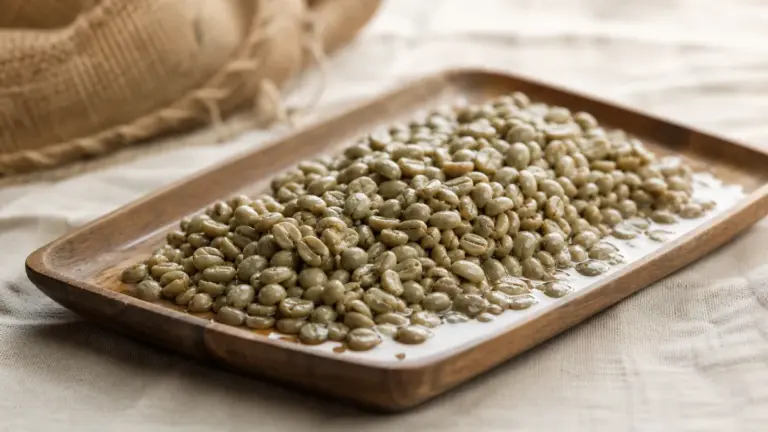 Indonesian Coffee: Origins, Flavours and ProcessingExplore Indonesian coffee by island, flavour and processing, including wet-hulled Sumatra, washed Java, regional varieties and kopi luwak welfare concerns.Read the guide
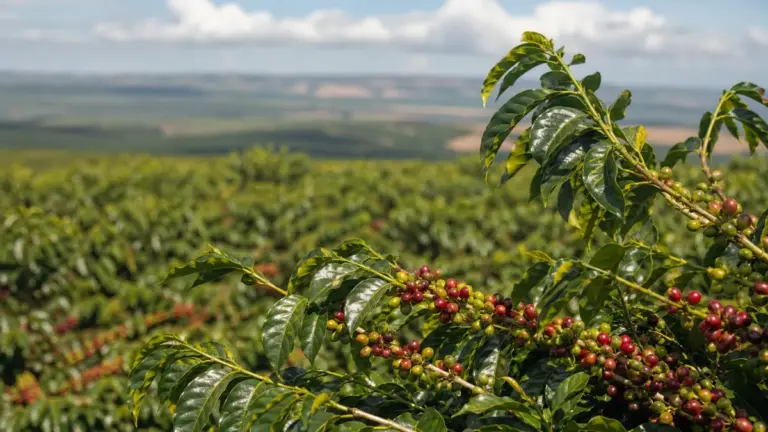 Laos Coffee: The Bolaven PlateauDiscover Laos coffee from the Bolaven Plateau: arabica and robusta, growing conditions, processing, harvest seasons and what to check before buying.Read the guide
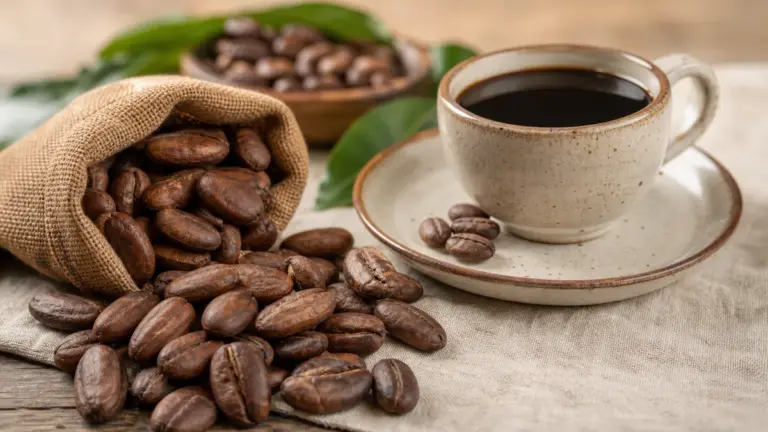 Philippine Coffee: Barako, Excelsa and ArabicaDiscover Philippine coffee, from liberica and the barako tradition to excelsa and highland arabica, with flavour profiles and clear buying advice.Read the guide
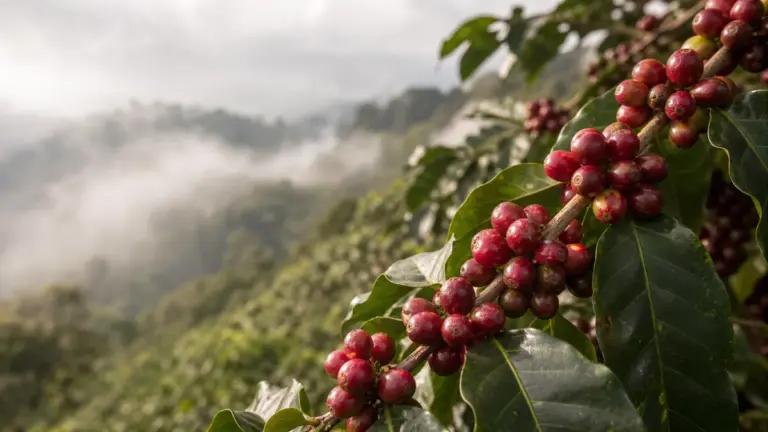 Thailand and Myanmar CoffeeExplore northern Thai arabica, southern robusta and Myanmar specialty coffee, with harvest calendars, cup profiles and clear guidance for choosing a bag.Read the guide
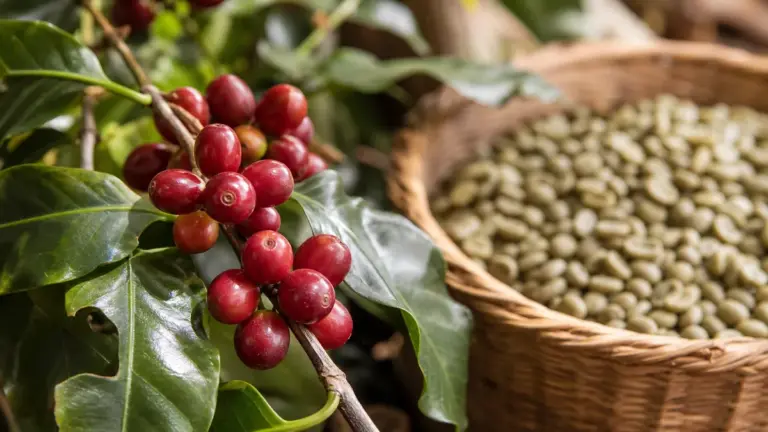 Timor-Leste CoffeeDiscover Timor-Leste coffee, from chocolate and citrus flavours to smallholder farming, organic certification and the Timor Hybrid’s role in rust resistance.Read the guide
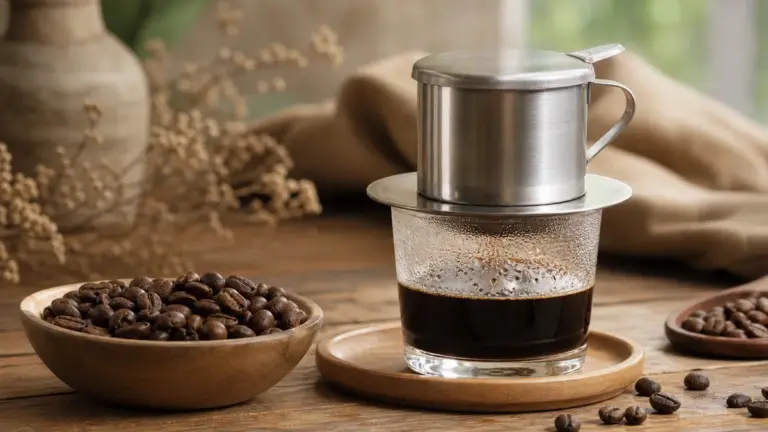 Vietnamese Coffee: Robusta, Arabica and Phin TraditionsDiscover Vietnamese coffee, from Central Highlands robusta to highland arabica, with verified production figures, fine robusta and phin traditions.Read the guide
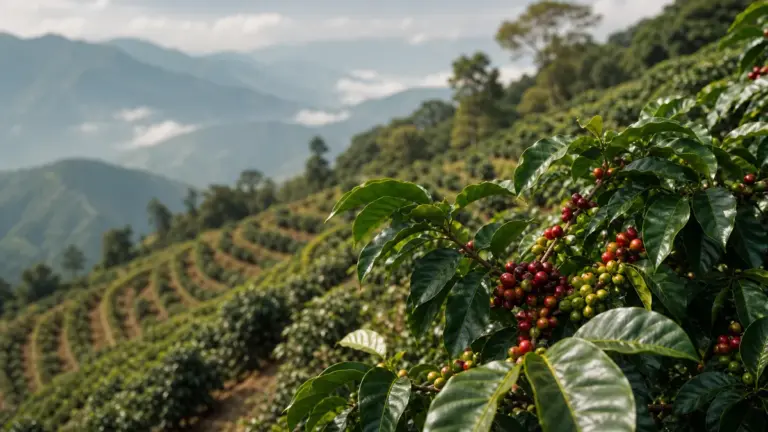 Yunnan Coffee: China’s Main Coffee-Growing RegionDiscover Yunnan coffee from China: its main growing regions, Catimor varieties, specialty shift, processing experiments and what to look for when buying.Read the guide
Start here if you are new
Begin with beans and origins to understand how species, growing conditions and processing fit together. Then read Vietnam for the region’s robusta story, followed by Indonesia to understand why wet-hulled arabica tastes different from many washed coffees.
This regional guide provides the comparison between countries. The country guides are the next step when you want to investigate particular growing areas or interpret an unfamiliar name on a coffee bag.
Regional origin fact panel
There is no single altitude range, harvest season or cup profile for this region. The following are sourced examples, not boundaries within which every farm must fall.
- Altitude examples: the Philippine Coffee Board places Cordillera arabica at 1,000 to 1,800 metres above sea level. FAO describes suitable Bolaven Plateau arabica areas at 1,000 to 1,300 metres. These are separate origin ranges, not a regional quality ranking.
- Species: principally Coffea arabica and Coffea canephora, the species traded as robusta. The Philippines also produces liberica and excelsa.
- Varieties and breeding groups: Typica, Bourbon, Caturra, S795, SL34, Timor Hybrid descendants and Catimor-related varieties occur across different origins. Vietnam also has named robusta selections, including TR4.
- Processing: washed and natural processing occur in the region; wet hulling is particularly associated with Indonesian coffees. A washed coffee has its fruit removed before drying in parchment; a natural dries inside the cherry.
- Harvest examples: Laos, November to March; the Philippines, generally October to March; Myanmar, December to March. Southern Sumatran robusta harvesting extends from March to August across different elevations, rather than following one simultaneous season.
- Cup profile: possibilities range from spicy, full-bodied, low-acidity Mandheling to floral Philippine coffees and citrus-and-tea washed Timorese lots. None describes the entire region.
Harvest dates indicate picking, not when freshly roasted coffee will appear in a UK shop.
Robusta giants and arabica highlands
Production scale helps explain the region’s importance, but it does not predict the quality of an individual lot.
In its May 2026 country reports, the United States Department of Agriculture’s Foreign Agricultural Service estimated Vietnam’s 2025/26 production at 31.7 million 60 kg bags, comprising 30.5 million bags of robusta and 1.2 million of arabica. The corresponding Indonesian estimate was 12.37 million bags, comprising 11 million of robusta and 1.37 million of arabica.
These are production estimates for named marketing years, not export totals or final counts of the 2026/27 crop. They establish the robusta-heavy balance without suggesting that the smaller arabica harvests are unimportant.
Vietnam’s coffee areas include the Central Highlands and northern provinces. Indonesia’s principal robusta belt lies in southern Sumatra, while much of its arabica comes from Aceh and North Sumatra, with other highland production elsewhere in the archipelago.
Beyond those giants, national labels become especially unhelpful. Laos grows both species around the Bolaven Plateau; Thailand’s documented origins include northern arabica and southern robusta. Myanmar combines highland arabica with lowland robusta, while the Philippines has an unusually broad commercial species mix.
Country comparison
The table compares growing geography and coffee types, not quality rankings.
| Country | Growing areas to recognise | Coffee grown | Useful buying distinction |
|---|---|---|---|
| Indonesia | Aceh, North Sumatra, Java, Sulawesi, Flores | Robusta and arabica | Check the island, growing area and process |
| Vietnam | Central Highlands; northern provinces including Son La | Predominantly robusta, with arabica | Confirm species rather than inferring it from the country |
| Laos | Bolaven Plateau; smaller northern origins | Robusta and arabica | Look for a named plateau district or producer group |
| Philippines | Cordillera, Mindanao, Batangas and Cavite | Arabica, robusta, liberica and excelsa | Ask what species a local or trade name represents |
| Thailand | Chiang Rai; Chumphon and other southern origins | Arabica and robusta | Distinguish northern arabica from southern robusta |
| Myanmar | Shan Highlands, Mandalay and southern lowlands | Highland arabica and lowland robusta | Seek a named growing area and producer |
| Timor-Leste | Highlands including Ermera | Arabica, including Typica and Timor-associated material | Read the processing and lot details |
| China | Yunnan, including Pu’er, Baoshan and Dehong | Predominantly arabica in Yunnan | Seek a named producer, variety and process |
Explore the countries by theme
Indonesia and Vietnam: understand the scale, then the differences
Read Indonesia when you want to distinguish an island or regional name from a processing description. It is the useful next guide for comparing wet-hulled arabica with coffees prepared differently, rather than treating the whole archipelago as one flavour.
Choose Vietnam to investigate robusta properly, while keeping the country’s smaller arabica sector in view. It is also the place to separate where a coffee was grown from how a Vietnamese-style drink is prepared.
Laos, Thailand and Myanmar: follow the highlands
The Bolaven Plateau is central to Lao coffee, but it should not make northern production invisible. Read Laos when a bag names a district, cooperative or plateau origin and you want geographical context.
Read Thailand and Myanmar to compare neighbouring countries without assuming their industries are interchangeable. Northern Thai arabica origins and Myanmar’s Shan Highlands are useful starting points, but both countries also have robusta production.
The Philippines and Timor-Leste: species and ancestry
Choose Philippines when the label says barako, liberica or excelsa, or when you want to explore arabica beyond the region’s better-known origins. Species identification matters particularly here.
Read Timor-Leste for the connection between a producing country and a globally influential coffee ancestry. Timor Hybrid’s significance extends well beyond coffees grown on the island today.
China: look closely at Yunnan
When you encounter Pu’er, Baoshan, Dehong or another Yunnan origin, look for information about the producer, variety and process. A named lot is more informative than a general claim about what Chinese coffee tastes like.
What wet hulling changes
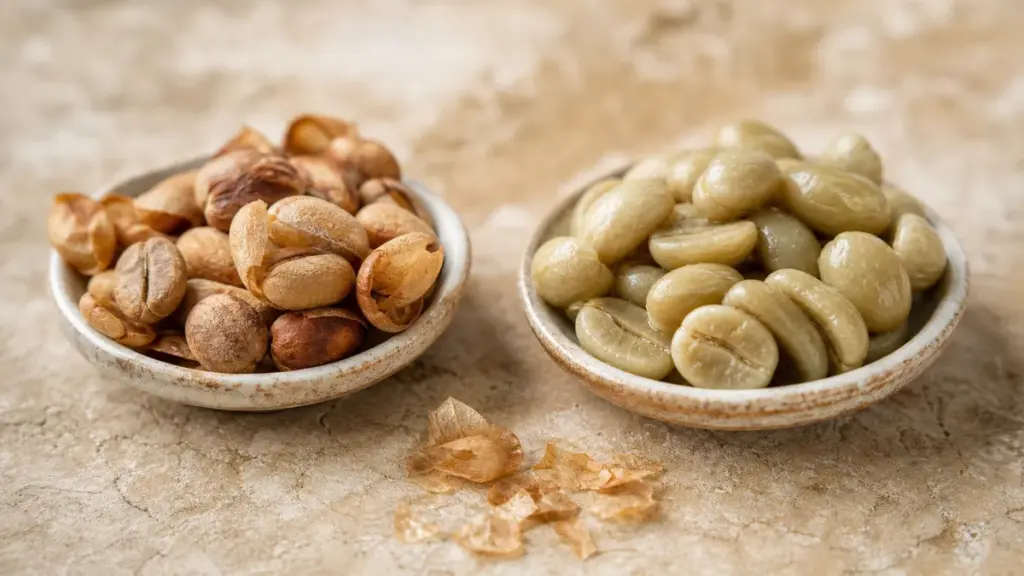
Wet hulling, commonly called giling basah, removes parchment, the papery covering around the seed, while the bean remains relatively moist. Drying then continues without that covering.
The essential sequence is:
- Remove the cherry’s outer flesh.
- Ferment and wash the coffee, then partially dry it.
- Hull the still-moist parchment coffee.
- Finish drying the exposed green beans.
In conventional washed processing, the coffee instead completes drying inside its parchment before hulling. That difference in sequence is what matters: “wet-hulled” does not simply mean that water was used during processing.
Indonesian research describes Mandheling coffees with low perceived acidity, substantial body, spice and some earthy or fruity character. Wet-hulled beans can also have a distinctive dark bluish appearance. Neither appearance nor origin alone proves how the roasted coffee will taste.
The mechanism behind the complete flavour profile remains less settled than confident marketing sometimes suggests. An FAO-supported processing trial did not consistently reproduce Mandheling character through particular storage treatments; its authors identified variety, environment, management and processing as potentially interacting influences.
The same research provides a practical warning: keeping parchment wet can encourage mould and musty flavours. Damp-cellar mustiness should not be excused as an essential feature of Indonesian coffee.
Varieties, hybrids and names on the bag
Keep three levels separate: species, variety or breeding group, and place. Arabica is a species; Typica is a variety; Yunnan is a producing region.
Timor Hybrid originated through natural crossing between arabica and robusta. Breeders subsequently used its ancestry in arabica breeding programmes: crosses with Caturra produced Catimor-related varieties, while crosses with Villa Sarchi produced Sarchimor-related varieties.
Catimor and Sarchimor are therefore families, not single varieties. “Catimor” on a bag supplies useful ancestry information, but not a complete plant identity or a guaranteed cup profile.
Other names need equal care. S795 and SL34 identify varieties encountered in regional production. TR4 is a Vietnamese robusta clone, meaning planting material propagated from a selected plant.
Liberica and excelsa are not interchangeable
Philippine liberica is associated with the name barako, particularly in Batangas and Cavite. Excelsa needs a separate botanical explanation.
Following genomic research published by Davis and colleagues in Nature Plants in 2025, this guide follows Kew in recognising excelsa as Coffea dewevrei, separate from Coffea liberica. Older references may call it Coffea liberica var. dewevrei. That older classification explains conflicting descriptions, but it is not the classification followed here.
Reading cup profiles without stereotyping
Use flavour descriptions to narrow your search, then assess the actual coffee.
For a weighty, gently acidic cup, a well-described wet-hulled Mandheling is a sensible starting point. For a brighter contrast, Sucafina describes its washed Daurfusu coffee from Timor-Leste with citrus, black tea and malic, or apple-like, acidity. That is a reported lot profile, not a promise about every Timorese coffee.
Robusta should not be reduced to bitterness alone. The Philippine Coffee Board describes natural robustas with floral and dark-chocolate notes, alongside natural arabicas showing floral and caramel character.
Yunnan research also demonstrates why blanket descriptions fail. A field study of Catimor coffee from different elevations around Pu’er found differences in chemical composition and aroma, including nutty, roasted, sugar and caramel attributes. Because this was a field comparison, it does not establish altitude as the sole cause or a universal quality ladder.
World Coffee Research’s sensory vocabulary is useful here: body, acidity, bitterness, sweetness and specific aromas describe different aspects of a cup. A coffee can be full-bodied without being strongly bitter, and an earthy description should invite a more precise explanation.
Buying East and Southeast Asian coffee in the UK
Start with these checks rather than a national reputation:
- Identify the species. Ask whether the coffee is arabica, robusta, liberica, excelsa or a blend.
- Find the growing area. Prefer a named producer, cooperative, station or district to an unexplained country label.
- Read the process. Ask for clarification if the description uses only a broad term such as “semi-washed”.
- Ask about the crop and roast. Treat harvest information and roast information as separate details.
- Match the description to your preference. Look for explicit comments on body, acidity, sweetness and aftertaste.
For home roasting or professional buying, request the grading method behind any grade claim, together with physical-quality information and a representative sample. FAO’s guidance on coffee standards makes the underlying point: producing countries use different grading systems, so a grade needs its own definition.
For a useful tasting comparison, choose coffees that answer one question. Compare washed and wet-hulled Indonesian lots to investigate processing, or compare named arabica and robusta lots to explore species. Keep preparation consistent and remember that differences in farm, roast and variety remain.
East and Southeast Asia is best approached as a collection of origins and production choices, not a single flavour category.
FAQ
Is barako the same as robusta?
No. The Philippine Coffee Board identifies Philippine liberica with the name barako or baraco, especially in Batangas and Cavite. If a packet uses barako prominently but gives no botanical information, ask the seller which species it contains and whether it is a single-species coffee or a blend.
Do floral or chocolate tasting notes mean ingredients were added?
Not by themselves. Such terms are used in coffee sensory assessment to describe aromas and flavours perceived in the brewed drink. They are not an ingredients list. If you want unflavoured coffee, check the product description separately and ask the seller to distinguish tasting notes from any added flavourings.
Is a high-altitude coffee automatically better?
No. Altitude is useful context, not a standalone quality certificate. World Coffee Research emphasises that environment and farm management affect how a variety performs, while the Pu’er field study illustrates the complexity of altitude comparisons. For buying, combine elevation information with traceability, processing details and evidence from tasting the actual lot.
Where to go next
Read Indonesia for wet hulling and island-level distinctions, then Vietnam to explore the region’s largest robusta producer. Choose Philippines for its wider species mix, or Timor-Leste for the origins and influence of Timor Hybrid.
Sources
-
USDA Foreign Agricultural Service, Coffee Annual: Vietnam, report VM2026-0016, 20 May 2026. Production estimates and species split.
https://apps.fas.usda.gov/newgainapi/api/Report/DownloadReportByFileName?fileName=Coffee+Annual_Ho+Chi+Minh+City_Vietnam_VM2026-0016.pdf -
USDA Foreign Agricultural Service, Coffee Annual: Indonesia, report ID2026-0021, 15 May 2026. Production estimates, growing geography and harvest timing.
https://apps.fas.usda.gov/newgainapi/api/Report/DownloadReportByFileName?fileName=Coffee+Annual_Jakarta_Indonesia_ID2026-0021.pdf -
World Coffee Research, Coffee Varieties Catalog, revised 4 September 2025. Species, variety terminology, Timor ancestry and TR4.
https://cdn2.assets-servd.host/worldcoffee-research/production/pdf/catalogEnglish/Combined/complete-1769602232.pdf -
FAO, Winston and colleagues, Arabica coffee manual for Lao-PDR, first published August 2005, “Coffee plant & site selection”. Altitude, environment and varieties.
https://www.fao.org/4/ae939e/ae939e03.htm -
FAO, Arabica coffee manual for Lao-PDR, August 2005, “Harvesting and processing” and “Quality and export standards”.
https://www.fao.org/4/AE939E/ae939e08.htm
https://www.fao.org/4/AE939E/ae939e0a.htm -
LURAS and Comma, Lao Coffee Notebook, September 2020. Lao growing areas, species and harvest season.
https://laocoffee.org/wp-content/uploads/2020/10/lao-coffee-notebook-english-final.pdf -
Philippine Coffee Board, Philippine Coffee, undated, current page retrieved November 2026. Species, growing areas, altitudes, harvest and reported cup profiles.
https://philcoffeeboard.com/philippine-coffee/ -
Thailand Trade Policy and Strategy Office, Bolliger & Company, Study on developing trade potential for high-value agricultural products: specialty coffee, final report, fiscal year 2023. English title translated from Thai; geographical indications and associated coffee types.
https://uploads.tpso.go.th/TPSO_Coffee_RevFinal_Full%20Cover.pdf -
Myanmar EU Trade Helpdesk, Myanmar Product Profile: Coffee, undated, hosted in a September 2018 directory. Growing areas, species, varieties and harvest.
https://myantrade.gov.mm/files/2018/9/5b94d7e6c64af0.00710889.pdf -
Sucafina, Vietnam and China origin profiles, undated, retrieved November 2026. Growing areas and varieties, excluding their historical production averages.
https://www.sucafina.com/apac/origins/vietnam
https://www.sucafina.com/apac/origins/china -
Sucafina, Daurfusu Fully Washed, undated, retrieved November 2026. Supplier-reported Timor-Leste lot details and tasting notes.
https://www.sucafina.com/apac/offerings/daurfusu-fully-washed -
Indonesian Coffee and Cocoa Research Institute, Ismayadi, Sumartono, Marsh and Clarke, Influence of Storage of Wet Arabica Parchment Prior to Wet Hulling on Moulds Development, Ochratoxin A Contamination, and Cup Quality of Mandheling Coffee, Pelita Perkebunan 21(2), 2005.
https://www.ccrjournal.com/index.php/ccrj/article/download/20/22 -
FAO, Anthony Marsh, Storage of wet Arabica parchment prior to wet hulling including the storage of dry green bean coffee, project GCP/INT/743/CFC, Annex E.6, reporting the 2004/05 trial; publication date not stated.
https://www.fao.org/fileadmin/user_upload/agns/pdf/coffee/Annex-E.6.pdf -
Royal Botanic Gardens, Kew, Plants of the World Online: Coffea dewevrei and its former varietal name, live records retrieved November 2026.
https://powo.science.kew.org/taxon/urn%3Alsid%3Aipni.org%3Anames%3A747092-1
https://powo.science.kew.org/taxon/urn%3Alsid%3Aipni.org%3Anames%3A77189827-1 -
Davis and colleagues, Genomic data define species delimitation in Liberica coffee with implications for crop development and conservation, Nature Plants 11, 2025.
https://www.nature.com/articles/s41477-025-02073-y.pdf -
Hu and colleagues, The Growing Altitude Influences the Flavor Precursors, Sensory Characteristics and Cupping Quality of the Pu’er Coffee Bean, Foods 13, article 3842, 2024; retrieved full-text copy.
https://pdfs.semanticscholar.org/5d90/fd9e54d8165924c1c8ed8110448bf5168022.pdf -
World Coffee Research, Sensory Lexicon, version 2.0, October 2017. Sensory terminology and reference attributes.
https://worldcoffeeresearch.org/read-more/news/174-world-coffee-research-sensory-lexicon
Researched through live retrieval of government production reports, botanical records, variety references, origin documentation and primary processing and sensory research; supplier tasting notes are identified as lot-specific reports.
Last checked: November 2026