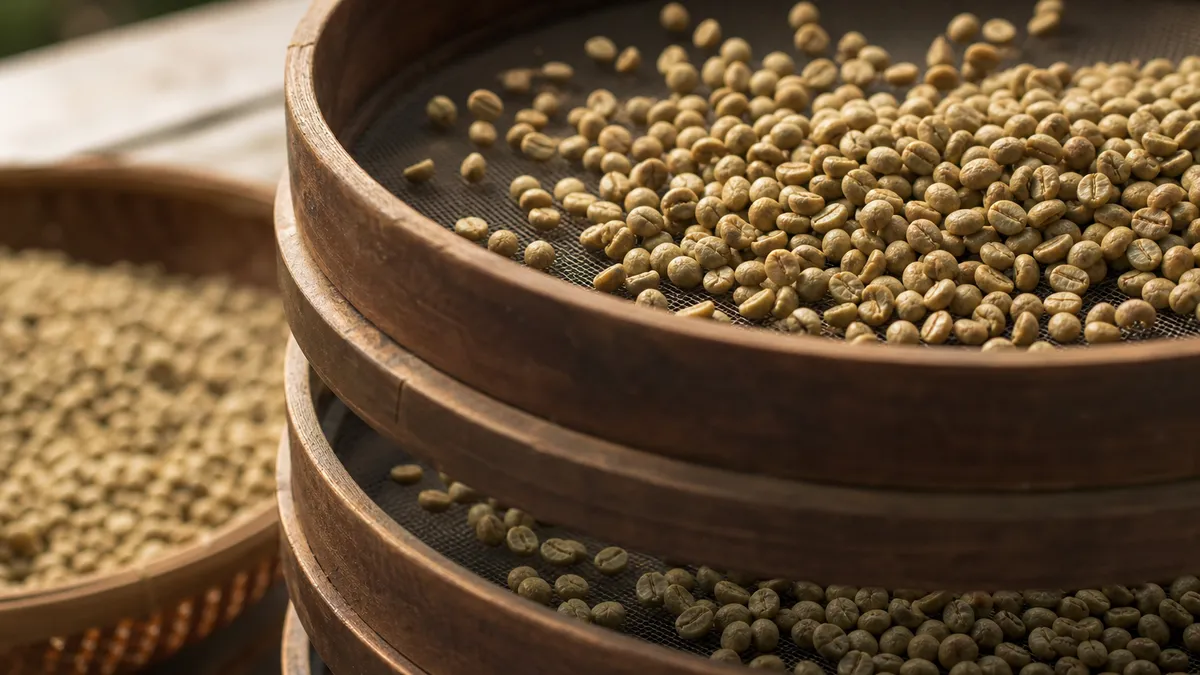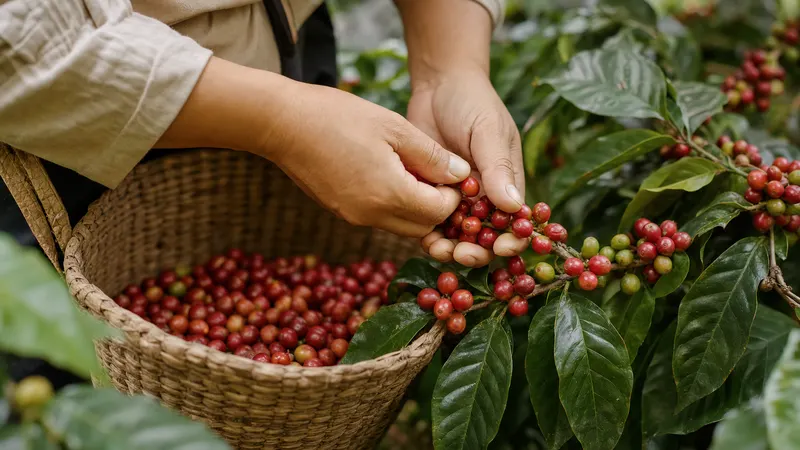
Coffee harvesting means collecting the fruit of the coffee plant, known as cherries, either selectively or by removing a larger mixture of fruit together. Sorting separates cherries and beans by useful characteristics, while grading describes the resulting green coffee against a particular set of rules.
In short
- Hand harvesting can mean selective picking or strip picking. “Hand-picked” alone does not tell you which.
- The coffee bean is a seed inside the cherry, protected by fruit tissue and a tough covering called parchment.
- Floating separates cherries by their behaviour in water, not directly by flavour.
- Sorting happens at several stages, including after drying and hulling.
- Screen size, physical defects and cup quality describe different things. Read them together rather than treating one as a complete quality verdict.
Guides in Coffee Harvesting
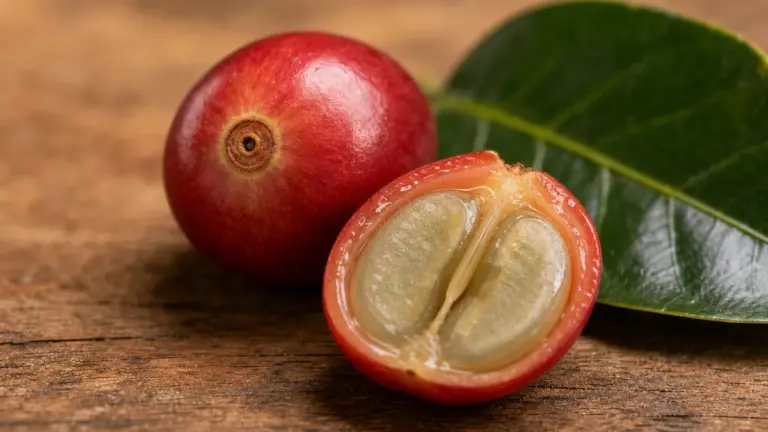 Coffee Cherry AnatomySee inside a coffee cherry: skin, pulp, mucilage, parchment, silver skin and seeds, plus how ripeness and processing influence coffee quality and flavour.Read the guide
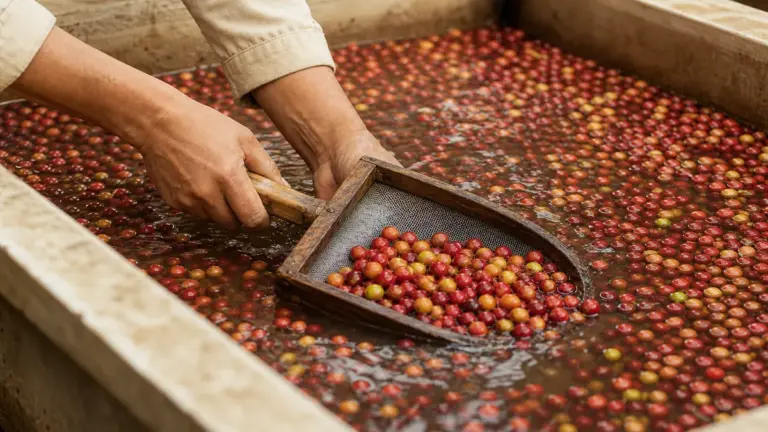 Coffee Cherry Sorting and FloatingLearn how hand sorting, flotation tanks and optical sorting separate coffee cherries, why floaters need inspection and what sorting means for cup quality.Read the guide
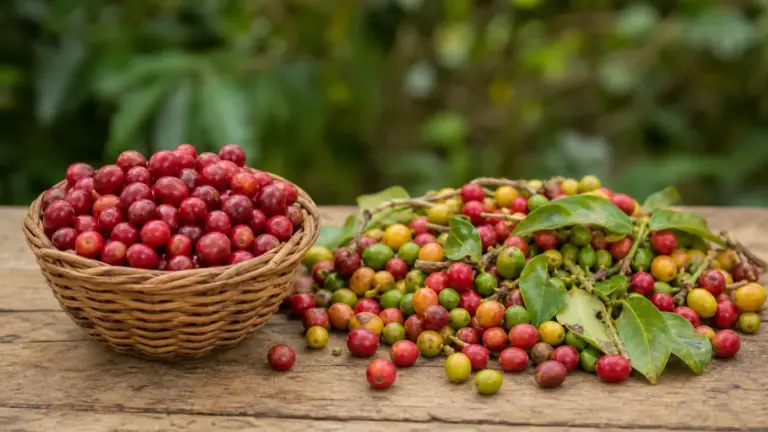 Coffee Harvesting Methods: Picking and Mechanical HarvestingCompare selective picking, stripping and mechanical coffee harvesting, including portable tools, terrain limits, labour needs and quality control.Read the guide
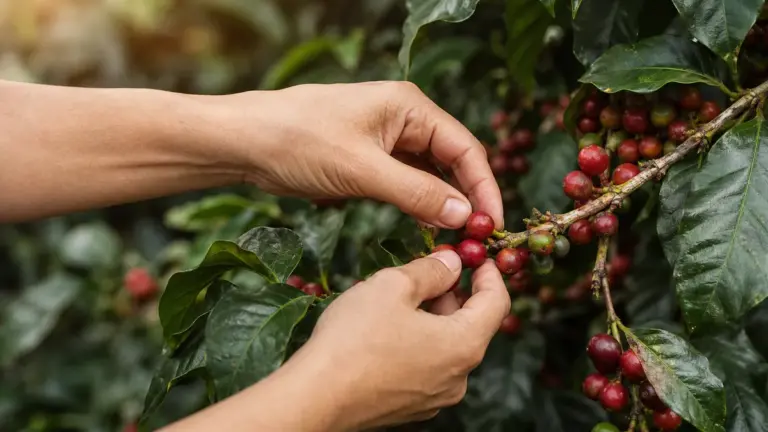 Coffee Harvesting: The Complete GuideHow coffee is harvested, from selective picking to machinery. Learn how ripeness, harvest seasons, workers and transport shape the crop before processing.Read the guide
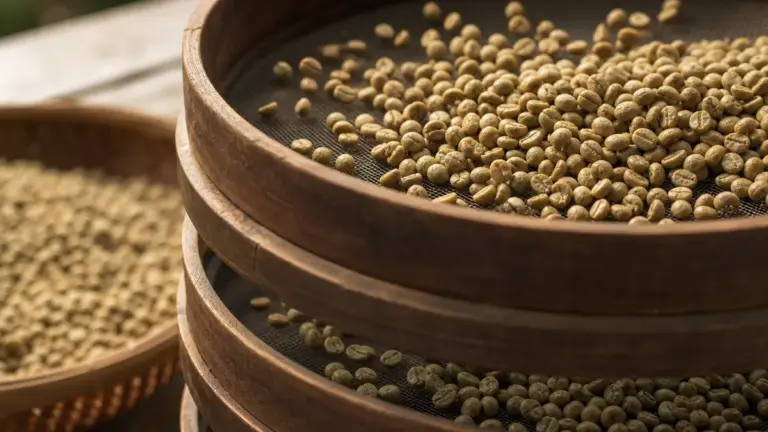 Green Coffee Grading, Screen Sizes and DefectsUnderstand green coffee grading, screen sizes, SCA defect counts, AA, Supremo and SHB, plus what moisture and water activity reveal about a coffee lot.Read the guide
Start here if you are new
Begin with coffee harvesting explained for the journey from a fruit-bearing branch to a harvested lot. Then read coffee cherry anatomy to understand what surrounds the seed, followed by picking and processing to connect harvesting decisions with what happens next.
This hub maps those subjects without replacing their detailed guides. For the wider context of the plant, its growing regions and the beans themselves, return to beans and origins.
A useful way to approach the subject is to keep three questions separate: what was collected, what was removed afterwards, and how was the finished coffee assessed? That distinction makes harvesting descriptions and green-coffee specifications much easier to interpret.
Coffee harvesting at a glance
The stages below overlap in practice. Sorting, in particular, is not a single inspection at the end: producers can separate material while receiving cherries, during processing and again when preparing dried beans.
| Area | Main question | What happens | Read next |
|---|---|---|---|
| Picking | Which fruit is collected? | Selective picking targets ripe cherries; stripping collects a broader mixture | harvesting methods |
| Cherry anatomy | What surrounds the bean? | Skin, pulp, mucilage and parchment are distinguished from the seed | inside the cherry |
| Picking and processing | What happens after collection? | Fruit enters a processing route, such as drying whole or being pulped first | from picking to processing |
| Cherry sorting | Which fruit should travel together? | Visual inspection and water separation help divide the harvest | sorting and floating |
| Green grading | How is the dried coffee described? | Samples are assessed for physical characteristics and defects, alongside separate tasting | grading and defects |
Use the table as a route into the subject, not as a universal production sequence. A natural coffee and a washed coffee do not pass through identical operations, and a small farm need not use the same equipment as a large mill.
Picking: choosing what leaves the branch
Selective picking
Selective picking means taking ripe cherries while leaving less mature fruit for a later visit. Harvesters return as the remaining cherries ripen, rather than clearing every branch at once.
The important word is selective, not simply manual. A person can also strip fruit from a branch by hand, so “hand-picked” is incomplete information about ripeness selection.
Ripe does not always mean red. Some coffee varieties bear yellow fruit when mature, so a harvesting description should be interpreted in relation to the plant being grown.
Strip picking and mechanical harvesting
Strip picking removes fruit together, potentially mixing green, ripe and dried cherries. Mechanical harvesters can use vibrating rods to detach fruit, while hand stripping achieves collection without a full harvesting machine.
The practical trade-off is between selection during collection and the separation required afterwards. Mechanised harvesting is particularly suited to large, relatively flat areas, but the resulting mixture still needs careful handling and sorting.
Avoid making the harvesting method stand in for the entire quality story. Ask how mature the collected fruit was, how it was separated and what happened during processing.
Coffee Harvesting: The Complete Guide is the place to compare these approaches in detail. Read it when you want to understand the difference between a picking technique, harvesting equipment and the condition of the fruit collected.
Cherry anatomy: understanding what is harvested
A coffee cherry is a fruit, not a bare bean waiting to be gathered. Understanding its layers explains why picking, pulping, drying and hulling are different operations.
Working from the outside towards the seed:
- Skin, also called the exocarp, is the outer covering.
- Pulp is the fleshy tissue beneath it.
- Mucilage is the sticky, pectin-rich material around the parchment. Botanical descriptions treat pulp and mucilage as parts of the mesocarp, although processing language often distinguishes them.
- Parchment, the endocarp, is the tough covering enclosing the seed.
- Silverskin is a thin layer closely associated with the seed.
- The seed contains the endosperm, which forms most of the familiar coffee bean, and the embryo.
This vocabulary is useful because “removing the fruit” can conceal several separate steps. Taking away skin and pulp does not necessarily remove the mucilage or parchment.
Read Coffee Cherry Anatomy when processing descriptions become difficult to picture. It is the best next step for understanding which material remains around a bean at a particular stage, rather than memorising names without a physical reference.
Where picking ends and processing begins
Harvesting collects the fruit. Processing then prepares its seeds for drying, storage and eventual roasting, although the boundary between receiving, sorting and processing is not always sharply drawn.
In natural processing, cherries dry with the fruit still surrounding the seeds. In washed processing, skin and pulp are removed before the parchment coffee is dried. Those routes therefore begin with the same harvested object but handle its outer layers differently.
Timely handling matters. Codex guidance warns against leaving harvested fruit in bags or heaps where heat and uncontrolled fermentation can develop; it also recommends sorting out unsuitable cherries before drying.
That does not mean all fermentation is a mistake. The useful distinction is between an intentional, managed processing step and deterioration during poorly controlled holding.
Picking and Processing connects the harvesting decision to those next operations. Read it if you understand how cherries are collected but want to know why the same crop might be handled differently after delivery.
For a producer or buyer, the useful question is not just “Was this picked carefully?” It is also “Was the receiving and processing system ready to handle what arrived?”
Cherry sorting: visual checks and floating
Sorting aims to divide a mixed harvest into more suitable groups and remove unwanted material. Visual inspection can identify differences in colour and condition, while cleaning removes material such as leaves, twigs and stones.
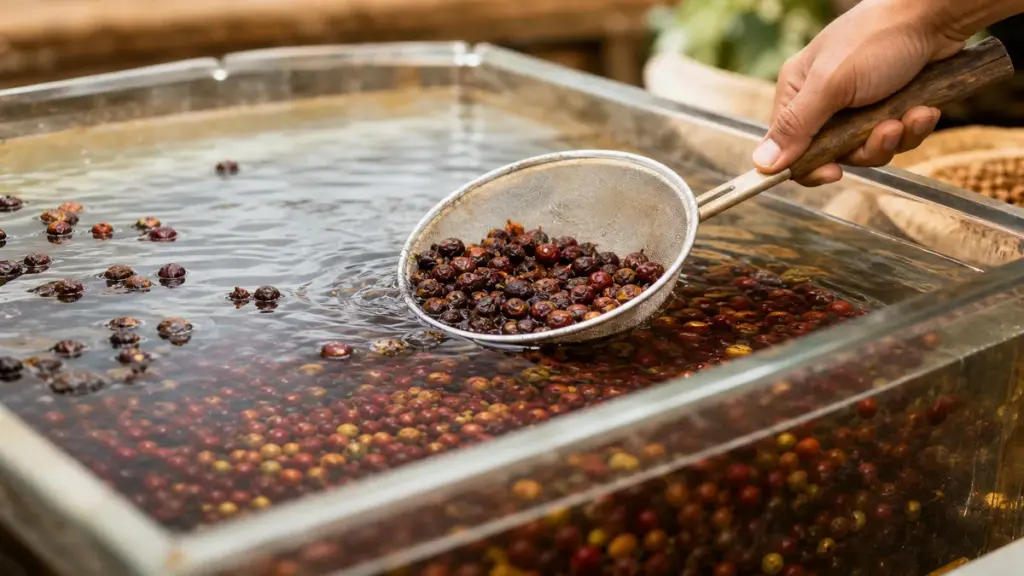
Floating adds another kind of separation. In water, some cherries float while others sink because their overall densities differ. Partially dried and overripe fruit can enter the floating fraction and be handled separately.
That makes floating useful, but not a complete ripeness test. A separation based on density cannot, by itself, tell the operator everything about maturity, damage or the flavour that will appear after roasting.
Treat “floated” as a description of an operation, not a complete quality claim. It is reasonable to ask what happened to each separated fraction and whether visual selection was also used.
Coffee Cherry Sorting and Floating explains this stage in greater detail. Choose it when you want to understand what a floating tank can separate, what still needs checking, and why sorting should be judged as a system rather than a single dramatic step.
For readers comparing coffee descriptions, a specific account of selection is more informative than “carefully sorted” on its own. Look for an explanation of what was separated and when.
Green coffee grading: size, defects and the cup
Once coffee has been dried and hulled, further sorting can separate green beans by size, density and colour. Hulling removes dried fruit coverings or parchment, depending on the processing route.
This is a different inspection from cherry sorting. The material is now exposed green coffee, so graders can examine characteristics that were not visible through the intact fruit.
Screen size describes dimensions
Size grading uses perforated screens: beans pass through or remain above openings of specified dimensions. A screen description therefore tells you about physical size, not the complete flavour quality of the coffee.
There is no single worldwide grading language. National systems and commercial specifications use different combinations of size, defects, preparation and cup assessment.
When reading a grade, first ask which system it belongs to. Then ask what that system actually measures.
Defects need a defined method
A defect count needs a sample size and counting rules. It is not enough to report “a few defects” without explaining the basis.
For example, the SCA’s 2018 Washed Arabica Coffee Grading Form uses a 350 g green-coffee sample. Its listed categories include full black, full sour, fungus damage and foreign matter, alongside categories such as immature, withered and broken beans.
The form also uses full-defect equivalents. One full black bean represents one full defect, whereas five broken, chipped or cut beans represent one full defect under that form. These are rules within a particular assessment method, not a universal counting system for every coffee.
Physical assessment does not replace tasting
The SCA’s Coffee Value Assessment distinguishes physical assessment from descriptive, affective and extrinsic assessment. In plain terms, examining beans, describing their sensory characteristics, judging their appeal and recording information about them are related but separate tasks.
Use Green Coffee Grading, Screen Sizes and Defects when you need to interpret a specification or understand a defect report. It is the detailed destination for the numbers and terminology that should not be squeezed into a harvesting overview.
For more advanced reading, check the edition as well as the organisation behind a rule. At this check, the SCA lists SCA-110, its proposed green-coffee trading standard, as under development rather than as a published standard.
Putting the information together
When assessing a harvesting description, follow the evidence through the chain:
- Identify the collection method. Was fruit selectively picked, stripped or mechanically harvested?
- Ask about selection. Was the harvest visually sorted, floated or separated in another way?
- Identify the processing route. Was fruit dried whole or pulped before drying?
- Read the finished specification. Which grading system and sample method were used?
- Keep tasting separate. What does the sensory assessment say, beyond the physical grade?
For a UK reader choosing roasted coffee, these questions are a way to interpret information, not a demand to obtain a laboratory report for every bag. Start with the distinction that matters most to you, then use the relevant guide to understand the terms.
The strongest coffee harvesting description explains a sequence of decisions. It does not ask “hand-picked”, “floated” or a large bean size to do all the explanatory work.
FAQ
Does coffee have one worldwide harvest season?
No, there is no single worldwide coffee harvest season. Timing varies between growing regions, and local conditions affect when fruit matures and is collected. When reading about a particular coffee, use information for that origin and crop rather than assuming that a harvesting month elsewhere applies to it.
Does floating cherries make a coffee washed?
No, floating is a sorting operation, not the definition of washed processing. Cherries intended for natural processing can also be sorted using water before drying. To identify the processing route, ask whether the fruit remained around the seeds during drying or whether skin and pulp were removed first.
Can sorting repair a damaged bean?
No, sorting separates material rather than repairing it. Removing unsuitable beans can improve the composition of the retained lot, but it does not reverse damage already present in an individual seed. This is why good harvesting and handling remain necessary even where a mill has extensive sorting equipment.
Where to go next
Read Coffee Harvesting: The Complete Guide for the full harvesting sequence, then Coffee Cherry Anatomy to picture the material being handled. Continue with Coffee Cherry Sorting and Floating for selection at reception, or Green Coffee Grading, Screen Sizes and Defects to interpret the finished green coffee.
Sources
- Royal Society of Chemistry, Introduction to Coffee Plant and Genetics, in Coffee: Production, Quality and Chemistry, 2019. Fruit anatomy and terminology. Chapter.
- Embrapa, Fase de Produção, undated, retrieved November 2026. Fruit maturation, selective picking, stripping and mechanical harvesting. Production guidance.
- Food and Agriculture Organization, coffee-processing technical report, 1.0 Introduction, undated. Cherry cleaning, natural and washed processing, flotation and hulling. Introduction.
- Food and Agriculture Organization, coffee-processing technical report, 5.0 Conclusions and Recommendations, undated. Hulling and green-bean sorting. Conclusions and recommendations.
- Codex Alimentarius Commission, FAO and WHO, Report of the Third Session of the Codex Committee on Contaminants in Foods, ALINORM 09/32/41, Appendix VI, 2009. Harvested-fruit handling and sorting recommendations. Committee report.
- International Trade Centre, The Coffee Guide, fourth edition, 2021, Chapter 5. Harvesting, processing, classification and screen grading. Fourth edition.
- Specialty Coffee Association, Washed Arabica Coffee Grading Form, 2018 version. Sample weight, defect categories and equivalents. Grading form.
- Specialty Coffee Association, Coffee Value Assessment, undated, retrieved November 2026. Physical, descriptive, affective and extrinsic assessment. Assessment framework.
- Specialty Coffee Association, Standards, undated, retrieved November 2026. Published standards and standards under development. Standards register.
This hub was researched from retrieved agricultural guidance, coffee-science references and SCA documents, with historical grading examples distinguished from the current standards register.
Last checked: November 2026