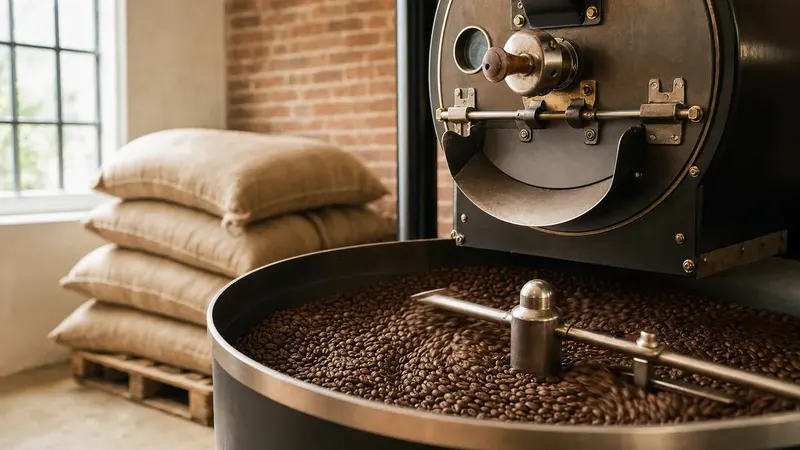
The coffee business connects farms, processors, traders, roasters and the places where we drink coffee, with risks and rewards shared unevenly along the way. Coffee can be produced and consumed more sustainably, but that requires evidence about farmer livelihoods, working conditions and environmental impacts, not simply a reassuring label.
In short
- Follow the supply chain: the business selling your coffee is not necessarily the business buying from its growers.
- Separate market prices from farmer income. A stronger market does not automatically mean a financially secure household.
- Check what each certification actually covers, rather than treating different labels as interchangeable.
- Look beyond packaging: cultivation, preparation, ingredients and waste all belong in the environmental picture.
- Use dated primary sources for changing rules, market developments and competition information.
Explore the topics
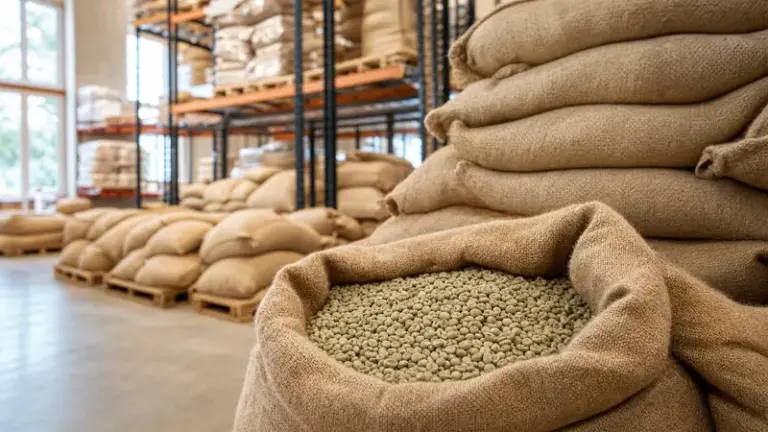
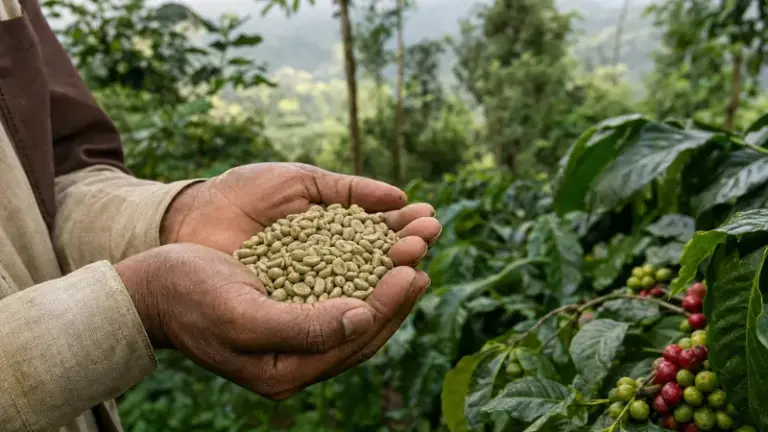
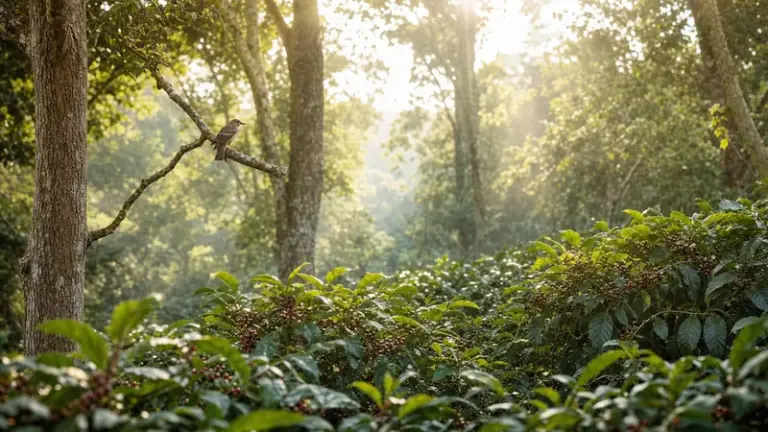

Start here if you are new
Read these three guides in order:
- how the coffee business works introduces the participants, trading relationships and market signals. Start here before trying to interpret a supplier’s sourcing story.
- understanding certification labels helps you turn a mark on a packet into questions about standards, verification and purchasing terms.
- coffee’s environmental impact explains how to assess the whole journey, rather than concentrating on whichever part is most visible.
You do not need to master commodity trading to buy coffee thoughtfully. A useful starting habit is to ask who produced it, what evidence supports the claims made about it, and which improvements the seller can demonstrate.
For a workplace, turn those questions into a short purchasing checklist. Ask for sourcing information, certification details where relevant, machine energy information and a realistic waste route. Keep the answers alongside the supplier’s written quotation, so that sustainability promises become something you can review rather than something you have to remember.
Explore Industry & Sustainability
These five hubs divide the subject by the question you want answered. The industry hub explains the business; certification and environment examine different kinds of evidence; events and news help you follow what is happening.
| Hub | Main question | When to use it |
|---|---|---|
| the coffee industry | How does coffee move from producer to customer? | Understanding trade, market movements, farmer income and the UK market |
| coffee certification | What does a label actually promise? | Comparing standards and checking sourcing claims |
| coffee and the environment | Where do impacts arise, and what can change? | Assessing farming, energy, ingredients, packaging and waste |
| events and festivals | Where can I learn, taste and meet the industry? | Planning visits and following competitions |
| industry news | What has changed, and why does it matter? | Following dated developments in trade, businesses, research and rules |
Choose the route that matches your task. If you are checking a coffee bag, start with certification; if you are writing a workplace purchasing policy, read industry and environment together. For a particular announcement or forthcoming event, use the relevant hub rather than treating this subject page as a live bulletin.
The global industry and the UK market
Coffee is both an agricultural product and a manufactured consumer product. Growing and processing happen in producing countries, while trading, roasting, manufacturing and retailing can take place across several countries. The International Coffee Organization’s work on global value chains shows why these stages must be considered together when examining who captures value and who bears risk.
The UK participates as an importer, roaster, manufacturer and consuming market. Its coffee supply includes green beans for domestic roasting, imported roasted coffee and soluble coffee, commonly called instant coffee. CBI’s UK market assessment identifies Brazil and Vietnam among its important green-coffee suppliers and describes a market spanning soluble coffee, independent roasters and out-of-home consumption.
That variety matters when reading market claims. Growth in coffee-shop activity does not describe every household or workplace, and a change in import volumes does not, by itself, explain how much coffee people drink. Ask which product, sales channel, geography and reporting period a statement covers before using it to support a decision.
How trading routes work
A simplified physical route is:
Grower → local collector or producer organisation → processor or mill → exporter → importer → roaster or manufacturer → customer.
Businesses can combine several of these roles, and routes vary. Coffee also travels internationally as roasted beans and soluble products, not only as green beans. The ICO’s trade data distinguishes these forms, an essential detail when comparing exporting and importing countries.
Shorter is not automatically better. Exporters and importers can provide logistics and expertise that individual growers and small roasters cannot readily supply themselves. The International Trade Centre notes that even direct-trade relationships may still involve these businesses.
Use the coffee industry guide when you need to examine these relationships more closely. It is the place to distinguish the physical movement of beans from the contracts, finance and ownership arrangements behind them.
Market prices and farmer income
Coffee market prices are signals, not a complete account of producer wellbeing. FAO explains that supply and demand shocks affect global markets, but their effects pass through supply chains incompletely and unevenly. A headline about a rising market therefore cannot establish what a particular farmer received.
ICE operates coffee futures markets used by the industry to price transactions and manage exposure to market movements. A futures contract is a standardised exchange-traded contract associated with a future delivery period; hedging means using financial positions to offset some commercial price risk. These mechanisms help explain market reporting, but they are not a promise of a particular household income.
For livelihoods, the more revealing questions concern what remains after production expenses, how much coffee a household can sell, and whether that income supports a decent standard of living. Fairtrade’s living-income methodology considers household needs, sustainable production, achievable yields and viable farm area. Its Living Income Reference Prices are a separate concept from its mandatory minimum-price mechanism.
When assessing a sourcing statement, ask:
- Does the evidence concern an individual farm, a producer organisation or an exporter?
- Does it describe a transaction, annual farm earnings or total household income?
- Are production expenses and unpaid household labour considered?
- Is the information specific to the coffee supplied?
- Does it show a sustained relationship or only one purchase?
These are evaluation questions, not a demand that every packet carry a financial report. Their purpose is to prevent a striking purchasing claim from standing in for evidence about livelihoods.
“Direct trade” also needs unpacking. The International Trade Centre states that the term has no single definition. Ask the seller to explain who contracts with whom, what services intermediaries provide and how its claimed benefits are verified.
Certification labels: useful tools with different jobs
Certification provides a defined framework against which a claim can be assessed. The useful question is not simply “Is it certified?” but “Certified to which standard, covering what, and checked by whom?”
The main schemes answer different questions:
- Fairtrade combines trading requirements, including a minimum-price mechanism and an additional Premium, with wider standards. Its voluntary living-income reference approach goes beyond those mandatory purchasing requirements. Do not read the mark alone as proof that every participating household earns a living income.
- Rainforest Alliance covers areas including forests, biodiversity, climate resilience, human rights and livelihoods. Its programme uses standards and independent audits; the seal should be interpreted through those requirements, not as a blanket promise that no problem can occur.
- Organic is a regulated production and labelling claim. GOV.UK explains that businesses producing or preparing food for sale as organic must be certified and comply with applicable rules. Organic status is not, by itself, evidence of a particular farmer-income outcome.
For UK readers, jurisdiction matters. Organic importing requirements distinguish Great Britain from Northern Ireland and depend on where products come from. An importer should check the applicable official guidance rather than assuming that one procedure covers every route.
Keep standards separate from evidence of results. A scheme’s own documents establish what it requires; a claim that it has improved incomes or restored habitats needs evidence about those outcomes.
Use the certification guide before choosing between labels or writing a sourcing requirement. The aim is an informed match between your priorities and a scheme’s actual scope, not a league table based on recognisable logos.
Environmental impact: follow the whole life cycle
Coffee’s environmental footprint extends from cultivation and land use through processing, transport, roasting, preparation and disposal. Life cycle assessment, usually shortened to LCA, models these connected stages to identify impacts and the activities contributing most to them.
A peer-reviewed study of coffee consumed in Finland identified cultivation as an important source of climate impact, with fertiliser use and land-use change influencing results. It also found that ingredients and preparation affected the finished drink’s footprint. These are findings from a particular study system, not universal measurements for every UK cup.
A separate brewing-method LCA illustrates another essential point: comparisons depend on what is included, how the equipment is used and how much coffee is prepared. A result for specified household brewing systems should not be transferred uncritically to a commercial office machine.
Read environmental comparisons carefully
Before accepting a “lower-impact” claim, ask:
- What is being compared? Green coffee, roasted coffee or a finished drink?
- What is the serving? Are drink volume, coffee dose and ingredients comparable?
- Where does the assessment stop? At the farm, factory, retailer or disposal stage?
- Which impact is measured? Climate change, water scarcity and biodiversity are not interchangeable.
- What assumptions drive the result? Look for equipment use, electricity, waste and collection arrangements.
These questions help you read evidence without needing to reproduce the model. They also stop a narrow improvement, such as different packaging, from becoming an unsupported claim about the whole product.
The UK Competition and Markets Authority’s Green Claims Code says environmental claims should be clear, accurate, supported by evidence and considered in their life-cycle context. A claim about one component must not mislead people about the product overall.
For practical next steps, use the environment hub to connect sourcing decisions with what happens where coffee is prepared. Ask your workplace supplier for relevant operating information, and check packaging and grounds arrangements with your actual waste collector.
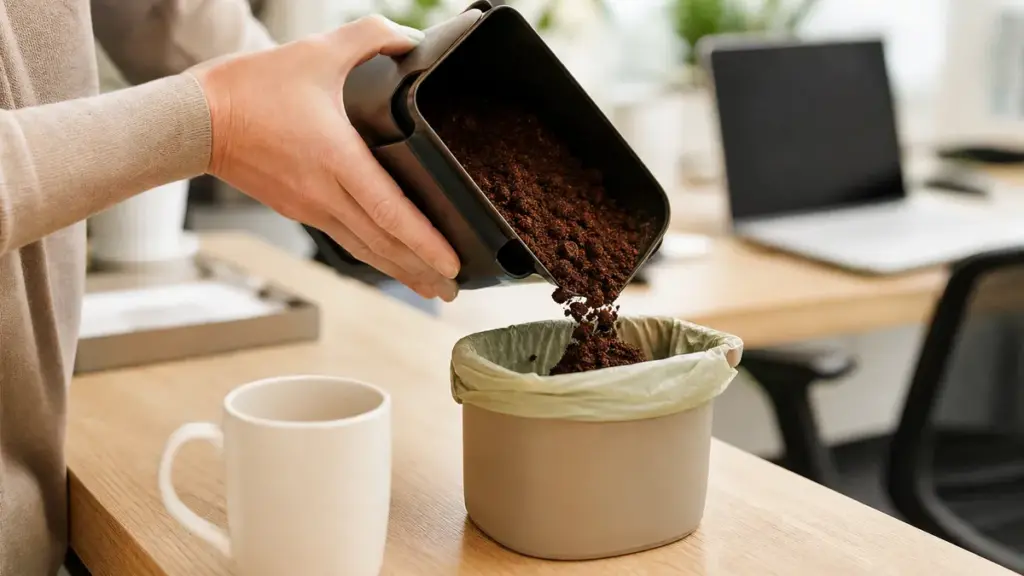
In England, workplace recycling rules include coffee grounds as food waste. The requirements took effect on 31 March 2025, with micro-firms employing fewer than 10 full-time-equivalent staff given until 31 March 2027. Packaging labelled compostable or biodegradable must not go into the food-waste stream under this guidance; a dedicated collection may be needed. Do not apply England’s rules automatically elsewhere in the UK.
Events, festivals and championships
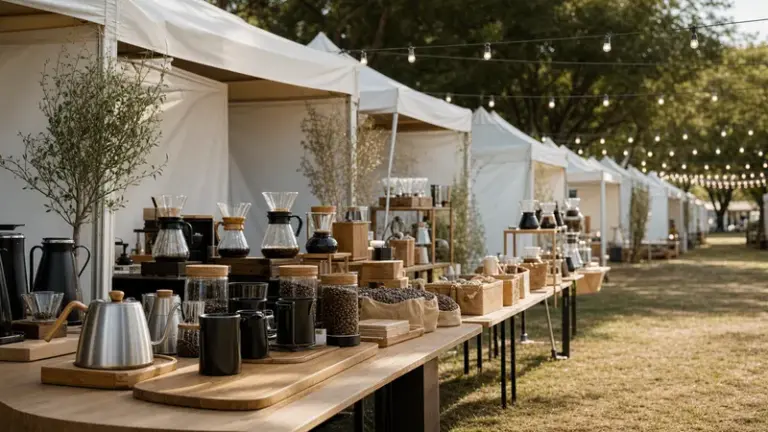
Use coffee events and festivals to find opportunities that match what you want to learn. Decide first whether you want to taste different coffees, investigate equipment, meet suppliers or watch skilled preparation. That makes an event programme much easier to judge.
Championships provide a different kind of learning opportunity. The World Coffee Championships includes disciplines such as barista performance, brewing, latte art, cup tasting and roasting. These are distinct competitions, so a result should be understood in the context of its particular discipline.
World-level participation is earned through qualifying national championships held by licensed competition bodies. Follow the organiser’s published information for the relevant event and season rather than assuming that an old programme or rulebook still applies.
Before arranging a visit, check the organiser’s dates, venue, admission conditions and programme. For workplace research, prepare the same questions for each exhibitor and request written supporting information afterwards. Treat a demonstration as a useful introduction, not a substitute for evidence about suitability in your own setting.
News, regulation and claims worth checking
Coffee industry news is the route for developments that need a date attached: market changes, business announcements, research, competition results and regulation. Use it alongside the explanatory hubs, which provide the background needed to judge why a development matters.
A useful reading discipline is to separate:
- Announcements: what an organisation says it plans to do.
- Implementation: what has actually changed.
- Results: what evidence shows happened afterwards.
For company sustainability reporting, ask whether a statement covers the whole business or selected products, whether it measures activity or outcomes, and whether its methods are disclosed. A target, a sourcing policy and a verified result answer different questions.
Regulation needs equally careful handling. The European Commission identifies coffee among commodities covered by the EU Deforestation Regulation. As checked in November 2026, its published application timetable gives 30 December 2026 for large and medium operators and 30 June 2027 for micro and small operators, subject to specified exceptions. These are EU-market requirements, not a general statement of UK domestic obligations.
Industry & Sustainability is most useful when you move between the routes: understand the business, examine a claim, then check the dated evidence behind it. Keep asking what changed, who benefits and how anyone knows.
FAQ
Does sustainable coffee necessarily taste better?
No, a sustainability claim does not establish that you will prefer the flavour. The certification frameworks discussed here address production practices, trading conditions and related requirements, rather than guaranteeing your sensory preference. Assess taste and sourcing evidence separately, then choose a coffee that meets both your drinking needs and your purchasing priorities.
Should an office refuse every uncertified coffee?
Not automatically; first decide what evidence your purchasing policy requires. Certification offers a defined standard and verification framework, while an alternative sourcing claim needs its own supporting evidence. If you consider an uncertified product, ask the supplier to document the relevant practices and outcomes rather than accepting a broad assurance that it is responsibly sourced.
Can a recyclable packet make the whole coffee sustainable?
No, a packaging claim describes only part of the product’s environmental story. Cultivation, processing, preparation and disposal still need consideration. Check what the packaging claim means and whether the relevant collection route exists, but do not use it as proof of the coffee’s overall environmental performance or its social credentials.
Where to go next
Read Coffee Industry to understand the businesses and trading relationships behind your supply, then Coffee Certification to assess labels against your priorities. Coffee and the Environment helps turn environmental evidence into practical questions, while Coffee Industry News follows the developments that can change those decisions.
Sources
-
International Coffee Organization, Coffee Development Report 2020: The Value of Coffee, Sustainability, Inclusiveness, and Resilience of the Coffee Global Value Chain, 2020.
https://www.ico.org/wp-content/uploads/2022/11/CDR2020.pdf -
International Coffee Organization, Coffee Trade Globe, live trade-data resource, 2026.
https://data.ico.org/globe/ -
International Trade Centre, The Coffee Guide, fourth edition, 2021, particularly the discussion of direct trade.
https://www.intracen.org/media/5718 -
CBI, Ministry of Foreign Affairs of the Netherlands, The United Kingdom’s market potential for coffee, updated 26 August 2026.
https://www.cbi.eu/market-information/coffee/united-kingdom/market-potential -
Food and Agriculture Organization of the United Nations, Coffee, including Global coffee market and recent price developments, 2025.
https://www.fao.org/markets-and-trade/commodities-overview/beverages/coffee/en -
Intercontinental Exchange, Coffee, live market overview, retrieved 2026; and Coffee “C”, market education brochure, retrieved 2026.
https://www.ice.com/agriculture/coffee
https://www.theice.com/publicdocs/ICE_Coffee_Brochure.pdf -
Fairtrade International, Fairtrade International secures a stronger safety net for coffee farmers, 2026; and Living Income Reference Prices, live methodology resource, retrieved 2026.
https://www.fairtrade.net/uk-en/get-involved/resources/media-centre/fairtrade-international-secures-a-stronger-safety-net-for-coffee.html
https://www.fairtrade.net/en/why-fairtrade/why-we-do-it/decent-livelihoods/living-income/living-income-reference-prices.html -
Rainforest Alliance, What Does Rainforest Alliance Certified Mean?, updated 8 September 2025.
https://www.rainforest-alliance.org/sas/ -
GOV.UK, Food labelling and packaging: Organic food, current guidance retrieved 2026; DEFRA, Importing organic food, feed and seed to the UK, updated 4 September 2026.
https://www.gov.uk/food-labelling-and-packaging/organic-food
https://www.gov.uk/guidance/importing-organic-food-to-the-uk -
Usva, K. and colleagues, Carbon and water footprint of coffee consumed in Finland: life cycle assessment, The International Journal of Life Cycle Assessment, volume 25, 2020.
https://link.springer.com/article/10.1007/s11367-020-01799-5 -
Cibelli, M., Cimini, A. and Moresi, M., Carbon Footprint of Different Coffee Brewing Methods, Chemical Engineering Transactions, volume 87, 2021.
https://www.cetjournal.it/index.php/cet/article/view/CET2187063 -
Competition and Markets Authority, The Green Claims Code checklist, 2021, current guidance retrieved 2026.
https://www.gov.uk/government/publications/green-claims-code-making-environmental-claims/green-claims-and-your-business -
DEFRA, Simpler recycling: workplace recycling in England, updated 3 October 2025.
https://www.gov.uk/guidance/simpler-recycling-workplace-recycling-in-england -
World Coffee Championships, World Coffee Championships and Get Involved, current organiser information retrieved 2026.
https://wcc.coffee/
https://wcc.coffee/get-involved -
European Commission, Regulation on Deforestation-free Products, current implementation guidance retrieved 2026.
https://environment.ec.europa.eu/topics/forests/deforestation/regulation-deforestation-free-products_en
Researched using retrieved intergovernmental publications, official market and certification resources, UK and EU guidance, organiser information and peer-reviewed life cycle research; no first-hand testing was undertaken.
Last checked: November 2026