The coffee industry connects growers, processors, traders, roasters, equipment makers and the businesses that serve the finished drink. Understanding how it works means following both the beans and the commercial relationships: who handles the coffee, who carries the risk and what reaches the producer.
In short
- Start with the supply chain, then explore the businesses and trading arrangements within it.
- A futures benchmark, an export transaction and a farmer’s payment describe different stages of the market.
- Specialty coffee is not simply another name for coffee from a small company.
- Direct trade can still involve exporters and importers, so ask what the relationship actually includes.
- For a new UK coffee business, investigate customers, premises, food safety and supply arrangements together.
Guides in Coffee Industry
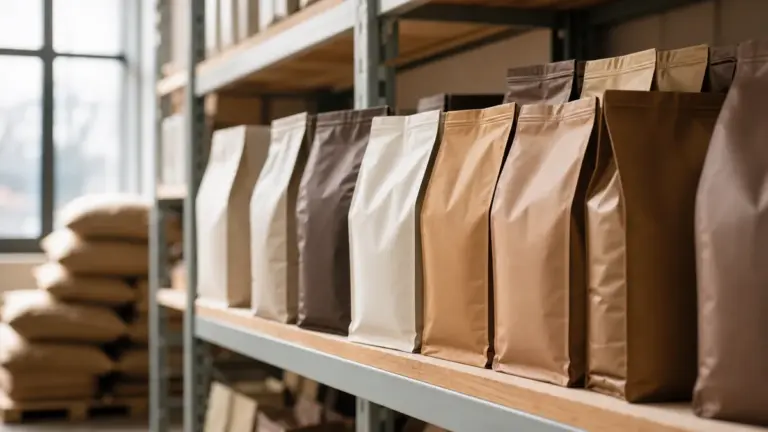 Coffee Industry GiantsMeet Nestlé, Starbucks and JDE Peet's: their brands, sourcing programmes, market influence and the ownership changes reshaping coffee in 2026 worldwide.Read the guide
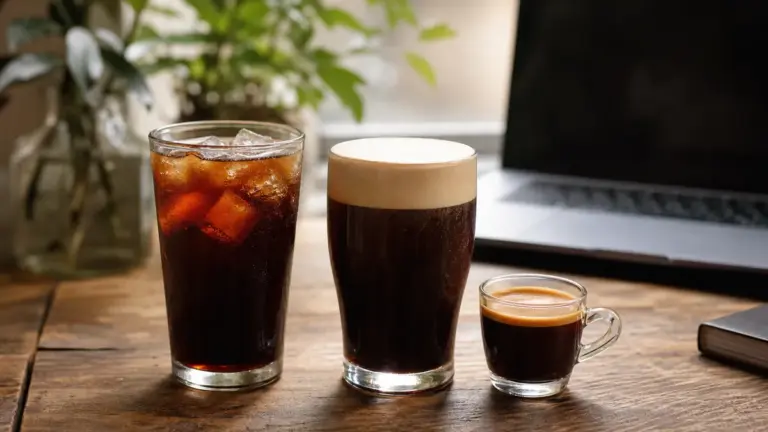 Coffee Market TrendsExplore coffee market trends with dated evidence on specialty coffee, cold brew, nitro, ready-to-drink formats, home habits and sustainability claims.Read the guide
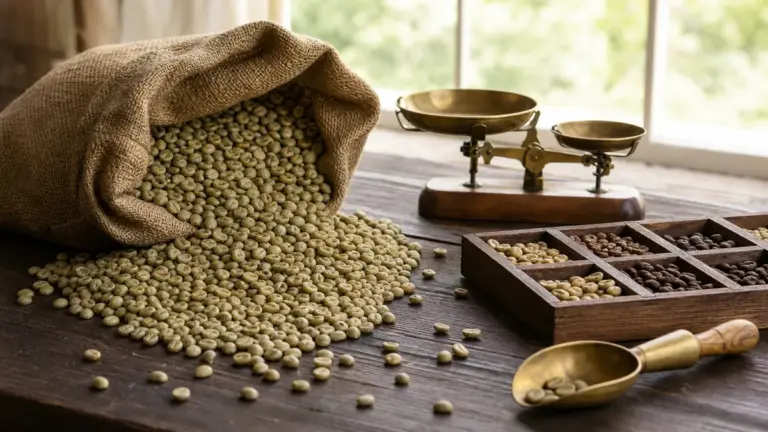 Coffee Prices: The C-Market and FuturesUnderstand coffee futures, physical differentials and hedging, with dated market movements and a clear explanation of what reaches farmers and shoppers.Read the guide
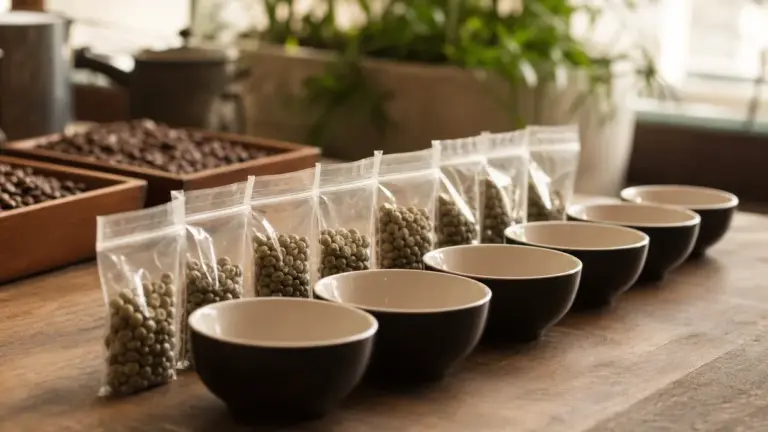 Direct Trade and Coffee AuctionsUnderstand direct trade, relationship coffee and online auctions, including Cup of Excellence, record lots and what payment transparency really proves.Read the guide
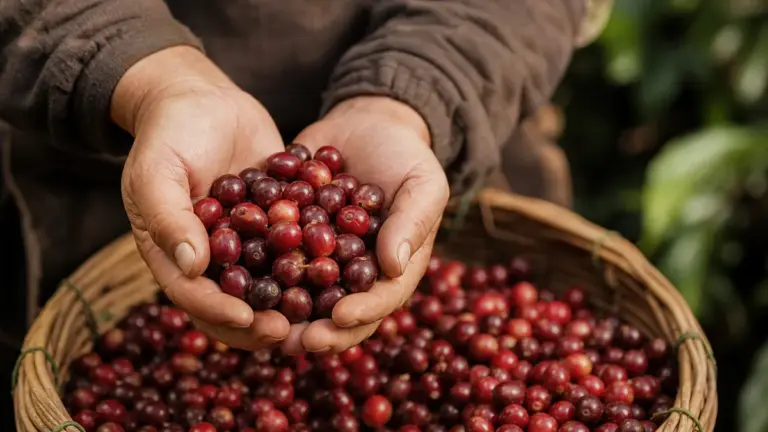 Farmgate Prices and Farmer IncomeUnderstand coffee farmers’ earnings: farmgate versus export payments, production expenses, living income benchmarks and what premiums really deliver.Read the guide
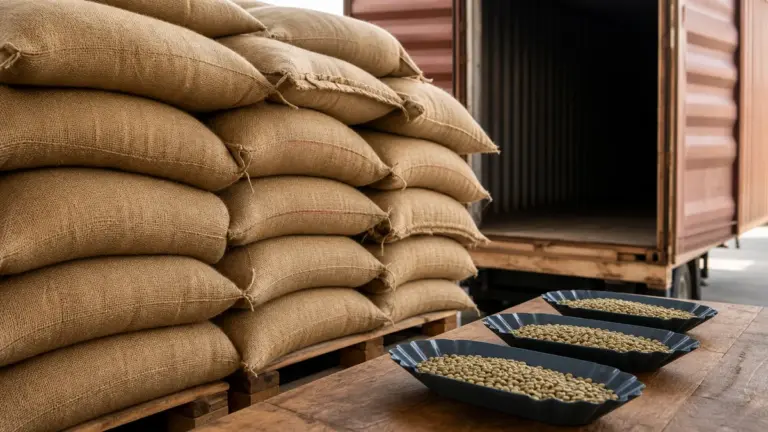 Green Coffee Trading, Importers and ExportersFollow green coffee from exporter to UK roaster, with clear explanations of contracts, shipping terms, samples, financing and import responsibilities.Read the guide
 Key Players in the Coffee IndustryMeet coffee’s growers, co-operatives, traders, roasters and retailers, and learn how ownership, purchasing scale and institutions shape industry power.Read the guide
 Specialty Coffee Roasters: Blue Bottle and StumptownHow Blue Bottle and Stumptown shaped specialty coffee, what their acquisitions changed, and the UK roasters offering useful parallels to their approaches.Read the guide
 Starting a Coffee Shop or RoasteryPlan a UK coffee shop or roastery with practical checks for premises, registration, food safety, equipment, staffing, roasting emissions and finance.Read the guide
 The Global Coffee IndustryFollow coffee from farm to retail, with dated ICO production and consumption figures, clear value-chain roles and evidence on who receives the value.Read the guide
 The UK Coffee IndustryUnderstand the UK coffee industry through dated consumption figures, chains, independents, instant coffee, workplace provision and employment data.Read the guide
Start here if you are new
Read these three guides in order:
- the global supply chain gives you the overall route from producing countries to consuming markets. Start here before trying to interpret company announcements or market headlines.
- the main industry roles helps you distinguish a producer organisation from an exporter, importer, roaster or retailer. Use it when the same company appears to perform several jobs.
- coffee market benchmarks explains the market language used in sourcing discussions. Read it before comparing a trading quotation with a farmer’s payment.
This hub concentrates on how coffee businesses and trade fit together. The wider industry and sustainability guide is the next step when your question concerns the relationship between commercial activity, people and the environment.
The coffee industry at a glance
The following map compares functions rather than company size. One organisation may occupy several rows, and a particular shipment may follow a shorter or longer route.
| Area | Main participants | What happens here | Useful question |
|---|---|---|---|
| Growing and primary processing | Farmers, estates, cooperatives, mills | Cherries are harvested and processed into coffee suitable for further preparation and trade | Who produced it, and in what form was it sold? |
| Export and import | Exporters, traders, importers, warehouses | Coffee is assembled, contracted, transported and stored | Who owns the stock and carries delivery risk? |
| Roasting and manufacturing | Roasters, soluble-coffee manufacturers, packers | Green coffee becomes roasted beans, ground coffee or other products | Who controls the specification and consistency? |
| Distribution and service | Wholesalers, retailers, cafés, caterers, workplace suppliers | Products reach households and businesses | What support accompanies the supply? |
| Supporting services | Equipment makers, technicians, laboratories, certifiers, trainers | Businesses obtain machinery, maintenance, assessment and specialist knowledge | What is independently checked, and what is a supplier claim? |
The distinction matters because a familiar name on a bag may be a brand rather than the grower, importer or roasting business. Following the functions gives a clearer picture than following packaging alone.
Global coffee: production, trade and influence
Coffee is an agricultural product and an internationally traded manufactured product. Green coffee, meaning unroasted beans, can cross borders before roasting, while roasted and soluble coffee also move through international supply chains. Producing countries have their own consumption and manufacturing businesses too, so “growers there, drinkers here” is an incomplete picture.
Brazil and Vietnam are the largest producing countries in the USDA’s published 2025/26 production estimates. Their importance helps explain why developments in those origins receive substantial market attention, but an industry overview should not reduce every origin to its contribution to world volume.
For a reader, the useful distinction is between production, exports and consumption. These measure different activities. A country can produce coffee, consume some domestically, import other coffee and export processed products.
Use the global industry guide when you want to understand those flows and the distribution of activity along the chain. It is also the right starting point for interpreting statistics: check the reporting period, product form and measurement basis before comparing two figures.
Who does what: key players, giants and specialty roasters
The businesses between farm and cup
A cooperative can organise services and collective selling for its members. An exporter prepares and dispatches coffee from origin, while an importer can arrange purchasing, logistics, storage and supply to roasters. These functions sometimes overlap.
Avoid assuming that every intermediary is unnecessary. Instead, ask which work each participant performs, whether its responsibilities are clear and how the arrangement affects the producer and buyer.
The key players guide is useful when you need to untangle those responsibilities. Read it before assessing a supplier that describes itself as “farm connected”, “vertically integrated” or “producer focused”.
Coffee industry giants
Large coffee businesses are not all the same kind of business. A manufacturer selling packaged coffee, a café operator and a company supplying workplace drinks may reach consumers through different routes.
Company reports illustrate the distinction. Nestlé’s Annual Review 2025 discusses Nescafé and Nespresso across different coffee formats and drinking occasions. JDE Peet’s Annual Report 2025 presents a portfolio including Peet’s, L’OR and Jacobs. These reports describe the reporting businesses and periods, not an independent verdict on product quality or producer outcomes.
Read the major coffee companies when you want to understand business models and brand portfolios. Check the date of any ownership information, and separate a completed transaction from an announced intention.
Specialty coffee roasters
The Specialty Coffee Association’s definition centres on distinctive attributes and the additional value associated with them. It considers sensory characteristics alongside information such as origin, producer and processing, rather than defining specialty solely through company size.
For buyers, that suggests a better set of questions than “Is it a small roaster?” Ask how the coffee is selected, how its attributes are assessed and what sourcing information is available.
Explore specialty roasting businesses when you want to compare their approaches. Keep independence, roasting style, sensory quality and sourcing transparency as separate considerations rather than treating any one as proof of the others.
Coffee prices, futures and farmer income
A benchmark is not the whole transaction
ICE describes Coffee C as a benchmark for arabica coffee. Its coffee markets also include robusta futures, and the industry uses futures and options to help manage market exposure.
A futures contract is an exchange-traded agreement with specified terms. It is not the same thing as ordering a particular shipment from an importer. Physical coffee transactions also need agreement on the coffee itself, delivery and other commercial conditions.
Use the C-market and futures guide for those mechanisms, including hedging, which means using a financial position to help offset exposure elsewhere. This hub is a map of the subject, not guidance on taking a trading position.
Farmgate, export terms and income
Farmgate describes the producer’s sale at the farm level. FOB, short for Free on Board, is a shipping term used in export contracts. A published FOB figure is not automatically the amount received by an individual farmer: processing, producer-organisation activity, transport and export handling may stand between the two.
Farmer income is a further question. What a household retains depends on production expenses, saleable output and other household income, not just the headline transaction.
Read farmgate payments and farmer income when assessing sourcing claims. Before comparing disclosures, ask whether they concern cherries, parchment coffee or green beans, which season they cover and whether the reported payment is gross or net of deductions.
For workplace procurement, request an itemised written quotation. Compare beans, delivery, equipment, installation, filtration, servicing, consumables and contract conditions separately; then apply your own expected usage. Keep the VAT basis consistent across the comparison.
Green coffee trading, direct trade and auctions
Buying physical coffee
A physical coffee contract needs more than an appealing origin description. The parties must establish what is being supplied, how it will be assessed, when it will move and what happens if the agreed terms are not met.
Before discussing a purchase, prepare questions about samples, lot identity, shipment timing, storage, traceability and responsibilities. This makes it easier to compare offers without confusing an available warehouse lot with coffee that has not yet shipped.
The guide to importers, exporters and green coffee trading is the useful next read for understanding those arrangements.
What direct trade does and does not establish
The International Trade Centre notes that “direct trade” has no single definition. A roaster can maintain a direct producer relationship while still using export and import specialists to move the coffee.
Treat the phrase as an invitation to ask for detail. Who negotiates with whom? Who receives payment? Is the relationship repeated across harvests? What evidence supports the description?
Auctions are a different mechanism. Cup of Excellence, for example, connects selected competition coffees with buyers through auctions managed by the Alliance for Coffee Excellence. Assess the particular lot and auction terms rather than treating its result as representative of ordinary trade.
Read direct trade and coffee auctions when comparing relationship-based sourcing with competitive bidding. Neither label removes the need to understand the underlying transaction.
Trends, certification and changing expectations
A useful trend report distinguishes consumer behaviour from supplier promotion. Nestlé’s 2025 review identifies cold coffee and ready-to-drink products as areas of commercial focus, but one company’s account should not be mistaken for a complete independent description of demand.
For coffee market trends, look for the reporting period, geography, sales channel and whether the evidence measures volume or value. A trend in café drinks does not automatically describe supermarket coffee or workplace consumption.
Certification requires similar care. Fairtrade has minimum-price and premium mechanisms, while Rainforest Alliance states that its certification does not guarantee a minimum price. Organic claims concern regulated production and certification requirements. These are different systems, not interchangeable versions of one promise.
Environmental comparisons also need context. Peer-reviewed reviews of coffee life cycle assessments find substantial variation between systems and study methods. Ask what stages and assumptions a claim includes before comparing products described as environmentally preferable.
Traceability is also a regulatory issue. Coffee falls within the EU Deforestation Regulation’s scope. As checked in November 2026, the European Commission gives application dates of 30 December 2026 for large and medium operators, and 30 June 2027 for most micro and small operators. These are EU requirements, not a blanket statement of Great Britain’s domestic rules.
The UK industry and starting a coffee business
Understanding the UK market
For a UK reader, “the coffee industry” should not mean cafés alone. Consider packaged coffee, roasting, importing, wholesale supply, hospitality and workplace provision when deciding which market you want to understand.
The British Coffee Association describes itself as the representative organisation for the UK coffee industry. Its material is useful for the industry’s perspective, but distinguish trade-body advocacy from independently established findings.
Read the UK coffee industry for the national context. For a workplace decision, begin with your required service: drink consistency, peak demand, replenishment, cleaning, maintenance and recovery after a breakdown.
Starting a shop or roastery
Start with the customer and operating model, not the machine catalogue. A shop needs a credible service proposition; a roastery needs a credible route to repeat orders. Test your assumptions about demand, staffing, production and delivery before committing to premises or equipment.
Use this preparation sequence:
- Define the customer and offer. Specify what you will supply and why that customer would return.
- Check the premises. Discuss the proposed use and equipment with the local authority and relevant specialists.
- Plan food safety and traceability. Establish procedures, records, cleaning and allergen controls appropriate to the operation.
- Map supply and support. Obtain written details of specifications, lead times, maintenance and contingency arrangements.
- Build your own operating model. Include ingredients, packaging, labour, utilities, premises, equipment, servicing, waste and administration, using itemised written quotations.
Food businesses in England, Wales and Northern Ireland must register with their local authority at least 28 days before trading. Scottish applicants should use Food Standards Scotland and their local authority for the applicable process. Registration does not replace food safety procedures or other relevant permissions.
The guide to starting a coffee shop or roastery develops that preparation. Use it before making commitments, with local professional advice where the premises or operation require it.
FAQ
Does direct trade mean there are no middlemen?
No. The International Trade Centre explains that direct trade can still require exporters and importers, particularly where producers and roasters need specialist logistics and trading support. The useful question is what the direct relationship changes: communication, negotiation, continuity or accountability. Ask the seller to describe those arrangements rather than relying on the label.
Is specialty coffee always independently owned?
No. The Specialty Coffee Association’s definition concerns distinctive attributes and their value, not ownership structure. Assess ownership, product quality and sourcing practice separately. An independent business still needs evidence for its claims, while a larger business’s coffee should be assessed on the relevant product and its documented attributes.
How can I judge a sourcing transparency report?
Begin by identifying what its figures describe. Check the harvest, coffee form, transaction stage, recipient and any deductions or additional services. A payment reported at export level cannot be treated automatically as a farmer’s receipt. Use the report to ask more precise questions, rather than assuming that publication alone establishes a satisfactory outcome.
Where to go next
Read The Global Coffee Industry for the overall structure, then Key Players to identify the organisations within it. Choose Farmgate Prices and Farmer Income to investigate producer outcomes, or Starting a Coffee Shop or Roastery to turn your understanding of the coffee industry into a practical business plan.
Sources
-
International Coffee Organization, Coffee Development Report 2020: The Value of Coffee, 2020. Global value chains, processing, trade and the limitations of a simple producing-country versus consuming-country model.
https://www.ico.org/wp-content/uploads/2022/11/CDR2020.pdf -
International Trade Centre, The Coffee Guide, fourth edition, 2021. Industry roles, physical trading, contracts, direct trade and transaction stages.
https://www.intracen.org/media/5718 -
USDA Foreign Agricultural Service, Production: Coffee, 2025/26 dataset, retrieved November 2026. Producing-country rankings.
https://fas.usda.gov/data/production/commodity/0711100 -
ICE, Coffee and Coffee C Futures, live specifications, retrieved November 2026. Benchmark markets and their use in managing exposure.
https://www.ice.com/agriculture/coffee
https://www.ice.com/products/15/coffee-C-Futures -
Nestlé, Annual Review 2025, published 2026. Company-reported brand portfolio, formats and commercial priorities.
https://www.nestle.com/sites/default/files/2026-02/annual-review-2025-en.pdf -
JDE Peet’s, Annual Report 2025, published 2026. Portfolio information for the reporting period.
https://www.jdepeets.com/siteassets/home/investors/annual-reports/jde-peets-annual-report-2025.pdf -
Specialty Coffee Association, What Is Specialty Coffee?, undated, retrieved November 2026. Attribute-based definition of specialty coffee.
https://sca.coffee/what-is-specialty-coffee -
Fairtrade International, Living Income Reference Prices: FAQ, undated, and Fairtrade Strengthens Safety Net for Coffee Farmers, 2026. Farmgate versus export-level payments, income considerations and Fairtrade mechanisms.
https://reference-prices.fairtrade.net/faq
https://www.fairtrade.net/us-en/for-media/Fairtrade-strengthens-safety-net-for-coffee-farmers.html -
Cup of Excellence, About Our Auctions, undated, retrieved November 2026. Auction arrangements and the Alliance for Coffee Excellence’s role.
https://cupofexcellence.org/about-auctions/ -
Rainforest Alliance, Is There a Guaranteed Minimum Price for Certified Crops?, live guidance, retrieved November 2026. Certification does not guarantee a minimum price.
https://www.rainforest-alliance.org/business/certification/does-rainforest-alliance-certified-guarantee-minimum-price/ -
GOV.UK, Organic Food: Labelling and Advertising Rules, live guidance, retrieved November 2026. Certification requirements for organic claims.
https://www.gov.uk/guidance/organic-food-labelling-rules -
European Commission, Regulation on Deforestation-free Products, live guidance, retrieved November 2026. Coffee’s inclusion and application timetable.
https://environment.ec.europa.eu/topics/forests/deforestation/regulation-deforestation-free-products_en -
British Coffee Association, organisational homepage, undated, retrieved November 2026. The association’s stated representative role.
https://britishcoffeeassociation.org/ -
GOV.UK, Food Business Registration and Starting a Food Business, live guidance, retrieved November 2026. Registration, food safety management, allergens and premises preparation.
https://www.gov.uk/guidance/food-business-registration
https://www.gov.uk/guidance/starting-a-food-business -
Sustainable Production and Consumption, Unravelling Life Cycle Impacts of Coffee: Why Do Results Differ So Much Among Studies?, 2024. Peer-reviewed review of variation in coffee life cycle assessments.
https://www.sciencedirect.com/science/article/pii/S2352550924001027
This hub was researched using intergovernmental trade publications, official exchange and regulatory guidance, certification organisations, company reports and a peer-reviewed environmental review; no first-hand testing was undertaken.
Last checked: November 2026