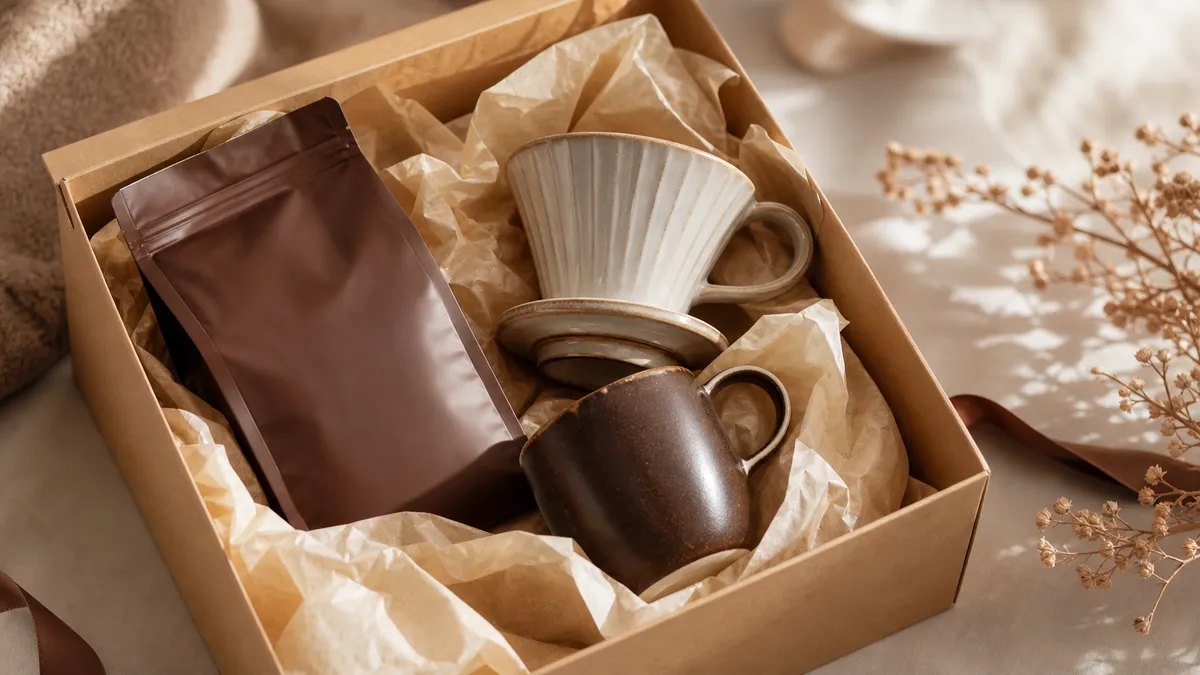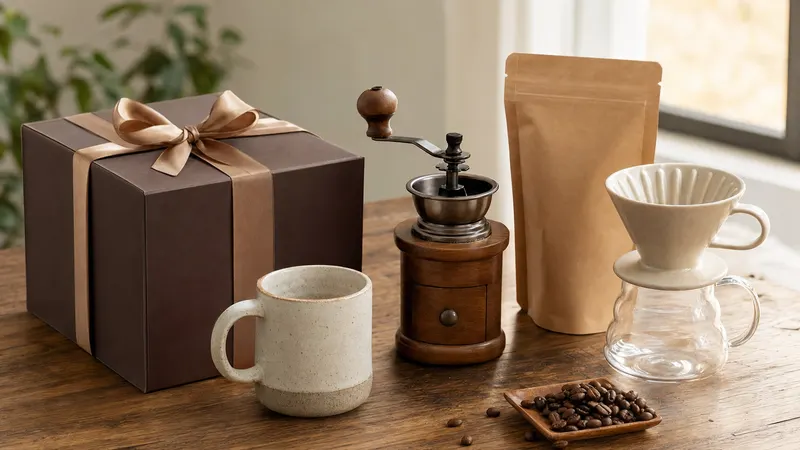
Coffee merchandise and gifts include clothing, accessories, mugs, artwork, home décor and sets built around coffee or brewing. The most useful starting point is the recipient: choose something they will wear, display, drink from or enjoy using, then check the practical details before the design wins you over.
In short
- Start with the person’s habits and taste, rather than assuming every coffee enthusiast wants brewing equipment.
- For clothing, check garment measurements, fabric composition and care instructions.
- For mugs, check capacity, handle comfort and the maker’s instructions for washing and heating.
- For posters and décor, establish where the item will go and whether framing or mounting is included.
- For gift sets, inspect every component: coffee format, equipment compatibility, food information and anything the recipient must already own.
Guides in Coffee Merchandise and Gifts
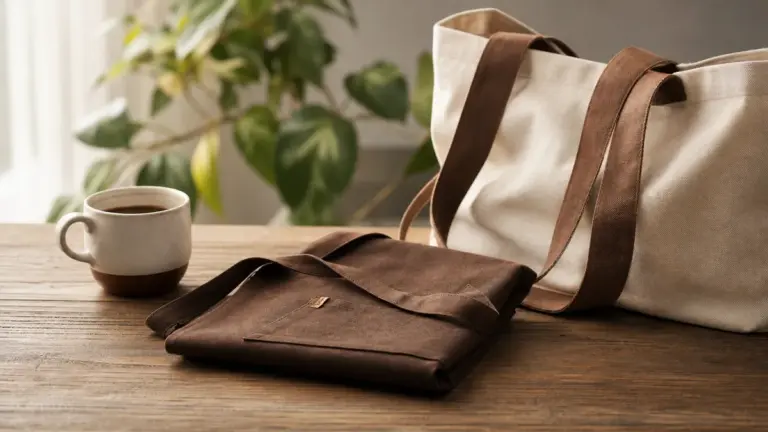 Coffee Apparel and AccessoriesExplore coffee apparel and accessories, from caps and totes to aprons, with practical checks on materials, ethical claims, quality and where to buy.Read the guide
 Coffee Art and Home DécorPlan a home coffee corner with art, displayed equipment and well-chosen materials, plus practical checks for shelves, surfaces and everyday use.Read the guide
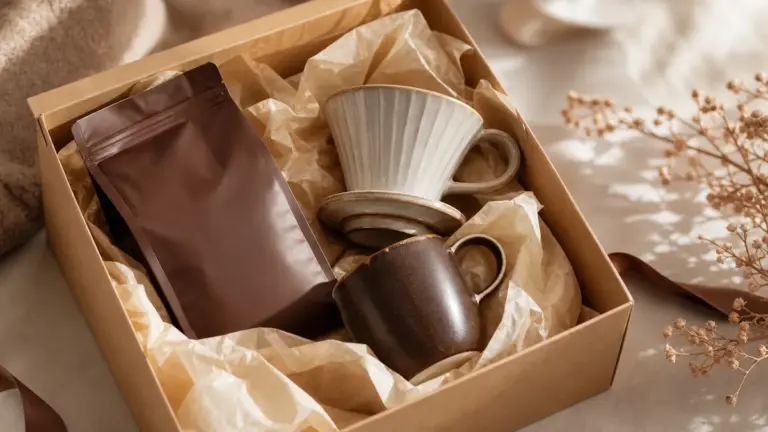 Coffee Gift SetsChoose coffee gift sets that suit the recipient’s brewer, taste and experience, with practical advice on contents, packaging and personal touches.Read the guide
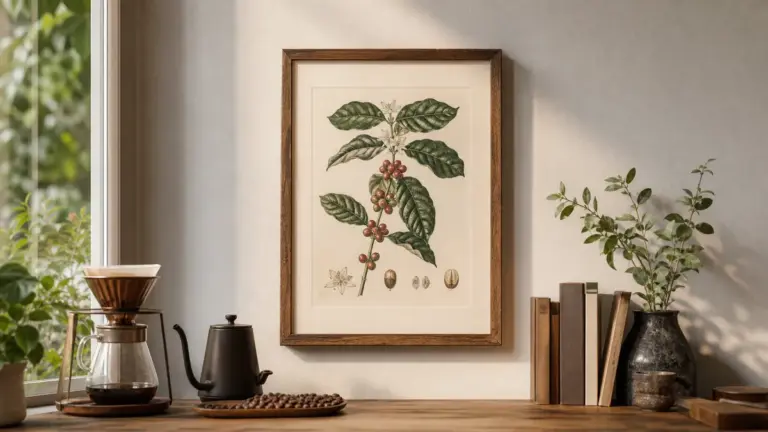 Coffee Posters and PrintsFind coffee posters and prints from named artists and specialist shops, with practical checks for originality, licensing, paper, sizing and framing.Read the guide
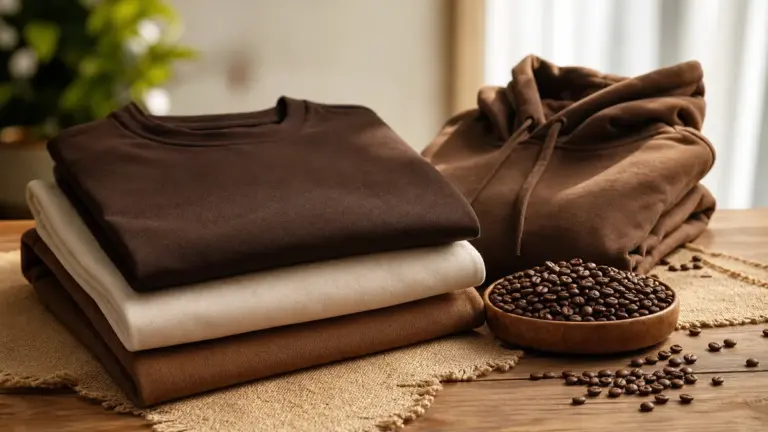 Coffee T-Shirts and HoodiesChoose coffee t-shirts and hoodies with confidence: compare fabrics, print methods, sizing, organic certification and what to ask independent makers.Read the guide
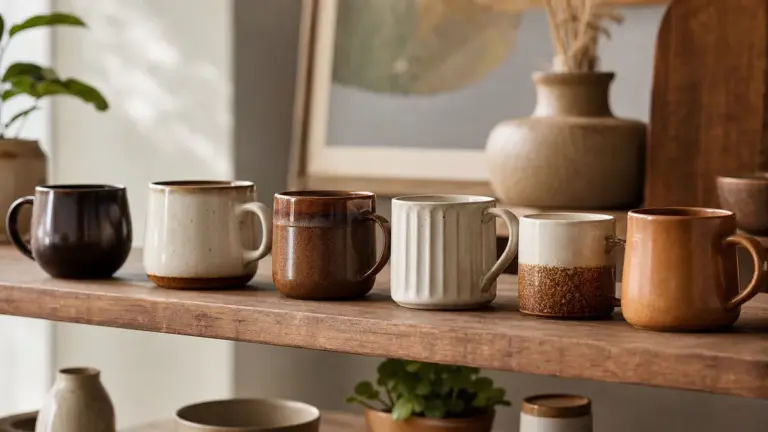 Coffee-Designed MugsChoose a coffee mug by material, drink size, heat retention and handle comfort, with clear advice on rims, decoration, dishwasher and microwave safety.Read the guide
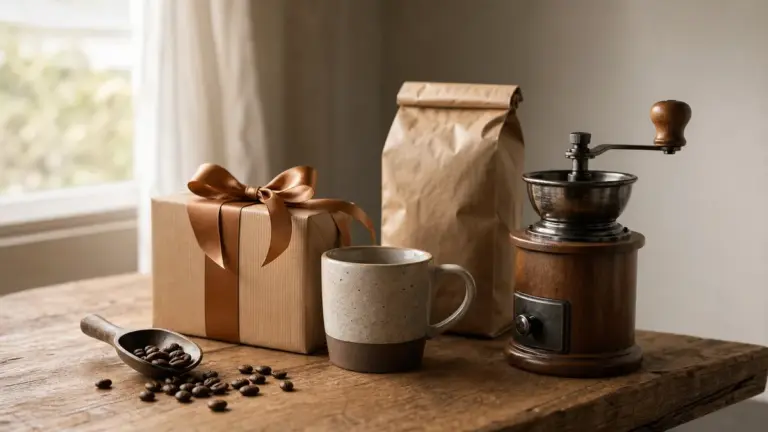 Coffee-Themed GiftsFind thoughtful coffee-themed gifts, from beans and brewing tools to subscriptions and experiences, with checks for taste, compatibility and gift terms.Read the guide
Start here if you are new
- Begin with coffee-themed gifts if you know someone enjoys coffee but have not decided what sort of present suits them. Use it to narrow the choice by their interests and everyday routine.
- Move to coffee-designed mugs if you want something for daily use, or coffee apparel and accessories if their enjoyment of coffee extends to what they wear and carry.
- Read about coffee gift sets when you want several complementary items together. This is the next step once you know whether the recipient wants coffee to drink, equipment to use or a themed collection.
For the wider context of coffee traditions, places and shared rituals, return to coffee culture and travel. This hub concentrates on objects and presents, leaving destination guides and cultural histories to that broader section.
Coffee merchandise and gifts at a glance
Use these criteria to compare the categories: personal fit, everyday usefulness, compatibility and the checks needed before choosing.
| Category | What to consider | Who it suits | Main check |
|---|---|---|---|
| Apparel and accessories | Aprons, bags, caps and wearable details | Someone whose clothing and accessory preferences you know | Dimensions, materials and care |
| T-shirts and hoodies | Small motifs, illustrations or prominent graphics | Someone comfortable wearing their coffee interest | Garment measurements and design placement |
| Individual gifts | A single object chosen around an interest or habit | A recipient with a clear preference | Whether they already own something similar |
| Art and home décor | Decorative objects and pieces for a coffee corner | Someone whose room and interior style you know | Available space and intended use |
| Posters and prints | Botanical images, brewing illustrations or graphic artwork | Someone with suitable wall space | Finished dimensions and framing |
| Mugs | Illustrated, patterned or personalised drinking vessels | Someone who enjoys choosing a particular cup | Capacity, handle and care instructions |
| Gift sets | Coffee, drinkware or brewing items grouped together | Someone whose coffee routine you understand | Every component, not just the presentation |
These are routes into the subject, not a ranking. A carefully chosen mug can be more appropriate than an elaborate brewing collection, while an enthusiast with very specific equipment preferences may welcome artwork instead of another tool.
Apparel, accessories, T-shirts and hoodies
Coffee clothing works best when it is clothing the recipient would choose even without the coffee reference. Start with their preferred colours, fit and degree of decoration: a small embroidered cup and a large illustrated back print make quite different gifts.
Clothing and accessories beyond the slogan
Read coffee apparel and accessories when you want to explore the broader category, including aprons, bags and smaller wearable items. It is the useful route when a T-shirt feels too obvious or you want something connected to the recipient’s routine.
For an apron, ask whether it is intended for occasional home brewing, cooking or regular work. Check its length, fastening arrangement and pocket positions against that use. For a bag, establish what it needs to carry rather than choosing solely by the graphic on its side.
Treat fabric composition and care instructions as separate checks. GINETEX explains that textile care instructions account for sensitive parts of the whole item, including colouring, finishes, accessories and applied decoration, not merely the main fabric. Follow the garment’s label rather than assuming that all cotton items can receive the same treatment.
Choosing T-shirts and hoodies
Go to coffee T-shirts and hoodies when fit, garment shape and graphic style are the main decision. That guide is the more focused next read once you have chosen clothing rather than an accessory.
Before ordering, compare the seller’s garment measurements with a similar item the recipient already wears comfortably. Ask whether the measurements describe the finished garment or the wearer’s body, and check what the seller means by relaxed, fitted or oversized.
Look closely at the design itself. Would the person wear it outside a coffee event? Does the wording suit them? For a workplace gift, avoid making caffeine dependence, tiredness or someone’s job performance the joke unless you are certain it will be welcome.
Individual coffee-themed gifts
A good individual gift starts with a recognisable interest: the recipient’s favourite morning ritual, affection for ceramics, interest in illustration or enjoyment of a particular coffee tradition. The coffee theme should help make the choice personal, not substitute for knowing the person.
Use coffee-themed gifts for help matching an object to its recipient and occasion. It is the broadest route for birthdays, thank-you presents, housewarmings and colleague gifts before you commit to one product category.
Try writing a short reason for the choice: “You always choose a different cup for your weekend coffee” is more useful than “You like coffee”. If the reason remains vague, reconsider the object rather than adding more coffee imagery.
For an experienced home brewer, ask before choosing technical equipment. Find out what they already use, what they want to change and whether they actually want another brewing method. If asking would spoil the surprise, consider a non-technical category whose style you understand.
For a colleague, keep personalisation proportionate. A name or restrained illustration may suit the relationship better than an intimate message or a joke intended to remain on their desk indefinitely.
Coffee art, home décor, posters and prints
Coffee artwork can be a way to acknowledge someone’s interest without choosing what they drink. Start with the room: identify the intended wall, shelf or corner before selecting the subject.
Objects for the home or coffee corner
Explore coffee art and home décor when you want to consider the whole setting rather than a picture alone. Read it before choosing decorative pieces for a kitchen shelf, home brewing area or office tea point.
Decide whether the object is purely decorative or must also perform a task. A display vessel and a container intended to store coffee should be assessed differently. If storage is the purpose, ask about the closure and intended use rather than judging only its appearance.
Leave working space around the brewer. Before choosing something for a coffee corner, consider how the recipient fills the machine, removes its tank and cleans the surface. Decoration should fit around those actions.
Choosing wall art
Read coffee posters and prints when you have suitable wall space and want to compare subjects, formats and presentation. It is particularly useful before deciding between an unframed image and a piece ready to hang.
Check the image dimensions, paper dimensions and external framed dimensions separately. Ask whether a mount, frame and hanging fittings are included. If you are giving an unframed print, consider whether the recipient would enjoy choosing the frame or regard it as an unfinished task.
Placement matters for preservation as well as appearance. The Institute of Conservation advises protecting works on paper from damaging light and unsuitable environmental conditions, and identifies good mounting and framing as an effective means of protection. Avoid choosing a position directly above steam or beside a heat source simply because it is near the coffee machine.
For instructional artwork, check the information as carefully as the illustration. If a poster presents brewing advice, decide whether you want a decorative interpretation or something the recipient can actually consult while making coffee.
Coffee-designed mugs
A mug is both a design object and something held, lifted, washed and stored. Assess it as drinkware first, then decide whether the pattern or illustration makes it right for the recipient.
Use coffee-designed mugs when the cup itself is the gift. Read it to focus on shape, handling and decoration rather than treating every coffee-themed vessel as interchangeable.
Check the stated capacity in millilitres against the person’s usual drink. Also ask whether that figure describes a brim-full capacity or a comfortable serving volume. For use beneath an office machine, measure the available clearance rather than relying on a product photograph.
If possible, assess the handle with the intended user in mind. Consider whether they prefer holding a handle or cupping the body, and whether a broad base or tall shape suits their desk and cupboard.
Washing and heating claims should come from the maker for the particular product. Le Creuset, for example, publishes microwave and dishwasher instructions for its mugs, but those are manufacturer instructions for its own products, not evidence about every decorated mug. Check the chosen item’s guidance rather than transferring assurances from another range.
For a workplace present, favour a mug whose care requirements fit the shared kitchen. If special handling is necessary, include the instructions with the gift.
Coffee gift sets
A gift set should make sense as a small collection. Choose a purpose first: enjoying a familiar drink, exploring different coffees or beginning a brewing method the recipient has expressed interest in.
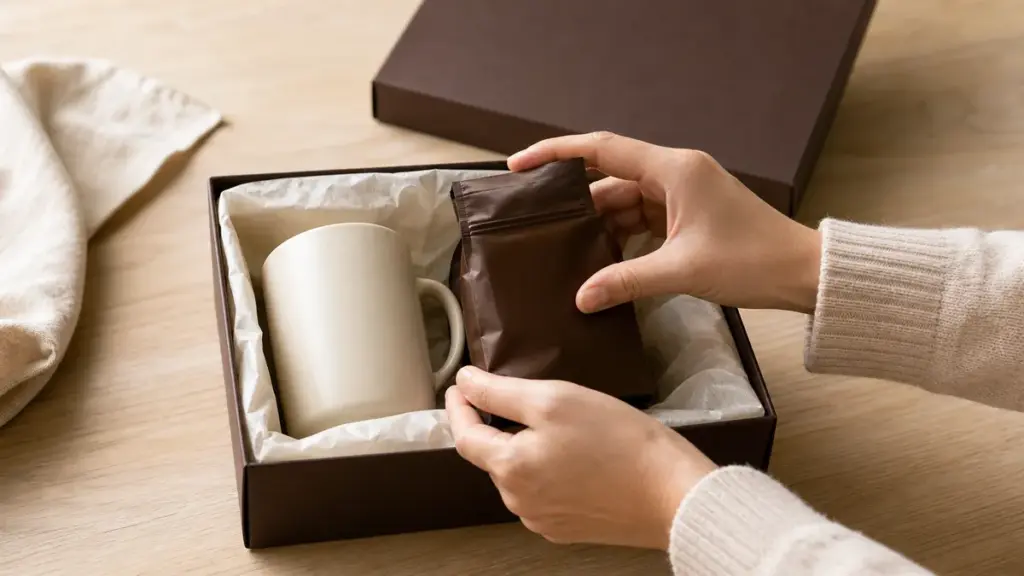
Read coffee gift sets before choosing a boxed collection or assembling your own. It is the next guide when presentation, complementary contents and practical completeness all matter.
Check the contents individually
Write down every included item and ask what the recipient needs to use it. Does the coffee arrive as whole beans or ground coffee? If ground, is it intended for their brewing method? Does any included brewer require filters or accessories that are absent?
Do not assume the largest collection is the most thoughtful. Prefer a clear relationship between the contents: a mug and suitable coffee, for example, rather than unrelated additions chosen to fill a box.
For coffee itself, retain the original sealed packaging and follow the producer’s storage guidance. The National Coffee Association identifies air, moisture, heat and light as threats to freshness and recommends airtight, cool storage. A decorative container should not take priority over protecting the coffee inside it.
Check food information for every edible component, including accompanying biscuits, chocolate or flavourings. The Food Standards Agency advises checking labels each time and explains that precautionary statements such as “may contain” concern possible unintended allergen presence. Keep ingredient and allergen information with the gift rather than removing it for a neater presentation.
Make the set usable on arrival
If assembling a set yourself, lay out the contents as though you were the recipient opening it. Identify anything that requires an explanation, an additional purchase or a piece of equipment you have not confirmed they own.
Keep different care instructions with their respective objects. Add a short personal note explaining the choice, but do not replace the producer’s instructions with an improvised brewing method.
For collectors: design, attribution and cultural meaning
Once the category is settled, look beyond the coffee motif. Ask who designed or made the object, what the seller can establish about its origin and whether any description refers to the design, manufacture or merely the place of dispatch.
For an editioned print, ask what the edition statement actually covers. For a reproduction, seek a clear description rather than assuming that a signature reproduced within the image establishes an original artwork. These are sensible questions for the seller, not reasons to dismiss reproductions as gifts.
Culturally specific objects deserve similar care. UNESCO’s account of Turkish coffee culture describes preparation and serving practices embedded in hospitality, friendship and social occasions. That provides useful context for a related gift, but a modern souvenir should not be treated as proof of a particular maker, age or provenance.
Our editorial preference is for a clear description and a well-matched recipient over an impressive-sounding story. Ask the seller to substantiate claims that matter to your choice, and choose something else if the answer remains unclear.
FAQ
Can someone who does not drink coffee still enjoy a coffee-themed gift?
Yes, if the gift matches another interest they genuinely have. Someone might appreciate botanical illustration, ceramics or graphic design without wanting coffee to drink. Choose through that interest rather than using merchandise to encourage a habit they have not expressed any wish to adopt.
Is personalisation always a better choice?
No, personalisation is useful only when the recipient would welcome it. Before approving a design, check spelling, placement and the final proof, and read the seller’s terms. For someone whose style you do not know well, a design they can choose to display or use may be more considerate than a prominently named object.
How can I keep a gift a surprise while checking what someone wants?
Ask about their routine rather than a particular product. Find out what they drink from, whether they enjoy wearing graphics, or what they would put in an empty space at home. You can also ask someone close to them to check an existing collection, garment measurement or equipment preference discreetly.
Where to go next
Start with Coffee-Themed Gifts to match the present to the person, then use Coffee Gift Sets if you want a coordinated collection. For a more focused choice, Coffee-Designed Mugs examines everyday drinkware, while Coffee Posters and Prints helps you choose coffee merchandise and gifts for the wall rather than the cupboard.
Sources
- GINETEX, Textile Care Symbols: Basic Principles, undated guidance, retrieved November 2026.
https://www.ginetex.net/userfiles/files/Table_of_textile_care_symbols_en.pdf - Icon, the Institute of Conservation, Art on Paper, 2011 copyright statement, retrieved November 2026.
https://www.icon.org.uk/conservation-hub/caring-for-your-collections/art-on-paper.html - Le Creuset UK, How to Pick Your Perfect Mug, undated manufacturer guidance, retrieved November 2026.
https://www.lecreuset.co.uk/en_GB/how-to-pick-your-perfect-mug/cap0147.html - National Coffee Association, About Coffee, Storage and Shelf Life, undated guidance, retrieved November 2026.
https://www.aboutcoffee.org/beans/storage-and-shelf-life/ - Food Standards Agency, Food Allergy and Intolerance Advice for Consumers, publication record dated 2020 and updated August 2026.
https://www.gov.uk/government/publications/food-allergy-and-intolerance-advice-for-consumers/food-allergy-and-intolerance-advice-for-consumers - UNESCO, Turkish Coffee Culture and Tradition, Representative List entry, 2013.
https://ich.unesco.org/en/RL/-00645
This hub was researched using textile-care guidance, conservation advice, manufacturer instructions, coffee-storage guidance, official food-allergy information and UNESCO’s cultural heritage listing; no products were tested.
Last checked: November 2026