Choose a coffee grinder around your brewing method first: espresso needs fine grinding with small, controllable adjustments, while filter coffee needs a useful brewing range and repeatable settings. For most people, an adjustable burr grinder is the sensible starting point; then decide whether hand grinding, electric grinding, single dosing or a commercial workflow fits your routine.
In short
- Grinder categories overlap: a manual grinder can use burrs, make espresso and work as a single-dose grinder.
- For espresso, check the adjustment available within the fine range, not just the total number of settings.
- A filter-only grinder is not necessarily suitable for espresso, even if it has large burrs.
- Single dosing means weighing the beans for each brew before grinding; it does not guarantee that no coffee remains inside.
- For shared workplaces, assess peak demand, permitted operating cycles, cleaning responsibilities and servicing before hopper size.
Guides in Coffee Grinders
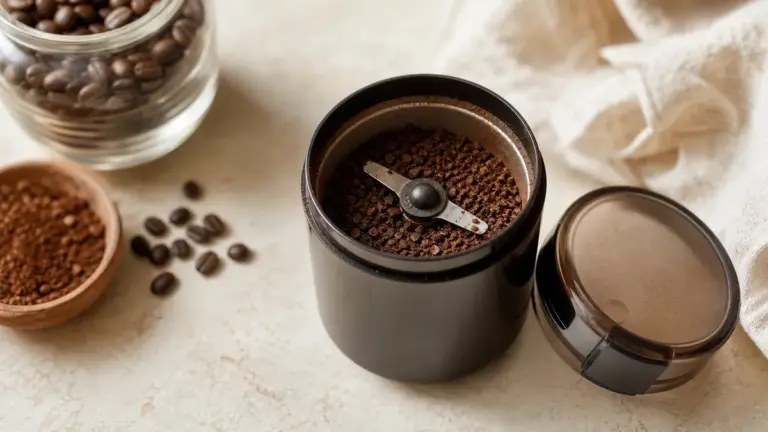 Blade GrindersAre blade coffee grinders any good? Learn when one is fine, how pulsing and sorting help, and when a burr grinder is the better…Read the guide
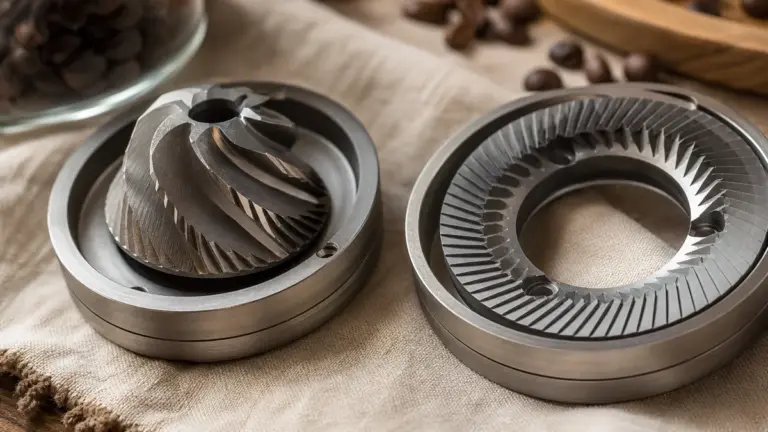 Burr GrindersUnderstand conical and flat burr grinders, particle sizes, heat and flavour claims, with a practical comparison and clear cleaning and maintenance advice.Read the guide
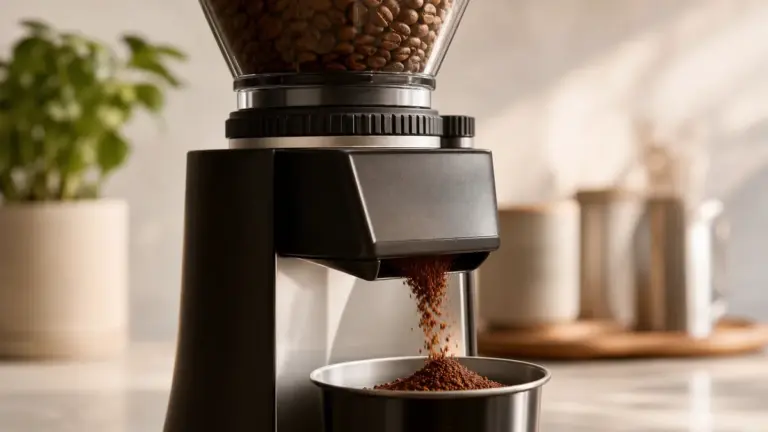 Coffee Grinders: The Complete GuideChoose a coffee grinder by brew method, burrs and adjustment. Understand retention, espresso needs and cleaning, with a practical step-by-step decision path.Read the guide
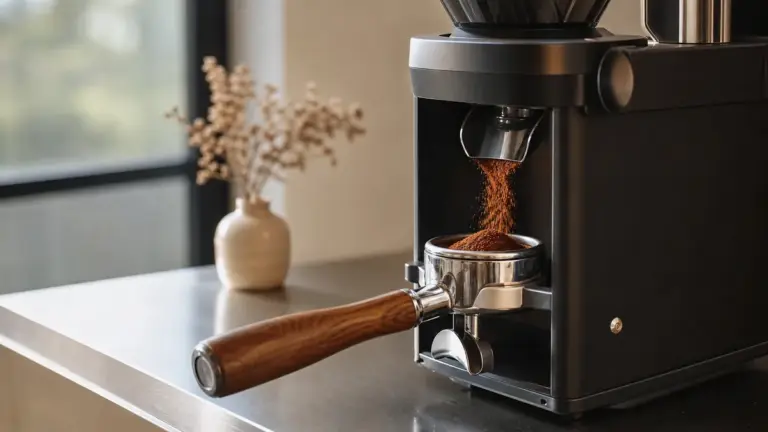 Commercial Coffee GrindersChoose a commercial coffee grinder around peak demand, dosing, cooling and service. Compare workflows and plan cleaning, calibration and burr replacement.Read the guide
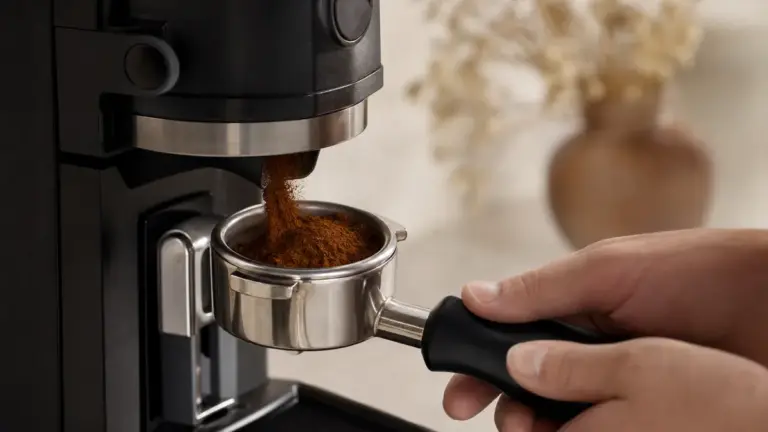 Espresso GrindersChoose an espresso grinder by adjustment, retention and dosing workflow. Understand burr size, noise, static control and compatibility with your machine.Read the guide
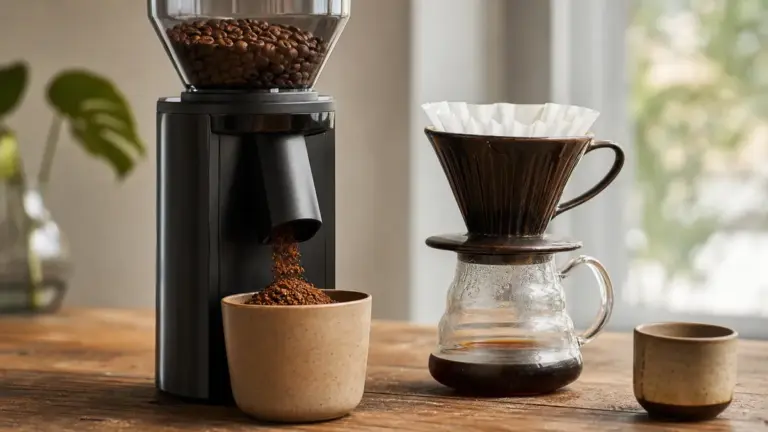 Filter Coffee GrindersChoose a filter coffee grinder by grind range, uniformity, burr design and batch capacity, with clear checks for pour-over and automatic filter brewing.Read the guide
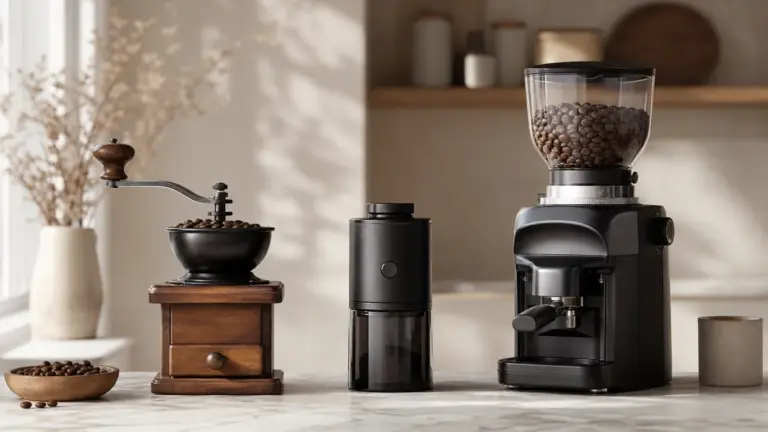 How to Choose a Coffee GrinderChoose a coffee grinder step by step: match your brewing method, check espresso adjustment, compare manual and electric, and assess cleaning and noise.Read the guide
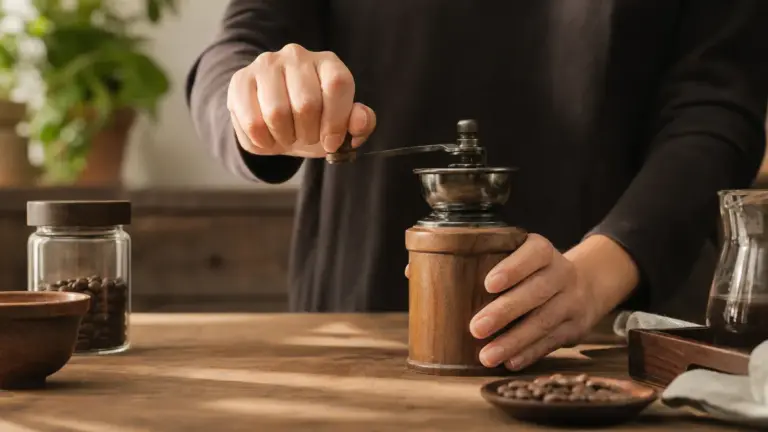 Manual Hand GrindersAre manual hand grinders worth buying? Compare burrs, grinding effort, espresso adjustment and travel features, with a practical buying checklist.Read the guide
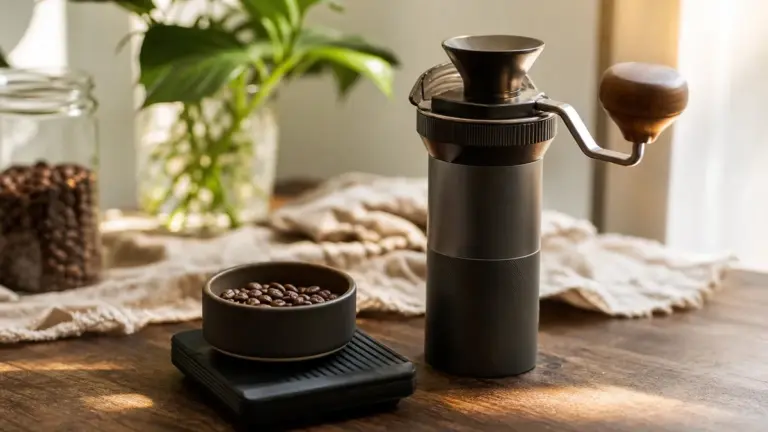 Single-Dose GrindersUnderstand single-dose grinders, zero-retention claims and bellows, with a practical workflow and clear advice for switching beans at home or work.Read the guide
Start here if you are new
Follow this short reading path rather than comparing every grinder specification at once:
- Understand the essentials: the complete grinder guide explains the terminology and how grinding connects to brewing. Read it first if burrs, adjustment and dosing are unfamiliar.
- Understand the main mechanism: burr grinders explains what to look for beyond the word “burr” on the packaging. It is the useful next step before comparing individual designs.
- Make your shortlist: choosing a coffee grinder turns your brewing habits, available space and preferred routine into selection criteria.
This hub maps the choices rather than ranking individual machines. For the wider relationship between grinders, brewers and other equipment, return to machines and equipment.
Coffee grinder types at a glance
The table compares purpose, adjustment and workflow. These are overlapping categories, not competing technologies: “manual” describes the power source, “espresso” describes the intended application, and “single-dose” describes how beans are loaded.
| Type | Who it suits | Main requirement | Main limitation |
|---|---|---|---|
| Blade | Someone already using a simple chopping grinder | Accepting limited control over particle size | Harder to reproduce a chosen grind |
| Manual burr | Someone happy to grind by hand | Comfortable handling and suitable adjustment | Each batch requires physical effort |
| Electric filter burr | Pour-over, cafetière and filter-machine users | Useful brewing range and repeatable settings | Some models cannot grind for espresso |
| Espresso burr | Users of traditional espresso machines | Fine grinding and small adjustments | Switching methods may complicate the routine |
| Single-dose burr | People weighing each brew or changing beans | Suitable loading and easy grounds collection | Requires weighing and loading each batch |
| Commercial burr | Shared workplaces and staffed coffee service | Appropriate operating cycle and service support | Size alone does not establish suitability |
Use the relevant section below to choose your next read. A grinder that suits your actual brewer is more useful than one with an impressive specification you will never use.
Burr versus blade: start with control
A burr grinder breaks beans between a pair of grinding surfaces. Adjusting their separation changes the grind, giving you a setting you can return to. A blade grinder chops beans with a spinning blade, leaving a mixture of smaller and larger pieces rather than controlling their passage through an adjustable burr gap.
Our recommendation is to choose burrs when repeatable brewing is the priority. That recommendation rests on control, not on the idea that every burr grinder performs equally well.
Read burr grinders when you want to compare adjustment systems and burr designs. Read blade grinders if you already own one and want to understand its limitations before replacing it.
Do not turn flat versus conical burrs into a shortcut for the whole decision. Manufacturers offer flat-burr grinders for both espresso and filter applications. Establish what the complete grinder is designed to do before judging it by burr shape.
Manual hand grinders: choose the routine as well as the mechanism
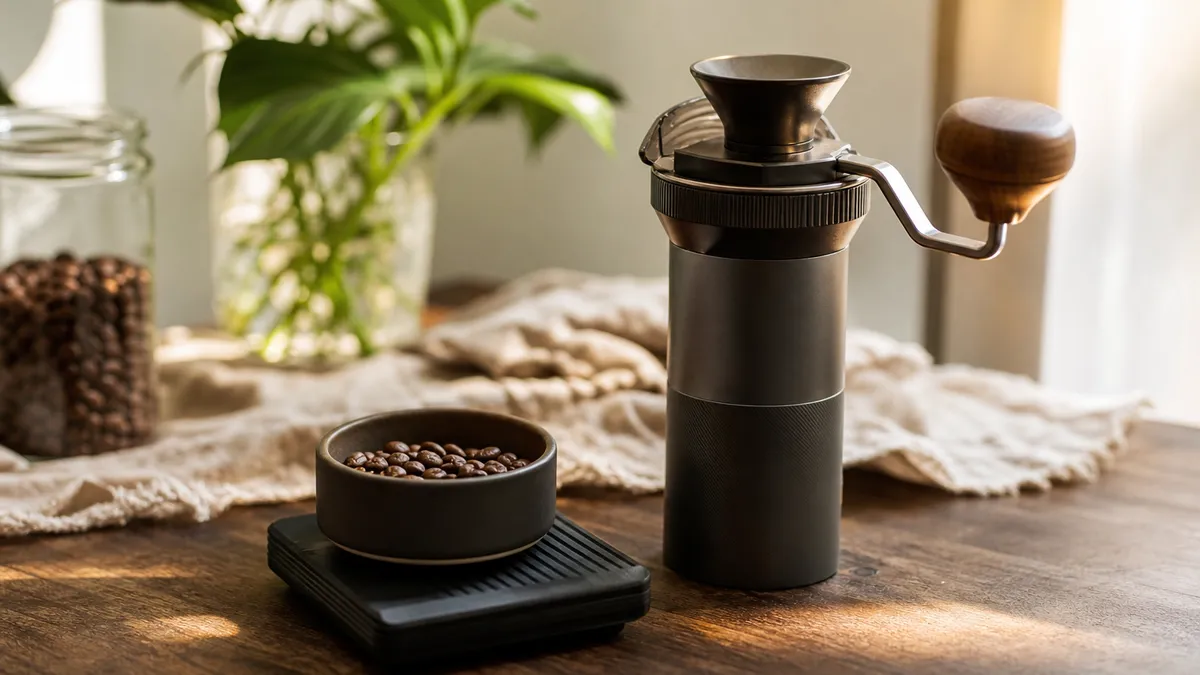
A manual grinder uses your hand to drive the burrs rather than an electric motor. It can be a practical choice when you do not want to depend on a socket, but you must be comfortable holding the body and turning the handle for every batch.
Manual does not mean filter-only. Comandante, for example, publishes espresso and filter settings for its C40. Suitability still depends on the particular grinder and whether its adjustment gives you enough control for your brewer.
Before choosing, consider:
- Can you grip the body comfortably?
- Is the adjustment easy to read and return to?
- Can it hold the quantity of beans you normally grind?
- Would you still enjoy the process when making several drinks?
- Can you follow its cleaning and reassembly instructions confidently?
Our advice is to try the action with coffee beans if a demonstration is available, rather than judging comfort from an empty grinder.
Read manual hand grinders when handling, portability and willingness to grind by hand are central to your choice. It is also the right branch if you are considering a hand grinder for espresso rather than assuming you need an electric model.
Espresso and filter grinders: match the adjustment to the brewer
Espresso grinders
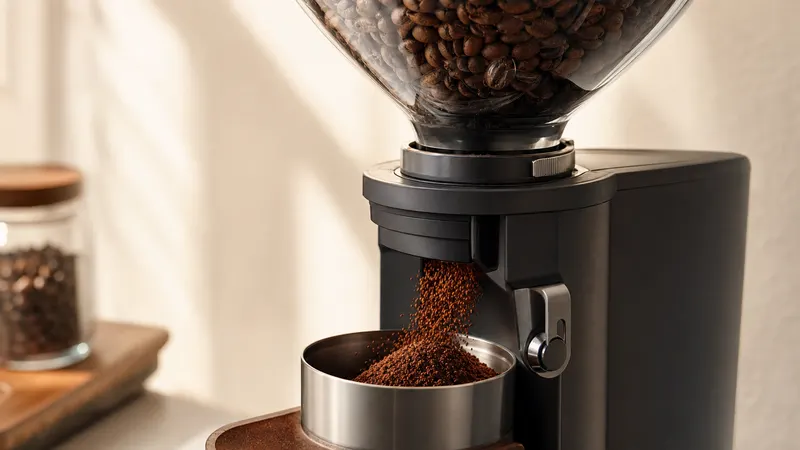
An espresso grinder needs more than the ability to produce powdery-looking coffee. It needs sufficiently fine grinding and adjustments small enough to help you control the shot.
Baratza illustrates this distinction in its published Encore ESP manual. The grinder has 40 settings, but settings 1 to 20 use smaller adjustment increments for espresso, while 21 to 40 cover a broader filter range. Those are manufacturer specifications checked in November 2026, not a universal scale for other grinders.
“Dialling in” means adjusting the grind while checking the resulting espresso. Keep the coffee dose and beverage yield consistent while making comparisons, otherwise several changing variables can obscure what the grind adjustment did.
Read espresso grinders when your main brewer is a traditional espresso machine. That guide is the place to examine fine adjustment and the practicalities of grinding into a portafilter, the handled basket holder used by the machine.
Filter coffee grinders
For filter brewing, start by checking that the grinder supports your actual methods and batch sizes. A grinder intended for pour-over, a filter machine or cafetière need not provide espresso capability.
Fellow explicitly describes its Ode Brew Grinder Gen 2 as unsuitable for espresso, despite its claimed 64 mm flat burrs. This is a useful example of why burr diameter does not establish the application.
Read filter coffee grinders if you mainly brew without an espresso machine. It helps you concentrate on the brewing range and workflow you need rather than treating espresso capability as an automatic advantage.
One grinder for both
One grinder can cover espresso and filter if its manufacturer specifies both applications. The separate question is whether changing between them suits you.
Check how you record settings, how easily you can return to them and what the manual says about changing grind size. Our practical preference is to prioritise your most-used method, then assess how much inconvenience the occasional second method introduces.
Single-dose grinders: a different loading workflow
Single dosing means weighing the beans needed for a brew and loading that batch into the grinder, rather than keeping a larger supply in the hopper, the bean container above the grinding mechanism.
It is worth considering if you want to alternate coffees or prepare each dose separately. The trade-off is another deliberate task before every brew: weigh, load, grind and collect.
Retention means coffee left inside the grinder instead of reaching the collection vessel. Single dosing does not automatically eliminate it. Fellow advises weighing before and after grinding because retained grounds can change the amount available to brew.
When comparing designs, ask:
- Is the grinder intended to operate with a pre-weighed batch?
- Can it take your largest normal dose?
- Does it deliver into a cup, bin or portafilter?
- How are remaining grounds cleared?
- What cleaning does the manufacturer require?
Read single-dose grinders when changing beans and weighing individual brews matter more than dispensing repeatedly from a filled hopper. Treat “zero retention” as a claim requiring a stated measurement method, not as a definition of the category.
Commercial grinders: assess the busiest period
For a workplace or staffed coffee service, begin with demand during the busiest period, not just total drinks over a day. Record which drinks are made, how many require grinding at once, who operates the equipment and who cleans it.
Ask suppliers to explain the duty cycle, meaning the permitted pattern of grinding and resting. Mahlkönig’s E65S GbW manual, for example, warns against exceeding its operating cycle and specifies pauses. Commercial equipment is not automatically intended to run continuously.
Also distinguish the dosing system:
- Grind-by-time runs for a programmed duration.
- Grind-by-weight uses weight measurement to control the dispensed dose.
Neither description tells you how straightforward the grinder will be for your staff. Request a demonstration with the intended coffee and receiving vessel, including adjustment, cleaning and recovery from an interrupted task.
Read commercial coffee grinders when shared use, throughput and service arrangements dominate the decision. Ask for itemised written quotations covering the grinder, installation where relevant, training, servicing, replacement burrs and other consumables, with exclusions clearly identified.
How to choose without getting lost in specifications
Use this sequence to turn the category map into a manageable shortlist.
- Name the main brewer. Require explicit manufacturer confirmation of espresso capability if you need it.
- Describe your normal batch. Record the grams you grind for one brew and the number of consecutive batches.
- Choose the loading routine. Decide whether you want individually weighed beans or repeated dispensing from a hopper.
- Check handling and space. Allow room to load beans, remove the grounds vessel, adjust settings and carry out cleaning.
- Check ownership support. Ask about replacement burrs, other spare parts, servicing and warranty terms for your intended use.
- Read the manual before committing. Confirm adjustment instructions, permitted operation and cleaning access rather than relying on a retailer’s summary.
For UK consumer purchases, products must be as described, of satisfactory quality and fit for purpose. Business purchases have a different contractual context, so workplace buyers should check the written terms rather than assume consumer protections apply in the same way.
Understand what “consistent grinding” really means
A grinder produces a distribution of particle sizes, not identical particles. The smallest particles are commonly called fines.
In a controlled laboratory study published in 2024, researchers systematically added sieved fines to espresso grounds. More fines reduced the coffee bed’s permeability, meaning water passed through less readily, and increased extraction time under the tested conditions.
The practical inference is that a single grind-size number cannot fully describe brewing behaviour. Nor does the study justify treating all fines as defects: it did not find an automatic sensory penalty from adding them.
For coffee grinders, the useful decision is therefore not “which specification is biggest?” It is “which design gives me suitable adjustment, repeatable results and a routine I can maintain?”
FAQ
Can I copy a grind setting from another brand?
No, grinder settings are not a shared measurement scale. A number identifies a position within a particular adjustment system, not a universal particle size. Start with your own manufacturer’s guidance, then adjust using a consistent recipe and the results in the cup. Even published starting settings may need changing for different coffees and doses.
Does a larger burr guarantee better coffee?
No, burr diameter alone does not establish suitability or cup quality. Fellow’s filter-only Ode Gen 2 illustrates the first point: its published burr size does not make it an espresso grinder. For selection, establish the intended application, useful adjustment and workflow first. Treat diameter as one specification rather than a ranking system.
Can I wash the grinding mechanism?
Do not assume that you can wash it. Follow the instructions for the exact model and component: Baratza prohibits washing the Encore ESP burrs, while Comandante recommends brushing the C40 burrs and interior. Some removable containers have different cleaning instructions. Unplug an electric grinder before cleaning or accessing its grinding chamber.
Where to go next
Read Coffee Grinders: The Complete Guide through the full guide if you want the underlying terminology, then How to Choose a Coffee Grinder through the selection guide to build your shortlist. Continue to Espresso Grinders through espresso choices, or Filter Coffee Grinders through filter choices, according to your main brewer.
Sources
Manufacturer descriptions are used for intended applications, operating instructions and claimed specifications, not as independent proof of comparative performance.
-
Breville, Burr grinder vs. blade grinder: What’s the difference and does it matter?, undated, current web edition.
https://www.breville.com/en-us/blog/coffee-and-espresso/burr-grinder-vs-blade-grinder -
Baratza, Encore ESP Operations Manual, January 2023, version 1.0.
https://assets.breville.com/ZCG495/manual-encoreesp-v1-0-en-010923.pdf -
Baratza, Dialing in Espresso: Burr Types, Adjustments, and Troubleshooting, undated, current web edition.
https://www.baratza.com/en-us/blog/product-guides/dialing-in-espresso -
Fellow, Ode Brew Grinder Gen 2, undated, current product specifications and FAQ.
https://fellowproducts.com/products/ode-brew-grinder-gen-2 -
Comandante, FAQ, undated, current use, adjustment and cleaning guidance.
https://comandantegrinder.com/pages/faq -
Mahlkönig, E65S GbW Instruction Manual, undated, manufacturer-hosted edition.
https://downloads.mahlkoenig.de/Service/Mahlkoenig_E65S_Gbw_Espresso_Grinder_Original_instruction_manual_EN.pdf -
Smrke, S., Eiermann, A. and Yeretzian, C., The role of fines in espresso extraction dynamics, Scientific Reports, 14, article 5612, 2024.
https://www.nature.com/articles/s41598-024-55831-x.pdf -
Fellow, How to clean & maintain your Ode Brew Grinder, 8 October 2026.
https://help.fellowproducts.com/hc/en-us/articles/4402414279309-How-to-clean-maintain-your-Ode-Brew-Grinder -
Fellow, Pulling Your First Great Shot on Series 1, 8 October 2026, used for its explanation of retention and weighing grounds.
https://help.fellowproducts.com/hc/en-us/articles/47232986639515-Pulling-Your-First-Great-Shot-on-Series-1 -
GOV.UK, Avoid unfair terms in sales contracts: Implied and statutory rights, undated, current guidance.
https://www.gov.uk/unfair-terms-in-sales-contracts/implied-rights
Research used manufacturer manuals and support documents, a peer-reviewed controlled extraction study and UK government guidance, with selection advice distinguished from verified specifications.
Last checked: November 2026