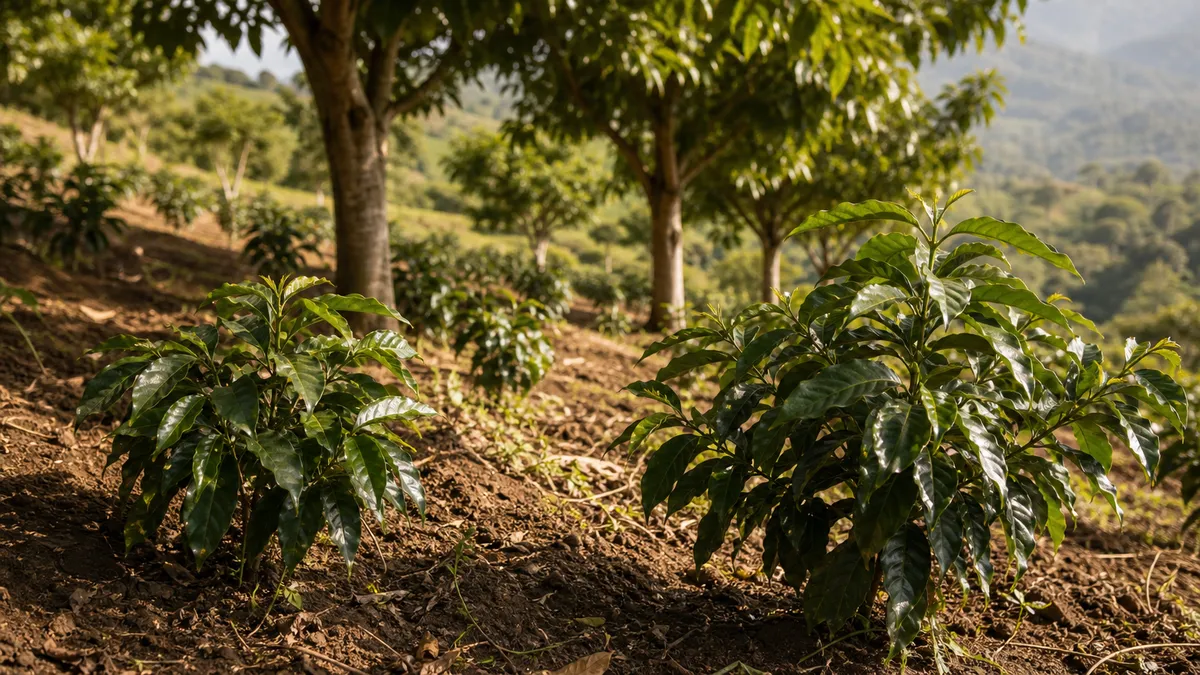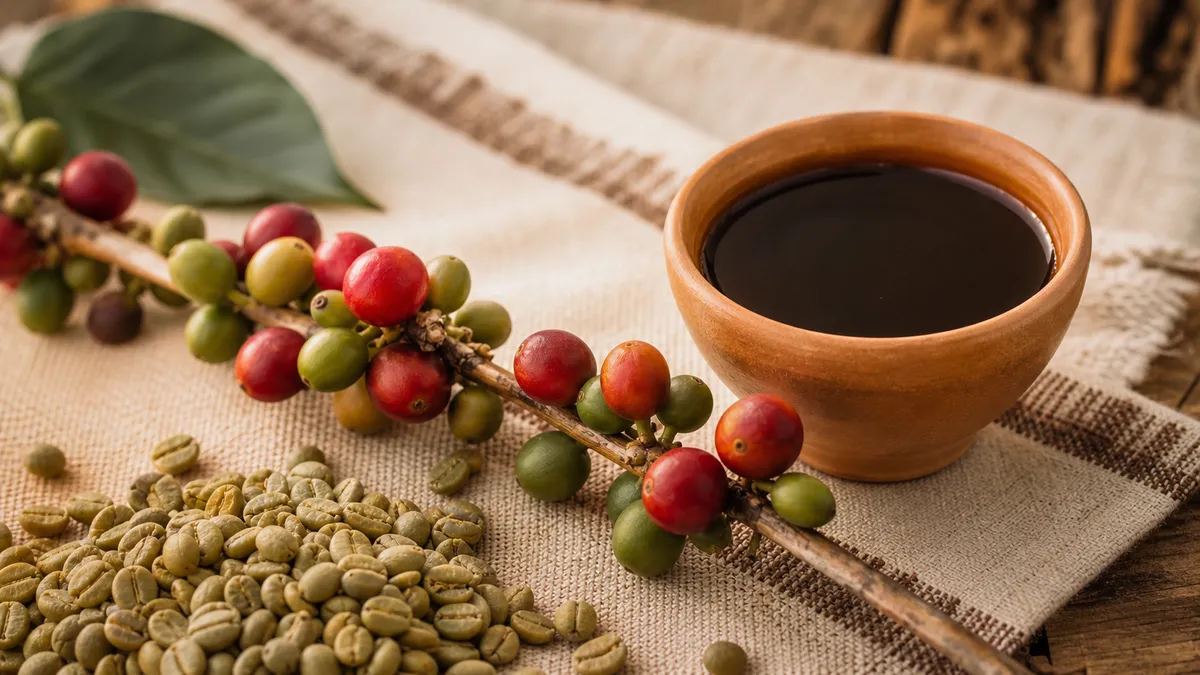
Coffee grown in North America includes Mexico’s substantial crop and smaller United States origins, chiefly Hawaii and the emerging farms of coastal Southern California. For buyers, the useful distinction is between a country or state name and the particular growing region, variety and processing method behind the beans.
In short
- Mexico’s principal producing states are Chiapas, Veracruz, Puebla and Oaxaca.
- Hawaii is more than Kona: other growing areas include Kaʻū, Puna, Hāmākua, Maui and Kauaʻi.
- Harvest windows differ: Mexico’s main season is broadly November to March, Hawaii’s August to March, while California producer FRINJ reports May to late October.
- Washed processing is an established starting point, but individual lots may use natural, honey or other methods.
- Treat altitude and tasting notes as lot-specific information, not promises attached to an entire origin.
Guides in North America
 California-Grown CoffeeIs coffee really grown in California? Explore its coastal farms, early trials, varieties, reported flavours and the challenges facing this small origin.Read the guide
 Hawaiian CoffeeUnderstand Kona and other Hawaiian coffees, their growing conditions and flavours, plus the current blend rules and the change due in July 2027.Read the guide
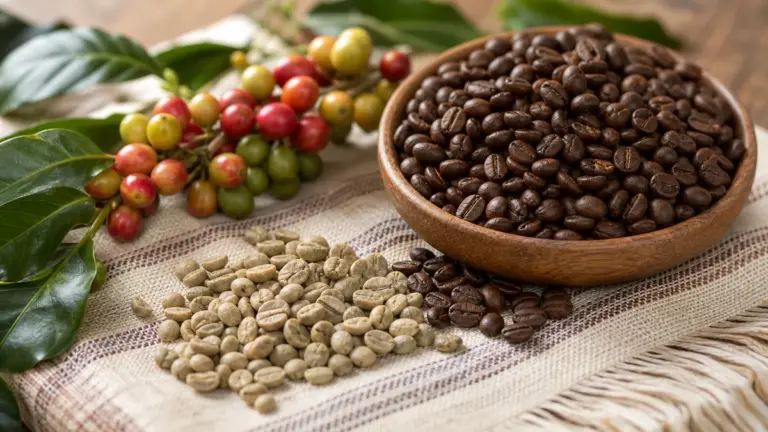 Mexican CoffeeDiscover Mexican coffee through Chiapas, Veracruz, Oaxaca and Puebla, with guidance on flavours, varieties, harvests, organic farming and co-operatives.Read the guide
Start here if you are new
Begin with Mexican coffee to explore the largest producing origin covered here, including its distinct regional identities. Next, read United States (Hawaii) to distinguish Kona from the islands’ other growing areas.
For the less familiar mainland US story, continue to United States (California). The wider beans and origins guide provides the context for comparing these coffees with origins elsewhere.
This page uses North America as an editorial grouping for Mexico and these United States origins. Hawaii is included because it is a US producing origin, not because it lies on the North American mainland; this is not an exhaustive guide to every coffee-producing territory within broader definitions of North America.
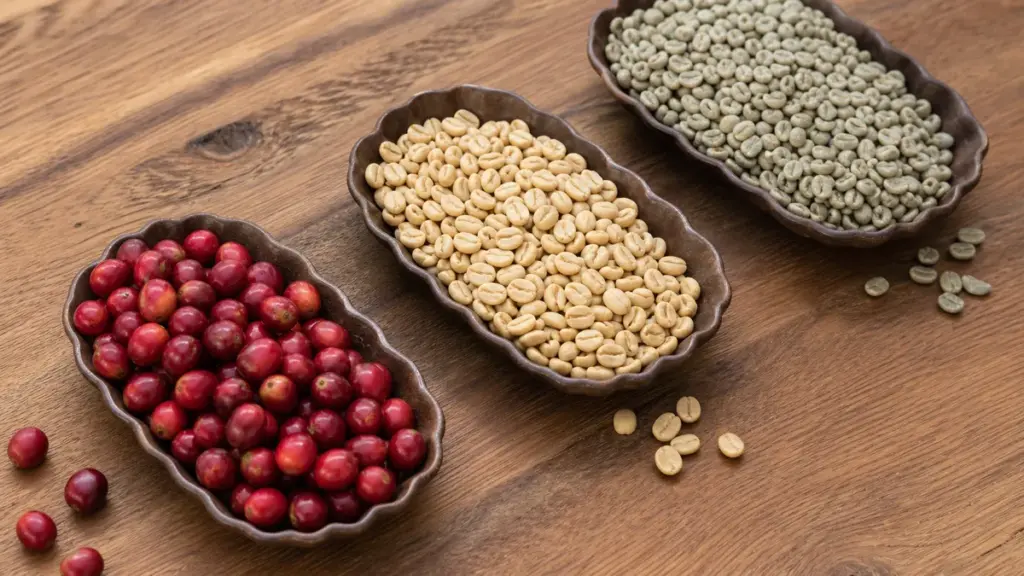
North American coffee at a glance
Origin fact panel
Growing areas: Mexico’s core production lies in Chiapas, Veracruz, Puebla and Oaxaca, with smaller producing areas elsewhere. The US origins covered here are Hawaii and coastal Southern California.
Altitude: There is no useful single regional range. USDA’s 2025 Mexico report identifies substantial cultivation at 600 to 900 metres and above 900 metres. The Hawaii Coffee Association describes Kona farms at approximately 150 to 915 metres. These are different geographical descriptions, not directly comparable quality bands.
Main varieties: Mexico’s established arabica varieties include Bourbon, Typica, Caturra, Catuaí and Garnica, alongside breeding selections such as Oro Azteca. Hawaii grows Kona Typica, Caturra and Catuaí, among others. California varieties should be checked against the individual producer’s lot information.
Processing: Washed and mechanically demucilaged coffee are established in Mexico. Washed processing is the most common method reported by Hawaii’s industry guide, alongside honey and natural processing. California methods are producer-specific.
Harvest months: Broadly November to March in Mexico, with local exceptions such as Pluma’s documented November to April season; August to March across Hawaii; May to late October within FRINJ’s California network.
Typical cup profiles: Mexican coffees can combine chocolate, toffee, nuts and citrus, with floral and fruit-led exceptions. Hawaiian profiles vary by district and variety, including citrus, nuts, berries, chocolate and floral notes. California is better approached through named lots than a single state-wide flavour description.
Evidence note: These descriptions were checked in November 2026 against the dated reports and current pages listed below. Micro-regional variation is normal: altitude, varieties, processing and harvest timing should be sourced and dated for the actual farm or lot whenever available.
Country and growing-area comparison
| Origin | Growing areas to recognise | Broad harvest window | Useful buying distinction |
|---|---|---|---|
| Mexico | Chiapas, Veracruz, Puebla, Oaxaca; smaller origins elsewhere | November to March, with regional extensions | Ask for the state, producer or cooperative, and process |
| United States: Hawaii | Kona, Kaʻū, Puna, Hāmākua and other island districts | August to March | Distinguish a named district from a general Hawaiian description |
| United States: California | Coastal Southern California, including FRINJ farms from San Diego to Santa Barbara | May to late October in FRINJ’s network | Confirm that the coffee was grown, not merely roasted, in California |
Harvest months describe picking, not the date beans will reach a UK roaster. Ask separately about the crop year and roast date rather than treating one as a substitute for the other.
Mexico: the region’s substantial producing origin
Mexico offers the broadest starting point for exploring the coffees covered here. Its principal producing states are Chiapas, Veracruz, Puebla and Oaxaca, but a national label leaves considerable regional detail unstated.
These names are useful first filters, not complete flavour descriptions. For a more meaningful comparison, look for the community, farm or cooperative and whether the bag represents a separated lot or a larger regional blend.
Mexico also grows both arabica, Coffea arabica, and robusta, Coffea canephora. Do not assume that “Mexican coffee” automatically identifies a species, even though arabica is central to the specialty coffees discussed here.
Altitude, varieties and processing
Mexico demonstrates why altitude needs context. USDA’s 2025 report describes coffee grown at 600 to 900 metres as well as production above 900 metres, with robusta primarily associated with lower elevations. That does not establish a universal height at which coffee becomes good.
Variety names add another layer. Typica, Bourbon and Caturra describe plant material, not geographical origins; Oro Azteca is a Mexican breeding selection belonging to the Catimor group. A bag naming a variety tells you something different from one naming Chiapas or Oaxaca.
Washed coffee has its fruit removed before the seed is dried, with the sticky surrounding material removed during processing. Mechanical demucilaging removes that material using equipment. Neither term alone tells you how carefully the cherries were selected, dried or stored.
What to expect in the cup
Cafe Imports describes Mexican coffees with chocolate and toffee sweetness, nuttiness and citrus-like acidity, while also reporting floral and fruit-led examples. Those observations come from a coffee importer’s sourcing and tasting experience, not a rule applying to every Mexican harvest.
For a first purchase, use the roaster’s actual description to choose between a chocolate-led cup and a brighter, fruitier one. Do not reject an unfamiliar profile simply because it does not match the familiar “mild and nutty” shorthand.
Read Mexico when you want to move from this overview to regional growing conditions and the information worth seeking on a bag.
United States: Hawaii beyond Kona
Hawaii’s commercial coffee is overwhelmingly arabica, according to its industry variety guide. Kona Typica is a familiar name, but Caturra, Catuaí and other varieties broaden the picture.
Kona is a growing district, not a synonym for all Hawaiian coffee. Kaʻū, Puna and Hāmākua have their own growing identities, while coffee is also cultivated on other islands.
The Hawaii Coffee Association describes Kona coffees with floral, citrus, berry and nutty notes, and Kaʻū examples with chocolate, cherry, floral and citrus characteristics. These are industry descriptions of possible profiles, not results from a comparative tasting conducted for this website.
Why Hawaiian altitude needs a different reading
Kona’s approximately 150 to 915 metre growing range is a useful corrective to the assumption that specialty arabica must always come from very high mountains. World Coffee Research explicitly adjusts its variety altitude guidance according to latitude.
The practical lesson is to compare growing conditions rather than altitude figures alone. A higher number on a Mexican bag does not, by itself, establish that it will taste better than a lower-grown Hawaiian lot.
Processing and identity
Hawaii’s industry guide identifies washed processing as the most common method, with honey and natural coffees also produced. Honey processing dries the seed with some sticky fruit material remaining; natural processing dries the coffee within the whole cherry.
When buying, establish whether the product contains entirely coffee from the named origin or is a blend containing it. If your purpose is to understand Kona, choose a clearly identified Kona lot rather than relying on prominent place-name wording alone.
Read United States (Hawaii) for the distinctions between growing districts, varieties and origin descriptions that this regional overview cannot unpack fully.
United States: California’s emerging coffee farms
California offers a different question: where can coffee succeed outside the familiar tropical production pattern? University of California extension guidance identifies frost-free microclimates, protection from wind and excessive exposure, and appropriate irrigation as important considerations for Southern California cultivation.
FRINJ, a producer network, reports a harvest moving from San Diego north towards Santa Barbara between May and late October. That is the network’s published description, not an independently established calendar for every California planting.
Judge the lot, not the novelty
California coffee should be assessed through its producer, variety, processing and cup description. “Grown in California” establishes provenance, but does not establish a uniform taste.
For example, FRINJ describes its yeast-washed Catuaí Rojo with milk chocolate, nuts, caramel, apple and berry-preserve notes. These are producer tasting notes for that offering, not a state-wide sensory profile or an independent performance finding.
The same restraint applies to production scale. The sources retrieved for this page did not establish a comprehensive California output total, so none is quoted here.
Read United States (California) to understand the growing conditions and developing production story without confusing an unusual origin with a guarantee of quality.
Production scale, specialty coffee and recent history
Keep production measurements comparable
USDA’s May 2025 Mexico report forecast production for the 2025/26 marketing year at 3.9 million 60 kg bags of green-bean equivalent. This is a dated forecast, not a final harvest result.
For Hawaii, USDA’s May 2026 summary reported approximately 1,782 tonnes of utilised coffee on a green-equivalent basis for 2025/26. That metric conversion uses the report’s published green-equivalent quantity.
These figures establish the large difference in scale without pretending that forecasts and reported utilised production are identical measures. Fresh cherries, parchment coffee and green beans must also remain separate: fruit and protective layers contribute weight before milling.
Specialty is more specific than a place name
Mexico’s move towards separated farm, altitude and variety lots is documented by Cafe Imports. Hawaii’s industry resources describe diversity in processing and varieties, while California producer information shows why named offerings deserve individual attention.
For the buyer, specificity is useful evidence of traceability, although it is not proof of flavour quality. Ask what the seller knows about the coffee rather than assuming that a famous district or unusual country label settles the matter.
A short timeline
- 1995: Mexico’s INIFAP released Oro Azteca for Mexican production, according to World Coffee Research.
- 2020: Mexico published protection for the Pluma denomination of origin, subsequently referenced in its official coffee standard.
- 2023: Mexico joined World Coffee Research’s Innovea breeding network through the University of Chapingo.
These milestones connect origin identity with breeding and agricultural research. Coffee origins are maintained and changed by growers and institutions, not simply inherited as fixed flavour categories.
Buying North American coffee in the UK
Use this order when comparing bags:
- Confirm where it was grown. A US roasting address does not identify the agricultural origin.
- Look for a named producer or group. Prefer information that lets you distinguish a particular coffee from a broad national description.
- Check species, variety and process. Ask the roaster when those details are missing rather than filling the gaps with assumptions.
- Separate harvest information from roasting information. Request the crop year as well as the roast date.
- Choose a profile for your intended use. Use the roaster’s brewing guidance and tasting notes, not the country name alone.
For a first comparison, consider two clearly documented washed coffees from different origins covered here. Keeping processing broadly similar is a practical way to make the comparison easier to interpret, although it cannot isolate origin from variety, roasting and other differences.
The most useful North American coffee purchase is therefore not necessarily the most famous name. It is a traceable coffee whose description gives you a sensible reason to expect a cup you will enjoy.
FAQ
Does “American coffee” mean coffee grown in the United States?
No, the expression is too ambiguous to establish origin. It may refer to a preparation style, a roasting business or coffee associated with the Americas more broadly. For agricultural provenance, look for the growing country and region, then the producer or cooperative. A seller’s address is not a substitute for that information.
Are chocolate or fruit tasting notes added flavourings?
Not necessarily: tasting notes describe perceived sensory characteristics and do not, by themselves, declare added ingredients. The Mexican and Hawaiian notes discussed here are presented by their sources as cup descriptions. If you want an unflavoured coffee, check the product information and ask the seller directly where any wording is unclear.
Should I reject coffee without an altitude on the bag?
No, missing altitude alone is not a sound reason to reject it. More useful questions concern the producer, processing, crop information and how the roaster describes the cup. Where altitude is supplied, treat it as context rather than a score: World Coffee Research’s guidance recognises that suitable altitude changes with latitude.
Where to go next
Read Mexico for a closer look at the substantial and varied origin at the centre of this North America guide. Continue with United States (Hawaii) to explore island and district differences, or United States (California) for the emerging mainland growing story.
Sources
-
USDA Foreign Agricultural Service, Coffee Annual: Mexico, report MX2025-0023, 20 May 2025. Production forecast, producing states, species and altitude context.
https://apps.fas.usda.gov/newgainapi/api/Report/DownloadReportByFileName?fileName=Coffee+Annual_Mexico+City_Mexico_MX2025-0023.pdf -
USDA National Agricultural Statistics Service, Noncitrus Fruits and Nuts 2025 Summary, 1 May 2026, coffee tables on page 32. Hawaii production on a green-equivalent basis.
https://release.nass.usda.gov/reports/ncit0526.pdf -
Cafe Imports, Origins: Mexico, undated, accessed November 2026. Varieties, processing, harvest, sensory descriptions and lot separation. Commercial importer source.
https://www.cafeimports.com/europe/mexico -
World Coffee Research, Coffee Varieties Catalog: Oro Azteca, undated, accessed November 2026. Breeding history, classification and latitude-dependent altitude guidance.
https://varieties.worldcoffeeresearch.org/varieties/oro-azteca -
World Coffee Research, Mexico, undated, accessed November 2026. Research partnerships and entry into Innovea.
https://worldcoffeeresearch.org/countries/mexico -
Hawaii Coffee Association, Hawaiʻi coffee guide booklet, undated, accessed November 2026. Kona farms, growing area and elevation (500 to 3,000 feet), district tasting notes and varieties.
https://hca.wildapricot.org/resources/Documents/DOA-HICoffeeAssoc-Booklet.v4_print.pdf -
Hawaii Coffee Association and Hawaii Department of Agriculture, Hawaiʻi’s Geographical Growing Regions, 2018 booklet. District sensory descriptions. Retrieved PDF address shown without temporary access parameters.
-
Hawaii Coffee Industry, Cultivation, undated, accessed November 2026. Harvest season and processing methods.
https://hawaiigrown.coffee/from-harvest-to-cup/cultivation/ -
Hawaii Coffee Industry, Coffee Varieties, undated, accessed November 2026. Species and varieties grown in Hawaii.
https://hawaiigrown.coffee/from-harvest-to-cup/coffee-varieties/ -
University of California Cooperative Extension, San Diego County, Coffee (Coffea Arabica): A New Plant/Crop for Southern California, undated. Local cultivation requirements.
https://ucanr.edu/?legacy-file=329593.pdf&legacy-file-path=sites%2Fsdsmallfarms%2Ffiles%2F -
FRINJ Coffee, Frequently Asked Questions and FRINJ: Yeast Washed Catuaí Rojo (Green), undated, accessed November 2026. Producer-reported harvest window, growing locations and lot description.
https://frinjcoffee.com/pages/frequently-asked-questions
https://frinjcoffee.com/products/frinj-yeast-washed-catuai-rojo-green -
Secretaría de Economía, Mexico, NOM-255-SE-2022, Café Pluma: Denominación, Especificaciones, Información comercial y métodos de prueba, 2022. Pluma harvest, processing and reference to its 2020 origin protection.
https://sidof.segob.gob.mx/notas/docFuente/5668443
This guide was researched using government production reports, official origin specifications, agricultural extension guidance, World Coffee Research and clearly identified industry and producer descriptions; no first-hand testing is claimed.
Last checked: November 2026