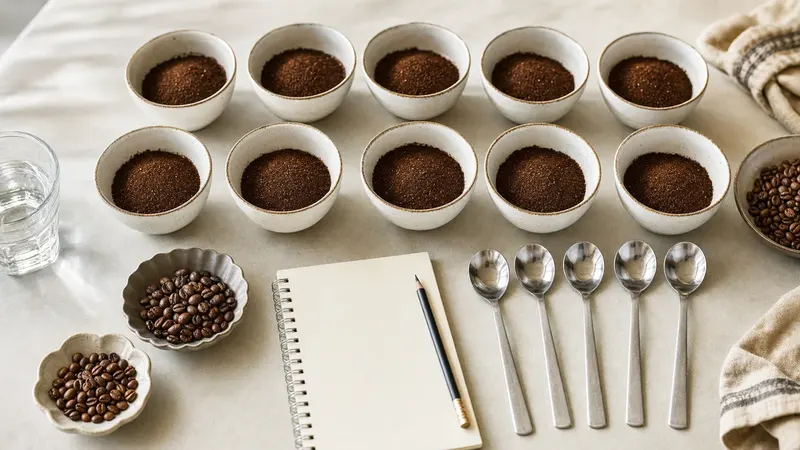
Start learning coffee by understanding what you enjoy, making one drink consistently and comparing coffees with attention. Learn Coffee brings together beginner guidance, history, myth-checking, tasting, education and reading, with a route from your first considered cup to the SCA Evolved Q Grader programme if professional assessment becomes your goal.
In short
- Start with beginner essentials, then practise describing a cup before choosing a specialist subject.
- Use the five hubs below according to your question, rather than treating coffee knowledge as a syllabus you must finish.
- Keep “what can I taste?” separate from “how much do I like it?”.
- Choose courses by their learning outcomes, practical work and assessment, not by the certificate’s name alone.
- The SCA took over the evolved, Coffee Value Assessment-based Q Grader programme on 1 October 2025. Older guidance about CQI’s programme needs checking.
Explore the topics
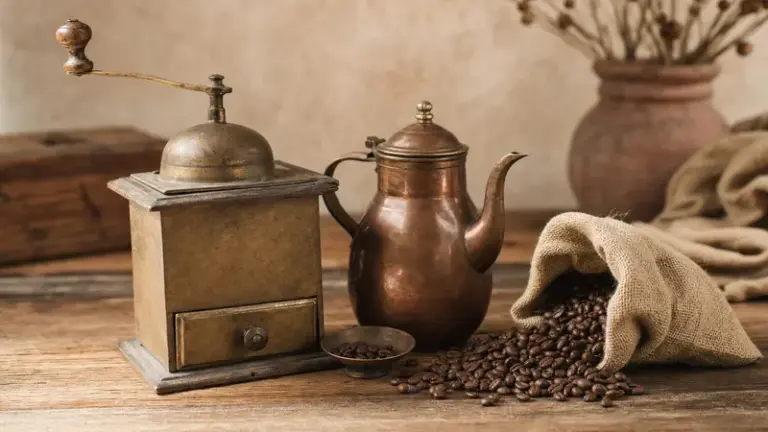
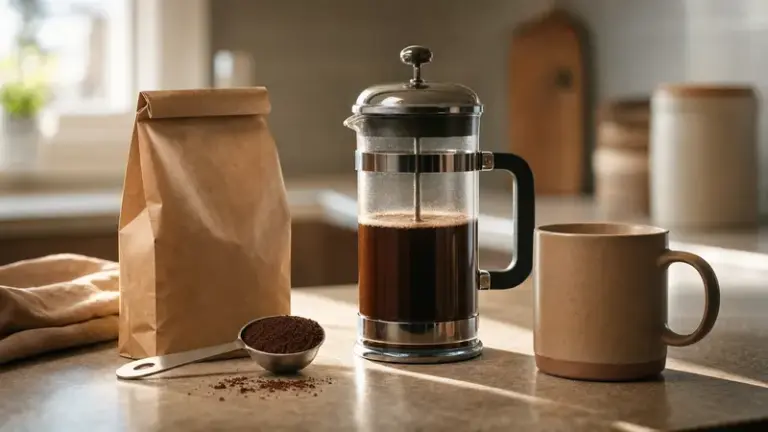

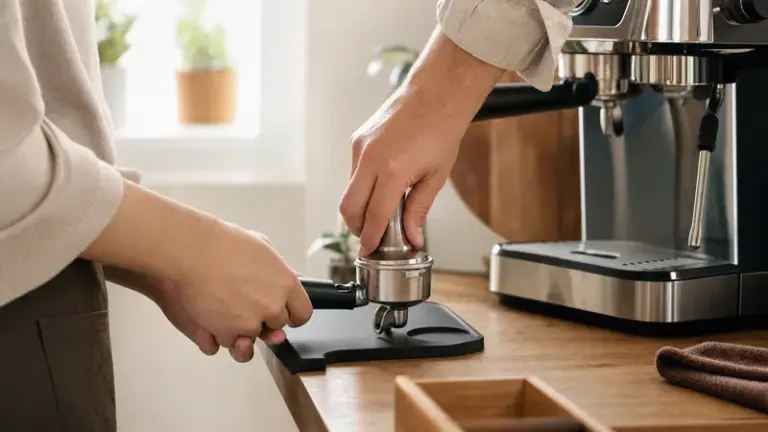

Start here if you are new
Follow this short route before exploring the whole subject:
- Beginner essentials: start here if coffee descriptions, equipment choices and brewing instructions feel like separate languages. Use it to identify the few things you need for your next cup, rather than trying to learn every method.
- Coffee myths and facts: read this when you encounter confident rules that seem to contradict one another. It is the next step towards asking what a claim actually means and what evidence would support it.
- Coffee education: move here when you want feedback, a structured class or a professional direction. You do not need to decide on a qualification before you begin.
For your first practical exercise, choose one familiar coffee and write down what you enjoy about it. “Comforting, full-bodied and pleasantly bitter” is a useful starting point. You can make the vocabulary more precise later.
The aim is not to replace enjoyment with analysis. It is to understand enough to repeat a good result, recognise a difference and decide what you would like to explore next.
Find your route through Learn Coffee
These five hubs organise the subject by the kind of question you are asking.
| Hub | Go here when you want to… | Useful next action |
|---|---|---|
| Coffee history | Understand how coffee became a global drink | Follow a historical claim back to its evidence |
| Coffee for beginners | Make sense of coffee without specialist knowledge | Choose one drink or method to learn first |
| Myths and facts | Check a rule, story or widely repeated claim | Identify what the claim measures or assumes |
| Education and qualifications | Find structured learning or develop professional skills | Match a course to a specific learning goal |
| Reading and publications | Build a dependable reading, viewing and listening list | Choose one reference and one continuing source |
You can enter anywhere. A reader interested in Ottoman coffee culture need not learn espresso first; someone responsible for workplace drinks may prefer practical training before historical reading.
Treat the hubs as connected routes, not ranks. Historical knowledge, brewing skill and sensory assessment answer different questions, and progress in one does not automatically imply expertise in another.
Understand coffee’s history without mistaking stories for evidence
Coffee history begins well before European coffeehouses. Historical research places Ethiopia and Yemen at the centre of its early development, while also acknowledging substantial gaps in the surviving record.
Michel Tuchscherer’s research describes wild Ethiopian coffee being traded by the end of the fifteenth century and intensive cultivation developing in Yemen during the sixteenth century. The British Museum’s collection-based account explains coffee’s place in the Islamic world through drinking vessels, preparation equipment and social customs.
A useful starting timeline is:
- By the late fifteenth century: wild coffee gathered in Ethiopia was entering trade.
- During the later sixteenth century: intensive Yemeni cultivation and trading networks supported a developing coffee economy.
- About 1652: Pasqua Rosée’s coffeehouse opened in London, according to the Courtauld’s historical account.
- From the eighteenth century: expanding coffee estates in the Indian Ocean and the Americas reduced Yemen’s share of production.
These dates are footholds, not a complete history. Read the history of coffee to explore the connections between cultivation, commerce, preparation and public drinking.
Keep discovery legends in a separate category. The familiar story of Kaldi and his lively goats is a legend, not a securely documented account of the first use of coffee. Uncertainty about the earliest evidence should not be replaced with a neat date and an attractive story.
It also helps to ask whose history you are reading. A coffeehouse account, a botanical history and a study of agricultural trade may each be sound while illuminating different parts of the same subject. Read across those perspectives rather than expecting one invention story to explain everything.
Build beginner knowledge around the cup you make
Begin with three questions: what are you brewing, how are you preparing it, and what would you like to change?
For learning purposes, keep a small record of the coffee, equipment and preparation you used. Measure the coffee and water where your method allows, and note the result in ordinary words. A record gives you something concrete to compare instead of relying on memory.
Useful terms include:
- Dose: the mass of dry coffee used.
- Yield: the amount of finished drink, usually measured by mass when discussing espresso.
- Extraction: the removal of soluble material from coffee during brewing.
- Strength: the concentration of dissolved coffee material in the drink.
- Body: the sense of weight or fullness in the mouth.
Strength and extraction describe different things. A concentrated drink is not automatically a well-extracted one, and a larger drink is not automatically weak. The SCA’s brewing education treats brewing strength, extraction and recipe adjustment as distinct learning topics.
You do not need to master the measurements behind each term immediately. First learn to record a repeatable preparation and describe the result. Then use the beginner guides to investigate the part that is puzzling you.
For a shared office machine, start with its instructions and approved user adjustments. Agree which drink recipe you are assessing, keep the cup size consistent and record any permitted change. Learning is easier when several people are not changing settings independently.
A sensible early milestone is simple: make a drink you enjoy, repeat it, and explain the preparation clearly enough for someone else to follow.
Learn to taste before trying to score
Tasting begins with noticing. Professional sensory work adds controlled preparation, shared terminology and methods for recording observations.
The World Coffee Research Sensory Lexicon identifies 110 flavour, aroma and texture attributes and supplies references for assessing their intensity. It is a technical vocabulary resource, not a requirement to find dozens of flavours in your morning cup.
For your own practice, start broadly:
- What do you notice in the aroma?
- Does the drink seem more bitter, sour or sweet?
- Is its texture light, rounded, drying or heavy?
- What remains after swallowing?
- Which features do you enjoy?
“Fruity” is an acceptable observation before you can distinguish citrus from berry-like character. Do not copy a descriptor merely because it appears on the packet.
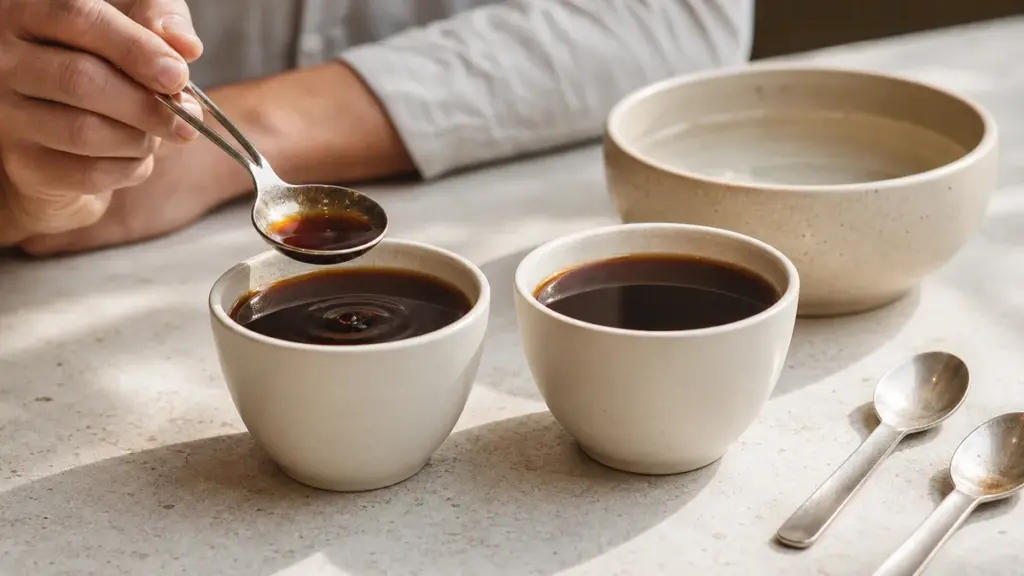
A simple comparison exercise
This is a suggested learning exercise, not a formal cupping protocol.
- Choose two coffees and prepare them using the same method and recipe.
- Use matching, clean cups and avoid adding flavourings during the comparison.
- Smell each coffee and write one broad aroma observation.
- Taste when comfortably cool enough, then return to both as they cool further.
- Record a difference in flavour, a difference in texture and your preference.
- If possible, repeat with the identities concealed.
Keep observation and preference in separate notes. “More citrus-like and lighter-bodied” describes a perceived difference; “I prefer the other coffee” records a judgement.
That distinction carries into the SCA’s Coffee Value Assessment, or CVA. Its descriptive assessment records sensory attributes, while its affective assessment records an impression of quality. You can borrow that separation for everyday learning without claiming to have carried out a professional assessment.
For structured tasting practice, use the routes in coffee education. Ask whether a session teaches observation, comparison, formal assessment or simply introduces different coffees.
Question myths and check the kind of evidence
Coffee claims often become misleading because an assumption disappears when the advice is repeated. A recipe for one brewer becomes a universal rule; a preference becomes a quality judgement; a historical legend acquires an exact date.
Use coffee myths and facts when a claim sounds absolute. Three recurring misunderstandings are particularly relevant to learning.
“There is one correct flavour description”
Shared sensory references help people communicate, but descriptive assessment and preference are not the same exercise. The SCA separates them deliberately. When comparing notes, first ask whether you are discussing a detected attribute, its intensity or how much someone likes it.
“A familiar story is a verified history”
Repetition is not documentation. Coffee’s earliest history contains real gaps, and the Kaldi story should remain labelled as legend. Look for the source behind a date, quotation or discovery claim.
“A course certificate means the same thing as a professional licence”
The SCA presents its modular skills courses and Q Grader licence as different educational routes. Before interpreting any credential, check what was taught, what was assessed and whether renewal applies.
A useful checking habit is to complete this sentence: “This claim applies to ___, under ___ conditions, according to ___.” If those spaces remain empty, keep investigating.
For technical questions, prefer the relevant standard, research paper or programme document. For historical questions, look for scholarship and collection evidence. For personal recommendations, ask the writer to explain their criteria rather than treating enthusiasm as proof.
Choose courses and certifications by your goal
Start with the task you want to perform. “Understand the basics”, “prepare espresso consistently” and “evaluate green coffee professionally” call for different teaching.
The SCA Coffee Skills Program includes Introduction to Coffee and five specialist areas: Barista Skills, Brewing, Green Coffee, Roasting and Sensory Skills. The specialist areas offer Foundation, Intermediate and Professional levels.
Use that structure to identify a direction:
- Brewing: investigate preparation variables and beverage assessment.
- Barista Skills: focus on espresso-based drinks and service practice.
- Sensory Skills: develop tasting and evaluation methods.
- Green Coffee: explore unroasted coffee, processing, grading and trade.
- Roasting: study the transformation of green coffee through roasting.
Before booking, request the current syllabus, entry requirements, assessment arrangements and details of practical participation. For a UK course, use the SCA’s official course-finding tools to check the provider and course listing rather than relying only on an advertisement.
Ask what you will actually do. Will you prepare drinks, compare samples, receive individual feedback or complete an assessment? An introductory demonstration may be useful, but it should not be mistaken for extensive supervised practice.
A qualification is most useful when its assessed skills match your purpose. For workplace staff, that purpose might be consistent drink preparation and correct cleaning routines. For a prospective quality assessor, it will include repeatable sensory work and accurate communication.
Read coffee education when you are ready to compare learning routes in detail. The decision should follow your goal, not the appeal of collecting certificates.
Follow a path from first cup to SCA Evolved Q Grader
There is no need for every coffee enthusiast to pursue professional assessment. If that is your ambition, however, it helps to understand the stages between enjoying coffee and evaluating it for work.
The following is a suggested learning path, not an SCA-mandated sequence of qualifications.
Stage 1: become a consistent maker
Learn one preparation method, record what you do and repeat a satisfactory result. Build enough vocabulary to describe a problem without immediately guessing its cause.
Stage 2: become a careful comparer
Compare coffees under similar preparation conditions. Record observations before looking at other people’s notes, and separate preference from description.
Stage 3: add structured sensory learning
Consider Introduction to Coffee and relevant Sensory Skills study. Seek feedback on how consistently you identify, describe and communicate differences.
Stage 4: practise professional assessment methods
Study the current CVA materials and gain guided experience using the forms. The SCA’s Q preparation guidance recommends practice with assessments, sensory references and comparison tasks. Reading the documents is preparation for practical work, not a replacement for it.
Stage 5: assess readiness for Q
The SCA Evolved Q Grader programme is the CVA-based successor to the programme formerly operated by the Coffee Quality Institute, or CQI. Management transferred to the SCA on 1 October 2025. The SCA’s current course page uses the shorter name Q Grader, so learners will encounter both terms.
As checked in November 2026, the SCA describes a six-day course with nine assessments: eight practical evaluations and one written examination. All must be passed to earn the licence. It is intended for experienced cuppers and sensory evaluators, rather than as a first coffee course.
The licence is renewable every three years through continued professional development. Check the current programme and preparation pages before enrolling, especially if you are reading older material about CQI, transition arrangements or previous assessment procedures.
Professional depth also means understanding the assessment framework. CVA considers physical properties, sensory description, impressions of quality and information beyond the cup, such as origin and traceability. Its purpose is broader than attaching one score to a coffee.
Build a reading, viewing and listening habit
Choose resources by their function: a reference for looking things up, practical instruction for a task and continuing journalism for ideas and developments.
James Hoffmann’s How to Make the Best Coffee at Home is a useful practical starting point because its published scope includes grinding, brewing methods and coffee drinks. His The World Atlas of Coffee offers a broader route through production, processing, roasting, brewing and producing countries.
For a contrasting perspective, include museum material and historical scholarship. Objects and archival research can challenge the simplified origin stories repeated in general introductions.
For continuing media, Sprudge publishes coffee journalism and operates a podcast network. Treat interviews and reported features as opportunities to hear different experiences, then return to primary sources when a technical or programme claim matters.
Use coffee blogs and publications to build a reading list suited to your interests rather than following everything. When watching a demonstration, note its method and assumptions; when listening to an interview, distinguish the speaker’s experience from a general claim.
A productive habit is to finish each reading session with one question or one practical exercise. To learn coffee steadily, make the next step specific enough to try.
FAQ
Can I learn coffee without buying more equipment?
Yes, start with the preparation method and coffee you already use. Record what you do, describe the result and choose one question to investigate. Add equipment only when you can explain the learning task it would support. An introductory class or guided tasting can also help you identify your interests before changing your setup.
Should I learn to enjoy coffee without milk?
You do not have to stop drinking coffee with milk to learn about it. Keep your normal drink as part of your practice, but consider a separate unflavoured comparison when you want to focus on the coffee itself. The purpose is to answer a particular tasting question, not to establish a more respectable way to drink.
How do I know when I am ready for a more advanced class?
Ask the provider to compare your experience with the current course requirements. Describe what you can do reliably, where you need help and which practical methods you have used. For Q Grader preparation, use the SCA’s published preparation guidance and discuss readiness with an instructor rather than judging it by how many coffees you have tried.
Where to go next
Begin with Coffee for Beginners for practical orientation, then use Coffee Myths and Facts to develop a questioning approach to advice. Choose History of Coffee for cultural and historical context, or Coffee Education when you want structured feedback and a learning route.
Sources
-
British Museum, Life in a cup: coffee culture in the Islamic world, exhibition guide, 2021.
URL: https://www.britishmuseum.org/sites/default/files/2021-10/Life_in_a_cup_coffee_culture_in_the_Islamic_world_large_print_guide_1021.pdf
Collection-based evidence for coffee preparation, drinking objects and social history. -
Michel Tuchscherer, Cambridge University Press, “Coffee in the Red Sea Area from the Sixteenth to the Nineteenth Century”, in The Global Coffee Economy in Africa, Asia, and Latin America, 1500 to 1989, online publication 2009.
URL: https://www.cambridge.org/core/books/abs/global-coffee-economy-in-africa-asia-and-latin-america-15001989/coffee-in-the-red-sea-area-from-the-sixteenth-to-the-nineteenth-century/8EDB621854C8AF5514BF39D6325171CE
The retrieved chapter summary supports the early trade and cultivation outline. -
Michel Tuchscherer, Oxford University Press, The Ethiopian and Yemeni Roots of Coffee, 2024, retrieved abstract.
DOI URL: https://doi.org/10.1093/acrefore/9780197762530.013.25
Retrieved abstract URL: https://machinelibrary.ai/r/10.1093/acrefore/9780197762530.013.25
Historical uncertainty, the role of Ethiopia and Yemen, and the status of the Kaldi legend. -
The Courtauld, From East to West, Illuminating Objects, undated.
URL: https://sites.courtauld.ac.uk/illuminating-objects/illuminating-objects-home/queen-anne-silver-coffee-pot/from-east-to-west/
Historical context for Pasqua Rosée’s London coffeehouse. -
Specialty Coffee Association, Coffee Skills Program, current programme page, checked 2026.
URL: http://education.sca.coffee/coffee-skills-program
Programme structure, specialist areas, learning levels and course-finding guidance. -
World Coffee Research, Sensory Lexicon, current resource page, undated.
URL: https://worldcoffeeresearch.org/resources/sensory-lexicon
Scope and purpose of the lexicon and its sensory references. -
Specialty Coffee Association, Coffee Value Assessment, current framework page, checked 2026.
URL: https://sca.coffee/value-assessment
Physical, descriptive, affective and extrinsic assessment categories. -
Specialty Coffee Association, The Specialty Coffee Association and the Coffee Quality Institute Announce Historic Partnership to Provide Better Support and Education to the Coffee Industry, 2025.
URL: https://tetra-pentagon-2dmy.squarespace.com/sca-news/2025/4/22/the-specialty-coffee-association-and-the-coffee-quality-institute-announce-historic-partnership-to-provide-better-support-and-education-to-the-coffee-industrynbsp-ng7ff
Retrieved SCA-hosted announcement documenting the programme transfer. -
Specialty Coffee Association, Q Grader, current programme page, checked 2026.
URL: https://sca.coffee/education/q-grader
Intended audience, course duration, assessments, licensing and renewal. -
Specialty Coffee Association, How to Prepare for the Q Grader Course, current guidance, checked 2026.
URL: https://sca.coffee/education/how-to-prepare
Recommended practical preparation and study materials. -
Hachette UK, Mitchell Beazley, How to Make the Best Coffee at Home, James Hoffmann, 2022, publisher’s description.
URL: https://www.hachette.co.uk/titles/james-hoffmann/how-to-make-the-best-coffee-at-home/9781784727246/
Verified author, title and subject coverage. -
The World Atlas of Coffee, The Book, official book website, undated.
URL: https://www.theworldatlasofcoffee.com/the-book
Verified author and subject coverage. -
Sprudge, About, undated.
URL: https://sprudge.com/about
Publication scope and podcast network.
This page was researched using retrieved programme documents, research resources, museum material, scholarly summaries and official publisher descriptions; practical learning exercises are editorial suggestions, not reported testing.
Last checked: November 2026