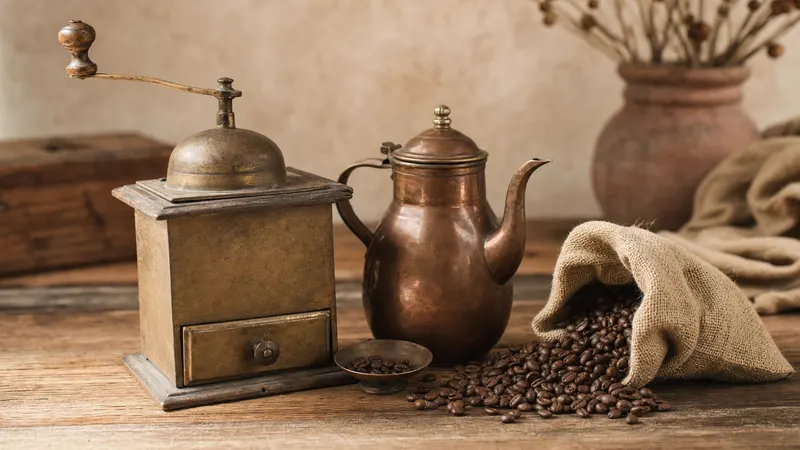
The history of coffee connects East African plants and Yemeni drinking traditions with Ottoman coffeehouses, colonial plantations and modern brewing technology. Start here to explore that story by period or theme, from the evidence behind the origin legends to the disputed idea of a fourth wave.
In short
- Separate the plant’s origins, the beginnings of coffee drinking and the legends of discovery.
- Follow trade and cultivation together: moving beans and establishing new farms were different processes.
- Read Ottoman coffeehouse history before European and British developments.
- Treat colonialism, enslavement and forced cultivation as central to the story, not a footnote.
- Use the coffee waves as overlapping interpretations, not a universally agreed calendar.
Guides in History of Coffee
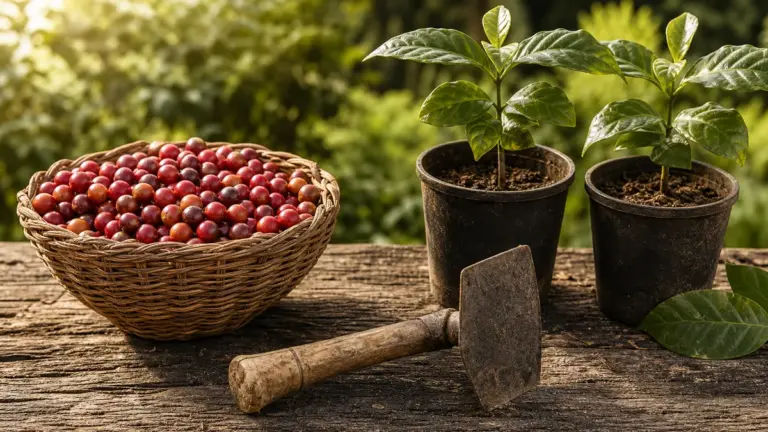 Coffee Cultivation through the AgesFollow coffee farming from Ethiopian forests and Yemeni terraces to colonial plantations, leaf rust crises and modern specialty growing methods.Read the guide
 Coffee in the Ottoman EmpireExplore coffee in Ottoman society, from Istanbul’s first coffeehouses and Murad IV’s bans to palace coffee makers and UNESCO-recognised traditions.Read the guide
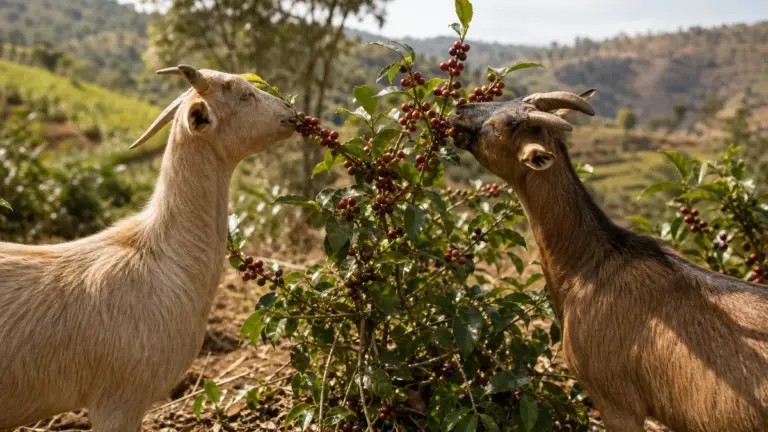 Coffee Legends and MythsExplore coffee’s origin legends, from Kaldi’s dancing goats to a pope’s blessing, with verified records and clear lines between fact and folklore.Read the guide
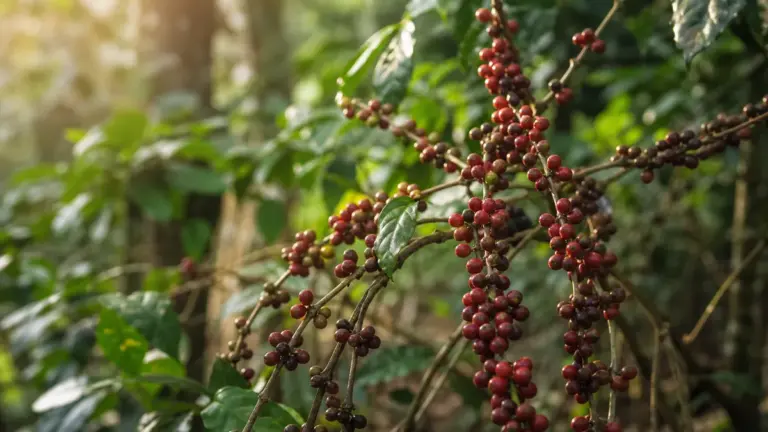 Coffee Origin and DiscoveryHow was coffee discovered? Trace wild arabica in Ethiopia, early drinking in Yemen, Oromo traditions and the evidence behind the famous Kaldi legend.Read the guide
 Coffee, Colonialism and Plantation HistoryHow slavery, forced labour and colonial land policies shaped coffee in Haiti, Brazil, Java, Ceylon and Africa, and what their legacy means today.Read the guide
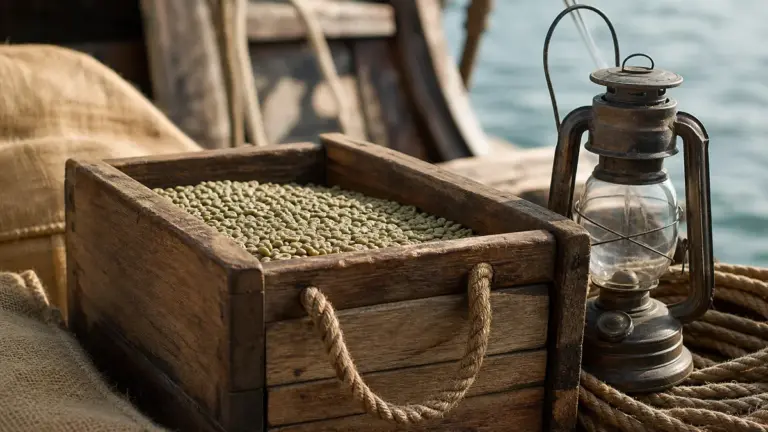 Coffee’s Role in Early TradeFollow coffee from Yemen's Red Sea ports to Amsterdam, exploring trading companies, plant transfers and the labour behind colonial production.Read the guide
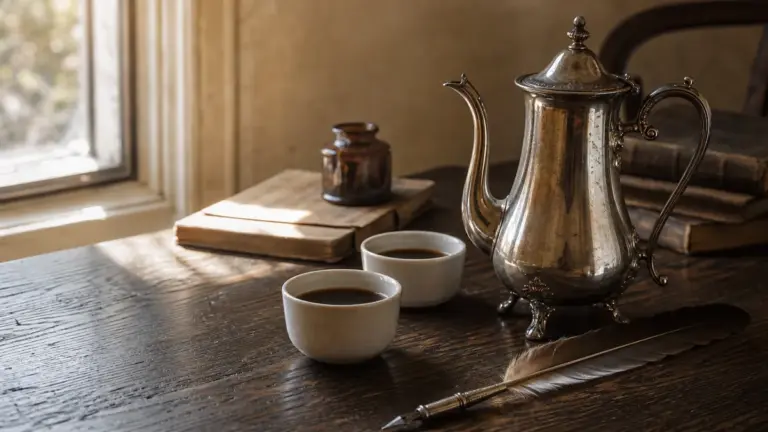 European CoffeehousesHow European coffeehouses began in Venice, Oxford, London, Paris and Vienna, with verified dates, disputed firsts, famous houses and women's roles.Read the guide
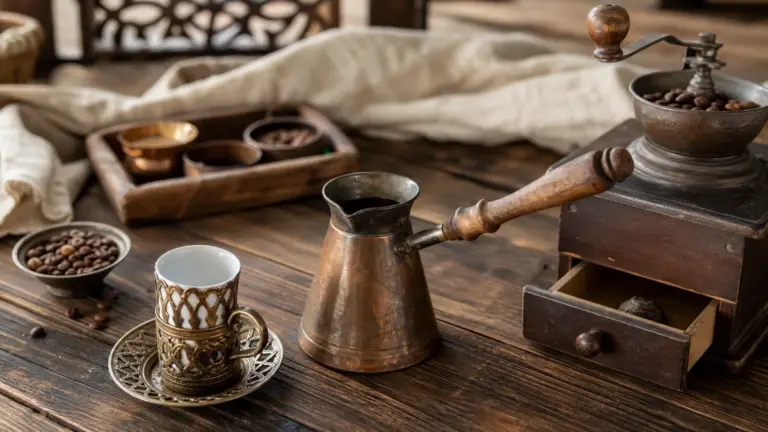 Historical Coffee ArtefactsExplore surviving coffee pots, Ottoman cups, roasters, grinders and coffeehouse tokens, with museum examples and a guide to understanding their dates.Read the guideLegends and Myths: Kaldi and the Dancing GoatsRead the guide
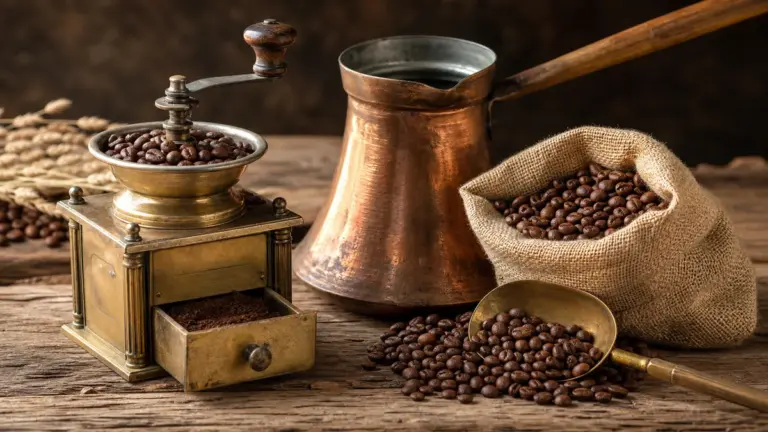 The Complete History of CoffeeFollow coffee from Ethiopia and Yemen through Ottoman coffeehouses, colonial plantations, instant coffee, espresso and the speciality coffee waves.Read the guide
 The First, Second, Third and Fourth Waves of CoffeeUnderstand coffee’s four waves, from instant and café chains to speciality craft, with a UK timeline and a clear explanation of the disputed fourth…Read the guide
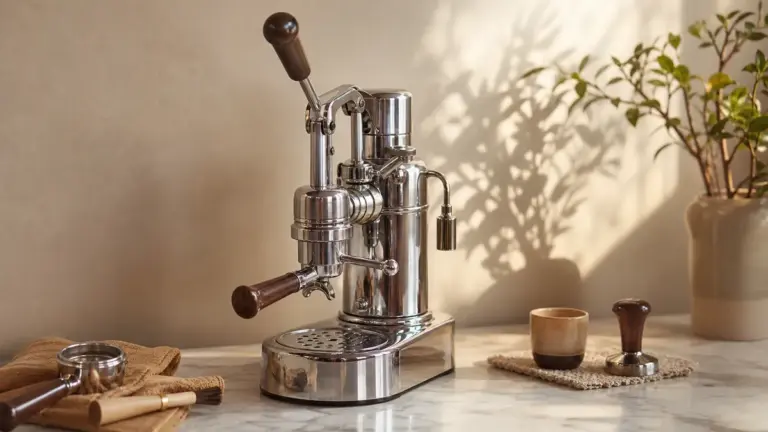 The History of Espresso MachinesTrace espresso machines from Moriondo’s 1884 patent through Gaggia’s crema, the Faema E61 and modern boilers, temperature control and pressure profiling.Read the guide
 The History of Instant CoffeeTrace instant coffee from disputed early inventions to Nescafé in 1938, wartime demand, freeze-drying and the UK's enduring instant coffee habit.Read the guide
 UK Coffee House HistoryExplore UK coffee house history, from Oxford’s disputed beginnings and London’s early traders to Charles II’s failed ban and Soho’s espresso revival.Read the guide
Start here if you are new
For a clear route through the history of coffee, read these three pieces in order:
- the complete history gives you the continuous narrative. Begin here if you want to understand the sequence before choosing a particular country, invention or controversy.
- origins and discovery examines what can actually be established about coffee’s beginnings. Read it next to distinguish botanical origins from the development of cultivation and drinking.
- coffee and colonialism puts the expansion of production into its political and human context. It is the essential companion to accounts centred on merchants, inventors and coffeehouse customers.
Then choose a themed route below. For the wider reference library, return to learn about coffee, which connects history with the plant, processing, brewing and equipment.
There is no need to read every linked article in sequence. If your interest began with an old grinder, a London coffeehouse or an espresso machine, start with that object or place, then follow its connections back towards cultivation and trade.
History of coffee at a glance
This overview combines a short timeline with a reading map. The periods overlap, and dates identify documented developments rather than a single moment when everyone changed how they drank coffee.
| Period or milestone | What to investigate | Best next read |
|---|---|---|
| Fifteenth century | Ethiopian coffee gathering and trade, and Yemeni drinking traditions | Origin and Discovery |
| Sixteenth and seventeenth centuries | Red Sea commerce and the growth of Ottoman coffee culture | Coffee's Role in Early Trade |
| Seventeenth century, including London around 1652 | Coffeehouses as places for news, conversation and business | UK Coffee House |
| Eighteenth and nineteenth centuries | Colonial production, coerced labour and expanding markets | Coffee, Colonialism and Plantation History |
| Early twentieth century, including a soluble-coffee patent in 1903 | Attempts to make coffee quicker and more convenient | The History of Instant Coffee |
| Post-war espresso, including a surviving 1948 lever-machine design | Changes in pressure brewing and the appearance of crema | The History of Espresso Machines |
| Modern consumption movements | Mass availability, coffee-shop culture, origin-led quality and competing fourth-wave definitions | The First, Second, Third and Fourth Waves of Coffee |
Use the table to choose a question rather than memorise a succession of dates. “Who grew the coffee?”, “Who carried it?” and “Where was it drunk?” often lead to different, equally necessary histories.
Origins, discovery and the stories people tell
Coffee’s beginnings require a distinction between the plant and the drink. Arabica’s East African origins do not establish when someone first roasted its seeds, brewed them or began cultivating it elsewhere.
Historical research places Ethiopia and Yemen together at the centre of the early story. Coffee gathered in Ethiopia was being traded by the end of the fifteenth century, while Yemen became a major centre of cultivation and consumption. Earlier everyday uses are harder to reconstruct because the surviving evidence is limited.
Choose the origins evidence if you want to know what supports these conclusions and where uncertainty remains. It is the right starting point for questions about the relationship between wild plants, cultivated crops and drinking traditions.
Where Kaldi belongs
The familiar story of Kaldi noticing lively goats is a discovery legend, not a verified eyewitness account. A much later written version resembling it appears in a seventeenth-century account, with details that differ from familiar modern retellings.
That does not make the story worthless. Legends are worth reading as stories people have repeated and adapted, but they cannot establish a discoverer or discovery date.
Read the legends and myths for the stories and their documentary trails. Keep it alongside the origins article rather than using one as a substitute for the other: “What does the legend say?” and “What can historians demonstrate?” are different questions.
Trade and cultivation: how coffee travelled
Coffee did not simply move from one famous discoverer to another. Its expansion involved growers, merchants, ports, markets and existing commercial connections.
Historian Michel Tuchscherer describes increasingly intensive cultivation on Yemeni mountain terraces during the second half of the sixteenth century. Networks linked Yemeni ports with Jeddah and Cairo, connecting coffee-producing communities to much larger markets.
Read coffee’s early trade when your question concerns routes, intermediaries and the movement of beans. It helps explain why a port or trading name can become prominent in coffee history without being the place where the plant originated.
Choose cultivation through the ages for the agricultural side. Follow this route when you want to distinguish an existing trade in harvested coffee from the establishment of production in another territory.
A useful reading habit is to pause whenever an account says that someone “introduced coffee”. Ask whether that means importing a drink, bringing seeds, keeping a plant alive or establishing a substantial crop. Those achievements should not be treated as interchangeable.
Ottoman and European coffeehouses
Coffeehouse history begins before London or the continental European establishments most familiar to British readers. The British Museum traces coffee’s movement through trade and pilgrimage routes across the Arabian Peninsula, Egypt and the Levant into the Ottoman world.
Coffee became part of domestic and public life, despite attempts by religious or political authorities to restrict it. This is a history of social practices as well as a beverage: serving equipment, conversation and the organisation of public gathering places all matter.
Start with coffee in the Ottoman Empire to understand that setting on its own terms. Read it before the European articles if you want to avoid treating Ottoman coffee culture merely as an introduction to something that happened elsewhere.
Then turn to European coffeehouses to compare local developments. The useful question is not just where a coffeehouse opened, but how the institution fitted into the city around it.
Be cautious with claims about “Europe’s first coffeehouse”. The Courtauld and British Museum accounts consulted here give different answers, including English and Italian establishments respectively. This hub therefore avoids assigning a single European first.
UK coffeehouses: news, business and belonging
London’s first coffeehouse is conventionally associated with Pasqua Rosée around 1652. Research based on parish and city records has examined the evidence behind that familiar account rather than simply repeating it.
British coffeehouses became places for gathering and exchanging news as well as drinking coffee. Historian Brian Cowan stresses that they developed within existing social structures, not outside them as entirely new, unrestricted spaces.
Read UK coffeehouse history for the British route through the subject. It is the next stop if you are interested in newspapers, commercial conversation, urban sociability or the people who operated these establishments.
One distinction is especially useful here: a place where strangers could converse was not necessarily a place where everyone participated equally. Cowan describes women’s involvement particularly as proprietors and visitors conducting business, while challenging an overly simple picture of universal coffeehouse openness.
When reading a claim that coffeehouses changed Britain, ask what kind of evidence supports it. An advertisement can show how a business presented itself; it cannot, by itself, tell us exactly who attended or what they discussed.
Colonialism and plantation history
The spread of coffee cultivation under European empires cannot be separated from the labour systems that sustained it. Enslaved people worked on coffee plantations in the Caribbean and Brazil, while Dutch-controlled production in Java included compulsory cultivation and deliveries.
These were not identical systems. Historian Steven Topik distinguishes production organised through coerced peasant cultivation from plantation slavery, and also examines the importance of smaller producers.
Read colonialism and plantation history to investigate those differences. Choose it whenever an account of expanding production seems to consist only of seedlings, ships and successful entrepreneurs.
A useful comparison asks who controlled the land, who performed the work, whether growers could refuse cultivation and who controlled the crop after harvest. These questions keep the people producing coffee visible alongside the institutions selling it.
Avoid using “colonial” as a complete explanation on its own. The stronger historical question is which arrangements operated in a particular place, how they changed and whose choices were constrained.
Espresso and instant: different routes to convenience
Espresso and instant coffee belong beside each other in a history of preparation, but they solve different problems. Espresso developed through pressure-brewing machinery; instant coffee through making a soluble coffee product that could be reconstituted with water.
For espresso, distinguish early steam-driven machines from later lever designs. Angelo Moriondo’s 1884 patent is an early machinery milestone, while MUMAC’s collection documents a 1948 Gaggia lever machine associated with high-pressure brewing and crema, the foam on an espresso.
Read espresso machine history to follow those changes without assuming the earliest machine produced exactly the drink familiar today. It is the best route for separating patents, commercial machines and changes in the cup.
For soluble coffee, Smithsonian archival research documents Satori Kato’s 1903 patent and Charles Trigg’s later work on soluble extracts. That evidence supports a history of successive development rather than an uncomplicated single-inventor story.
Choose instant coffee history for that parallel route. Read both histories if you are interested in convenience: compare what each invention changed about preparation, equipment and the work required before serving.
What historical objects can tell us
Objects provide evidence that a smooth written narrative can miss. The British Museum’s coffee exhibition includes brewing vessels and cups, while London Museum holds a seventeenth-century coffeehouse trade token advertising several products.
Read historical artefacts if you prefer to approach history through things people made, used and kept. It is particularly useful for learning how a vessel, token or machine can support a historical argument.
Ask three questions of an object: what survives, how it has been dated and what its original use can reasonably establish. An elaborate coffee pot may reveal something about a particular setting, but should not automatically stand for everyone’s drinking habits.
Distinguish the object’s manufacture from later inscriptions, repairs or museum interpretation. For machinery, also separate a patent drawing from a surviving working example.
The first, second, third and fourth waves
The wave model groups changes in consumption: mass availability in the first wave, coffee-shop experience in the second, and origin-led, craft-focused coffee in the third. These movements overlap rather than replacing one another.
The fourth wave is less settled. The International Trade Centre proposes scaling up specialty coffee; an industry account published by Finlays instead emphasises science in production and brewing. The difference is partly about what counts as the defining change: wider access or a more technical approach.
Read the coffee waves for the competing interpretations. Use the model to compare priorities, not to rank drinkers or label every coffee culture.
For the history of coffee, the stronger question is what changed, for whom, and with what consequences.
FAQ
Which article should I read if I only have time for one?
Start with The Complete History of Coffee. It provides the continuous narrative that this hub deliberately leaves to a separate article. Use this page afterwards to select a more focused route, especially if you want to examine the evidence behind an origin story, explore British coffeehouses or understand the production side of the history.
How can I tell whether a historical claim is well supported?
Look for a source that can support the precise claim being made. A patent establishes a documented invention claim, not necessarily widespread use; a museum object establishes the survival of that example, not how common it was. Strong accounts distinguish contemporary records, later recollections and modern interpretations, and make uncertainty visible.
Do I need to understand brewing before reading coffee history?
No, start with the historical question that interests you. The origins, trade and coffeehouse routes do not require technical brewing knowledge. When you reach machine history, concentrate first on what the equipment changed about preparation and service, then investigate the mechanism if that becomes useful to your reading.
Where to go next
Read The Complete History of Coffee for the connected narrative, then Coffee, Colonialism and Plantation History to examine the labour and power behind expanding production. Choose UK Coffee House for the British social history, or The First, Second, Third and Fourth Waves of Coffee to connect the history of coffee with modern consumption.
Sources
- Cambridge University Press, Michel Tuchscherer, Coffee in the Red Sea Area from the Sixteenth to the Nineteenth Century, in The Global Coffee Economy in Africa, Asia, and Latin America, 2003, online publication 2009. Publisher’s chapter summary consulted. Source.
- Plant Humanities Lab, Nina Foster, Arabica Coffee: Cultivating Connection and Climate Resilience, 2025, updated September 2026. Source.
- British Museum, Life in a Cup: Coffee Culture in the Islamic World, large-print exhibition guide, 2021. Source.
- The Courtauld, From East to West, Illuminating Objects, undated. Source.
- The London Journal, Markman Ellis, Pasqua Rosee’s Coffee-House, 1652 to 1666, volume 29, issue 1, 2004. Publisher’s abstract consulted. Source.
- DIGIT.EN.S, Brian Cowan, Coffeehouses, undated scholarly reference entry. Source.
- London School of Economics, Global Economic History Network, Steven Topik, The World Coffee Market in the Eighteenth and Nineteenth Centuries, from Colonial to National Regimes, working paper 04/04, May 2004. Source.
- Smithsonian Magazine, Jimmy Stamp, The Long History of the Espresso Machine, 2012. Used for machinery history, not brewing specifications. Source.
- MUMAC, via Museimpresa and Google Arts & Culture, Espresso Coffee Machine Detail of Classica, Gaggia (Made by FAEMA), collection record for a 1948 object, undated. Source.
- Smithsonian, Lemelson Center, Alison Oswald, Coffee in an Instant, 2017. Indexed archival article text consulted. Source.
- London Museum, The New Coffee House, collection record, undated. Source.
- International Trade Centre, The Coffee Guide, fourth edition, October 2021, chapter 1, particularly pages 13 to 18. Source.
- Finlays, Tom Blackwall, Coffee Waves, 1750, issue 166, 2020. Used as a primary example of an industry interpretation, not an agreed historical standard. Source.
This hub was researched through retrieved historical scholarship, museum records, archival interpretation and explicitly attributed industry frameworks, with disputed firsts and wave definitions kept separate from established milestones.
Last checked: November 2026