Office coffee installation and maintenance means preparing the right site, commissioning the machine safely and assigning responsibility for cleaning, water treatment, servicing and supplies. Start with the exact machine’s installation requirements and care instructions, then agree who does each task, including any pressure-system examinations required for that particular installation.
In short
- Plan the whole tea point: machine, milk fridge, water treatment, drainage, electrical supply and maintenance access.
- Keep cleaning, descaling, servicing and statutory pressure-system examination separate in your maintenance plan.
- Check local water information, then have the installer assess the water reaching the machine.
- Name a cleaning lead and a deputy, and train both before handover.
- Ask for written confirmation of whether the particular commercial pressure system falls within PSSR and what duties follow.
Guides in Office Coffee Installation and Maintenance
 Choosing Coffee Beans for Office MachinesChoose office coffee beans by roast, surface oil, freshness and taste. Compare suppliers, estimate stock needs and run a useful workplace sample trial.Read the guide
 Commercial Boiler Safety and PSSR ComplianceUnderstand coffee machine boiler safety, written examination schemes, competent persons and hired-machine responsibilities under Great Britain’s PSSR.Read the guide
 Office Coffee Consumables and SuppliesPlan office coffee supplies with a practical stock list covering beans, milk, cups, cleaning products, filters, safe storage and sensible reorder points.Read the guide
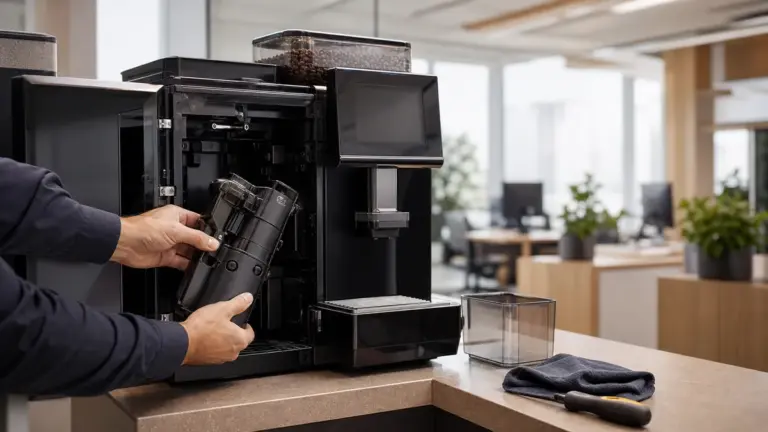 Office Coffee Machine Breakdowns and RepairsOffice coffee machine stopped working? Follow safe checks, record error messages and understand engineer call-outs, service cover and repair decisions.Read the guide
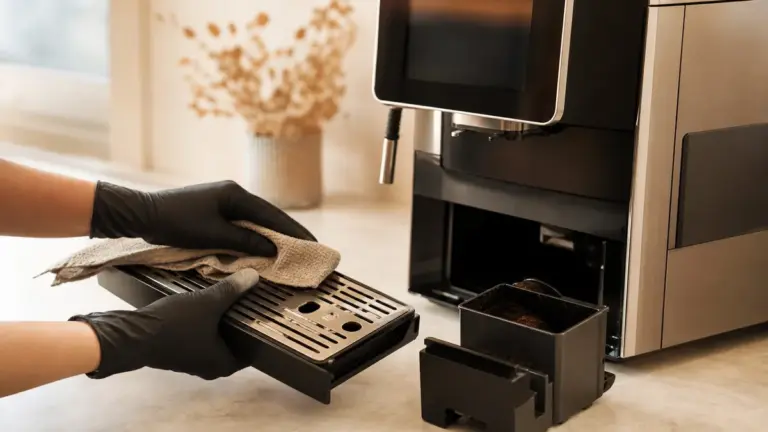 Office Coffee Machine Daily Cleaning and HygieneFollow a daily office coffee machine cleaning routine covering milk systems, drip trays, weekly tasks, named responsibilities and clear hygiene records.Read the guide
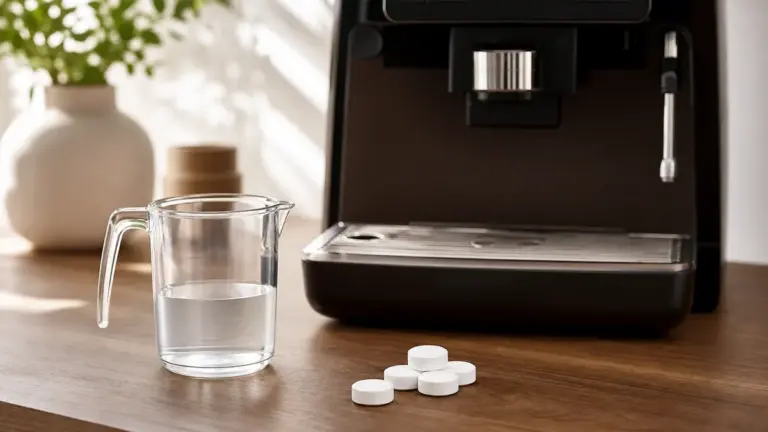 Office Coffee Machine Descaling and ServicingLearn when office coffee machines need descaling and servicing, how filters change the schedule, and which maintenance tasks need a qualified engineer.Read the guide
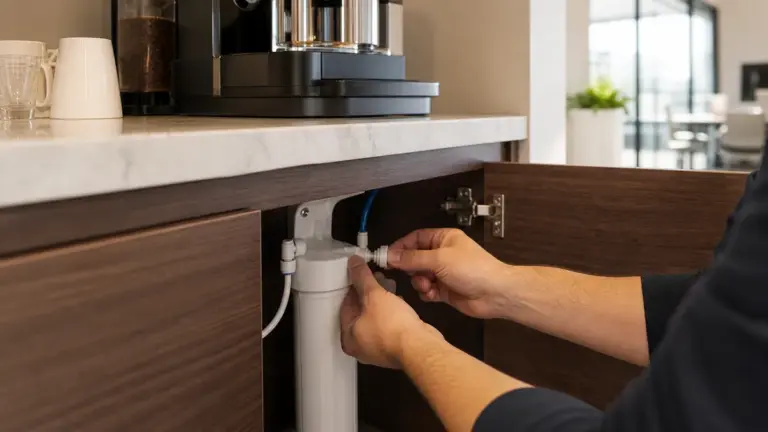 Office Coffee Machine Installation GuidePlan office coffee machine installation from site survey to sign-off, with checks for power, water, filters, drainage, commissioning and staff training.Read the guide
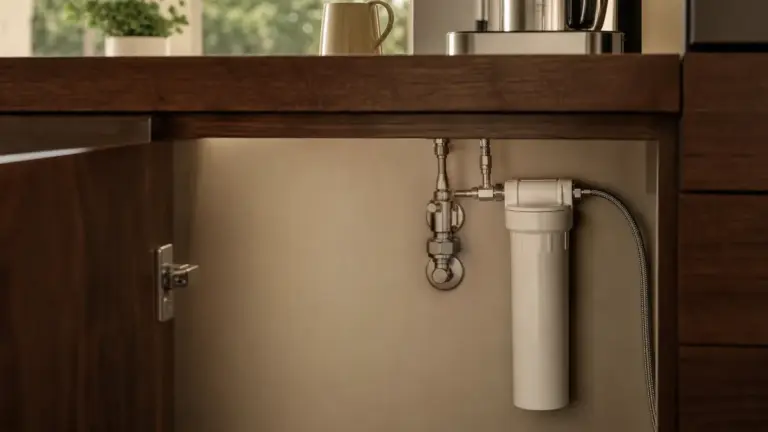 Office Coffee Machine Plumbing and Electrical RequirementsCheck office coffee machine sockets, circuits, water pressure, backflow protection, drains and isolation valves before installation, with a handover checklist.Read the guide
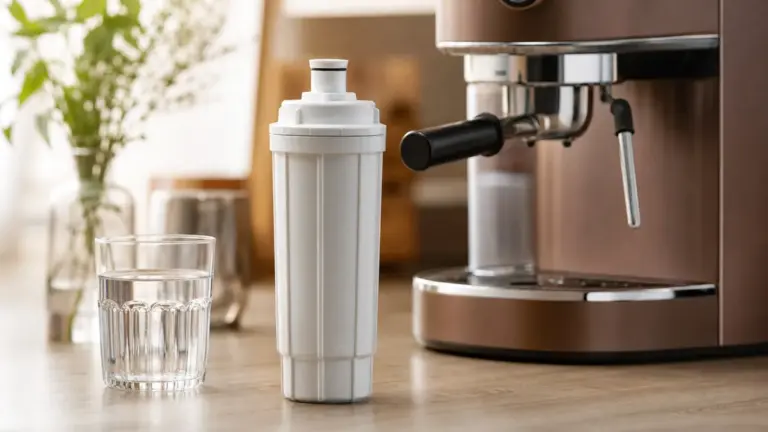 Office Coffee Machine Water FiltrationChoose office coffee water filtration using hardness, alkalinity and machine requirements, with guidance on bypass settings, capacity and replacements.Read the guide
Start here if you are new
Follow this reading path before arranging delivery:
- Read the installation guide to organise the site survey, delivery, commissioning and handover.
- Use plumbing and electrical requirements with your facilities team and installer to establish which building services the chosen configuration needs.
- Set up daily cleaning and hygiene before the machine enters service, rather than deciding who cleans it afterwards.
Already running a machine? Go straight to the section matching your problem: water treatment, planned maintenance, safety or repairs. For decisions beyond installation and upkeep, return to the wider office coffee guide.
This hub maps the work and directs you to the detailed guides. It is not a substitute for the operating manual supplied with your machine.
Office coffee installation and maintenance at a glance
Use this overview as an ownership checklist. The suggested leads are a practical management arrangement, not a statement that legal responsibilities can simply be passed to a supplier.
| Area | What to establish | Suggested lead | Detailed guide |
|---|---|---|---|
| Installation | Position, access, commissioning and handover | Facilities lead and installer | installation planning |
| Building services | Electrical supply, water connection and drainage | Facilities team and competent trades | services requirements |
| Water | Assessment, treatment settings and cartridge replacement | Installer and nominated machine lead | water filtration |
| Hygiene | Cleaning programmes, removable parts and milk equipment | Trained cleaning lead and deputy | cleaning routines |
| Planned maintenance | Descaling instructions and service schedule | Machine lead and service provider | descaling and servicing |
| Pressure-system safety | Applicability, written scheme and examinations where required | Duty holder with competent advice | PSSR compliance |
| Repairs | Safe shutdown, fault reporting and technical support | Machine lead and repair provider | breakdowns and repairs |
| Stock | Compatible beans, cleaning products and replacement supplies | Named stock controller | beans and consumables |
Installation: prepare the site before delivery
Begin with the installation documents for the exact model and configuration, including its milk equipment and other modules. Do not assume that a photograph or the dimensions of the main machine describe the complete installation.
Manufacturer specifications can distinguish between mains-connected and tank-fed configurations and give separate requirements for water pressure, water quality, drainage and electrical connections. Franke’s published A600 technical leaflet is one example of why those details must be checked together, rather than treating every commercial bean-to-cup machine alike.
Ask the installer to confirm:
- The complete equipment footprint and required clearances.
- Access for filling, cleaning, removing containers and technical work.
- The electrical connection required by every powered module.
- Water supply and drainage arrangements, where applicable.
- Delivery access and any preparation needed before arrival.
- Who commissions the machine and trains its users.
The Office Coffee Machine Installation Guide is the next read when you need to turn that list into a delivery and handover plan. Keep the survey, approved configuration and commissioning record together.
Plumbing and electrical checks
For a plumbed-in installation in England and Wales, the Water Supply (Water Fittings) Regulations 1999 require appropriate protection against backflow, meaning water or another fluid travelling backwards towards the supply. Scotland has separate water fittings byelaws, and Northern Ireland has its own regulations.
Do not prescribe a generic valve from an online checklist. Have the installer establish the required protection for the actual appliance and installation, consulting the water supplier where necessary.
Electrical requirements also need model-specific confirmation. In Great Britain, HSE explains that electrical equipment must be maintained to prevent danger, but annual portable appliance testing is not a universal legal requirement. The inspection and testing approach should reflect the equipment and its use.
Read Plumbing and Electrical Requirements before approving building work or reusing connections left by an earlier machine.
Water: assess the supply and maintain the treatment
Start with your water supplier’s local information, not a single hardness figure for the UK. Thames Water, for example, provides a postcode-based water quality lookup. Ask the installer to assess the supply at the proposed connection and document the treatment selected for the machine.
Keep the manufacturer’s equipment requirements separate from coffee-tasting standards. SCA Standard 102-2024 specifies water for cupping, the structured tasting of coffee samples; it is not an installation specification for every commercial coffee machine.
For context, its cupping-water table specifies calcium hardness of 50 to 175 ppm as calcium carbonate, alkalinity at or near 40 to 70 ppm as calcium carbonate, pH of 6 to 8 and no chlorine. Do not substitute those figures for the machine manufacturer’s requirements. Calcium hardness is also not interchangeable with every supplier’s figure for total hardness.
The Office Coffee Machine Water Filtration guide is the useful next step when choosing treatment or checking an existing filter arrangement.
Ask for a written water-treatment record covering the measured results, cartridge identity, settings, replacement instructions and responsible person. Record units exactly: “hardness” without its measurement basis is not enough to compare results.
A filter change is a maintenance task in its own right. Follow the specified replacement and flushing procedure rather than assuming that replacing the cartridge completes every required step.
Cleaning: make the routine someone’s responsibility
Build the cleaning plan around the manufacturer’s instructions for the installed coffee and milk systems. Franke publishes different cleaning resources for different machine and milk-system combinations, illustrating why a generic brand-level checklist may be insufficient.
Separate automatic programmes from the manual tasks surrounding them. A screen message confirming a completed programme does not establish that someone has cleaned every removable part or the adjoining milk equipment.
For example, JURA’s GIGA X8 instructions require milk-system cleaning daily when milk has been prepared, alongside daily dismantling and rinsing of the relevant spout components. Those are instructions for that machine, not a universal procedure to copy onto another model.
A practical workplace arrangement is to:
- Nominate a cleaning lead and a trained deputy.
- Keep the correct instructions and products accessible.
- Schedule the work when someone can complete the whole procedure.
- Record completion and report anything that could not be cleaned.
- Agree who checks the machine before it returns to use.
Read Office Coffee Machine Daily Cleaning and Hygiene when assigning those tasks. Ask the trainer to demonstrate them on your installation, then have the responsible staff repeat the process.
Include holiday cover and shutdown arrangements in the handover. They should be planned procedures, not improvised by whoever happens to be last in the office.
Descaling and servicing: use the machine’s own maintenance plan
Descaling removes mineral deposits; it is not the same task as the machine’s cleaning programme. Servicing is another separate activity, with its scope agreed against the manufacturer’s requirements and the equipment’s condition.
Avoid imposing an arbitrary monthly or annual descaling routine. JURA’s GIGA X8 instructions, for example, relate scale formation to water hardness and describe a different descaling arrangement when its specified filter system is used. That illustrates a model-specific maintenance strategy, not a promise that any filtered machine never needs descaling.
Use Office Coffee Machine Descaling and Servicing to organise the questions for your provider:
- Which tasks belong to trained workplace staff?
- Which require a technician?
- What determines each maintenance interval?
- Which products and replacement parts are specified?
- How should filter changes and maintenance be recorded?
- What happens after a prolonged shutdown?
Ask for itemised written quotations defining installation, water treatment, planned servicing, consumables, repairs and any statutory examinations separately. Compare the scope and exclusions, not just the word “maintenance”.
Keep the latest service report available to the next technician. Record what was inspected, what was replaced and what follow-up was recommended.
Pressure-system safety: check the particular installation
Do not assume that every bean-to-cup machine has identical boiler-safety obligations. Ask the supplier and an appropriately competent person to establish whether the particular commercial pressure system falls within the Pressure Systems Safety Regulations 2000, known as PSSR, and which requirements apply.
HSE’s guidance for Great Britain identifies steam at any pressure as a relevant fluid. A machine’s brewing-pressure figure is therefore not, by itself, a reliable way to decide its PSSR position. Northern Ireland has a separate legal framework.
For qualifying equipment, HSE says a written scheme of examination must be in place and the required examination undertaken before use. The scheme sets out the examinations and their frequency. A competent person must draw it up or certify it as suitable.
A statutory examination is not a substitute for routine maintenance, and a routine service should not be accepted as evidence that a required examination has occurred.
Read Commercial Boiler Safety and PSSR Compliance before commissioning equipment that may fall within these duties. Request a written applicability assessment and, where required, retain the scheme, examination reports and evidence that any specified actions were completed.
Breakdowns and repairs: establish a safe escalation route
Give staff a clear boundary between permitted user checks and technical repairs. Manufacturer instructions may allow checks of accessible containers or removable parts while expressly prohibiting users from opening and repairing the machine themselves.
If a fault appears unsafe, stop use and follow the manufacturer’s shutdown instructions. Do not ask an untrained colleague to investigate behind panels or repeatedly restart equipment with a recurring safety-related fault.
Prepare a fault report containing:
- Model and serial number.
- The exact message displayed.
- What happened immediately before the fault.
- Whether it affects every drink or one function.
- Recent cleaning, filter changes or servicing.
- Any visible leakage or damage.
The Office Coffee Machine Breakdowns and Repairs guide helps distinguish user-level checks from faults needing technical support.
Agree the reporting route before a breakdown occurs. Useful questions include who accepts the report, what information they need, how attendance is arranged and who authorises further work.
Beans, consumables and waste: keep the routine supplied
Choose beans for both the drinks people want and the machine’s permitted ingredients. JURA’s GIGA X8 instructions, for example, prohibit beans treated with additives or caramelised beans. Check your own manual rather than assuming every product labelled “coffee beans” is suitable.
Read Choosing Coffee Beans for Office Machines when comparing coffee for the installed machine. Treat a bean change as something to assess in the actual drinks, rather than judging it only from the packet description.
For stock control, Office Coffee Consumables and Supplies helps organise beans, milk, cleaning products, filters and other routine requirements. Keep cleaning and descaling products clearly distinguished and identified in their original packaging.
Set reorder points from actual use and delivery lead times. Give the stock controller the exact product references so that a substitute is not ordered merely because it looks similar.
Include coffee grounds in the waste plan
In England, Simpler Recycling workplace requirements took effect on 31 March 2025. Micro-firms with fewer than 10 full-time-equivalent employees have until 31 March 2027; the employee count applies across the business, not separately to each location.
The guidance includes coffee grounds in food waste. Packaging labelled compostable or biodegradable must not go into that food-waste collection, although food-waste caddy liners are allowed. Scotland, Wales and Northern Ireland have different arrangements, so check the rules applying to your workplace.
Finish the office coffee installation and maintenance plan with an owner, a deputy, current instructions and a usable record of outstanding tasks. That gives the next person taking responsibility somewhere reliable to start.
FAQ
Can our existing cleaner look after the machine?
Yes, if the agreed duties, training and available time match the manufacturer’s instructions. Do not assume a general cleaning contract includes internal coffee-system programmes, milk-system parts or filter replacement. Walk through the work together, identify anything excluded and appoint someone to check completion and arrange cover during absence.
Does mains plumbing remove the need for daily attention?
No, a permanent water connection does not remove the machine’s cleaning and operational tasks. Use the installed model’s instructions to establish what still needs checking, cleaning, emptying or replenishing. At handover, ask the trainer to distinguish tasks avoided by the chosen configuration from those that remain with workplace staff.
What documents should we retain when changing service provider?
Keep the operating instructions, installation and commissioning records, water-treatment details, service history and current fault information. Where applicable, retain the written scheme of examination and examination reports too. Give the incoming provider the exact machine configuration and ask them to identify missing information before agreeing the new maintenance scope.
Where to go next
Read Office Coffee Machine Installation Guide to prepare a new site, then Office Coffee Machine Daily Cleaning and Hygiene to allocate everyday care. For an existing installation, Office Coffee Machine Descaling and Servicing helps organise planned maintenance, while Commercial Boiler Safety and PSSR Compliance explains the separate pressure-system questions.
Sources
- Franke Coffee Systems, A600 technical product leaflet, undated retrieved edition. Manufacturer-published requirements illustrating configuration-specific water, drainage and electrical provision. Technical leaflet.
- UK legislation, The Water Supply (Water Fittings) Regulations 1999, SI 1999/1148, Schedule 2, paragraph 15. England and Wales backflow requirements. Regulations.
- Water Regs UK, Backflow Protection, undated live guidance. Installation-specific protection and the separate national frameworks. Guidance.
- HSE, PAT: answers to popular questions, undated live guidance. Electrical maintenance and risk-based inspection and testing in Great Britain. Guidance.
- Thames Water, Water quality, undated live resource. Postcode-based local water information. Water quality resource.
- Specialty Coffee Association, Coffee Value Assessment: Sample Preparation and Tasting Mechanics, Standard 102-2024, section 7.4 and Table 2, 2024. Cupping-water specifications and their scope. Standard.
- Franke Coffee Systems, Cleaning instructions, undated live resource. Cleaning resources separated by machine and milk-system configuration. Cleaning resources.
- JURA, GIGA X8 Instructions for Use, G2 manual, undated retrieved edition. Manufacturer instructions for user safety, ingredients and maintenance. Instructions.
- JURA, Cleaning the milk system / Dismantling and rinsing the dual spout, GIGA X8c/X8, undated retrieved edition. Separate milk-system cleaning and manual component care. Cleaning sheet.
- HSE, Pressure Systems Safety Regulations 2000 (PSSR) and Introduction to pressure equipment, undated live guidance. Relevant fluids, qualifying equipment, written schemes, examinations and maintenance. PSSR guidance; pressure equipment guidance.
- DEFRA and Environment Agency, Simpler recycling: workplace recycling in England, published 2024, live updated guidance. Commencement dates, employee-count basis, coffee grounds and compostable packaging. Workplace recycling guidance.
Research combined retrieved manufacturer documentation, legislation, regulator guidance, a water supplier’s local-information resource and the published SCA standard; workflow checklists are editorial recommendations, not additional legal requirements.
Last checked: November 2026