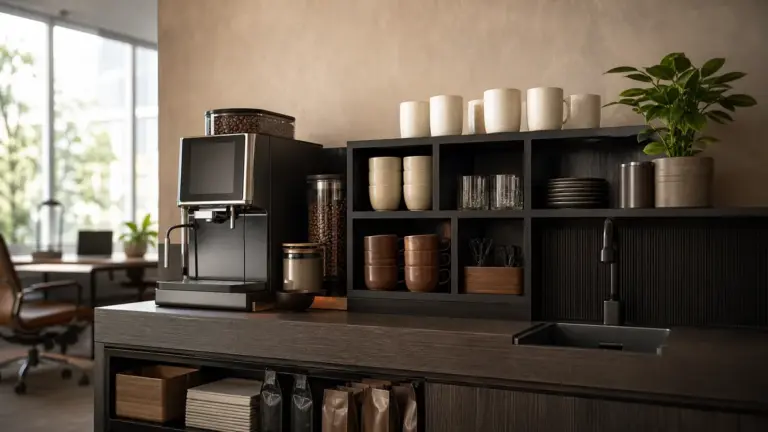
Your team already knows what great coffee tastes like. The question is whether they can get it at work.
Coffee shop culture has raised everyone’s expectations, and that is brilliant news for offices. It means a step up in quality gets noticed, appreciated and talked about.
In short
- Employees score the range of coffee at work 4.8 out of 10, and nearly half left work in the past year to buy coffee elsewhere.
- A bean to cup machine grinds fresh beans for every drink and makes milk drinks at the touch of a button.
- Capsules suit smaller teams and occasional use; a filter or batch brewer suits mostly black coffee for meetings.
- In England, coffee grounds count as food waste under Simpler Recycling, so bean to cup grounds go straight into the food waste.
- Before choosing, taste your team’s favourites, time the machine at your peak and check water, power, space and care.
The opportunity in one number
World Coffee Portal’s Coffee At Work Report UK 2026 asked more than 2,000 workplace coffee drinkers about the coffee at work. They scored the range available an average of 4.8 out of 10, while rating it highly for access and speed.
Read that as an open goal. People love having coffee at work. They just want it to taste as good as the place down the road. Nearly half had left their workplace in the past year to buy coffee from a coffee shop.
Bring that quality inside and the walk to the high street becomes a walk to the kitchen.
There is a confidence boost in it too. When visitors are offered a proper flat white in reception, or a meeting starts with a fresh cappuccino, it says something about the care that goes into everything else you do.
What bean to cup does brilliantly
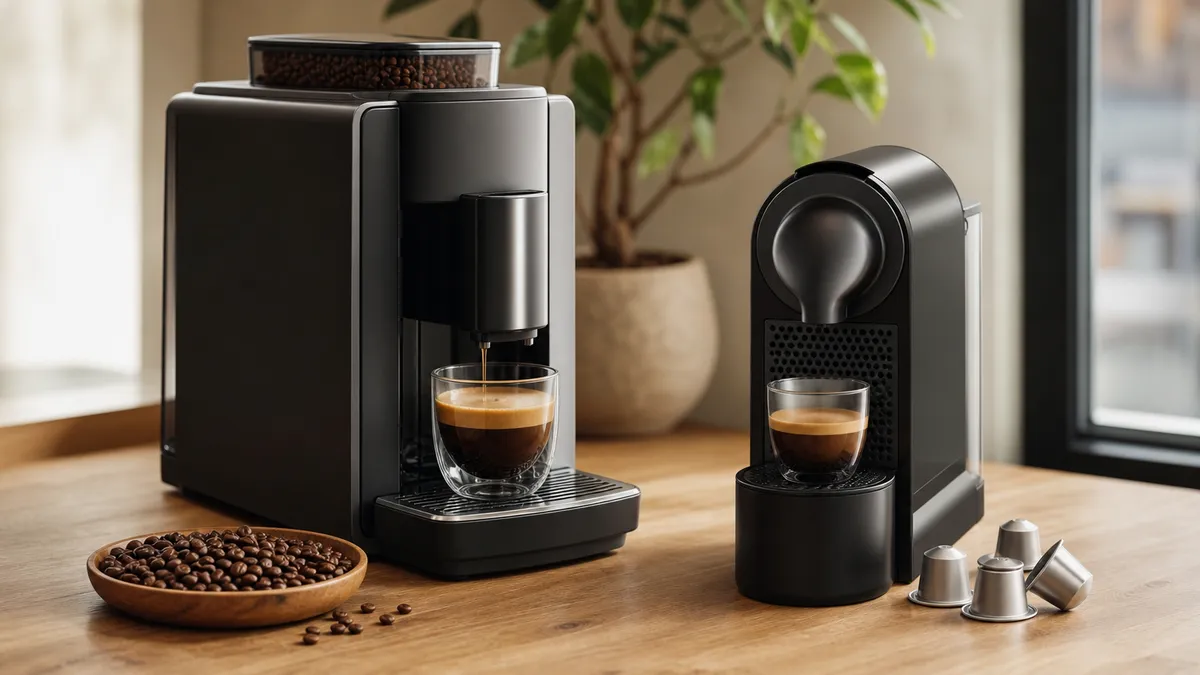
A bean to cup machine grinds fresh beans for every single drink, then brews it on the spot. With a milk system, it makes cappuccinos, lattes and flat whites at the touch of a button. No barista training, no pods to load, no fuss.
Modern professional machines are built for busy workplaces. Manufacturers publish an hourly rating and a recommended daily output for each model, so ask to see them and match them to your own busiest morning. Some even plan servicing around the number of drinks made rather than the calendar. These are machines designed for volume.
And because the coffee is ground fresh, you can choose beans your team loves, and change them whenever you fancy something new.
For the person who looks after the kitchen, it is a joy as well: one machine, one routine, and a menu that keeps everyone happy.
Pods have their place too
Capsule machines are compact, tidy and very consistent. They suit smaller teams, occasional use and people who enjoy picking a different coffee each time.
A simple way to decide:
- Regular shared demand and lots of milk drinks: bean to cup is usually the natural first choice.
- A small or spread out team with occasional use: capsules are worth a look.
- Mostly black coffee for meetings: add a filter or batch brewer to the shortlist.
Whichever you lean towards, ask for a demonstration at your busiest time, using your own mugs and your team’s favourite drinks.
The sustainability bonus
Here is a win many offices miss. In England, the Simpler Recycling rules have applied to workplaces since 31 March 2025, with micro firms (fewer than 10 full time equivalent employees) following by 31 March 2027. DEFRA’s guidance lists coffee grounds and tea bags as food waste.
So a bean to cup machine’s grounds have a ready made route: straight into the food waste collection your workplace already uses.
Capsule users have good options too. Some capsule brands run business recycling schemes with booked collections, so ask your supplier what theirs offers before you choose.
(Scotland, Wales and Northern Ireland have their own arrangements, so check locally there.)
Busy midweek? Plan for it
UK offices are busiest from Tuesday to Thursday. The British Council for Offices found occupancy averaging 40% on those days in its July 2025 review, against 30% across the whole week. Choose a machine that shines on your busiest morning and every other day takes care of itself.
Three steps to coffee shop quality at work
- Taste test. Try your team’s real favourites, black and with milk, at the size you will serve.
- Time the rush. Watch how the machine handles a run of drinks at your peak.
- Check the setup. Water, power and space, plus who keeps it clean and stocked.
Great coffee at work is no longer a luxury. It is what people expect, and with bean to cup it is easier than ever to deliver.
Our side by side guide compares bean to cup and pods on taste, capacity, milk, care and recycling: /bean-to-cup-vs-pods-offices/
For a closer look at whether bean to cup is right for your office, see: /office-bean-to-cup-machines/
Team bean or team pod? Tell me why.
More in our workplace coffee series: The Best Conversations in Your Office Start at the Coffee Machine, and What a Great Office Coffee Partner Looks Like. For the practical detail behind them, read Coffee in the Workplace: The Complete Guide.
Sources
- World Coffee Portal, analysis of the Coffee At Work Report UK 2026 (range scored 4.8 out of 10; high scores for access and speed; nearly half bought coffee outside the workplace in the past year), 4 September 2026. https://www.worldcoffeeportal.com/analysis/the-hidden-3-60-opportunity-workplace-coffee-is-worth-more-than-many-suppliers-imagine/
- DEFRA, “Simpler recycling: workplace recycling in England” (in force 31 March 2025; micro firms by 31 March 2027; coffee grounds and tea bags listed as food waste). https://www.gov.uk/guidance/simpler-recycling-workplace-recycling-in-england
- British Council for Offices, Review of Post Pandemic UK Office Utilisation by Nigel Oseland, 10 July 2025, as announced online. https://www.e-architect.com/awards/bco-review-of-post-pandemic-uk-office-utilisation
Last checked: November 2026