Every office has a coffee machine. Every coffee machine can be part of a greener workplace.
The best part? Most of the changes are easy.
In short
- Since 31 March 2025 workplaces in England separate food waste under Simpler Recycling, and coffee grounds and tea bags count as food waste (micro firms by 31 March 2027).
- Whole beans in bigger bags mean fewer single use capsules, and certifications such as Fairtrade or Rainforest Alliance help you choose.
- Washable mugs are the easiest green win in any office kitchen.
- The right water filter and an energy saving mode set to your working hours keep the machine efficient.
- Label the bins, name a coffee champion and share the wins so the habits stick.
The rules have changed, and that is good news
Since 31 March 2025, workplaces in England have been separating their waste under the government’s Simpler Recycling rules. Dry recyclables, food waste and general waste each go their own way. Micro firms have until 31 March 2027.
And here is the coffee connection: the rules list coffee grounds and tea bags as food waste.
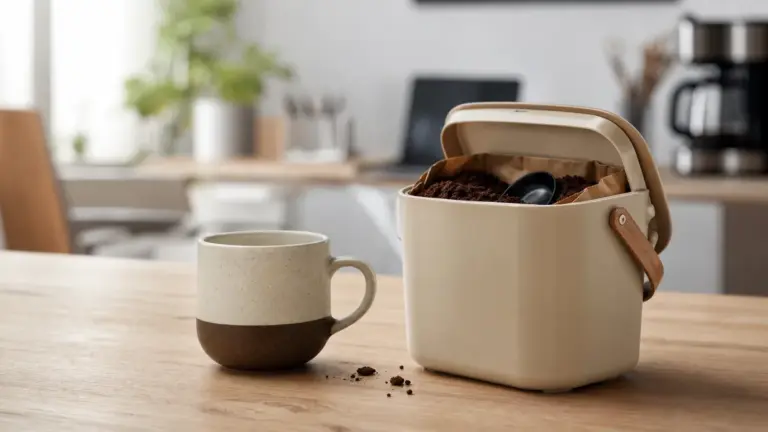
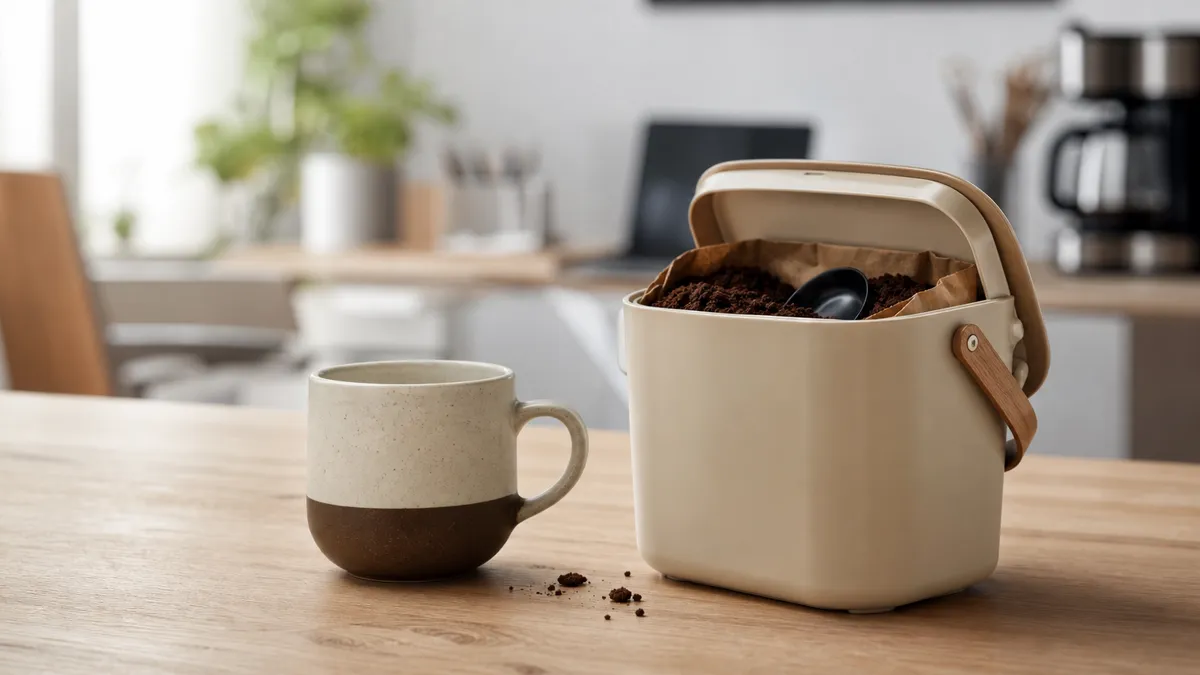
That means the grounds from every cup your team drinks can go in the food waste, ready for recycling, rather than into the general bin. It is a simple change with a satisfying result.
Start with the beans
A bean to cup machine works from whole beans, ground fresh for every cup. That means fewer single use capsules, and bigger bags of beans instead of lots of small packs.
Choose your beans with care. Look for certifications you trust, such as Fairtrade or Rainforest Alliance, which set standards for farming, farmers and the environment.
Buy the right amount. Order in line with how much your team drinks, so beans are used fresh and nothing goes stale.
Rethink the cup
Proper mugs are the easiest green win in any office kitchen.
- Mugs first. Keep a good stock of washable mugs and glasses by the machine.
- Bring your own. Encourage reusable cups for the walk back to the desk.
- Make it easy. A dishwasher nearby and a clear place for clean mugs makes the habit stick.
It also looks so much nicer. A shelf of real mugs feels far more welcoming than a stack of paper cups.
Grounds for celebration
Used coffee grounds are useful. Once they are in the food waste, they can go on to be composted or turned into energy, depending on your local arrangements.
Some offices with a garden or plant pots save a little for the compost heap too. Mix grounds with leaves or cardboard so they do not clump.
Milk and water, wisely
Milk: Keep fresh milk cold and use the oldest first, so little goes to waste. Offering a plant milk gives people choice as well.
Water: A machine with the right water filter, set for your local water hardness, needs descaling less often and keeps running smoothly for longer. That is kinder to the machine and to the planet.
Energy: Most modern machines have an energy saving mode. Set it to match your working hours so the machine rests overnight and at weekends.
Make it a team effort
The greener coffee break works best when everyone is on board.
- Label the bins clearly, with “coffee grounds and tea bags” on the food waste bin.
- Name a coffee champion who keeps an eye on bins, mugs and supplies.
- Share the wins, such as a month without paper cups.
- Ask for ideas. Your team will have plenty.
Small changes, big feeling
Sustainability can feel huge and distant. The coffee machine brings it down to earth. Every time someone pops their grounds in the right bin or reaches for a mug, it is a small, positive choice.
And those small choices, repeated every day by the whole team, really do add up.
Tell the story
Green changes stick best when people can see them working.
Put a small sign by the machine that explains where the grounds go and why. Mention your certified beans in the team chat or on the kitchen noticeboard, and explain in a line or two what the certification stands for. Share a photo of the full food waste caddy heading off for recycling, or celebrate the first month with no paper cups.
Visitors notice these touches too. A coffee point with real mugs, clearly labelled bins and certified beans quietly tells clients and candidates that your business takes its responsibilities seriously.
Ask the team for their own ideas, too: the best suggestions often come from the people who use the kitchen every day. And it gives everyone a reason to feel good about their coffee break. That is a lovely thing to build into the working day.
Our guide to sustainable coffee in the office covers beans, cups, waste and energy in detail.
What is the greenest habit in your office kitchen? Share it below.
More in our workplace coffee series: The Flat White Revolution Has Reached the Office Kitchen, and The Coffee That Wins the Meeting Before It Starts. For the practical detail behind them, read Coffee in the Workplace: The Complete Guide.
Sources
- DEFRA, “Simpler recycling: workplace recycling in England” (in force 31 March 2025; micro firms by 31 March 2027; dry recyclables, food waste and residual waste; coffee grounds and tea bags listed as food waste), read 4 November 2026. https://www.gov.uk/guidance/simpler-recycling-workplace-recycling-in-england
- Fairtrade Foundation, “Coffee”. https://www.fairtrade.org.uk/farmers-and-workers/coffee/
- Rainforest Alliance, official website. https://www.rainforest-alliance.org/
Last checked: November 2026