Most workplace perks get used by a few people, now and then. Great coffee gets used by nearly everyone, every single day.
Think about the benefits list in your own organisation. The cycle scheme, the wellbeing app, the discount portal. All worthwhile. But how many people use them before ten o’clock on a Wednesday?
Now think about the coffee machine.
It is busy before nine, busy again mid morning and busy after lunch. It is used by the new graduate and the managing director alike. And unlike almost any other benefit, people enjoy it several times a day, so every good cup is a small reminder that their workplace looks after them.
In short
- Great coffee is the perk nearly everyone uses, several times a day.
- 70% of employees say better quality coffee improves their own performance (World Coffee Portal, 2026).
- Employees rate the range of coffee at work 4.8 out of 10, so a step up in quality is noticed straight away.
- EFSA says up to 400mg of caffeine a day, spread through the day, raises no safety concerns for healthy adults (200mg a day in pregnancy).
- Ask the team, choose for quality, keep it stocked, launch it and adjust after a few weeks.
The most used benefit in the building
Coffee is woven into the British working day. The British Coffee Association says 67% of UK adults drink coffee every day, and 29% drink three or more cups.
At work, the habit is even stronger. World Coffee Portal’s Coffee At Work Report UK 2026 found that 45% of employees drink three or more cups during working hours, and that people drink more coffee on working days than on days off.
No other perk gets that kind of daily use. That is what makes coffee such a powerful one.
Your team says it helps them work
Here is the figure every HR and office manager should know. In the same 2026 report, 70% of employees agreed that better quality coffee improves their own performance.
That is how people feel rather than a lab measurement, but it is a strong signal, and it comes from the people who matter most: your team.
The report also found that 44% of employees said routine was the reason for their last workplace coffee. Coffee is not an occasional treat at work. It is part of how people shape their day. Support that routine well, and you support a good day.
The bar is low, which makes it easy to shine
There is a real opportunity here. Employees gave the range of coffee available at work an average score of 4.8 out of 10, while rating it highly for access and speed.
In other words, people love having coffee at work. They simply want it to be better. That is great news for any employer, because a step up in quality gets noticed straight away.
Good news on caffeine, too
The European Food Safety Authority says caffeine intakes of up to 400mg a day, spread through the day, raise no safety concerns for healthy adults (for pregnant women the figure is 200mg a day). So a few good coffees across the working day are perfectly sensible for most people. Add a great decaf for the afternoon and for anyone who prefers it, and everyone is looked after.
A perk that works for the business as well
- Everyone can use it. Early starters, late finishers, office staff and visitors alike.
- It keeps the good stuff on site. The 2026 report found nearly half of employees had left the workplace in the past year to buy coffee elsewhere. Great coffee at work keeps the break, and the conversation that comes with it, inside the building.
- It impresses visitors. A proper cappuccino in reception or a meeting room makes a confident first impression.
- It is tax efficient. HMRC’s guidance says the workplace meals exemption applies to light refreshments as it does to meals. Check the conditions with payroll.
How to make it a perk people rave about
- Ask first. What do people drink, and when? Include the tea drinkers, decaf fans and plant milk lovers.
- Choose for quality. A bean to cup machine grinds fresh beans for every cup and makes milk drinks at the touch of a button.
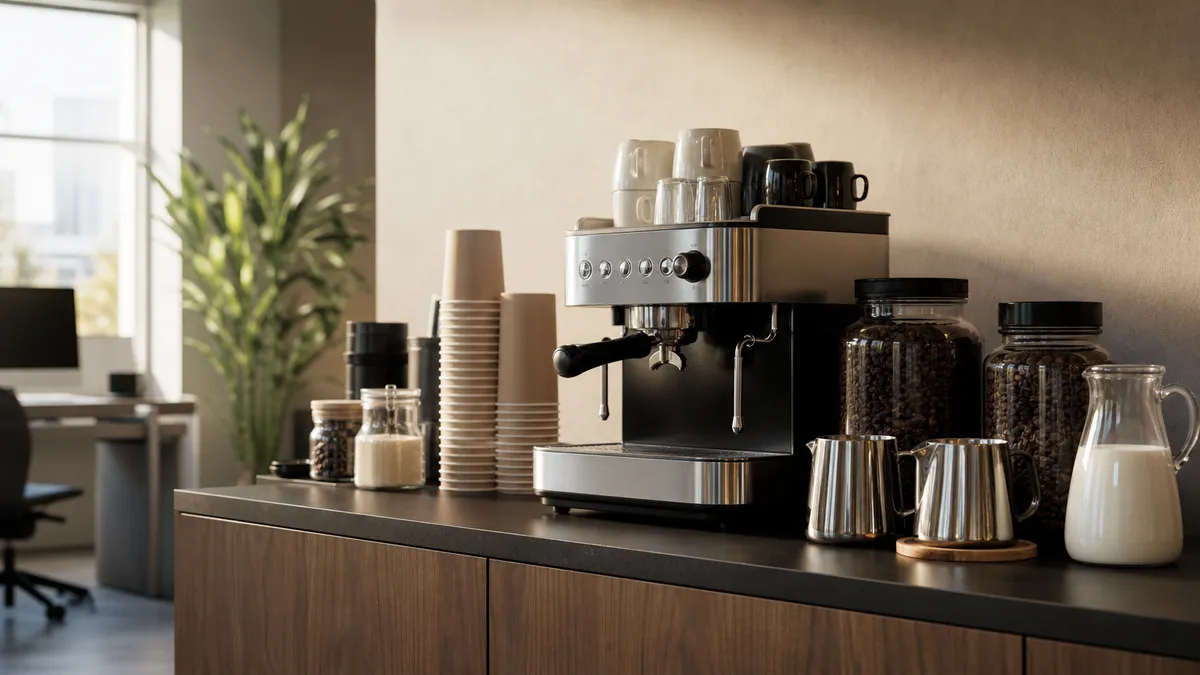
- Make it look good. A proper coffee station, not kettle corner.
- Keep it stocked. Name an owner and a deputy, so it never runs dry.
- Launch it. Announce it, and open with a tasting morning so everyone tries something new.
- Listen and tweak. After a few weeks, ask what is working and adjust the menu.
Perks are a way of saying thank you. The best ones say it every day. Great coffee does exactly that, one cup at a time.
Our guide to office coffee stations as a staff perk covers what to offer, how to run it and the HMRC rules: Coffee Stations and Office Perks
Which workplace perk do you actually use every day? I suspect I know the answer.
More in our workplace coffee series: The Best Return to Office Policy Might Be a Really Good Flat White, and The Best Conversations in Your Office Start at the Coffee Machine. For the practical detail behind them, read Coffee in the Workplace: The Complete Guide.
Sources
- British Coffee Association, Media Centre, headline figures (67% of UK adults drink coffee daily; 29% drink three or more cups), read 3 November 2026. https://britishcoffeeassociation.org/media-centre/
- World Coffee Portal, analysis of the Coffee At Work Report UK 2026 (45% drink three or more cups during working hours; 70% say better quality coffee improves their performance; 44% cite routine; range scored 4.8 out of 10; nearly half bought coffee outside the workplace in the past year), 4 September 2026. https://www.worldcoffeeportal.com/analysis/the-hidden-3-60-opportunity-workplace-coffee-is-worth-more-than-many-suppliers-imagine/
- European Food Safety Authority, “Caffeine” topic page (400mg a day for healthy adults; 200mg a day in pregnancy). https://www.efsa.europa.eu/en/topics/topic/caffeine
- HMRC, Employment Income Manual, EIM21670 (light refreshments). https://www.gov.uk/hmrc-internal-manuals/employment-income-manual/eim21670
Last checked: November 2026